Xijing Hospital Xi’an Gastroenterology: China’s Top Digestive Endoscopy and Liver Disease Center
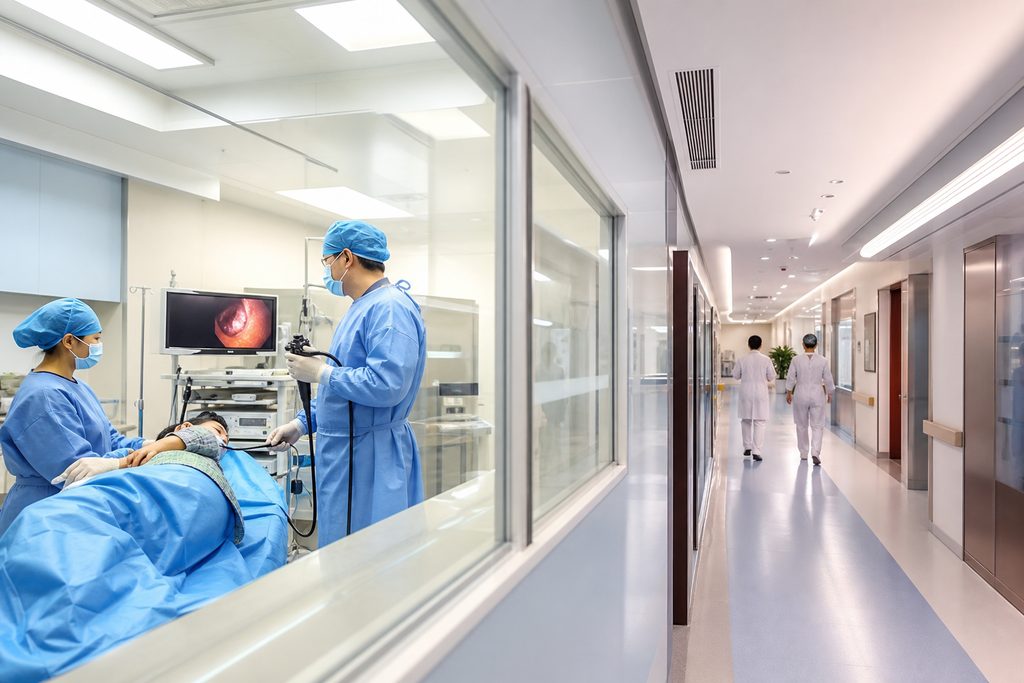
You have probably heard that seeking specialized medical care in China means lowering your standards. That the equipment is outdated. That the doctors are not peer-reviewed on a global stage.
The data tells a different story.
Xijing Hospital in Xi’an performs over 90,000 gastrointestinal endoscopies each year. Its liver disease center manages one of the world’s largest cohorts of hepatitis B patients. And for certain advanced endoscopic procedures, wait times can drop from months in a Western system to days here. The challenge is not the quality of care. It is navigating a system that was not built for international patients. That is where the real friction lives.
Key Takeaways
- Xijing Hospital’s gastroenterology department is consistently ranked among China’s top 5 for digestive disease, performing approximately 90,000 endoscopies annually — a case volume that directly correlates with procedural safety and diagnostic accuracy.
- The total cash price for a complex diagnostic endoscopy with biopsy often falls between $400 and $900, compared to $4,000–$8,000 in the United States, without sacrificing histological quality.
- No Western patient can simply email the hospital and book a procedure. The public registration system requires a Chinese ID or local presence, and the language barrier in Xi’an is significant — this is not Beijing or Shanghai.
- You need a clear plan for visa documentation, real-time translation during consent and discharge, and someone who understands how pathology results are delivered in a Chinese public hospital before you commit to travel.
The Problem: Liver Disease and Digestive Disorders Don’t Wait for Affordable Care
Approximately 296 million people live with chronic hepatitis B worldwide. In the United States, a single endoscopic retrograde cholangiopancreatography (ERCP) with stent placement can cost $12,000 to $20,000 for an uninsured or underinsured patient. Even with insurance, out-of-pocket exposure often reaches $3,000 to $6,000. For patients with chronic liver conditions requiring regular surveillance endoscopies — every 6 to 12 months — this math becomes unsustainable.
Wait times add another layer of risk. In Canada, the median wait for a gastroenterology consultation stretches to 12 weeks. In the UK’s NHS, a routine gastroscopy can take 6 to 8 weeks from referral. For a patient with dysphagia, unexplained weight loss, or rising alpha-fetoprotein levels, that gap is terrifying. Pathology does not pause for administrative queues.
What if the infrastructure existed to get a high-definition gastroscopy with narrow-band imaging within 72 hours of arrival? What if the physicians reading your slides see more hepatocellular carcinoma cases in a month than a Western pathologist encounters in a year? That infrastructure exists. It sits in Xi’an.
Who We Are
We are not a hospital. We do not provide medical treatment, clinical diagnoses, or surgical interventions. Our team is the logistical bridge between you and China’s top-tier gastroenterology centers. We handle hospital matching based on your specific diagnosis, coordinate appointments through official international department channels, arrange bilingual medical companions who stand beside you during every procedure, and manage the visa documentation that makes travel possible. Think of us as your case management architects. We build the pathway. You and your physicians make the clinical decisions.
Why Xijing Hospital’s Gastroenterology Department Delivers Results
Procedure Volume That Changes the Risk Calculus
Xijing Hospital, affiliated with the Air Force Medical University, runs one of the highest-volume digestive endoscopy centers in Asia. The numbers matter. A 2021 meta-analysis published in Gastrointestinal Endoscopy found that endoscopists performing fewer than 200 procedures annually had significantly higher adenoma miss rates than high-volume operators. At Xijing, senior endoscopists routinely perform over 1,000 procedures per year. That repetition breeds pattern recognition — the subtle flat lesion, the irregular mucosal pit pattern, the early sign of submucosal invasion that a less experienced eye might pass over.
For liver disease patients, the volume argument is even stronger. The hospital’s liver disease center manages an enormous cohort of hepatitis B, hepatitis C, and cirrhosis patients. Decompensated cirrhosis, acute-on-chronic liver failure, portal hypertension management — these are not rare presentations here. They are Tuesday. When you need a transjugular intrahepatic portosystemic shunt (TIPS) procedure or a complex variceal banding, you want the team that does this every single day.
Technology Access Without the Insurance Gatekeeping
Xijing’s endoscopy unit operates Olympus 290 series high-definition scopes with narrow-band imaging as standard equipment. Confocal laser endomicroscopy is available for real-time optical biopsy of suspicious lesions. Endoscopic ultrasound (EUS) with fine-needle aspiration is routine for pancreatic and biliary assessment. These are the same platforms you would find at Mayo Clinic or Charité in Berlin.
The difference is access. In many Western systems, advanced imaging like confocal endomicroscopy requires specific insurance pre-authorization or is reserved for academic research protocols. At Xijing, these tools are integrated into the standard diagnostic workflow. If your endoscopist sees a suspicious area, the probe goes in. No phone call to a utilization review nurse. No three-week delay while paperwork moves through a payer system.
The Xijing Hospital Gastroenterology Price Reality
Let us address the Xijing Hospital gastroenterology price question directly. We have coordinated care for international patients at this hospital, and the cash prices follow a consistent pattern. A diagnostic upper endoscopy with sedation typically ranges from $250 to $450. A colonoscopy with polypectomy falls between $400 and $700. An EUS with FNA for pancreatic assessment runs $800 to $1,500. An ERCP with stone extraction or stent placement ranges from $1,200 to $2,500.
These are the hospital’s charges for the procedure itself, paid directly to the hospital’s international department. They do not include our coordination fees, travel, accommodation, or the bilingual companion service. But even with those costs fully loaded, the total spend typically lands at 20% to 30% of the US cash price for equivalent care. The structural reasons are straightforward: lower physician labor costs, hospital-owned equipment without third-party financing overhead, and a single-payer hospital billing system that does not support the complex chargemaster inflation common in American hospitals.
What about the best liver disease hospital China cost for more advanced interventions? A comprehensive liver disease workup — including contrast-enhanced MRI, transient elastography (FibroScan), full viral panel, and consultation with a hepatologist — typically costs between $800 and $1,500 at Xijing. For patients asking specifically can Xijing Hospital treat hepatitis B, the answer is yes, and the antiviral protocols follow the same international guidelines (AASLD, EASL, APASL) that your physician at home would reference. Nucleos(t)ide analogs like entecavir and tenofovir are widely available and priced at a fraction of Western pharmacy costs.
| Procedure | Xijing Hospital Cash Price (USD) | US Average Cash Price (USD) |
|---|---|---|
| Diagnostic Upper Endoscopy | $250–$450 | $2,500–$4,500 |
| Colonoscopy with Polypectomy | $400–$700 | $3,000–$6,000 |
| EUS with FNA | $800–$1,500 | $6,000–$12,000 |
| ERCP with Stent | $1,200–$2,500 | $12,000–$20,000 |
| Comprehensive Liver Workup | $800–$1,500 | $4,000–$8,000 |
Prices are estimates in USD. Actual costs vary by case complexity, length of stay, and specific physician fees. Hospital prices are subject to change. Coordination and companion service fees are separate.
What You Need to Know Before Going Alone
We have seen patients attempt to arrange care at Xijing independently. Some succeed. Most encounter barriers that waste time, money, or both. Here is what you face if you try to navigate this alone:
- Registration Requires a Local Presence: Xijing’s public outpatient system uses a real-name registration platform tied to a Chinese phone number and ID. Foreign passport holders cannot simply register online and show up. The international department handles foreign patients, but reaching the right coordinator by email — in English — is inconsistent. Response times can stretch to weeks. If you need to book digestive endoscopy Xijing Hospital on a specific date window, the public channel will not accommodate you.
- Payment Is Upfront and Cash-Based: Chinese public hospitals do not bill Western insurance directly. You pay a deposit at admission, and the hospital draws against it daily. When the balance runs low, treatment pauses until you top up. International credit cards are not reliably accepted at hospital cashier windows. You need a Chinese bank card, WeChat Pay, Alipay, or someone physically present with cash. This is not a system designed for foreign financial workflows.
- Medical Records and Consent Are in Mandarin: The consent form for an ERCP — a procedure with a 5% to 10% risk of post-procedure pancreatitis — will be handed to you in Chinese characters. The pathology report for your gastric biopsy will arrive in Chinese. The discharge instructions will be in Chinese. Google Translate is not sufficient for informed consent on a procedure with real complication risks.
How We Help You Navigate This
These barriers are structural, not malicious. Xijing Hospital serves over 3.8 million outpatient visits annually. The system is optimized for volume and domestic patients. Our role is to create a parallel pathway for you.
Before you travel, we translate your existing medical records into Chinese clinical terminology — not literal translation, but the structured format that Chinese gastroenterologists expect. We submit your case through the hospital’s international department channel and secure a confirmed appointment window with a senior specialist. We advise on the S2 visa documentation, including the hospital invitation letter format that the Chinese consulate requires. We handle this process for patients seeking everything from routine screening endoscopies to complex hepatology consultations.
During your procedure day, a bilingual medical companion meets you at the hospital entrance. This person handles registration check-in, escorts you to the endoscopy unit, translates the pre-procedure consent conversation in real time, and stays within reach throughout your sedation and recovery. When the pathology report is ready — typically 3 to 5 working days for standard histology — we ensure you receive a professionally translated version alongside the original Chinese document.
For patients exploring China liver transplant package for foreigners options, the coordination is more complex. China’s organ transplantation system operates under strict regulatory oversight, and foreign patients must meet specific eligibility criteria. We do not sell transplant packages — no legitimate organization does. What we do is connect you with transplant hepatologists for candidacy evaluation, coordinate the extensive pre-transplant workup, and manage the documentation required by China’s national organ allocation system. The process is rigorous. It should be. We ensure you understand every step before you commit.
One more thing worth mentioning. Any remote consultation fee you pay — whether for a written second opinion ($300–$500) or a top-specialist video consultation ($500–$800) — is credited in full toward our on-the-ground coordination service if you decide to travel within 90 days. The credit applies to our coordination fee, never to hospital treatment charges. This is how we align incentives: you test the waters with a consultation, and if the clinical fit is right, your initial investment carries forward.
Frequently Asked Questions
The question how safe is endoscopy in China deserves a direct answer. At a top-tier center like Xijing, procedural safety metrics are comparable to major Western academic hospitals. The endoscopy unit follows standardized reprocessing protocols consistent with World Gastroenterology Organisation guidelines. Sedation is administered by anesthesiologists, not endoscopy nurses — a practice that exceeds the standard in some Western countries. Complication rates for diagnostic endoscopy (perforation, bleeding, aspiration) fall well below 0.1%. The volume argument cuts both ways: high procedure counts mean the team has seen and managed every complication scenario. The risk is not the procedure itself. The risk is communication breakdown during consent, during the procedure if you are awake, and during discharge. That is why we insist on a bilingual companion for every patient we coordinate at Xijing.
Yes. Can Xijing Hospital treat hepatitis B with first-line agents? The hospital stocks entecavir, tenofovir disoproxil fumarate, and tenofovir alafenamide — the same nucleos(t)ide analogs recommended by AASLD and EASL guidelines. The hepatology department follows international treatment algorithms for HBeAg-positive and HBeAg-negative chronic hepatitis B. What differs is the monitoring protocol. Because patient volume is so high, follow-up visits may be scheduled more frequently than you are used to — every 3 months for ALT and HBV DNA is common. The physicians are also more aggressive about hepatocellular carcinoma surveillance, often using contrast-enhanced ultrasound in addition to standard ultrasound and AFP, given the high prevalence of HCC in the local population.
This is the scenario every patient fears. If a malignancy is found on endoscopic biopsy — gastric adenocarcinoma, esophageal squamous cell carcinoma, a GIST — the pathology report will be available within 3 to 5 working days. At that point, you have decisions to make. Xijing’s gastroenterology department works closely with its surgical oncology and medical oncology teams. A multidisciplinary consultation can often be arranged within the same week. Our role in this situation is to ensure you understand every word of the diagnosis, facilitate urgent appointments with the relevant specialists, and help you weigh the option of proceeding with treatment in Xi’an versus returning home with a confirmed diagnosis and treatment plan in hand. We do not push you toward one path. We make sure you have the information to choose.
You cannot book digestive endoscopy Xijing Hospital through the public registration system as a foreigner. The hospital’s WeChat mini-program, phone hotline, and on-site kiosks all require Chinese language ability and a local ID or phone number. The international department is the correct channel, but it is a small office handling a high volume of inquiries. We have an established working relationship with this department. We submit your translated records, confirm a procedure date, and ensure an English-capable coordinator is assigned to your case before you book a flight. Attempting to arrange this independently — arriving in Xi’an and walking into the outpatient hall — will almost certainly result in confusion, lost time, and no procedure.
The Xijing Hospital gastroenterology price we quote is the hospital’s charge for the procedure itself — the technical fee, physician fee, sedation, and basic pathology. It is genuinely low by Western standards for the structural reasons explained earlier. But there are costs beyond the hospital bill. You need flights to Xi’an, a hotel near the hospital (the Hyatt Regency and Hilton are within a 15-minute drive), meals, and local transportation. If a polyp is found and removed during colonoscopy, that adds a polypectomy charge. If additional immunohistochemistry staining is needed on a biopsy, that adds a pathology surcharge. None of these are hidden — they are line items on your hospital bill. But they do accumulate. A procedure quoted at $500 can land at $800 once all ancillary charges are included. Still, compare that to $6,000 for the same scope in the US. The math holds.
Your Next Step
Xijing Hospital’s gastroenterology department offers genuine clinical excellence at a price point that makes regular surveillance affordable for chronic liver disease patients and diagnostic scoping accessible for those facing long waits at home. The trade-off is not quality. The trade-off is complexity — language, payment systems, visa paperwork, and a healthcare culture that does not bend to accommodate foreign expectations.
We exist to manage that complexity so you can focus on the clinical outcome. If you are considering a digestive endoscopy, a liver disease consultation, or a transplant evaluation at Xijing, start with a conversation. Tell us your diagnosis, your timeline, and your concerns. We will tell you honestly whether this path makes sense for your specific situation. No pressure. No sales script. Just the information you need to make a clear-eyed decision.
Learn more about how we coordinate care at our patient services page, or explore our full database of top-ranked Chinese hospitals to compare Xijing with other gastroenterology centers across the country.
Medical Disclaimer: This article is for informational purposes only and does not constitute medical advice, diagnosis, or treatment recommendation. All clinical decisions should be made in consultation with a qualified physician. Prices cited are estimates based on historical cases and vary by hospital, case complexity, and individual physician fees. China Medical Services does not guarantee specific clinical outcomes or access to any particular physician.
For more medical information and treatment options in China, visit chinamedservices.com (China Medical Services).
