Xijing Hospital Respiratory Medicine for International Patients: A Practical Guide
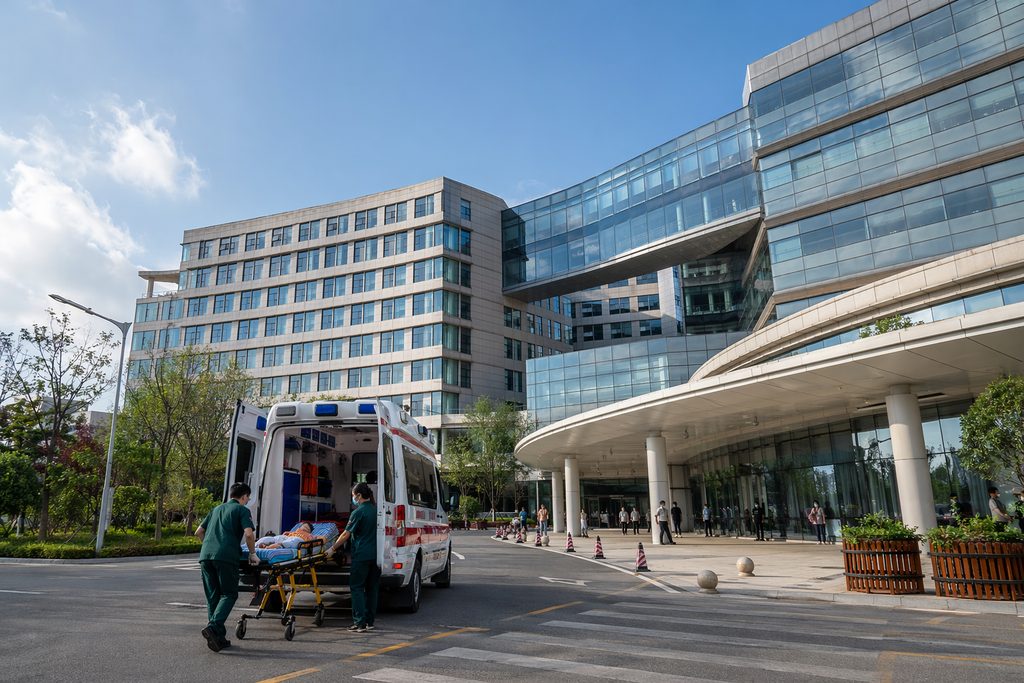
You have probably heard that getting treated at a top Chinese hospital means waiting for months or being lost in a system you cannot navigate. The reality for Xijing Hospital respiratory medicine international patients is more nuanced. Xijing Hospital, officially the First Affiliated Hospital of the Air Force Medical University in Xi’an, runs one of China’s busiest respiratory departments. For foreign patients, the bottleneck is rarely clinical capacity. It is coordination.
Our team has helped patients from Europe, the Middle East, and Southeast Asia arrange respiratory consultations at Xijing. The department handles everything from refractory asthma and COPD to interstitial lung disease and complex pulmonary infections. But the pathway for an international patient differs sharply from what a local resident experiences. Understanding that difference before you book a flight saves time and money.
Xijing Hospital Respiratory Medicine for International Patients: The Short Answer
Yes, Xijing Hospital accepts international patients in its respiratory medicine department. You cannot simply walk in and register at the general outpatient window as a foreigner without Chinese language support. The practical route is through the hospital’s international or VIP outpatient channel, which offers English coordination, priority scheduling, and same-day test results in many cases. Expect to pay 1.5 to 2 times the standard consultation fee for that access. A standard specialist consultation at Xijing’s respiratory department costs roughly $30 to $80. The international channel typically starts around $100 to $250 per visit, depending on the specialist’s seniority.
But that is only the consultation. Diagnostic workups, bronchoscopy, CT imaging, and pulmonary function tests are billed separately. And here is the part most patients miss: you cannot book any of this from overseas through the general appointment system. Someone on the ground has to create your hospital medical card, register you, and often speak to the department coordinator in Mandarin.
Who This Is Right For — and Who It Isn’t
Xijing’s respiratory department makes sense for a specific profile of international patient. Not everyone should fly to Xi’an for lung care.
Good candidates typically include:
- Patients with complex or undiagnosed respiratory conditions who have exhausted diagnostic options at home
- People who need a high-volume center for a second opinion on interstitial lung disease, pulmonary fibrosis, or drug-resistant respiratory infections
- Expats already living in China who want access to a top-tier public hospital without relocating to Beijing or Shanghai
- Patients from regions where advanced bronchoscopy or endobronchial ultrasound (EBUS) is unavailable or prohibitively expensive
You should probably not pursue Xijing respiratory care if:
- Your condition is stable and well-managed by your current pulmonologist
- You need emergency care — Xijing is not the right destination for an acute respiratory crisis from overseas
- You are not prepared for the practical realities of a Chinese public hospital: crowded corridors, limited privacy, and a system built for volume
- You require long-term, ongoing in-person follow-up that would mean repeated international trips
Being honest about the second list matters. A top-ranked department is not automatically the right fit for every lung condition.
The Options, Compared
Foreign patients considering respiratory care in Xi’an face a genuine choice between hospital tiers and service models. Here is how the realistic options stack up for someone coming from abroad.
| Option | Consultation Fee | English Support | Booking From Overseas | Best For |
|---|---|---|---|---|
| Xijing public outpatient | $30–$80 | Minimal | Not possible directly | Mandarin-speaking patients already in Xi’an |
| Xijing international/VIP channel | $100–$250 | Yes | Via coordinator or agent | International patients needing specialist access |
| Private international hospital in Xi’an | $150–$400 | Full | Direct online booking | Expats wanting Western-style service, insurance billing |
| Beijing/Shanghai top respiratory center | $200–$500 | Yes (international dept) | Via coordinator | Rare/complex cases requiring subspecialty depth |
If your priority is clinical depth in respiratory medicine, Xijing’s international channel beats private hospitals in Xi’an on specialist seniority and case volume. But if you want direct insurance billing and a fully English-speaking environment from the front desk to the lab, a JCI-accredited private hospital may serve you better. Beijing and Shanghai add travel cost but offer the deepest subspecialty rosters in China.
What Makes Xijing’s Respiratory Department Different
Xijing Hospital sits in Xi’an, a city of 13 million people and the gateway to northwestern China. The hospital is one of the largest military-affiliated medical centers in the country. Its respiratory department handles a patient volume that most Western pulmonology units would struggle to imagine. Daily outpatient numbers routinely reach into the hundreds.
That volume creates clinical experience. For conditions like difficult-to-treat asthma, chronic obstructive pulmonary disease, tuberculosis and nontuberculous mycobacterial infections, and smoking-related lung disease, the department’s specialists see more cases in a month than many Western pulmonologists see in a year. The hospital also runs advanced bronchoscopy suites, pulmonary function labs, and a dedicated respiratory ICU.
But volume cuts both ways. A consultation at Xijing is efficient, not leisurely. You may get 10 to 15 minutes with a specialist. The doctor will likely order tests immediately. The system moves fast. If you expect a 45-minute conversation, you will be disappointed. If you want a definitive diagnostic plan executed quickly, Xijing delivers.
And here is a question worth asking yourself: is Xijing the best pulmonology hospital China for foreigners with your specific condition? For general respiratory disease, yes, it ranks among the strongest outside Beijing and Shanghai. For ultra-rare interstitial lung disease or lung transplantation evaluation, you may be better served at a center like China’s top-ranked respiratory departments in Beijing or Shanghai. Xijing’s strength is breadth and volume, not necessarily the deepest subspecialty niche for every rare disease.
Cost of Lung Treatment at Xijing Hospital: What to Expect
The cost of lung treatment at Xijing Hospital varies enormously by diagnosis and treatment intensity. Here are realistic ranges based on our coordination experience.
A standard outpatient respiratory consultation through the international channel: $100 to $250. A high-resolution chest CT: $100 to $200. Full pulmonary function testing: $50 to $120. Bronchoscopy with biopsy: $500 to $1,500 depending on sedation and pathology. A sleep study for sleep apnea: $150 to $400. If admission is required, a standard ward bed costs $50 to $150 per night. VIP ward beds run $200 to $500 per night.
Compare that to the United States, where a bronchoscopy can exceed $5,000 and a chest CT often bills at $1,000 or more. Even with international channel markups, the total cost of a diagnostic workup at Xijing typically lands at one-fifth to one-tenth of the US price. That is the honest math.
What is not included: your flight, hotel, visa fees, food, local transportation, and any medication prescribed for use after you return home. Chinese public hospitals also require prepayment for services. You pay as you go, and you settle each department’s charges separately. Reimbursement from international insurers is possible but requires you to collect and submit itemized receipts — the hospital will not bill your insurer directly through the public system.
How to Book an Appointment at Xijing Respiratory Department
You cannot search online and click a “book now” button for Xijing’s public respiratory clinic as an overseas patient. The how to book appointment Xijing respiratory department question has a layered answer.
The general outpatient system requires a Chinese phone number, a hospital medical card, and usually a local ID or passport registration done in person. For international patients, the realistic options are:
- Have a local coordinator or bilingual medical companion register on your behalf using your passport, creating your hospital card and booking the first available specialist slot
- Use the hospital’s international outpatient channel, which accepts overseas requests but typically requires phone or WeChat communication in Chinese
- Work with a service like ours that handles registration, document translation, and on-the-day navigation
Expect the first available specialist appointment to be within 3 to 10 days of registration. Xijing is busy but not Beijing-busy. For a specific senior specialist, the wait can stretch to two or three weeks. You should plan at least 5 to 7 days in Xi’an for a first visit that includes consultation, imaging, and pulmonary function testing.
And what about is Xijing Hospital good for asthma treatment? The short answer is yes for difficult or severe asthma. The department runs dedicated asthma clinics and offers biologic therapies, bronchial thermoplasty evaluation, and comprehensive allergy testing. But if your asthma is well-controlled on a standard inhaler regimen, flying to Xi’an for care is unnecessary. Xijing’s value emerges when your asthma is uncontrolled despite maximal therapy, or when the diagnosis itself is uncertain.
Practical Considerations: Visa, Language, and Follow-Up
You will need an S2 visa for medical treatment in China. The S2 covers short stays for private affairs including medical treatment, typically up to 180 days. Your accompanying family member applies for the same category. The Chinese embassy or consulate will require supporting documents from the hospital — usually an invitation letter, appointment confirmation, or treatment plan. We help patients assemble these documents, but we cannot guarantee visa approval. That decision rests entirely with the consular officer.
Language is the next hurdle. Xijing’s public outpatient corridors, signboards, payment windows, and lab queues operate in Chinese. Even the international channel does not guarantee English-speaking nurses or technicians at every step. A bilingual medical companion handles registration, payment, queueing, and translation. The cost starts around $300 per day. Some patients try to manage alone with translation apps. A few succeed. Most report that the stress of navigating a crowded Chinese hospital without language support outweighs the savings.
For expats already living in Xi’an or elsewhere in China, the question of a respiratory specialist Xi’an for expats often comes down to whether you want public-sector clinical depth or private-sector convenience. Xijing offers the former. Private hospitals like those on our international hospital list offer the latter. There is no wrong answer — only a trade-off.
Follow-up after you return home is another factor. Xijing specialists can provide written treatment summaries and prescriptions valid in China. For ongoing care, you will need a local pulmonologist who accepts the Chinese diagnosis and plan. Some Western doctors are skeptical of reports from unfamiliar institutions. Requesting English-language reports and raw imaging data helps bridge that gap.
Frequently Asked Questions
Not through the public system. The hospital’s general outpatient registration requires in-person card creation and a Chinese phone number. International patients typically work through the hospital’s international channel or a local coordinator who handles registration on their behalf. Direct online booking is not currently available for overseas patients.
For an international patient, a realistic budget is $1,500 to $3,500 for consultation, chest CT, pulmonary function tests, and basic bloodwork through the international channel. If bronchoscopy or advanced imaging is needed, add $500 to $1,500. This excludes travel, accommodation, and visa costs. Final figures vary by hospital and case complexity.
You have options, but they require planning. Some medications prescribed in China are not approved or available in Western countries. You may need to purchase medication in China, or your home physician may need to identify an equivalent. Xijing doctors can provide documentation to support your case, but they cannot override your home country’s drug regulations.
Clinically, yes. Xijing is a top-tier teaching hospital with rigorous standards. The challenges for foreign patients are operational, not medical: language barriers, payment logistics, crowded facilities, and limited privacy. None of these affect the quality of the respiratory medicine itself, but they shape the experience. Patients who arrive with realistic expectations and language support consistently report better outcomes.
Your Next Step
Xijing Hospital’s respiratory medicine department offers genuine clinical strength at a fraction of Western prices. The trade-off is coordination: you need the right documents, the right registration, and someone who speaks the language on the ground. That is where we come in. China Medical Services connects international patients with top-tier Chinese hospitals. We are not a hospital and we do not diagnose or treat. We handle the logistics — registration, document translation, bilingual accompaniment, and appointment coordination — so you can focus on your health.
If you are considering Xijing for respiratory care, start with a conversation. Tell us your diagnosis, your history, and what you hope to achieve. We will tell you honestly whether Xijing fits, what it will cost, and how to prepare. No pressure. No obligation. Just a clear-eyed assessment from people who know the system.
Your lungs deserve the best care you can access. Sometimes that means flying to Xi’an. Sometimes it does not. Knowing the difference is the first step.
For more medical information and treatment options in China, visit chinamedservices.com (China Medical Services).
