Rehabilitation: Begin Recovery Today With China’s Top Centers
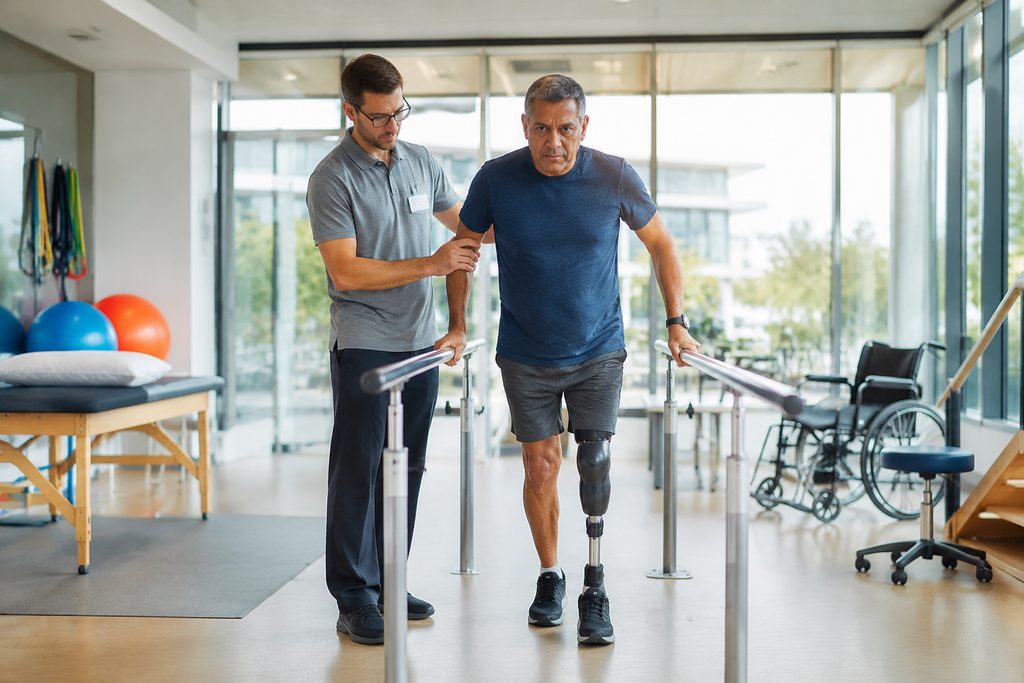
Rehabilitation: Begin Recovery Today With China’s Top Centers
Rehabilitation means rebuilding your body after illness, surgery, or injury. When you search for a rehabilitation center China cost, you are likely facing a hard truth: recovery at home is not progressing, and Western rehab programs are either too expensive or too far away. China’s top rehabilitation centers now offer structured, evidence-based recovery programs at roughly one-fifth to one-tenth of comparable US pricing.
Our team at China Medical Services has spent years connecting international patients with China’s 340+ top-ranked hospitals across 37 cities. We have watched stroke survivors regain mobility, spinal surgery patients relearn to walk, and cardiac patients rebuild endurance. This article explains what rehabilitation in China actually costs, what quality looks like, and how the process works.
Key Takeaways
- Inpatient rehabilitation at a top Chinese hospital typically costs $150–$400 per day, compared to $1,500–$3,000 per day in the United States.
- China’s leading rehab centers treat high patient volumes, which builds clinical experience that smaller Western facilities cannot match.
- Language barriers and unfamiliar hospital workflows are real obstacles — but structured support services exist to bridge them.
- You need a confirmed diagnosis and medical records before any reputable Chinese rehab center will accept you as an international patient.
The Problem: Recovery Stalls When Rehab Is Unaffordable or Unavailable
Every year, approximately 15 million people worldwide suffer a stroke. Of those who survive, roughly two-thirds leave the hospital with some form of disability. The World Health Organization identifies rehabilitation as one of the most under-resourced health services globally — and the gap is widening.
In the United States, a single day of inpatient rehabilitation averages $1,600 to $3,200 depending on the facility and intensity of therapy. A typical 21-day stroke rehab program can exceed $60,000 before insurance. Even with coverage, many plans cap rehab days at 20 to 30 per calendar year. After a spinal cord injury or complex orthopedic surgery, that cap gets exhausted quickly. Patients then face a choice: pay out of pocket at unsustainable rates, or go home and hope for the best.
Hope is not a treatment plan. And this is where the search for alternatives begins.
Why China Delivers Measurable Rehabilitation Results
China has invested heavily in rehabilitation medicine over the past two decades. The country now operates dedicated rehabilitation hospitals in every major city, many affiliated with the same top-tier academic medical centers that rank among China’s best in cardiology, neurology, and orthopedics. The Fudan-ranked top 100 hospitals include several with dedicated rehab departments staffed by physiatrists, physical therapists, occupational therapists, and speech-language pathologists.
Clinical Volume Builds Pattern Recognition
A senior physiotherapist at a major Shanghai rehab center may treat 15 to 20 stroke patients per day. Over a decade, that adds up to tens of thousands of individual therapy sessions. Compare that to a typical US outpatient physical therapist who might see 8 to 12 patients daily. Volume alone does not guarantee quality — but in rehabilitation, where progress depends on correctly reading a patient’s response to therapy and adjusting the plan, pattern recognition matters enormously.
This is especially true for stroke rehab. Chinese hospitals admit approximately 3 million new stroke patients annually. The top neurology and rehab departments in Beijing and Shanghai manage complex cases daily — hemiplegia, aphasia, dysphagia, cognitive impairment. A therapist who has guided 500 patients through post-stroke gait training sees things a therapist who has guided 50 cannot.
Integrated Traditional and Western Approaches
China’s rehabilitation model combines conventional physical therapy with traditional Chinese medicine techniques. Acupuncture, tuina massage, and targeted herbal formulations are used alongside — not instead of — standard rehab protocols. For chronic pain management, post-surgical swelling, and spasticity, many patients report meaningful relief from these adjunctive therapies.
This is not alternative medicine replacing evidence-based care. It is a layered approach. A patient recovering from knee replacement surgery might receive standard range-of-motion exercises in the morning and acupuncture for pain control in the afternoon. The goal is the same: faster functional recovery with less reliance on opioid painkillers.
Cost Structures That Make Intensive Rehab Possible
The most common question we hear: why is rehabilitation center China cost so much lower? The answer is structural, not a reflection of quality. Chinese hospital labor costs are lower across the board. Facility construction and equipment costs are lower. Administrative overhead is leaner. And because Chinese hospitals operate at high volume, fixed costs are spread across far more patients.
A cardiac rehabilitation session that costs $250 in the US might cost $40 to $80 at a top Chinese hospital. A full inpatient rehab day with three hours of one-on-one therapy, nursing care, and meals can run $150 to $400. That pricing makes intensive, multi-week programs financially feasible for patients who would otherwise ration their therapy at home.
What a Typical Rehab Program in China Actually Looks Like
Most international patients enter Chinese rehab through one of two pathways: direct admission after surgery in China, or transfer from a hospital abroad for continued recovery. The second pathway is more common for patients seeking stroke rehab packages abroad.
On day one, you undergo a comprehensive functional assessment. This typically takes two to three hours and includes evaluation by a physiatrist, a physical therapist, and an occupational therapist. They measure baseline function — range of motion, strength, balance, activities of daily living, speech and swallowing if relevant. From that assessment, the team builds an individualized therapy plan.
A typical inpatient day includes two to three hours of active therapy, split across morning and afternoon sessions. That might mean 45 minutes of gait training, 30 minutes of upper-limb occupational therapy, 30 minutes of speech therapy, and 45 minutes of acupuncture or hydrotherapy. Between sessions, nursing staff handle medication, wound care, and monitoring.
Weekly team meetings review progress against goals. If you are not improving as expected, the plan changes. This is standard practice at any reputable facility — but it happens faster in China because the team is on-site and sees you daily.
How Long Is Rehab After Spinal Surgery — And What Should You Expect
Spinal surgery patients often ask us directly: how long is rehab after spinal surgery? The honest answer depends on the procedure. After a microdiscectomy, most patients need two to four weeks of structured rehab before returning to light activity. After a spinal fusion, expect six to twelve weeks. After complex multi-level fusion or surgery for spinal cord injury, rehab can extend three to six months or longer.
In China, spinal surgery rehab is often integrated with the surgical department. That means the surgeon who operated on you can communicate directly with the rehab team — no faxing records, no waiting for referrals. Patients recovering from spinal fusion at a hospital like Zhongshan Hospital in Shanghai typically begin passive range-of-motion exercises within 48 hours of surgery, progress to sitting and standing with support by day three to five, and start walking with assistance by the end of week one. The rehab team adjusts the pace based on imaging and surgical notes, not a generic protocol.
One caution: do not rush spinal rehab. Bone fusion takes time. Aggressive therapy too early can compromise hardware or delay healing. Chinese rehab teams tend to be appropriately conservative in the first two weeks post-fusion, then accelerate once imaging confirms stability. This matches international best practice.
Is Cardiac Rehab Safe in China?
The question is cardiac rehab safe in China comes up frequently — and it deserves a straight answer. Yes, when done at a properly equipped hospital with cardiac monitoring capability. No, if you are considering an unaccredited wellness retreat or a standalone TCM clinic without emergency backup.
Cardiac rehabilitation in China follows the same three-phase model used internationally. Phase I begins in-hospital immediately after a cardiac event or surgery — monitored mobilization, education, risk factor management. Phase II is supervised outpatient rehab, typically 12 to 36 sessions of monitored exercise. Phase III is long-term maintenance.
China’s top cardiac centers, including Fuwai Hospital in Beijing — which performs over 14,000 cardiac surgeries annually — operate dedicated cardiac rehab programs with continuous ECG monitoring, blood pressure tracking, and on-site emergency response. A typical Phase II session includes 30 to 40 minutes of aerobic exercise on a treadmill or cycle ergometer at 60-80% of target heart rate, plus resistance training and education on diet, medication adherence, and stress management.
If you have a history of arrhythmia, recent stent placement, or heart failure, you need a facility with a cardiologist on-site or immediately available. Ask before you book. Any reputable center will answer this question directly.
Comparing Rehab Options: China vs. the US and Europe
Numbers help. Here is a direct comparison of typical costs for a 21-day inpatient rehabilitation program, based on published rates and our own coordination experience:
| Cost Item | United States | Germany | China (Top Hospital) |
|---|---|---|---|
| Daily inpatient rehab rate | $1,600–$3,200 | $800–$1,500 | $150–$400 |
| 21-day program total | $33,600–$67,200 | $16,800–$31,500 | $3,150–$8,400 |
| Physical therapy session (1 hour) | $150–$300 | $80–$150 | $30–$80 |
| Occupational therapy session (1 hour) | $120–$250 | $70–$130 | $25–$70 |
| Speech therapy session (1 hour) | $150–$300 | $80–$140 | $25–$65 |
| Cardiac rehab session (Phase II) | $100–$250 | $60–$120 | $40–$80 |
These figures vary by hospital and case complexity. But the pattern holds: China delivers comparable therapy intensity at roughly one-fifth to one-tenth of US pricing. For patients paying out of pocket, that difference can mean the difference between two weeks of rehab and two months.
Practical Considerations: Records, Visas, and Payment
You cannot simply fly to China and check into a rehab center. The process requires preparation. Here is what you need to know.
First, records. Any reputable Chinese rehab center will require your complete medical file: discharge summary, surgical notes, imaging reports, current medication list, and any prior rehab assessments. These must be translated into Chinese or English — most top hospitals accept English records, but Chinese translations speed up review. Budget one to two weeks for records review and program acceptance.
Second, visa. Foreign nationals traveling to China for medical treatment apply for an S2 visa, which covers short-term private affairs including medical treatment. If your rehab stay will exceed 180 days, you need an S1 visa. Accompanying family members also apply for S2. The Chinese embassy or consulate in your home country will require documentation from the receiving hospital confirming your treatment arrangement. Processing typically takes one to four weeks depending on your location.
Third, payment. Chinese public hospitals generally require prepayment for inpatient services. Budget for the full estimated program cost upfront, plus a buffer of 20-30% for unexpected extensions or additional therapy. Most hospitals accept international credit cards, wire transfers, or cash. Private international hospitals in China — such as United Family or Jiahui — may bill international insurance directly, but their rehab rates are typically two to three times higher than public hospital international departments.
Fourth, language. Even in international departments, not every therapist speaks fluent English. This is the single most common friction point for foreign patients. Some hospitals provide English-speaking coordinators. Others do not. If you do not speak Mandarin, you will need interpretation support — either through the hospital or through a third-party service.
Practical tip: Before committing to any rehab program in China, request a written treatment plan that specifies therapy hours per day, therapist-to-patient ratio, and the qualifications of the lead physiatrist. Reputable centers provide this without hesitation.
Frequently Asked Questions
The best physical therapy Shanghai has to offer is concentrated in the international departments of top public hospitals and a handful of JCI-accredited private hospitals. Public hospital international departments offer lower costs and access to senior therapists, but you will navigate more paperwork. Private international hospitals offer English-speaking staff and insurance billing but at higher rates. For complex neurological or orthopedic rehab, we typically recommend the public hospital international departments first — the clinical depth is simply greater.
You can initiate the process remotely, but you cannot finalize admission without an in-person assessment. The standard pathway is: submit records for review, receive a preliminary acceptance, travel to China on an S2 visa, complete the in-person functional assessment, and then begin the program. Some hospitals allow you to book rehab program Beijing slots provisionally based on records, but the assessment is non-negotiable. This protects you as much as the hospital — a program designed without seeing you move is a guess.
This is a fair concern. Ask about the facility’s reassessment policy before you commit. At reputable Chinese rehab centers, the team reviews progress weekly and adjusts the plan. If progress stalls, they will tell you — and they will change the approach. If you are genuinely dissatisfied, you can request a second opinion from another department or transfer to a different facility. Transfers between Chinese hospitals are administratively straightforward, though you will need to handle billing reconciliation.
Rehabilitation is physically and emotionally demanding. We strongly recommend that elderly patients travel with a family member or companion, especially for the first two weeks. Hospital staff provide medical care, not companionship. A family member helps with decision-making, emotional support, and navigating daily logistics. Some patients do travel alone successfully, but it is harder than most people expect.
In most cases, yes. Top Chinese hospitals provide discharge summaries and therapy records in English upon request. These documents typically meet the standards expected by Western physicians. Request English-language records before you leave the hospital — obtaining them after you return home is slower and more complicated.
Your Next Step
Rehabilitation is not a luxury. It is the difference between surviving a medical event and recovering from it. China’s top rehab centers offer world-class therapy intensity at prices that make comprehensive recovery possible for patients who would otherwise be forced to ration care.
We are China Medical Services — not a hospital, not a clinic. We help international patients navigate China’s healthcare system: matching you with appropriate rehab programs, coordinating records review, arranging interpretation, and supporting you through the logistics. If you are weighing your options, start with a conversation. Our team will help you understand what is realistic for your specific condition and what it would cost. Request a free consultation and we will respond within one business day.
Recovery begins with a decision. The decision begins with information. You have the information now.
For more medical information and treatment options in China, visit chinamedservices.com (China Medical Services).
