Xijing Hospital Urology for International Patients: Costs, Booking, and What to Expect
When 54-year-old Daniel from Manchester first saw his CT scan results showing a 9mm kidney stone lodged in his left ureter, his NHS consultant gave him a six-month wait for surgery. The pain was intermittent but severe. He started searching for alternatives outside the UK. That search eventually led him to Xijing Hospital in Xi’an, one of China’s most respected military-affiliated medical institutions, and to a series of questions about cost, quality, and logistics that this guide answers directly.
Xijing Hospital Urology for International Patients: The Short Answer
Xijing Hospital urology prices for foreigners typically run 60–80% lower than equivalent private care in the United States or United Kingdom. A ureteroscopic laser lithotripsy that costs $18,000–$25,000 in a US hospital generally lands between $4,000 and $7,000 at Xijing through the international medical services channel. But the real answer is more nuanced than a price tag. Xijing is a top-tier tertiary hospital with a urology department that handles complex cases daily. Getting in as an international patient requires navigating a system designed primarily for domestic patients, and that’s where most foreigners hit a wall long before they ever see a urologist.
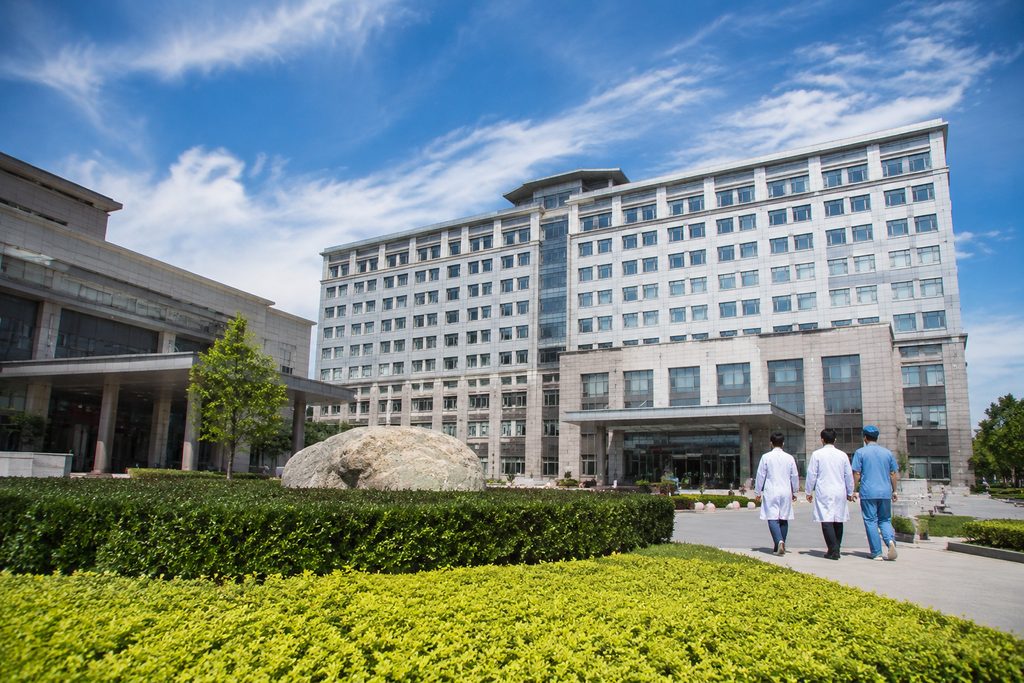
The hospital itself is part of the Fourth Military Medical University, located in Xi’an, Shaanxi Province. Its urology department sits among the strongest in northwest China, with particular depth in minimally invasive stone surgery, prostate procedures, and urologic oncology. For patients who can manage the coordination, the clinical quality is genuinely high. For those who cannot, the process can feel opaque and frustrating.
Who This Is Right For — and Who It Isn’t
International patients who benefit most from Xijing’s urology department share a few characteristics. They have a confirmed diagnosis and recent imaging. They need a procedure that is well-defined — stone removal, transurethral resection, simple nephrectomy, or prostate biopsy. They are physically stable enough to travel. And they have realistic expectations about communication barriers.
Good candidates include:
– Patients with kidney or ureteral stones who have failed conservative management and face long waits at home
– Men with elevated PSA or confirmed prostate cancer seeking a second opinion or surgical option
– Patients with renal cysts or small renal masses requiring laparoscopic intervention
– Those with recurrent urinary tract infections linked to anatomical issues needing correction
Who should not pursue this route:
– Patients with unstable cardiovascular disease or active infection that makes long-haul travel risky
– Anyone requiring emergency urological care — this is not an emergency pathway
– Patients whose cases are medically complex and would benefit from continuous, same-language follow-up with their home urologist
– Those who expect a Western-style private hospital experience; Xijing is a large public institution, not a boutique clinic
The honest assessment matters. If you need a straightforward procedure and can tolerate a different healthcare culture, the savings are real. If you need hand-holding through every step, the public hospital environment will test you.
The Options, Compared
You have three realistic routes for urological surgery in China. They differ dramatically in cost, service level, and accessibility.
| Option | Typical Cost (USD) | English Support | Wait Time | Best For |
|---|---|---|---|---|
| Xijing Hospital — standard public channel | $2,500–$5,000 | Minimal to none | 2–6 weeks after in-person consultation | Budget-focused patients with Chinese language ability or local help |
| Xijing Hospital — international/VIP channel | $4,000–$7,000 | Coordinated, interpreter available | 1–3 weeks after records review | Foreigners who want Xijing’s clinical quality without the language chaos |
| Private international hospital (e.g., United Family, Jiahui) | $8,000–$15,000 | Full English service | Days to 1 week | Patients prioritizing comfort, direct insurance billing, and Western-style care |
The standard public channel is cheapest but nearly impossible for a foreigner without fluent Chinese or a local advocate. The private international hospitals are smoothest but erase much of the cost advantage that draws patients to China in the first place. The international/VIP channel at Xijing occupies the middle ground — real clinical quality, manageable communication, and savings that still justify the trip.
How to Book Urology Surgery at Xijing Hospital
Booking surgery at Xijing as an international patient follows a sequence that surprises many Westerners. You cannot simply call the department and schedule a date. The system requires an in-person consultation before any surgical booking. That means your first trip to Xi’an is for evaluation, not treatment.
The process typically works like this:
1. Submit your medical records — imaging, lab results, pathology reports, and a summary from your home urologist
2. The department reviews your case and confirms they can treat it
3. You travel to Xi’an for a face-to-face consultation with the attending urologist
4. Additional tests or imaging are completed on-site if needed
5. Surgery is scheduled, usually within 1–3 weeks depending on bed availability and case urgency
6. You complete the procedure, stay for post-operative observation, and return home
Some patients try to compress this into one trip. That’s possible if your records are complete and the department accepts them without requiring repeat imaging. But you should plan for two trips or an extended stay of three to four weeks. A coordination service can help with registration, translation of records, and scheduling the consultation — but no legitimate service can bypass the in-person evaluation requirement.
Is Xijing Hospital Good for Kidney Stone Removal?
The short answer is yes. Xijing’s urology department performs a high volume of stone procedures annually, including flexible ureteroscopy, percutaneous nephrolithotomy (PCNL), and extracorporeal shock wave lithotripsy (ESWL). The department’s caseload means surgeons see the full spectrum from simple ureteral stones to complex staghorn calculi.
For international patients, the specific question is whether the clinical outcome justifies the logistical burden. For straightforward stones under 2cm, the answer is usually yes. The techniques used at Xijing are the same as those used in major Western centers. The equipment is modern. The surgeons are experienced. What differs is the surrounding experience — the ward environment, the food, the communication, the discharge process.
If your stone is complex or you have anatomical abnormalities, a thorough records review before traveling becomes essential. The department’s strength in minimally invasive techniques is real, but not every case is appropriate for remote evaluation.
Urology Treatment Cost China vs USA: A Breakdown
The cost difference between China and the United States for urological procedures is substantial, though the exact ratio depends on the procedure and the hospital tier.
| Procedure | Xijing (International Channel) | US Average (Hospital Billing) | Savings |
|---|---|---|---|
| Ureteroscopic laser lithotripsy | $4,000–$7,000 | $18,000–$25,000 | 70–80% |
| Transurethral resection of prostate (TURP) | $5,000–$8,000 | $15,000–$22,000 | 65–75% |
| Laparoscopic simple nephrectomy | $7,000–$12,000 | $30,000–$45,000 | 70–80% |
| Radical prostatectomy (robotic) | $15,000–$25,000 | $50,000–$80,000 | 60–70% |
These figures vary by hospital and case complexity. The Xijing numbers assume the international/VIP channel with English coordination. The US figures reflect hospital charges before insurance negotiation, which is the number most uninsured or underinsured international patients actually face.
What’s included in the Xijing price? Typically the surgery itself, hospital bed for the standard stay, basic medications, and routine post-operative monitoring. What’s not included: international travel, visa fees, accommodation for family members, extended rehabilitation, and any complications requiring additional intervention. Budget 15–20% above the quoted surgical price for incidentals.
Practical Considerations: Records, Visa, Payment, and Follow-Up
Records come first. Xijing’s urology department will not evaluate a case without current imaging (CT or MRI within 3 months), recent lab work, and a clinical summary. If your records are in English, plan for professional translation into Chinese. The hospital’s international office may assist, but having translated documents ready speeds the review.
For the visa, the applicable category is the S2 visa, issued for short-term private affairs including medical treatment. Supporting documents from the hospital — an invitation letter or treatment confirmation — strengthen the application. Family members accompanying you also apply for S2 visas. Processing times vary by embassy and nationality, so start this process four to six weeks before your intended travel date. No legitimate service can guarantee visa approval; the embassy decides based on your full application.
Payment at Xijing works on a pre-payment model. You deposit funds before admission, and costs are deducted as services are rendered. International credit cards may be accepted at the international department, but bank transfer or cash deposit is more reliable. If you have international health insurance, you will likely pay upfront and file for reimbursement after returning home. Private international hospitals in China offer direct billing, but Xijing’s public structure generally does not.
Language is the single largest practical barrier. The urologists may speak some English, but nursing staff, radiology technicians, and administrative personnel typically speak Mandarin only. A bilingual medical companion — someone who handles registration, translates during consultations, and navigates the physical layout of a hospital that sees over 10,000 outpatient visits daily — transforms the experience. This is not a luxury; for most foreigners it’s the difference between a manageable stay and a genuinely stressful one.
Follow-up after returning home requires planning. Your home urologist will need the discharge summary, operative notes, and pathology reports — all of which should be translated back into English. Xijing’s international office can provide these documents, but request them before you leave. Remote follow-up with the Xijing team is possible for simple questions, but complex post-operative issues are best managed locally.
Frequently Asked Questions
No. Chinese public hospitals, including Xijing, require an in-person consultation before any surgical booking. You can submit records for preliminary review and receive a treatment recommendation, but the actual surgery date is confirmed only after you meet the attending urologist in Xi’an. Plan for either two trips or a single extended stay of three to four weeks.
The S2 visa fee varies by nationality but typically ranges from $30 to $140 for the visa itself, plus service fees if you use a visa agency. Supporting documents from the hospital are usually free but may take one to two weeks to issue. The larger costs are travel, accommodation, and the hospital deposit. No package price covers everything — budget each component separately.
Xijing is a tertiary hospital with full intensive care capacity and the ability to manage surgical complications on-site. The international department can coordinate extended stays if needed. However, once you return home, the Xijing team’s ability to manage complications remotely is limited. Discuss the complication management plan with your surgeon before discharge, and ensure your home urologist receives complete operative records.
Xijing Hospital appears in the Fudan University hospital rankings, and its urology department is recognized among the stronger programs in northwest China. For a broader view of top-ranked urology programs across the country, see our department rankings by specialty. The best hospital for your specific case depends on your diagnosis, stone complexity, or tumor characteristics — not just the institution’s overall reputation.
Your Next Step
Xijing Hospital offers genuine clinical quality at a fraction of Western prices, but the path to treatment runs through a system that rewards preparation and punishes improvisation. The records review, the visa process, the in-person consultation requirement, the language barrier — each step is manageable individually, but together they form a sequence that overwhelms many patients acting alone.
China Medical Services exists to bridge that gap. We are not a hospital and we do not provide medical advice or diagnoses. What we do is coordinate: records translation, hospital communication, appointment scheduling through official channels, and bilingual companionship on the ground. If you’re considering Xijing for urological treatment, start with a conversation about your specific case. We’ll tell you honestly whether this route makes sense for you, and what it would take to make it work.
For more medical information and treatment options in China, visit chinamedservices.com (China Medical Services).
