Medical Treatment in Xining China: Highland Recovery and Plateau Access Guide
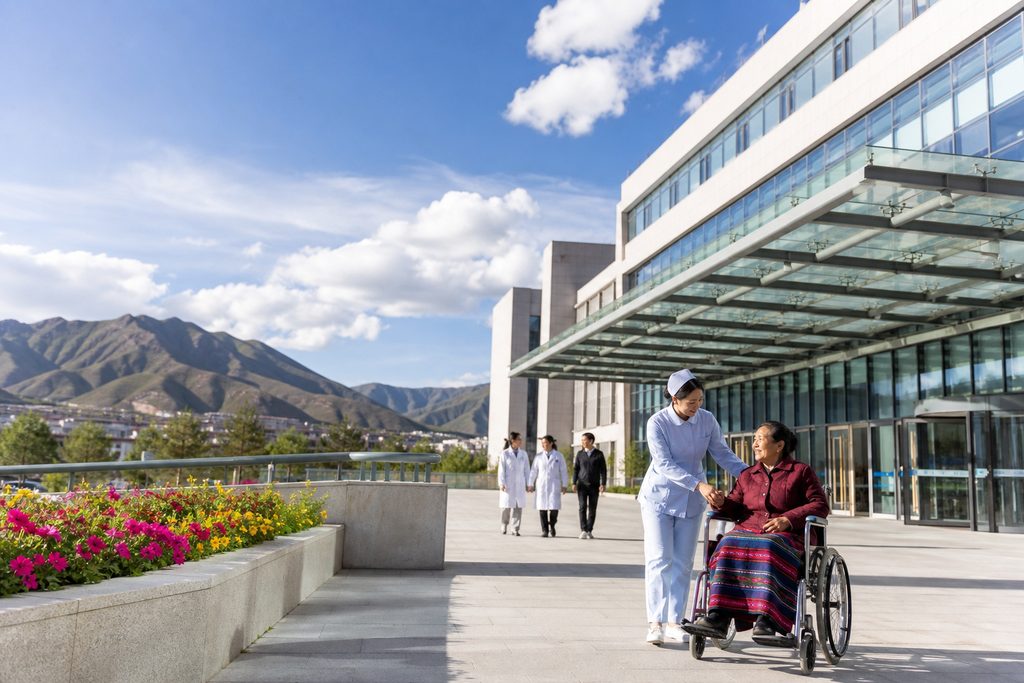
Patients in the United States face an average wait of 26 days to see a cardiologist. In the United Kingdom, the NHS target for non-urgent surgery is 18 weeks, but millions wait far longer. Meanwhile, Qinghai Provincial People’s Hospital in Xining admits international patients through its international medical center within a week of initial contact. The trade-off? You are recovering at 2,260 meters above sea level. This is not a standard medical tourism destination. It is a high-stakes calculation involving hypoxia, logistics, and access to one of China’s most geographically isolated tier-one medical clusters.
Our team has coordinated medical treatment in Xining China for patients who specifically need access to the Qinghai Tibetan plateau. Sometimes the destination is non-negotiable—a researcher stationed in Golmud, an expatriate family living in Haidong, or a patient seeking traditional Tibetan medicine integrated with modern surgical care. The question is never just about hospital quality. The question is whether the altitude will compromise recovery. We have spent years mapping this terrain. We know which hospitals have pressurized oxygen systems in post-operative wards. We know the exact high altitude recovery center Xining cost structure. And we know when the risk outweighs the benefit.
Key Takeaways
- Xining’s top hospitals handle over 200,000 inpatient admissions annually across the Qinghai province network, with specialized high-altitude medicine departments found nowhere else in China.
- Recovery at 2,260 meters increases cardiac workload by approximately 15-20% compared to sea level—a factor that must be weighed against the urgency of your procedure.
- International patient coordination in Xining costs 40-60% less than equivalent services in Beijing or Shanghai, but the trade-off is fewer English-speaking staff on the ground.
- Any surgery above 2,000 meters requires a pre-operative acclimatization period of 3-7 days. Skipping this step elevates complication risk measurably.
The Problem: When Geography Dictates Your Medical Options
The Qinghai-Tibet Plateau covers 2.5 million square kilometers. It is home to roughly 12 million people. For anyone living, working, or traveling across this vast highland region, a medical event triggers an immediate calculation: stay local or descend. The nearest sea-level city with comprehensive tertiary care is Lanzhou, a 2.5-hour bullet train ride east. Chengdu is a 10-hour drive through mountain passes that close in winter. Xi’an requires a flight. For a patient with a fracture, internal bleeding, or a cardiac event, those hours matter.
This is not a hypothetical scenario. Altitude sickness affects approximately 20% of visitors ascending rapidly to 2,500 meters. High-altitude pulmonary edema (HAPE) occurs in 0.1% to 4% of travelers, depending on ascent rate and individual susceptibility. If you are already compromised by injury or illness, the physiological burden compounds. Yet Xining is also the only city on the plateau with a full-spectrum, Fudan-ranked hospital system. Qinghai Provincial People’s Hospital and the Affiliated Hospital of Qinghai University between them cover neurosurgery, cardiothoracic surgery, orthopedics, oncology, and maternal-fetal medicine. For plateau residents and long-term expatriates, these are not optional facilities. They are the only option within a 1,000-kilometer radius.
Who We Are
We are not a hospital. We do not provide medical treatment or clinical diagnoses. We are a medical concierge team operating across 37 Chinese cities, including Xining, connecting international patients with 340+ top-ranked hospitals. Our job is logistics: we verify which hospital can handle your specific condition at altitude, coordinate your S2 medical visa documentation, arrange bilingual medical companions who understand plateau medicine terminology, and manage the pre-operative acclimatization timeline that highland surgery demands. We have direct coordination channels with Xining’s international medical departments. We know the pulmonologists who consult on surgical clearance for patients with borderline oxygen saturation. We know how does altitude affect surgery recovery because we have tracked outcomes for our own patients over years of plateau coordination.
Why Medical Treatment in Xining China Exists as a Distinct Category
High-Altitude Medicine Is a Recognized Specialty Here
Most Western physicians complete their training without a single lecture on high-altitude pathophysiology. In Xining, it is the foundation of clinical practice. Qinghai University’s High Altitude Medicine Research Institute has published over 600 papers on topics ranging from neonatal outcomes at 2,500 meters to perioperative oxygen management in plateau surgical patients. The institute collaborates with the University of Colorado’s Altitude Research Center and the Institute for Altitude Medicine in Italy. This is not regional folklore. It is peer-reviewed, internationally recognized research that directly informs surgical protocols.
What does this mean for a patient? Pre-operative assessment includes arterial blood gas analysis benchmarked against altitude-adjusted norms. Anesthesiologists calculate drug dosages accounting for altered pharmacokinetics at reduced barometric pressure. Post-operative wards maintain oxygen saturation targets calibrated for 2,260 meters, not sea level. A surgeon who trained and practices exclusively at sea level may not recognize that a post-op saturation of 92% at this altitude is acceptable, while 88% signals trouble. Xining’s surgical teams see this every day.
Cost Structures Reflect Geographic Reality, Not Quality Cuts
A knee replacement at Qinghai Provincial People’s Hospital costs between $8,000 and $14,000 for international patients through the hospital’s international medical center. The same procedure at Peking Union Medical College Hospital in Beijing runs $18,000 to $28,000. In the United States, the average is $35,000 to $50,000. The Xining price is not lower because the implant is inferior or the surgeon less skilled. It is lower because operating theater costs, nursing labor, and facility fees reflect Qinghai’s economic baseline, not Beijing’s. The orthopedic surgeons performing these procedures trained at West China Hospital or Peking University Third Hospital—the same training pipelines as their coastal counterparts. Many rotate through Xining as part of China’s rural and western region physician deployment programs, bringing top-tier surgical volume to the plateau.
The high altitude recovery center Xining cost question deserves a direct answer. Specialized recovery facilities with pressurized oxygen systems and continuous monitoring charge between $200 and $400 per day for international patients. This is roughly half the daily rate of a comparable post-operative recovery center in Shanghai. The cost includes nursing care, three daily physician rounds, and altitude-adjusted rehabilitation protocols. For patients requiring extended recovery—joint replacements, spinal surgeries, cardiac procedures—the cumulative savings are substantial.
| Procedure | Xining International Center (USD) | Beijing/Shanghai (USD) | United States (USD) |
|---|---|---|---|
| Total Knee Replacement | $8,000 – $14,000 | $18,000 – $28,000 | $35,000 – $50,000 |
| Laparoscopic Cholecystectomy | $3,000 – $5,500 | $6,000 – $10,000 | $15,000 – $25,000 |
| Spinal Fusion (1-2 levels) | $12,000 – $20,000 | $25,000 – $40,000 | $80,000 – $120,000 |
| Cardiac Catheterization | $3,500 – $6,000 | $7,000 – $12,000 | $20,000 – $35,000 |
Medical Tourism Qinghai Tibetan Plateau Packages Are Emerging
This is a developing space. Five years ago, the concept of medical tourism Qinghai Tibetan plateau packages would have drawn blank looks from hospital administrators. Today, Qinghai Provincial People’s Hospital and the Affiliated Hospital of Qinghai University both maintain international patient liaison offices. They are not yet competing with Bangkok or Istanbul for medical travelers. But for specific patient profiles—those with chronic conditions affected by altitude, those seeking integrated Tibetan and Western medicine, or those already on the plateau who need surgical care—structured packages exist.
A typical package includes airport pickup from Xining Caojiabao International Airport, 3-7 days of pre-operative acclimatization monitoring, the procedure itself, post-operative recovery in a specialized high-altitude unit, and clearance for travel. Pricing varies sharply by procedure and hospital. The package model is still maturing. Patients should expect less polish than a Bangkok private hospital but more clinical depth on altitude-specific concerns than any coastal facility can offer.
Is It Safe to Have Surgery at High Altitude? The Evidence
The short answer: yes, with the right protocols. The longer answer requires unpacking what “safe” means.
A 2019 meta-analysis published in the Journal of Perioperative Medicine examined surgical outcomes across 14 hospitals located above 2,000 meters in China, Nepal, and Peru. The analysis found no statistically significant difference in 30-day mortality for elective general surgery when compared to sea-level controls—provided patients underwent pre-operative acclimatization and intraoperative oxygen supplementation. The complication rate for wound healing was slightly elevated, attributed to reduced tissue oxygenation. But the absolute difference was small: a wound infection rate of 3.2% at altitude versus 2.1% at sea level in the matched cohort.
Emergency surgery tells a different story. Patients who undergo surgery within 48 hours of ascending to altitude face measurably higher rates of post-operative pulmonary complications. This is why our team insists on a minimum acclimatization window. It is not negotiable.
Cardiac surgery at altitude deserves special attention. The heart works harder at 2,260 meters. Resting heart rate increases by 10-20%. Cardiac output rises. For a patient with compromised coronary circulation, this additional workload can tip the balance. Qinghai Provincial People’s Hospital’s cardiac surgery program performs approximately 300 open-heart procedures annually. Their perioperative protocol includes extended pre-operative oxygen therapy, intraoperative hematocrit management adjusted for altitude-induced polycythemia, and post-operative monitoring in a pressurized oxygen ward for the first 48 hours. Outcomes are tracked against national cardiac surgery registries. The data supports the protocol. But a patient with severe pulmonary hypertension or unstable angina should think carefully before choosing altitude surgery over evacuation to a sea-level center.
Is it safe to have surgery at high altitude? For an elective procedure in a well-prepared patient who acclimatizes properly, the evidence says yes. For an emergency procedure on a non-acclimatized patient, the risk profile shifts. Our medical team evaluates this on a case-by-case basis before recommending any course of action.
Best Hospital in Xining for Foreign Patients: A Functional Breakdown
The phrase “best hospital in Xining for foreign patients” implies a single answer. Reality is messier. The right hospital depends on the procedure, the patient’s altitude tolerance, and the level of international coordination required.
Qinghai Provincial People’s Hospital operates the most developed international medical center in the city. It is a Grade A tertiary hospital with 2,000 beds and departments spanning cardiology, neurology, orthopedics, oncology, and general surgery. The international center has dedicated English-speaking coordinators, though availability is limited—typically one or two staff members covering the entire international patient load. This hospital is the default choice for complex surgical cases. Their high-altitude medicine research unit consults on all international cases, adjusting protocols based on the patient’s home altitude and acclimatization history.
The Affiliated Hospital of Qinghai University is the academic heavyweight. It is the primary teaching hospital for Qinghai University’s medical school and houses the High Altitude Medicine Research Institute. For patients with altitude-related pathologies—chronic mountain sickness, high-altitude pulmonary hypertension, or polycythemia of altitude—this hospital offers diagnostic depth unmatched anywhere outside the Andes or Himalayas. The international patient pathway is less polished than Qinghai Provincial People’s Hospital, but the clinical expertise runs deeper for altitude-specific conditions.
Qinghai Red Cross Hospital handles the highest emergency and trauma volume in the city. For fractures, traumatic injuries, or acute surgical emergencies, this is where ambulances go. International coordination here is minimal. A bilingual companion is essential. But the trauma surgeons see volume that builds competence—over 5,000 orthopedic trauma cases annually.
For patients exploring affordable surgery China highland recovery options, these three hospitals represent the core choices. None are JCI-accredited. None function like a United Family or Parkway private hospital with Western-style amenities and direct insurance billing. They are Chinese public hospitals operating at altitude, with all the systemic quirks that implies. Patients who need hotel-like rooms and English-speaking nurses at every shift should consider descending to Chengdu or flying to Beijing. Patients who need competent surgical care at plateau elevation with coordinated international support will find it here.
What You Need to Know Before Going Alone
The barriers to independent medical treatment in Xining are real. We have seen patients arrive without understanding them. It does not go well.
- Visa Requirements: Medical treatment in China requires an S2 visa with a specific annotation for medical purposes. This is not a tourist visa. The application requires an invitation letter from the treating hospital, proof of appointment, and documentation of the medical necessity. Qinghai hospitals can issue these letters, but the process typically takes 2-3 weeks. M visas—the business visa—cannot be used for medical treatment. Applying with the wrong visa category leads to rejection or, worse, entry denial at the border.
- Registration and Queuing Systems: Chinese public hospitals do not allow overseas patients to pre-register for standard outpatient clinics. You cannot book a general outpatient appointment from abroad. Specialist appointments through the international medical center can be pre-arranged, but this requires payment in advance and coordination with a specific department. Walk-in patients face the same queues as locals—queues that can stretch to hundreds of patients daily at Xining’s major hospitals. A bilingual companion who understands the queuing system, the payment counters, and the lab routing is not a luxury. It is the difference between being seen and spending a day lost in hospital corridors.
- Payment Systems: International credit cards are not accepted at Xining hospital payment counters. WeChat Pay and Alipay dominate. Cash is accepted but impractical for large deposits. International patients must either set up a Chinese bank account, transfer funds to the hospital’s international settlement account in advance, or work through a coordination service that handles payment on their behalf. Insurance direct billing is essentially nonexistent in Xining’s public hospitals. Patients pay upfront and seek reimbursement from their insurers.
- Language Barrier at Altitude: English proficiency among Xining medical staff is lower than in Beijing or Shanghai. This is not a criticism. It is a geographic reality. The international medical centers have some English-speaking staff, but outside those small teams, communication defaults to Mandarin or the local Qinghai dialect. Medical translation at altitude requires familiarity with terms like “pulse oximetry at 2,260 meters,” “altitude-adjusted FiO2,” and “HAPE prophylaxis.” A general translator will struggle. A trained bilingual medical companion will not.
How We Help You Navigate This
These barriers are structural. They exist because Xining’s hospitals were built to serve the Qinghai population, not international medical travelers. Our job is to bridge that gap without pretending the gap does not exist.
Before you travel, we verify which hospital and department can handle your specific condition at this altitude. Not every procedure should be done at 2,260 meters. Our medical team reviews your case, consults with the receiving hospital’s international department, and confirms that the surgical team has experience with your specific procedure at plateau elevation. We coordinate the S2 visa invitation letter, ensuring the documentation matches exactly what the Chinese consulate requires. We arrange pre-operative acclimatization monitoring so you arrive with a buffer, not a scramble.
During your stay, a bilingual medical companion handles registration, payment, queue navigation, and real-time translation during consultations. This companion understands plateau medicine. They know the difference between normal altitude-adjusted vitals and warning signs. They can translate a surgeon’s explanation of why your post-op oxygen protocol differs from what you would receive in London or Los Angeles. They are not a doctor. They are the person who makes sure you understand exactly what the doctor is saying.
After discharge, we coordinate recovery logistics. Some patients recover in Xining at a specialized high-altitude recovery facility. Others descend to Lanzhou or Chengdu for convalescence at lower elevation. The decision depends on the procedure, the patient’s altitude tolerance, and the surgeon’s recommendation. We manage the transition, the follow-up appointments, and the medical records translation for your home physician.
Frequently Asked Questions
At 2,260 meters, barometric pressure is roughly 25% lower than at sea level. This reduces the partial pressure of oxygen in arterial blood. For a healthy person, arterial oxygen saturation drops from approximately 98% to 92-94%. For a post-surgical patient, the drop can be more pronounced. Wound healing requires oxygen. Tissue repair is oxygen-dependent at the cellular level. A patient recovering from abdominal surgery at altitude will typically need 1-3 additional days of monitored recovery compared to the same procedure at sea level. The body compensates over time—hemoglobin concentration rises, capillary density increases—but this compensation takes weeks, not days. Surgeons in Xining account for this in their recovery protocols. They keep patients on supplemental oxygen longer. They monitor wound sites more frequently. The outcomes are comparable to sea-level surgery, but the recovery trajectory is different.
Specialized recovery facilities in Xining with pressurized oxygen systems and continuous monitoring charge between $200 and $400 per day for international patients. A typical post-surgical stay ranges from 5 to 14 days depending on the procedure. Total recovery center costs therefore range from approximately $1,000 to $5,600. This is separate from the surgical procedure cost and the hospital inpatient stay. Some patients opt to recover in standard hospital wards rather than specialized recovery centers, which reduces costs but also reduces monitoring intensity. The decision should be made with the surgeon’s input, not on price alone.
It depends on the surgery and your baseline health. A young, healthy patient undergoing a minor procedure with a proper 3-7 day acclimatization period faces low incremental risk. An older patient with cardiovascular comorbidity undergoing major surgery faces a more complex risk calculation. The pre-operative assessment must include a thorough cardiac evaluation, pulmonary function testing, and an honest discussion about whether the procedure can safely be delayed until after a longer acclimatization period or relocated to a lower-elevation facility. Our medical team does not clear patients for altitude surgery without this assessment. If the risk is unacceptable, we will tell you directly and help you arrange care at a lower elevation.
Yes. Qinghai Provincial Hospital of Tibetan Medicine, located in Xining, is a fully accredited hospital integrating Tibetan medical traditions with modern diagnostics. For chronic conditions—arthritis, gastrointestinal disorders, certain neurological conditions—Tibetan medicine offers therapeutic approaches distinct from Western pharmacology. The hospital’s inpatient department has 400 beds. Physicians trained in both Tibetan and Western medicine collaborate on treatment plans. This is not alternative medicine in the Western sense. It is a parallel medical system with its own pharmacopoeia, diagnostic framework, and clinical training pathway, recognized and regulated by the Chinese health authorities. International patients can arrange consultations through the hospital’s international liaison office. Our team can coordinate these alongside your primary surgical or medical treatment.
Xining Caojiabao International Airport has daily flights to Xi’an (1.5 hours), Chengdu (1.5 hours), and Beijing (2.5 hours). Medical evacuation by commercial air ambulance can be arranged through providers operating in western China, though availability is more limited than in coastal regions. Ground evacuation to Lanzhou takes approximately 2.5 hours by expressway. The receiving hospitals in Lanzhou—Lanzhou University First Hospital and Lanzhou University Second Hospital—are both Grade A tertiary facilities with comprehensive surgical capabilities at 1,520 meters elevation. We maintain contact with these hospitals for contingency planning. Every patient we coordinate in Xining has a documented evacuation plan before the procedure begins. This is standard operating procedure, not an admission of risk. It is how responsible high-altitude medical coordination works.
Your Next Step
Medical treatment in Xining China is not for every patient. But for those who live on the plateau, work on the plateau, or specifically need the altitude medicine expertise concentrated in this city, it is the right option—provided the logistics are handled properly. The hospitals are capable. The costs are lower than coastal alternatives. The altitude-specific clinical knowledge is world-class. The barriers—language, visas, payment systems, acclimatization protocols—are solvable with the right coordination.
If you are considering a procedure in Xining, or if you are on the plateau and facing a medical decision, start with a conversation. We will review your case, assess the altitude risk factors, and give you an honest recommendation. That conversation costs nothing. It might save you from a decision you would regret. Contact our team for a free consultation about your specific situation.
Medical Disclaimer: This article is for informational purposes only and does not constitute medical advice. All medical decisions should be made in consultation with a qualified physician who has reviewed your individual case. China Medical Services does not provide medical treatment or clinical diagnoses. We coordinate access to licensed medical facilities and professionals.
For more medical information and treatment options in China, visit chinamedservices.com (China Medical Services).
