Thyroid Nodule: When Does It Need Surgery? Cost & China Options
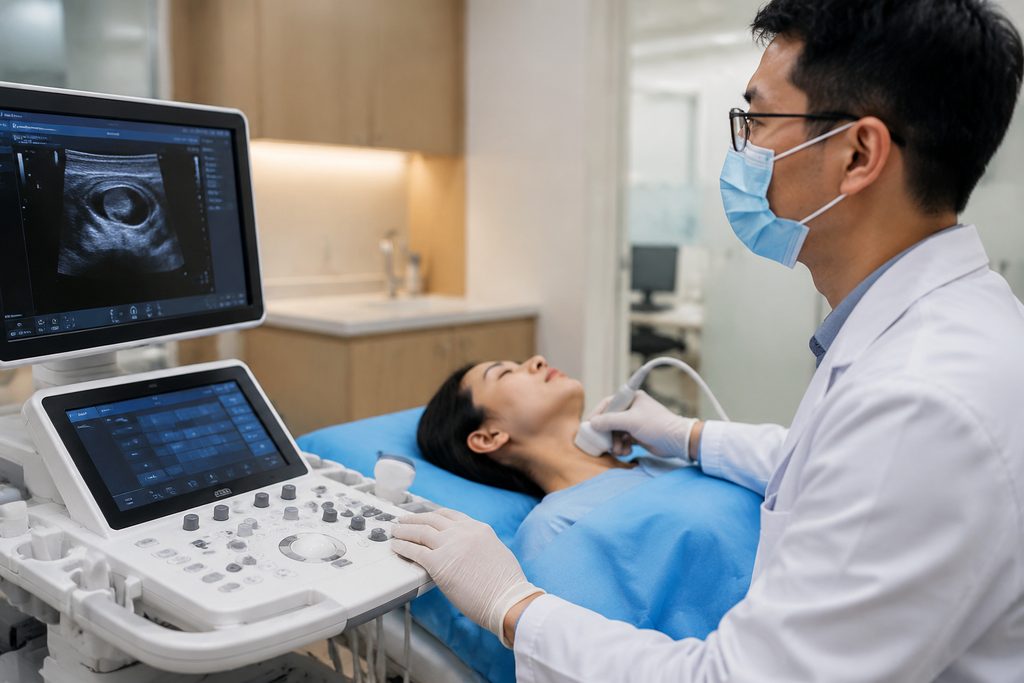
While an American patient with a suspicious thyroid nodule might wait 4 to 6 weeks for a surgical consult and face a thyroidectomy bill exceeding $25,000, surgeons at Shanghai’s high-volume endocrine centers routinely perform over 1,200 thyroidectomies annually — with total hospital charges often landing between $6,000 and $12,000. The gap is not marginal. It is structural. And for a patient holding an ultrasound report that says “TI-RADS 4” or “Bethesda III,” the question stops being abstract. You need to know whether surgery is actually indicated, what it should cost, and where you can get it done safely. This article answers those questions directly, including the real thyroid nodule surgery cost China figures and the decision framework that determines if you even need an operation.
How This Actually Works, Step by Step
You have a thyroid nodule. A radiologist flagged it. Now what? The sequence from “incidental finding” to “post-op recovery” follows a predictable path, and understanding it removes most of the anxiety.
First, you need a complete picture of what you are dealing with. That means a thyroid ultrasound with TI-RADS scoring, and if the nodule is larger than 1 to 1.5 cm or looks suspicious, a fine-needle aspiration (FNA) biopsy. You send us those reports — the ultrasound images, the cytology report, your TSH and calcitonin levels if drawn. Our team translates them into medical English and forwards them to a thyroid surgeon or endocrinologist at a top-ranked Chinese hospital department for review.
What comes back is a written second opinion. It tells you whether the nodule meets surgical criteria under American Thyroid Association (ATA) guidelines, what the surgeon would recommend, and whether observation is still a reasonable option. If surgery is indicated, you then decide: operate at home, or travel. If you choose China, we coordinate a video consultation with the surgical team, then handle appointment scheduling, visa documentation support, and on-the-ground logistics.
The step people forget is document preparation. Chinese hospitals require translated, notarized medical records for international patients. That alone can take 5 to 7 business days. Plan for it.
When Does a Thyroid Nodule Need Surgery?
The honest answer: most nodules do not. Up to 68% of adults have thyroid nodules detectable by high-resolution ultrasound, yet only 5 to 15% of those nodules are malignant. Surgery is not the default. It is the endpoint of a specific decision tree.
Surgery is generally recommended when any of the following are present:
- FNA shows Bethesda V or VI cytology — suspicious for or diagnostic of papillary, follicular, or medullary thyroid carcinoma.
- Bethesda III or IV with molecular testing positive for BRAF V600E, RAS, or TERT promoter mutations.
- Compressive symptoms — difficulty swallowing, voice changes from recurrent laryngeal nerve involvement, positional breathing trouble.
- Nodule growth despite benign biopsy — more than 20% increase in two dimensions or 50% volume increase over 2 years.
- Toxic adenoma — a hyperfunctioning nodule causing clinical hyperthyroidism that does not respond to medication or radioiodine.
- Cosmetic deformity — a large goiter visible at conversational distance.
But here is the nuance Western patients often miss. A 1.2 cm papillary microcarcinoma may be managed with active surveillance in Japan and Korea, while the same nodule in the United States might get a lobectomy. Chinese thyroid surgeons, particularly at high-volume centers in Shanghai, increasingly follow the Asian active-surveillance paradigm for low-risk microcarcinomas. That means a second opinion can genuinely change your treatment path — not just your bill.
A Realistic Timeline
If you are considering surgery in China, here is what the calendar actually looks like. Ranges, not best-case promises.
| Stage | What Happens | Duration |
|---|---|---|
| Day 1–7 | You gather ultrasound, FNA, bloodwork; send to us for translation | 1 week |
| Day 8–14 | Written second opinion from Chinese thyroid specialist | 1 week |
| Week 3–4 | Video consultation with surgical team; surgical plan confirmed | 1–2 weeks |
| Week 5–7 | S2 visa application with hospital invitation letter; flight booking | 2–3 weeks |
| Week 8 | Arrival in China; pre-op labs, ultrasound re-check, anesthesia clearance | 2–3 days |
| Week 8–9 | Surgery (lobectomy or total thyroidectomy); 3–5 day hospital stay | 1 week |
| Week 10 | Follow-up, suture removal, levothyroxine titration if total thyroidectomy | 3–5 days |
| Month 3 | Home-country ultrasound and thyroglobulin check; remote follow-up with Chinese team | Ongoing |
Total door-to-door: roughly 8 to 10 weeks from first contact to being back home. The visa step is the one nobody budgets enough time for. Chinese consulates typically process S2 visa applications in 4 to 10 business days, but appointment availability at your local consulate can add two weeks. Start early.
What Can Go Wrong — and What Happens Then
Thyroid surgery is safe. But it is not risk-free, and you deserve the unvarnished list.
Recurrent laryngeal nerve injury. This nerve controls your vocal cords. Injury causes hoarseness — temporary in 5 to 8% of cases, permanent in 1 to 2%. High-volume surgeons using intraoperative nerve monitoring (IONM) have lower rates. Ask your surgeon how many thyroidectomies they perform annually. The answer should be above 100. At major Shanghai centers, the number is often above 300.
Hypoparathyroidism. The parathyroid glands sit behind the thyroid and regulate calcium. If they are bruised or removed during a total thyroidectomy, you get low calcium — tingling, cramps, in severe cases cardiac arrhythmia. Transient hypoparathyroidism occurs in up to 20% of total thyroidectomies; permanent in 1 to 3%. Treatment is calcium and calcitriol. If it happens, your Chinese surgical team will manage it during your hospital stay and give you a clear medication plan for home.
Hematoma. Post-operative bleeding in the neck is rare — under 1% — but it is a surgical emergency because it can compress the airway. Chinese hospitals keep thyroidectomy patients for 3 to 5 days specifically to monitor for this. That is longer than the 23-hour observation common in American outpatient thyroid surgery. Longer monitoring is not inefficiency; it is a safety margin.
Cancer recurrence. For papillary thyroid carcinoma, 10-year recurrence after total thyroidectomy plus radioiodine is under 5% at experienced centers. If recurrence happens, you return for re-operation or targeted therapy. Your Chinese team will have your complete operative and pathology record — request a copy before you leave.
Is Thyroid Nodule Surgery Safe in China?
The question behind the question is: can I trust a hospital 7,000 miles from home? The data says yes, with caveats.
Chinese hospitals in the Fudan Top 100 perform thyroidectomies at volumes that dwarf most Western centers. A single high-volume endocrine surgery department in Shanghai may complete 1,200 to 1,500 thyroid operations per year. Compare that to the average American general surgeon, who performs fewer than 25 thyroidectomies annually. Volume correlates with lower complication rates for recurrent laryngeal nerve injury and hypoparathyroidism. That is not marketing language. It is the published finding of multiple surgical outcome studies.
But safety is not just about the surgeon. It is about the system around you. Chinese public hospitals are high-throughput environments. A top-tier hospital may see 10,000 outpatient visits per day. Without Chinese language ability, you will struggle to navigate registration, payment, lab draws, and discharge paperwork. That is where a bilingual medical companion becomes essential — not a luxury. Our team handles the logistics so you can focus on recovery.
For patients who want Western-style care with English-speaking staff and direct insurance billing, private international hospitals in Shanghai and Beijing offer thyroid surgery too. The price is higher — often 1.5 to 2 times the public hospital rate — but still below American cash prices.
Practical Considerations: Records, Visa, Payment, Follow-Up
What actually matters when you are planning this from abroad:
Records. You need a recent ultrasound (within 3 months), FNA cytology report, TSH, free T4, calcitonin, and calcium levels. If you had prior neck surgery, include the operative note. All documents must be translated into Chinese by a certified translator. We handle this.
Visa. You will apply for an S2 visa, which is the short-stay category used for medical treatment and private affairs in China. Your accompanying family member applies for the same S2 category. The hospital’s international department will issue an invitation letter and treatment confirmation to support your application. Processing times vary by consulate. Do not book flights until the visa is in your passport.
Payment. Chinese public hospitals require pre-payment before admission. You deposit an estimated amount — for thyroid surgery, typically $6,000 to $12,000 depending on hospital tier and procedure extent — and the hospital deducts charges daily. Any surplus is refunded at discharge. International insurance is usually reimbursement-based, meaning you pay upfront and claim later. Private international hospitals may bill your insurer directly.
Follow-up at home. If you had a total thyroidectomy, you will need levothyroxine for life, with TSH checks every 6 to 12 months. If you had a lobectomy, you need annual ultrasound of the remaining lobe. Your Chinese surgeon will provide a detailed discharge summary in English. Send it to your home endocrinologist.
Frequently Asked Questions
The thyroid nodule surgery cost China patients typically pay ranges from $6,000 to $12,000 for a total thyroidectomy at a top public hospital, including hospital stay, operating room, anesthesia, and pathology. A lobectomy runs $4,000 to $8,000. Private international hospitals charge 1.5 to 2 times that. The same surgery in the United States averages $25,000 to $40,000 before insurance. Final pricing varies by hospital and case complexity.
Shanghai has several Fudan-ranked hospitals with dedicated thyroid and endocrine surgery departments. The strongest programs are at Zhongshan Hospital Fudan University, Ruijin Hospital, and Shanghai Ninth People’s Hospital. Ruijin is particularly known for endocrine disease volume. For a full comparison of Shanghai hospital options, review our city guide. The right choice depends on your cytology, nodule size, and whether you need a total or partial thyroidectomy.
You cannot book a guaranteed surgery slot remotely at a Chinese public hospital. The standard rule is that surgery requires an in-person outpatient consultation first. However, our appointment coordination service can arrange your initial consultation, pre-operative testing, and admission through the hospital’s international or VIP channel — which does allow you to lock in a treatment timeline before you travel. We never promise a specific surgeon or date; we promise to coordinate honestly and refund the coordination fee if we cannot secure the appointment.
No. The price difference reflects labor costs and hospital economics, not quality. Chinese top-tier thyroid surgeons operate at volumes that exceed most Western surgeons by a factor of 10 or more. Complication rates at high-volume centers are comparable to or better than Western benchmarks. What you sacrifice is not clinical quality but convenience: language barriers, unfamiliar processes, and distance from your home support network. A bilingual companion mitigates the first two.
Your Next Step
A thyroid nodule diagnosis is unsettling, but it is rarely an emergency. The right sequence is: confirm the cytology, get a second opinion, then decide where to operate — if you need to operate at all. We help international patients navigate Chinese healthcare with honest information, document translation, hospital coordination, and on-the-ground support. We do not perform surgery, and we do not promise outcomes. We connect you with the right specialists and make the logistics manageable.
If you have a thyroid ultrasound or FNA report and want to know whether surgery is indicated — and what it would cost in China — send us your records. We will review them and tell you straight what your options are. Start with a free consultation at China Medical Services.
For more medical information and treatment options in China, visit chinamedservices.com (China Medical Services).
