Yunnan Provincial TCM Hospital: How We Help International Patients
Key Takeaways
- Traditional Chinese medicine hospital China cost is usually a fraction of Western pricing — a first consultation often runs $15–$60, and a session of acupuncture $20–$70 depending on the hospital and whether you use the standard or international department.
- Yunnan Provincial TCM Hospital sits in Kunming, a city of about 8.5 million people and the gateway to Yunnan’s famous medicinal plant trade — which matters if you are researching the best TCM hospital in Kunming for foreigners.
- The hard part is not the medicine. It is the queue. Most public TCM hospitals do not let you book a standard outpatient slot from overseas, and almost nobody at the registration window speaks English.
- You do not need us to enjoy TCM in China. You need us when you want a specific department, a written record in English, or a treatment plan that continues after you fly home.
The Problem: You Want TCM Care, But the System Was Not Built for You
Here is the number that stops most people. A 2023 survey by the American Academy of Medical Acupuncture found that a single acupuncture session in the United States averages around $120 to $200 — and most American insurance plans still refuse to cover it. In the UK, private acupuncture runs £40 to £90 per session. Multiply that by the 10 to 15 sessions a chronic pain protocol typically requires, and you are looking at $1,500 to $3,000 out of pocket before you have felt any real change.
That math is exactly why searches for a traditional chinese medicine hospital China cost comparison have climbed steadily over the past few years. Patients with chronic pain, insomnia, post-stroke rehabilitation needs, digestive disorders, and fertility concerns are doing the arithmetic and realizing that a two-week treatment course in China — flights included — can cost less than a month of sessions at home.
Then they hit the wall. Chinese public hospitals are enormous. A major provincial TCM hospital may see 8,000 to 12,000 outpatient visits in a single day. Registration opens in the morning and closes when the quota runs out. There is no English booking portal. There is no one at the front desk who can explain what a “tuina” prescription actually involves. And the rules are firm: for most public hospitals, you cannot lock in a specialist appointment from abroad, and any treatment plan begins only after an in-person consultation.
So the question is not whether TCM in China is affordable. It usually is. The question is whether you can actually get to the right door.
Why Yunnan Provincial TCM Hospital Deserves a Serious Look
Yunnan is not the first place most Western patients think of when they picture Chinese medicine. Beijing and Shanghai dominate that mental image. But Yunnan has a claim the coastal giants cannot match: it is China’s most biodiverse province, home to more than 6,000 known medicinal plant species and the historic trading routes that supplied traditional pharmacies across Southeast Asia for centuries.
A Regional Referral Center, Not a Neighborhood Clinic
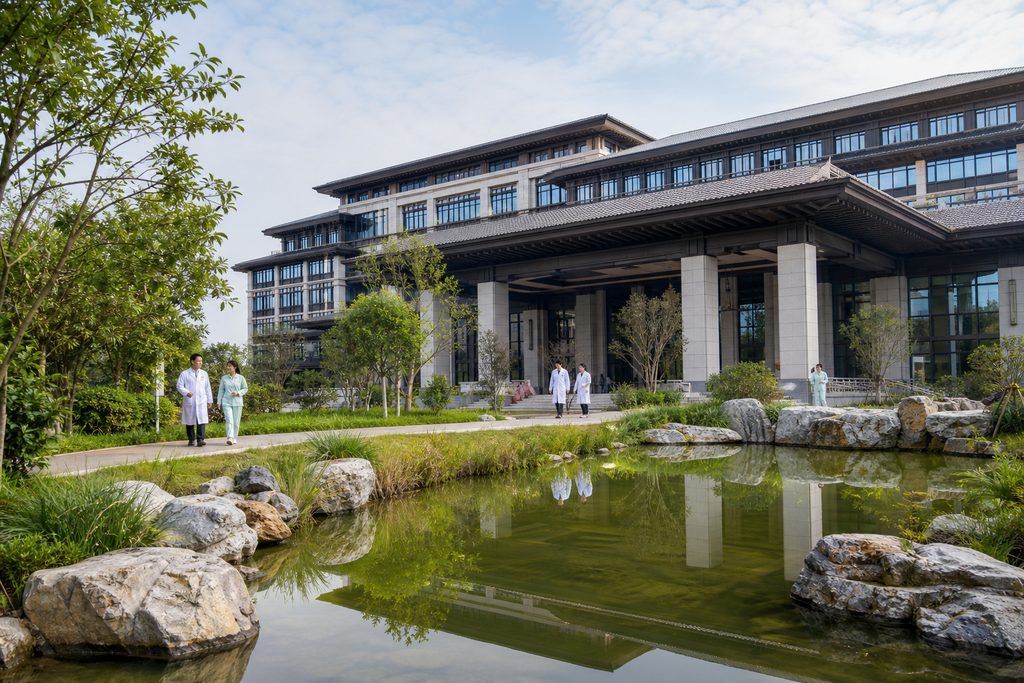
Yunnan Provincial TCM Hospital is a tertiary-level institution — the highest tier in China’s hospital classification system — and functions as a regional referral center for the province. Its departments cover the standard TCM specialties you would expect: acupuncture, tuina (therapeutic massage), herbal internal medicine, rehabilitation, dermatology, and gynecology. For international patients, the practical significance is that a tertiary TCM hospital has the diagnostic depth to handle complex or long-standing conditions, not just maintenance care.
Kunming’s Climate Is Part of the Treatment
This sounds like marketing. It is not. Kunming sits at roughly 1,900 meters and enjoys what Chinese people call the “Spring City” climate — mild year-round temperatures, low humidity, and comparatively clean air. For patients doing respiratory therapy, post-illness recovery, or simply trying to avoid the brutal summer heat of Shanghai and Guangzhou during a two-week treatment course, the setting genuinely matters.
Cost Structure That Reflects Provincial, Not Metropolitan, Pricing
Kunming is not Beijing. Provincial pricing is lower across the board — consultations, herbal prescriptions, and inpatient rehabilitation beds. A patient who would pay international-department rates in Shanghai can often access comparable expertise in Kunming at meaningfully lower cost, then spend the savings on a longer treatment course.
What TCM Care in China Actually Costs
Prices vary by hospital, department, and case complexity, and the figures below are reference ranges for planning — not quotes. Standard public-channel pricing is lower; international or VIP department pricing typically runs 1.5 to 2 times higher and includes English-language service.
| Service | Typical Range in China | Comparison Benchmark |
|---|---|---|
| Initial TCM consultation | $15–$60 | $150–$400 (US integrative clinic) |
| Acupuncture, single session | $20–$70 | $120–$200 (US average) |
| Tuina / therapeutic massage | $25–$80 | $90–$180 (US) |
| Custom herbal prescription, 2 weeks | $40–$150 | $80–$300 (US/UK) |
| Inpatient rehabilitation bed, per day | $60–$200 | $800–$2,500 (US) |
| Full diagnostic workup (labs, imaging) | $150–$600 | $1,000–$5,000 (US) |
Two things drive the spread. First, whether you are seen through the standard public channel or the hospital’s international department. Second, how much diagnostic imaging and laboratory work your case requires. A patient with a clear, long-standing musculoskeletal issue may need almost none. A patient with unexplained fatigue needs a full workup before anyone should touch a needle.
Is TCM Treatment Safe in China for Foreigners?
This is the question that matters most, and it deserves a straight answer rather than reassurance.
China regulates acupuncture and TCM practice tightly. Practitioners at tertiary hospitals hold licensed physician credentials and complete standardized medical training that includes Western diagnostics. Acupuncture needles at Chinese public hospitals are single-use and sterile — this is a national regulatory requirement, not a hospital preference. Infection risk from needling at a licensed Chinese hospital is comparable to any developed country.
The real risks are elsewhere, and they are worth naming.
- Herbal-drug interactions. Some Chinese herbs interact with warfarin, immunosuppressants, and thyroid medication. If you take prescription drugs, you must disclose them — in writing, with the drug names in English and the generic names, not just brand names.
- Unregulated private clinics. The gap between a tertiary hospital and a small private “TCM studio” targeting tourists is enormous. Heavy-metal contamination in unregulated herbal products has been documented in multiple countries, including the United States. Buy your herbs from a hospital pharmacy, not a market stall.
- Delayed diagnosis. TCM is excellent at symptom management and rehabilitation. It is not a substitute for cancer screening or cardiac evaluation. If your symptoms are undiagnosed, get a Western diagnostic workup first — a good Chinese TCM physician will tell you the same thing.
So yes, TCM treatment in China is generally safe for foreigners when it happens inside a licensed tertiary hospital with proper disclosure of your medications and history. The variable is not the country. It is the setting.
How to Book a TCM Consultation in China as a Foreign Patient
Here is the honest sequence, step by step.
Step 1 — Get your records translated. Recent lab work, imaging reports, medication lists, and a short summary of your chief complaint. Chinese physicians read English reasonably well in major hospitals, but a translated summary speeds everything up and reduces the chance of a misunderstanding.
Step 2 — Decide on the channel. Standard public outpatient registration is cheapest but requires you to be physically present, often from early morning, and offers no English support. The international or VIP department costs more but provides English-speaking staff, scheduled appointments, and a written record you can take home.
Step 3 — Understand the consultation itself. A first TCM visit in China typically runs 20 to 40 minutes and includes pulse diagnosis, tongue examination, and a detailed history. You will usually leave with a herbal prescription, a recommendation for acupuncture or tuina frequency, and a follow-up date.
Step 4 — Plan the treatment block. Chronic conditions generally need 10 to 20 sessions over two to four weeks. Do not book a three-day trip and expect a transformation. This is the single most common mistake international patients make.
Step 5 — Arrange the visa. For medical treatment in China, the applicable short-stay category is the S2 visa, which covers medical treatment and private affairs; stays beyond 180 days fall under S1. Accompanying family members apply under S2 as well. Requirements are set by the relevant Chinese embassy or consulate and change periodically — confirm current documentation with them before you apply. Note that the M visa is for commercial and trade activity and is not the correct category for medical travel.
Matching the Right TCM Hospital to Your Condition
Yunnan Provincial TCM Hospital is a strong option for patients who want a tertiary provincial hospital with lower cost of living, a mild climate, and access to Yunnan’s herb supply. It is not automatically the right choice for everyone.
If your condition is complex and you want the deepest possible specialty bench, the national referral centers in Beijing and Shanghai carry more sub-specialization. If you are combining TCM with a Western diagnostic workup, a general tertiary hospital with an integrated TCM department may serve you better than a dedicated TCM institution. And if your priority is English-language comfort and hotel-like facilities, a private international hospital will cost more but remove most friction.
Use the specialty rankings rather than brand names. Our department-by-department hospital rankings list the top institutions by specialty, and the TCM hospital directory covers dedicated Chinese medicine institutions across the country. For a broader view of what is available city by city, the top-ranked hospital database groups institutions by location and tier.
One more filter that saves people real money: ask whether the hospital has a dedicated international department before you build a plan around it. Not every excellent TCM hospital does. Without one, you are navigating a system designed for 10,000 daily local patients, and the language barrier becomes the binding constraint on your care.
Frequently Asked Questions
A single acupuncture session at a Chinese public hospital typically runs $20 to $70, versus $120 to $200 in the United States. International departments charge more, usually at the upper end of that range or slightly above. A 15-session course in China often costs less than four sessions at home.
For standard public outpatient care, generally no — registration happens on the day, in person. International and VIP departments at many tertiary hospitals do accept advance scheduling, sometimes with a remote pre-consultation. Rules differ by hospital, so confirm the specific institution’s policy before booking flights.
It can be, provided you disclose every medication in writing and the prescribing physician reviews potential herb-drug interactions. This is not optional. Herbs such as danshen and ginkgo can amplify blood thinners, and the interaction risk is real. Bring a translated medication list and insist it be reviewed.
Tertiary TCM hospitals have Western diagnostic capabilities on site — laboratory testing, imaging, and emergency services. For serious acute events, major cities have general hospitals with international departments. Travel insurance that includes medical evacuation coverage is strongly recommended for any treatment trip to China.
Your Next Step
Traditional Chinese medicine in China is affordable, well-regulated at the tertiary level, and genuinely effective for the right conditions — chronic pain, rehabilitation, sleep disorders, and long-standing digestive complaints among them. What it is not is self-organizing. The queue, the language, and the registration rules are the real barriers, not the medicine.
We are China Medical Services, a coordination team that connects international patients with Chinese hospitals. We are not a hospital and we do not diagnose or prescribe. What we do is translate your records, help you identify the right department, coordinate appointments through official hospital channels, and provide bilingual support on the ground if you want it. If you would like to talk through whether Yunnan, Kunming, or another city fits your situation, you can start with a free consultation — no obligation, and no pressure to book anything.
This article is for general information only and is not medical advice. Treatment decisions should be made with a qualified physician who has reviewed your individual history. Costs cited are reference ranges and vary by hospital, department, and case complexity.
For more medical information and treatment options in China, visit chinamedservices.com (China Medical Services).
