Second Affiliated Hospital Zhejiang Oncology: International Patient Guide
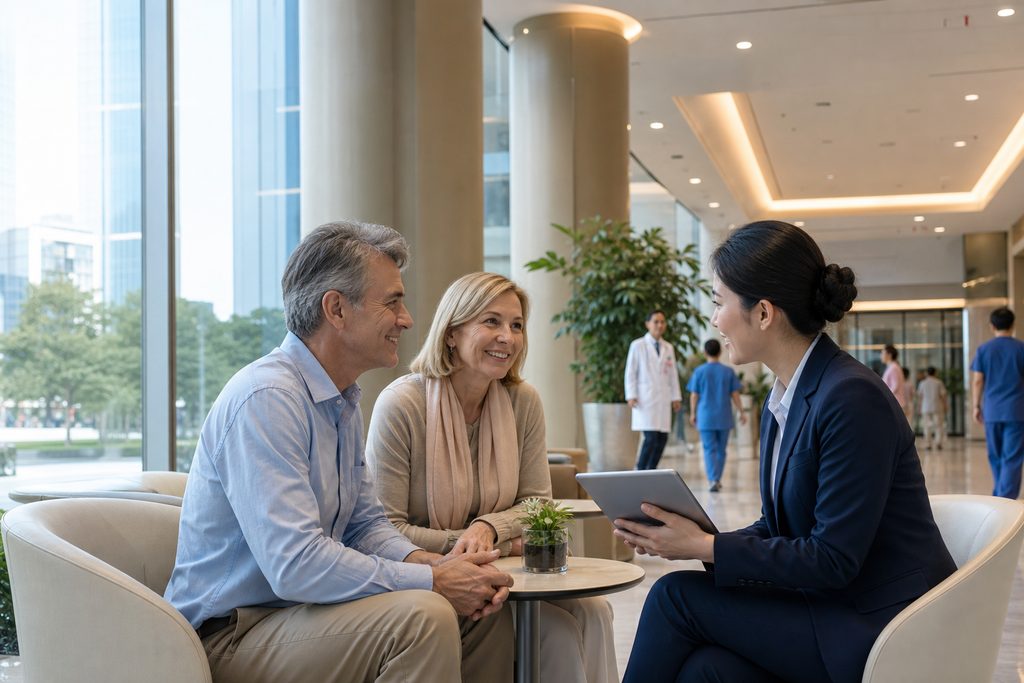
Oncology at Second Affiliated Hospital Zhejiang University: The Short Answer
The Second Affiliated Hospital of Zhejiang University School of Medicine (SAHZU) is one of China’s most substantial cancer treatment centers, handling over 4.2 million outpatient visits annually across its Jiefang Road and Binjiang campuses. It holds a position in Fudan University’s China Hospital Specialty Reputation Rankings for oncology, placing it among the country’s strongest programs. For international patients, the hospital operates a dedicated International Medical Center with English-speaking coordinators, and the oncology treatment cost China offers typically runs 60-80% below comparable care in the United States or Western Europe. But getting treated there is not as simple as booking a flight and walking in.
The hospital’s public outpatient clinics operate on a same-day registration system. You cannot reserve a specific oncologist from overseas through the standard channel. What you can do is arrange care through the International Medical Center, which offers appointment coordination and VIP outpatient services at roughly 1.5 to 2 times standard pricing. That premium still lands far below Western costs.
Who This Is Right For — and Who It Isn’t
SAHZU oncology makes sense for a specific profile of patient. Not everyone. Here is the honest breakdown.
Typically a good candidate:
- You have a confirmed or suspected cancer diagnosis and want a second opinion from a high-volume Chinese oncology team before committing to a treatment plan.
- You need surgery, chemotherapy, radiotherapy, or targeted therapy and have already received a diagnosis — SAHZU’s oncology department performs over 30,000 cancer-related procedures annually.
- You are comfortable traveling internationally and can commit 2-6 weeks for evaluation, treatment initiation, and initial recovery.
- You have existing medical records — pathology slides, imaging (CT/MRI/PET), blood work — that can be translated and reviewed remotely first.
- Your cancer type falls within SAHZU’s strongest areas: gastrointestinal, hepatobiliary, breast, lung, and gynecologic oncology.
Who should not pursue this:
- Patients in active medical crisis — unstable vitals, severe pain requiring immediate hospitalization, or rapidly progressing disease where a long flight poses real risk.
- Those without a confirmed diagnosis. Chinese oncology departments generally require tissue diagnosis before initiating treatment. Coming to China to “figure out what’s wrong” is better handled at home first.
- Patients seeking experimental therapies not yet approved anywhere. SAHZU does run clinical trials, but enrollment criteria are strict and not designed for medical tourism.
- Anyone expecting Western-style private hospital amenities. SAHZU is a public hospital. Care is excellent but the environment is high-volume and fast-paced.
Being honest about who should stay home is part of responsible guidance. If you are in category two or three, the better first step is a remote written second opinion, which we will cover later.
The Options, Compared
You are not locked into one path. Here is how the realistic choices stack up for an international patient considering oncology treatment in China.
| Path | Typical Cost | Time to First Appointment | English Support | Best For |
|---|---|---|---|---|
| Public outpatient at SAHZU (self-arranged) | $15-40 per consultation | Same-day queue, 2-6 hours waiting | Minimal | Mandarin speakers already in China |
| SAHZU International Medical Center | $150-400 per specialist visit | 3-10 days with coordination | Full | International patients wanting direct access |
| Private international hospital (e.g., United Family, Jiahui) | $300-800 per consultation | 1-3 days | Full, Western-style | Those prioritizing comfort over cost |
| Remote written second opinion from SAHZU oncology team | $300-500 | 5-10 business days | Via coordinator | Patients not yet ready to travel |
| Full treatment coordination (surgery/chemo at SAHZU) | $12,000-35,000 total depending on cancer type | 2-6 weeks from arrival | Via bilingual companion | Committed patients with confirmed diagnosis |
The public outpatient route is cheap but nearly impossible for a non-Mandarin speaker to navigate alone. The International Medical Center is the realistic sweet spot for most foreign patients. The private hospitals offer the smoothest experience but at 2-3 times the cost of SAHZU’s international channel. And the remote second opinion is the lowest-risk entry point — it lets you test the hospital’s thinking before spending on travel.
What Makes SAHZU Oncology Different From Other Chinese Cancer Centers
This is the section you will not find on a generic hospital comparison page. SAHZU’s oncology program is distinctive for three reasons that matter to international patients specifically.
First, volume and subspecialization. SAHZU runs one of China’s largest hepatobiliary and pancreatic cancer programs, with surgical teams performing over 1,000 pancreatic resections annually. For a Western patient with a pancreatic or liver malignancy, that case volume translates into operative experience that few centers in Europe or North America can match. The hospital also operates a dedicated Cancer Center that integrates surgery, medical oncology, and radiation oncology under one roof — meaning your case gets discussed across disciplines without you having to shuttle between departments.
Second, the International Medical Center is structurally separate from the public flow. This matters more than it sounds. At most Chinese public hospitals, “international services” means a translator standing next to you in the same crowded hall. At SAHZU, the International Medical Center operates dedicated outpatient floors at the Binjiang campus with appointment-based scheduling. You are not competing with 10,000 daily public patients for a chair. That changes the entire experience.
Third, Hangzhou itself. The city is a 45-minute high-speed train ride from Shanghai, which gives you access to China’s largest international airport hub while avoiding Shanghai’s higher costs and denser hospital congestion. Hangzhou has a large expatriate community, good international schools if family accompanies you, and generally cleaner air than Beijing or Shanghai. For a 4-8 week treatment stay, that quality-of-life factor is not trivial.
What Oncology Treatment Costs in China — Real Numbers
Let us talk about the oncology treatment cost China figure you came here for. These are ranges based on published hospital price lists and typical case complexity. They vary by cancer type, stage, and treatment protocol.
| Treatment | SAHZU International (USD) | US Average (USD) | Savings |
|---|---|---|---|
| Radical cancer surgery (e.g., gastrectomy, lobectomy) | $8,000-18,000 | $60,000-120,000 | 70-85% |
| Chemotherapy course (6 cycles, standard regimen) | $6,000-15,000 | $40,000-90,000 | 75-85% |
| Radiation therapy (IMRT, 30 fractions) | $8,000-14,000 | $50,000-100,000 | 80-85% |
| Targeted therapy (monthly, drug-dependent) | $1,500-5,000 | $8,000-20,000 | 70-80% |
| PET-CT scan | $700-1,000 | $3,000-6,000 | 70-80% |
These figures do not include travel, accommodation, or coordination services. And they assume the international channel pricing. Public-channel pricing would be lower still, but as noted, it is not realistically accessible to most foreign patients without Chinese language ability.
One honest caveat: drug costs for newer immunotherapies and targeted agents can be unpredictable. Some drugs are cheaper in China because of national procurement programs. Others — especially recently approved Western biologics — may cost similar to US prices or may not be available at all. Always get a written quote for your specific drug protocol before committing.
Practical Considerations: Records, Visa, Payment, and Follow-Up
Here is what actually needs to happen, step by step, if you decide SAHZU oncology is worth pursuing.
Medical records. You will need complete documentation: pathology report, imaging studies (DICOM files preferred), surgical notes if applicable, and a summary of any prior treatment. All documents must be translated into Chinese for the hospital review. A professional medical translator is worth the cost — machine translation of pathology reports leads to dangerous errors.
Visa. Medical treatment in China falls under the S2 visa category. You apply at your local Chinese embassy or consulate with supporting documents from the hospital — typically an invitation letter or treatment confirmation from the International Medical Center. Family members accompanying you also apply for S2 visas. Processing takes 1-4 weeks depending on your country of origin. Do not book flights until the visa is in hand.
Payment. Chinese public hospitals, including SAHZU’s international channel, operate on a prepayment model. You deposit funds at admission or before each treatment phase, and costs are deducted as services are rendered. International credit cards are accepted at the International Medical Center, but large deposits may require wire transfer. US and European insurance plans generally reimburse after the fact — you pay upfront, then file claims. Some international insurers have direct billing arrangements with private hospitals like United Family, but rarely with public hospital international departments.
Language. The International Medical Center has English-speaking staff, but once you move to imaging, lab, or inpatient floors, English coverage thins out. A bilingual medical companion who knows the hospital’s internal flow can cut hours of confusion per day. This is not a luxury for cancer treatment — it is logistics.
Follow-up after returning home. Your SAHZU oncologist will provide a written treatment summary and follow-up plan. You will need a home oncologist willing to continue care based on that plan. Not all Western oncologists are comfortable with this arrangement, so find one before you leave, not after.
Is Cancer Treatment in China Safe? What the Data Shows
The question behind the question: “Am I making a dangerous choice by getting cancer care in China instead of staying home?”
The honest answer is that safety depends on the institution, not the country. Is cancer treatment in China safe at a Fudan-ranked, JCI-accredited hospital like SAHZU? The hospital’s surgical oncology teams operate at volumes that generate genuine expertise. Post-operative infection rates and surgical mortality at top Chinese centers are comparable to Western academic hospitals. The Joint Commission International has accredited multiple Chinese hospitals, and SAHZU follows national clinical pathways that align with international guidelines.
But there are real risks that have nothing to do with medical skill. Communication gaps can lead to misunderstandings about medication schedules or discharge instructions. Follow-up care after you return home requires coordination that many patients underestimate. And if something goes wrong — a surgical complication, a drug reaction — you are far from your home support system. None of these are reasons to avoid China. They are reasons to plan carefully.
How to Book Cancer Treatment at Second Affiliated Hospital Zhejiang
The booking process at SAHZU for international patients follows a specific sequence. Skipping steps leads to wasted trips.
Step 1: Remote evaluation. Send your translated records to the International Medical Center for review by the relevant oncology subspecialty. This typically costs $100-300 and takes 3-7 days. The hospital will tell you whether your case is appropriate for their program and which department should see you.
Step 2: Written second opinion (optional but recommended). For $300-500, a senior oncologist reviews your full file and provides a written assessment and proposed treatment direction. This is not a prescription — it is a professional opinion that helps you decide whether traveling is worthwhile.
Step 3: Video consultation. A 30-60 minute online meeting with the oncology team, typically $500-800 for a senior specialist. You discuss your case directly, ask questions, and hear their recommendations in real time.
Step 4: Travel and in-person evaluation. Once you decide to proceed, the International Medical Center schedules your initial outpatient visits, imaging, and any necessary biopsies. You arrive with a plan, not a hope.
Step 5: Treatment initiation. If the in-person evaluation confirms the plan, surgery or systemic therapy is scheduled. For surgery, expect 3-7 days of pre-operative workup before the procedure.
Any coordination service that promises to “guarantee” a specific surgeon or surgery date is overpromising. Chinese public hospitals, even international departments, schedule based on medical priority and bed availability. What a good coordinator does is handle the paperwork, translation, and hospital navigation so you are not lost in the system.
Frequently Asked Questions
For a typical surgical case with adjuvant chemotherapy, budget $20,000-40,000 total at international channel pricing. That includes surgery, hospital stay, imaging, and a standard chemotherapy course. Complex cases involving immunotherapy or extended radiation can push higher. Always request a written quote for your specific protocol before committing.
Most international insurance plans reimburse care at accredited overseas hospitals, but you pay upfront and file claims afterward. Check your policy’s “treatment abroad” provisions. Some plans require pre-authorization. Private international hospitals in China often have direct billing, but SAHZU’s international channel typically does not.
This happens more often than patients expect. A scan in Hangzhou may show something your home imaging missed. The SAHZU team will adjust the plan accordingly. Your costs will change too. Build a 20-30% buffer into your budget for this reality. It is not a sign of poor planning — it is how oncology works.
Yes. Family members apply for S2 visas alongside you. SAHZU’s international inpatient wards generally allow one family member to stay in the room. Hotels near the Binjiang campus range from $50-150 per night for long-stay options. Hangzhou’s public transit is excellent, and ride-hailing apps work in English.
Your SAHZU oncologist provides a detailed treatment summary, imaging, and a follow-up schedule. You need a home oncologist willing to take over care. Some patients arrange periodic video follow-ups with their SAHZU team. The gap between Chinese and Western medical records systems is real — translating and transferring records takes time and effort on your end.
Your Next Step
SAHZU oncology offers world-class cancer care at a fraction of Western prices — if you navigate the system correctly. The hospital’s International Medical Center is the right entry point, and remote evaluation before travel is the smartest first move. China Medical Services helps international patients connect with top Chinese hospitals, including SAHZU, by handling record translation, appointment coordination, and bilingual accompaniment. We are not a hospital and we do not provide medical advice or diagnoses. What we do is make the logistics of getting cancer care in China manageable. If you are considering SAHZU for oncology treatment, start with a free consultation to discuss your case and the realistic options.
Get the facts, plan carefully, and make the decision that is right for your health and your family. Request a free consultation to discuss your situation with our coordination team.
For more medical information and treatment options in China, visit chinamedservices.com (China Medical Services).
