First Affiliated Hospital of Zhengzhou University Oncology: A Complete Guide for International Patients
Key Takeaways
- Henan Province sees over 250,000 new cancer diagnoses annually, making Zhengzhou’s top oncology center one of China’s highest-volume cancer treatment hubs.
- Cancer treatment at First Affiliated Hospital of Zhengzhou University typically runs 60-80% below US prices for comparable chemotherapy and surgical protocols.
- Language barriers and unfamiliar hospital workflows are the biggest obstacles for foreign patients — not medical quality.
- You cannot book surgery remotely. A formal in-person consultation is required before any treatment plan is finalized.
The Problem: Cancer Care Costs Are Breaking Patients
Cancer does not care about your insurance network. A 2024 report from the American Cancer Society found that roughly 40% of US cancer patients deplete their entire life savings within two years of diagnosis. The numbers are brutal. A single round of immunotherapy in the United States can exceed $15,000. Six months of chemotherapy? Easily $100,000 before insurance negotiations. For the uninsured or underinsured, these figures are not medical bills — they are financial death sentences.
Patients in the UK, Canada, and Australia face a different nightmare: wait times. The NHS target of 62 days from urgent GP referral to first cancer treatment has been missed consistently since 2015. In some regions, radiotherapy waits stretch past 100 days. Cancer does not wait politely. So patients start searching. They type phrases like “cancer treatment price China” into Google at 2 a.m., looking for a way out.
That search leads somewhere unexpected: Zhengzhou, a city of 12 million people in central China, home to one of the busiest oncology departments on the planet.
Why First Affiliated Hospital of Zhengzhou University Delivers Results
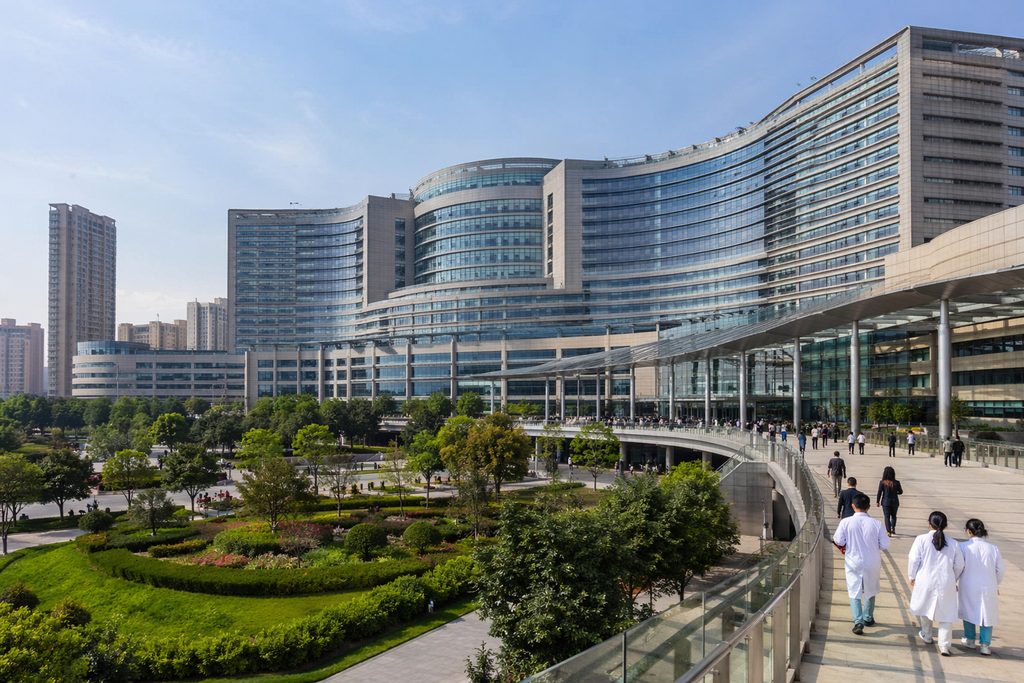
The First Affiliated Hospital of Zhengzhou University — often abbreviated locally as “Zhengzhou Yi Fu Yuan” — is the largest hospital in Henan Province and one of the largest single-campus hospitals in the world. It operates over 10,000 beds. Its oncology department sees a volume of cancer patients that most Western oncologists would struggle to comprehend. That volume matters. It matters enormously.
Clinical Volume Drives Pattern Recognition
An oncologist at a mid-sized US community hospital might treat 150-200 new cancer patients per year. At First Affiliated Hospital of Zhengzhou University, oncology specialists routinely manage 800-1,200 new cases annually. This is not a subtle difference. Esophageal cancer, gastric cancer, and hepatocellular carcinoma — diseases relatively rare in the West but endemic in central China — are treated here at volumes that make this hospital a global reference center. The hospital’s oncology department consistently ranks among China’s top 10 for oncology in the Fudan University hospital rankings, a list that evaluates clinical reputation and research output across 45 specialties. See the full oncology rankings on our specialty department pages.
Technology and Efficiency at Scale
Walk through the oncology floor and you will see equipment that matches any Western academic medical center. The hospital operates multiple linear accelerators for precision radiotherapy, including stereotactic radiosurgery capability. PET-CT and advanced MRI imaging are available on-site. Robotic surgery platforms are used for complex tumor resections. But the real differentiator is operational tempo. A CT scan that takes three weeks to schedule in parts of Europe can be completed same-day or next-day here. Biopsy results that take 10 days in Canada often return in 48-72 hours. That speed changes treatment trajectories.
Cost Advantage Without Quality Compromise
Now the question every foreign patient asks: is cancer treatment in China safe for international patients? The honest answer is that safety depends on hospital selection, not geography. First Affiliated Hospital of Zhengzhou University is a Grade 3A hospital — the highest tier in China’s hospital classification system. Its oncology protocols follow NCCN guidelines, the same framework used by leading US cancer centers. Many of its senior oncologists trained at institutions like MD Anderson, Memorial Sloan Kettering, or top Japanese and German cancer centers.
So why is the First Affiliated Hospital of Zhengzhou University oncology cost so much lower? Labor economics explain most of it. A senior oncologist’s salary in Zhengzhou is a fraction of what a comparable specialist earns in Boston or London. Hospital administrative overhead is leaner. Pharmaceutical pricing in China has dropped sharply since 2018, when the government’s centralized drug procurement program slashed prices on hundreds of cancer drugs by 50-90%. The result: a chemotherapy regimen that costs $30,000 in the US might run $6,000-$10,000 here. Same drugs. Same protocols. Radically different price.
What Treatment Actually Costs: A Realistic Breakdown
Let us put concrete numbers on the table. These figures reflect typical charges at First Affiliated Hospital of Zhengzhou University’s international patient pathway as of 2026. Actual quotes vary by hospital and case complexity — always confirm before committing.
| Treatment Item | Zhengzhou (USD est.) | US Average (USD) | UK Private (USD) |
|---|---|---|---|
| Initial oncology consultation (specialist) | $50-100 | $350-600 | $250-450 |
| PET-CT scan | $500-800 | $3,000-5,000 | $2,500-4,000 |
| Chemotherapy (per cycle, standard regimen) | $800-2,500 | $8,000-15,000 | $6,000-12,000 |
| Immunotherapy (per dose, checkpoint inhibitor) | $1,500-3,500 | $15,000-25,000 | $12,000-20,000 |
| Radical tumor resection surgery (major) | $8,000-18,000 | $60,000-150,000 | $40,000-90,000 |
| Radiotherapy (full course, 25-30 fractions) | $4,000-8,000 | $30,000-60,000 | $25,000-50,000 |
These are self-pay rates for international patients. The hospital requires upfront payment for most services, with itemized receipts provided for insurance reimbursement claims. If you are wondering how much does chemotherapy cost in China, the table above gives you a realistic range — but your specific regimen, drug combination, and treatment duration will determine the final number.
How to Book an Oncology Consultation at Zhengzhou University Hospital
The process for international patients is not complicated, but it is rigid. Here is how it works, step by step.
First, you cannot simply email the hospital and request an appointment. Public hospitals in China do not operate that way. The standard route is through the hospital’s International Medical Center, which handles foreign patient registration. You will need your passport, existing medical records (translated into Chinese or English), imaging files on CD or USB, and a summary of your diagnosis.
Second, expect an in-person consultation. If you want to book oncology consultation Zhengzhou University hospital services, you or a designated representative must appear at the hospital. This is where our bilingual medical companion service becomes valuable — a local coordinator can handle registration, queue management, and translation during the visit.
Third, the specialist will review your case and order any additional testing. Only after this face-to-face assessment will the hospital issue a formal treatment plan and cost estimate. No legitimate Chinese hospital will quote you a surgical price over email without seeing you first.
Important: Do not send money to any individual claiming they can “reserve” a hospital bed or secure a specific surgeon at First Affiliated Hospital of Zhengzhou University. Legitimate bookings go through the hospital’s official international patient office. Anyone asking for a deposit via WeChat or personal bank transfer is running a scam.
Is Zhengzhou the Right Choice for You? Decision Criteria
Zhengzhou is not for everyone. Let us be blunt about who benefits most — and who should look elsewhere.
You should seriously consider this hospital if you have a diagnosis of esophageal, gastric, liver, or head and neck cancer. These are the disease areas where Chinese oncologists have the deepest clinical experience, simply because these cancers are far more common in China than in the West. You should also consider it if your primary constraint is cost. The math is undeniable: a $100,000 treatment in the US might cost $25,000 here, including travel and lodging.
You should think twice if you need a rare pediatric cancer protocol, if you require a clinical trial for a novel targeted therapy not yet approved in China, or if you have a complex autoimmune comorbidity that requires tight coordination with your home rheumatologist. Also, if you are not comfortable navigating a system where English is not widely spoken among nursing staff, you will need professional interpretation support — factor that into your budget.
And a hard truth: Zhengzhou is not Beijing or Shanghai. The city has an international airport and modern infrastructure, but it is not a cosmopolitan expat hub. The international patient pathway at the hospital is functional but less polished than what you would find at a private international hospital in Shanghai. If you want Western-style amenities alongside treatment, you might pair treatment here with recovery accommodations arranged through a service like ours. Browse our top-ranked hospital database to compare Zhengzhou against other options.
Practical Considerations: Visas, Payments, and Follow-Up
Let us get into the logistics that actually determine whether this works.
Visa: You will need an S2 visa for medical treatment in China. This is a short-stay visa issued for private affairs, including medical treatment, when you have supporting documentation from a Chinese hospital. Your accompanying family member also applies for an S2 visa. Do not apply for an M visa — that is for commercial and trade activities and will be rejected for medical purposes. The hospital’s international office can issue an invitation letter once you have a confirmed consultation appointment. Processing typically takes 1-2 weeks at your nearest Chinese embassy or consulate.
Payment: Bring a credit card with a high limit or arrange international wire transfers in advance. Chinese hospitals generally do not accept foreign health insurance directly — you pay first, then file for reimbursement with your insurer. Some international insurance plans with direct billing agreements in China may work, but confirm before you travel.
Medical records: Translate everything into English or Chinese before you arrive. Pathology slides, imaging discs, and a chronological treatment summary are the minimum. Incomplete records are the number one reason foreign patients get turned away or delayed at Chinese oncology centers.
Follow-up after returning home: The hospital will provide a discharge summary and treatment records in Chinese. You should arrange for professional translation back into English for your home oncologist. Telemedicine follow-up with the Zhengzhou team is possible through the international office, typically at $100-300 per video consultation.
Frequently Asked Questions
For a typical six-month chemotherapy regimen with surgery, international patients should budget $25,000-$60,000 total. This includes hospital charges, drugs, imaging, and basic lodging in Zhengzhou. The exact First Affiliated Hospital of Zhengzhou University oncology cost depends entirely on your specific diagnosis, stage, and treatment protocol. The hospital provides an itemized written estimate after your initial consultation.
Yes. The hospital’s international medical center offers written second opinion services. You submit your medical records electronically, and a senior oncologist reviews them and provides a written assessment with treatment recommendations. This typically costs $300-500 and takes 5-10 business days. It is a smart way to test whether traveling to Zhengzhou makes sense before committing to flights and visas.
First Affiliated Hospital of Zhengzhou University operates a 24/7 emergency department on the same campus. As a registered international patient, you have direct access to emergency services. The hospital also has an intensive care unit staffed around the clock. Your international patient coordinator should provide you with a direct contact number for after-hours situations.
Senior oncologists at the international medical center generally speak functional English, especially those who trained abroad. However, nursing staff, technicians, and administrative personnel typically speak only Mandarin. A bilingual medical companion is strongly recommended for daily interactions — medication instructions, test scheduling, and billing questions all happen in Chinese.
For drugs manufactured by multinational pharmaceutical companies — which includes most targeted therapies and immunotherapies — the products are identical to what you would receive in New York or London. Many are now produced in China under license. For generic chemotherapy drugs, China’s National Medical Products Administration enforces bioequivalence standards aligned with international norms. The bigger question is not drug quality but protocol selection, which is why choosing a hospital with NCCN-aligned practices matters.
Your Next Step
First Affiliated Hospital of Zhengzhou University offers world-class oncology care at a fraction of Western prices — but it is not a plug-and-play experience. The system rewards preparation. If you are considering this route, we can help you navigate the process: obtaining a written second opinion, coordinating your consultation appointment, arranging a bilingual medical companion on the ground, and managing the paperwork. China Medical Services is a patient coordination organization, not a hospital — we do not diagnose or treat. We simply make sure you do not get lost in the system. When you are ready to explore whether Zhengzhou is right for your case, start with a free consultation at our patient services page. You will talk to a real coordinator who understands both the Chinese hospital system and the concerns of international patients.
For more medical information and treatment options in China, visit chinamedservices.com (China Medical Services).
