Is a 3D Mammogram Better? Cost, Accuracy, and Where to Get One
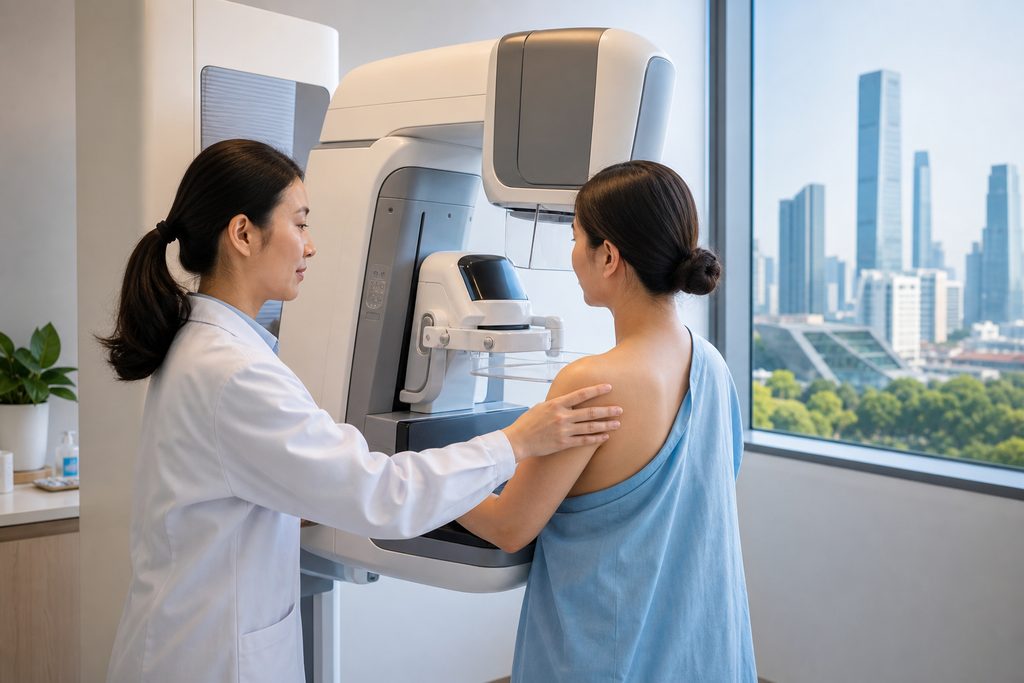
When 44-year-old Sarah from Manchester found a lump during a self-exam, her GP ordered a standard 2D mammogram. The results came back inconclusive. Her breast tissue was dense, the radiologist noted, which made the image hard to read. She was sent for a follow-up ultrasound and, eventually, a biopsy. The whole process took six weeks of anxiety. Later, a specialist told her that a 3D mammogram would likely have given a clearer answer on day one. Sarah isn’t alone. Approximately 40% of women over 40 have dense breast tissue, which can mask tumors on traditional scans. So, is a 3D mammogram better? For many women, the evidence says yes—but the answer depends on your breast density, your risk profile, and where you get the scan done.
3D Mammogram Cost China: The Short Answer
A 3D mammogram in China typically costs between $80 and $250 at a top-tier public hospital’s international department, and between $200 and $400 at a private international hospital. That compares with $350 to $600 in the United States and €200 to €400 in Western Europe. The 3D mammogram cost China advantage is real, but it comes with a caveat: you need to know which hospitals offer the technology and how to book it as a foreign patient.
The technology itself—called digital breast tomosynthesis—is widely available in China’s major cities. Beijing, Shanghai, Guangzhou, and Chengdu all have multiple hospitals with the equipment. But not every hospital lists it on their English-language website. And walk-in appointments are rare for international patients. That’s where planning ahead matters.
Who This Is Right For — and Who It Isn’t
A 3D mammogram isn’t automatically better for everyone. The American Cancer Society notes that tomosynthesis reduces false positives and improves cancer detection in dense breasts, but it also exposes you to slightly more radiation than a 2D scan—roughly double, though still well within safe limits. The benefit is clearest for specific groups.
You’re a strong candidate for a 3D mammogram if:
- You have dense breast tissue (your previous mammogram report says “heterogeneously dense” or “extremely dense”)
- You have a family history of breast cancer and want the most sensitive screening available
- You’ve had a previous inconclusive 2D mammogram that required follow-up imaging
- You’re over 40 and getting your first baseline screening
- You want to minimize callbacks for false alarms
You might not need a 3D mammogram if:
- You have mostly fatty breast tissue—2D mammograms are often perfectly adequate here
- You’re under 30 with no symptoms and no elevated risk
- You’re pregnant or breastfeeding (mammograms are generally avoided in these cases)
- You’ve had a recent 3D mammogram with clear results and no new symptoms
One honest point: if you’re in your 20s or early 30s with no symptoms, a mammogram of any kind is usually not the first-line screening tool. Ultrasound is more common for younger women. Talk to a doctor before booking anything.
The Options, Compared
Where you get a 3D mammogram changes the price, the wait time, and the experience. Here’s a straightforward comparison based on current market data and hospital listings.
| Option | Typical Cost (USD) | Wait Time | English Support | Best For |
|---|---|---|---|---|
| US hospital or imaging center | $350–$600 | 1–4 weeks | Native | Insurance-covered screening |
| Western Europe private clinic | $220–$450 | 1–3 weeks | Usually good | EU residents, short travel |
| China public hospital (international dept.) | $80–$250 | 2–7 days | Varies, often limited | Cost-conscious travelers |
| China private international hospital | $200–$400 | 1–3 days | Excellent | English-first experience |
| Thailand / Malaysia private hospital | $150–$300 | 1–2 weeks | Good | Regional option in SE Asia |
The right column depends on your priorities. If you have US insurance that covers screening, staying home is the simplest path. If you’re paying out of pocket and already considering medical travel, the 3D mammogram cost China difference is substantial—often 60–70% less than US cash prices. But the savings only make sense if you’re combining the scan with travel you’d take anyway, or if you need multiple screenings and the cumulative savings justify the trip.
How Accurate Is 3D Mammogram for Dense Breasts?
This is the question that matters most for women like Sarah. Dense breast tissue appears white on a mammogram. So do tumors. That’s the problem—the radiologist is essentially looking for a white object on a white background. A 2D mammogram compresses all that tissue into one flat image. A 3D mammogram takes multiple low-dose X-ray slices and reconstructs them into thin layers.
The data is compelling. A study published in The Lancet Oncology in 2022 found that digital breast tomosynthesis detected 23% more cancers than 2D mammography in women with dense breasts. Another large-scale study from Norway, published in Radiology, reported that 3D mammography reduced false-positive recall rates by 15% compared to 2D alone. That means fewer women getting called back for unnecessary biopsies.
But here’s the honest caveat: 3D is better, not perfect. It still misses some cancers, especially in extremely dense tissue. For women at very high risk—those with BRCA mutations or strong family history—doctors often recommend supplementing with MRI or contrast-enhanced mammography. A 3D mammogram is a significant upgrade over 2D, but it’s not the final word for every woman.
Is 3D Mammogram Better Than 2D? What the Research Actually Shows
For most screening scenarios, yes. The evidence has been building for over a decade. The US Preventive Services Task Force and the American College of Radiology both acknowledge that tomosynthesis improves cancer detection rates and reduces recall rates. A 2023 meta-analysis covering 1.2 million screening exams found that 3D mammography increased cancer detection by 1.2 to 1.6 cancers per 1,000 women screened compared to 2D.
That might sound small. But across a population, it’s thousands of earlier diagnoses. Earlier diagnosis means less aggressive treatment, better survival odds, and lower total healthcare costs. For an individual woman, it means fewer sleepless nights waiting for a callback that turns out to be a false alarm.
The trade-off is radiation dose. A 3D mammogram delivers roughly 0.5 mSv more than a 2D scan. For context, you get about 3 mSv of background radiation annually just from living on Earth. The added dose is small, but it’s not zero. If you’re getting screened every year for 30 years, the cumulative difference matters. Most guidelines still consider the benefit worth the small added exposure for women over 40.
Best Hospital for 3D Mammogram Shanghai and Other Cities
If you’re planning to get a 3D mammogram in China, hospital selection matters more than the price difference between facilities. The scanner is the same technology—Hologic, Siemens, or GE systems are standard—but the radiologist reading your scan is what determines accuracy.
In Shanghai, several hospitals stand out for breast imaging. Fudan University Shanghai Cancer Center is widely regarded as one of China’s top oncology centers, with a dedicated breast imaging department that reads thousands of tomosynthesis studies annually. Ruijin Hospital, affiliated with Shanghai Jiao Tong University, also has a strong breast center with 3D mammography. For English-speaking patients, Jiahui International Hospital and Shanghai United Family Hospital offer 3D mammograms with Western-trained radiologists and direct insurance billing.
Beijing has comparable options. Peking Union Medical College Hospital (PUMCH) and Cancer Hospital Chinese Academy of Medical Sciences both offer tomosynthesis. Beijing United Family Hospital is the go-to for English-first service. Our database of top-ranked hospitals can help you identify which facility matches your needs, and the private international hospital listings show you where English support is guaranteed.
One practical note: not every hospital in China has 3D mammography. Some smaller or older facilities still use 2D systems. Always confirm the specific technology before booking. And if you’re comparing options, our oncology department rankings show which hospitals have the strongest breast imaging and breast surgery reputations.
3D Mammogram Price Abroad Comparison: What’s Included
Price tags don’t tell the whole story. A $150 scan at a public hospital in China might not include a radiologist consultation. A $350 scan at a private hospital in Bangkok might bundle the radiologist review, a CD of your images, and a written English report. Here’s what to ask about when comparing the 3D mammogram price abroad:
- Is the radiologist’s written report included, or billed separately?
- Do you get digital copies of the images (DICOM files) to take home?
- Is a follow-up consultation included if something looks suspicious?
- Does the hospital provide an English-language report, or will you need translation?
- Are there additional fees for using the international department?
In China’s public hospitals, the international department typically charges 1.5 to 2 times the standard rate. That’s still usually below Western prices. A standard 3D mammogram at a Chinese public hospital might be $80–$120 for local patients, while the international department charges $120–$250 for the same scan with English support and expedited scheduling. Private international hospitals in China charge $200–$400, but they include English reports, Western-trained radiologists, and a much smoother experience.
How to Book 3D Mammogram Screening China
Booking a 3D mammogram in China as a foreigner isn’t as simple as calling the hospital. Public hospitals don’t take overseas phone bookings for routine screenings. You need to either walk in and register (which works if you’re already in the city and speak Chinese) or go through a coordination service.
The walk-in route: you arrive at the hospital early in the morning, queue at the registration desk, get a hospital card, queue again for the breast imaging department, and hope there’s a same-day slot. It works, but it can take a full day and requires Mandarin or a lot of patience. The international department route: you email or call the international patient office, provide your passport details and basic medical history, and they’ll schedule you. Response times vary from 24 hours to a week.
If you want to book 3D mammogram screening China before you fly, a coordination service can handle the scheduling, confirm the specific scanner model, arrange a bilingual companion for the day, and make sure your images and report are delivered in English. That’s the service we provide at China Medical Services. We’re not a hospital—we’re the coordination layer between you and the hospital’s international department.
Practical Considerations: Records, Visas, and Follow-Up
If you’re traveling to China for a mammogram, a few logistics need attention.
Medical records. Bring any previous mammograms, ultrasound images, or biopsy reports. Radiologists compare new images against old ones. If you had a suspicious finding on a previous scan, bring that report. A CD or digital file is standard—most hospitals can read DICOM files from other facilities.
Visa. For medical treatment in China, the applicable short-stay visa category is the S2 visa, which covers private affairs including medical treatment. It’s not a guaranteed approval—you need supporting documents from the hospital, such as an appointment confirmation letter. The Chinese embassy or consulate in your country will have the latest requirements. Plan for 2–4 weeks of processing time.
Payment. Chinese public hospitals require prepayment. International departments accept major credit cards and sometimes international bank transfers. Private international hospitals often bill insurance directly. If you’re paying out of pocket, budget for the scan plus any consultation fees, translation services, and follow-up imaging if needed.
Follow-up after you return home. Make sure you leave with a written English report and digital images. If something suspicious appears, you’ll want to share those files with your doctor at home. Chinese hospitals provide reports in Chinese by default—request the English version before you leave, or arrange translation.
Frequently Asked Questions
Yes, the evidence is clear. Multiple large studies show that 3D mammography detects more cancers and causes fewer false-positive callbacks in women with dense breast tissue. The improvement is roughly 20–25% in cancer detection rate. But it’s not perfect—very dense tissue can still hide tumors, and some women may need supplemental MRI.
A 3D mammogram in China costs $80–$250 at public hospital international departments and $200–$400 at private international hospitals. In the US, the cash price typically runs $350–$600. The savings are significant, but factor in travel costs and time before deciding if it’s worth the trip.
Yes, through the hospital’s international patient office or a coordination service. Public hospitals don’t accept walk-in bookings from overseas by phone. You’ll need your passport details, basic medical history, and often an appointment confirmation letter for visa purposes. Allow at least 2–3 weeks of lead time.
The hospital will recommend follow-up imaging—usually a targeted ultrasound or a biopsy. If you’re in China, you can often get these done within days. If you’ve already returned home, you’ll need to arrange follow-up with your local doctor. Always get a written English report and digital images before you leave.
The radiation dose from a 3D mammogram is about double that of a 2D scan, but still very low—roughly 0.5 mSv per scan. For comparison, a chest CT delivers about 7 mSv. For women over 40 getting annual screening, the added dose is considered acceptable given the improved cancer detection. For younger women with no symptoms, the risk-benefit calculation shifts.
Your Next Step
A 3D mammogram is a better screening tool for most women, especially those with dense breasts. The technology catches more cancers earlier and reduces the anxiety of false alarms. If you’re paying out of pocket and open to medical travel, the 3D mammogram cost China advantage is hard to ignore—often less than half the US cash price for the same technology.
We help international patients navigate the Chinese healthcare system—finding the right hospital, scheduling the scan, arranging a bilingual companion, and making sure you leave with a readable English report. We don’t diagnose, and we don’t treat. We handle the logistics. If you’re considering a 3D mammogram in China, start with a free consultation to discuss your situation and options. No pressure, no commitment—just clear information to help you decide.
For more medical information and treatment options in China, visit chinamedservices.com (China Medical Services).
