TCM for Chronic Pain in China: Specialist Match and Care
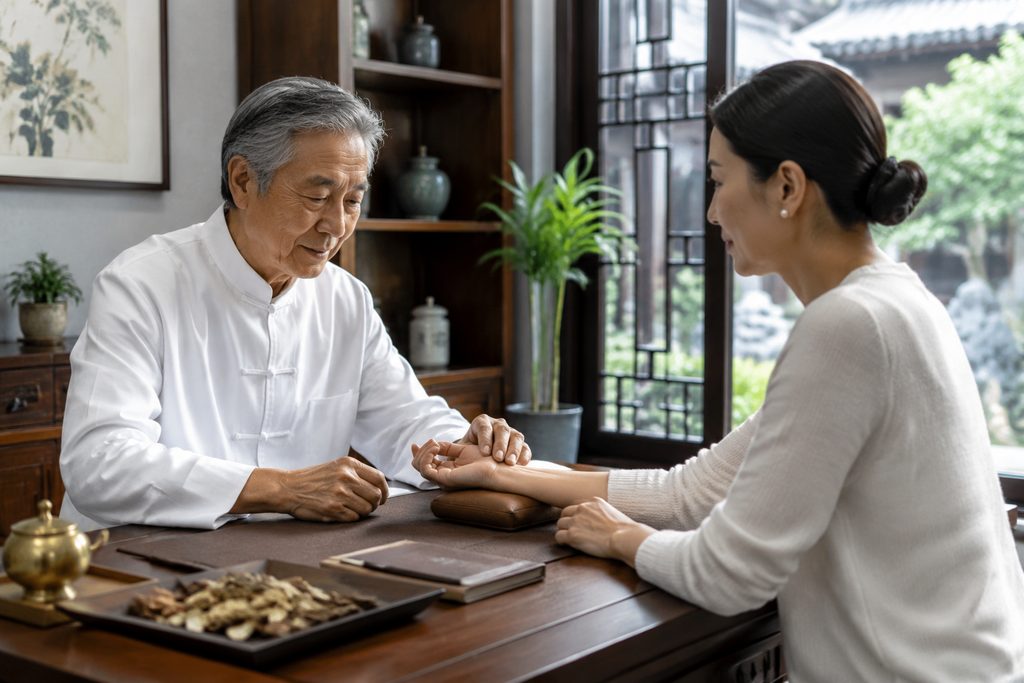
TCM for Chronic Pain in China: The Short Answer
Traditional Chinese Medicine treats chronic pain through acupuncture, tuina massage, herbal formulas, and moxibustion. A tcm pain clinic cost China typically runs from $40 to $150 per session at public TCM hospitals, with full treatment packages abroad priced from $2,000 to $6,000 for a 2–4 week intensive course. That is the honest range, and it varies by hospital, city, and your specific diagnosis.
But here is the catch: cost is not the hard part. The real challenge is being matched with the right specialist for your specific pain pattern. Chronic low back pain needs a different approach than post-herpetic neuralgia. Fibromyalgia is treated differently than osteoarthritis. Matching matters more than the price tag.
Who This Is Right For — and Who It Isn’t
TCM pain management in China works best for certain profiles. We see the strongest outcomes when patients arrive with clear diagnostic records and realistic expectations about treatment timelines.
Good candidates typically include:
- Adults with chronic musculoskeletal pain lasting 3+ months who have not found adequate relief from standard NSAIDs or physical therapy alone
- Patients with neuropathic pain conditions like diabetic neuropathy or post-herpetic neuralgia who want to reduce reliance on gabapentin or pregabalin
- People with osteoarthritis of the knee or hip who are not yet surgical candidates, or who want to delay surgery
- Fibromyalgia patients seeking a structured, multi-modal approach combining acupuncture with herbal support
- Those who have already tried acupuncture locally and want access to senior TCM specialists with 20+ years of focused pain practice
Who should not pursue this path? Anyone with undiagnosed acute pain, red-flag symptoms like unexplained weight loss, fever, or progressive neurological deficits. Those symptoms need a Western medical workup first. Also, patients on multiple blood thinners need careful clearance before acupuncture. And if you expect one session to fix a decade of pain, you will be disappointed. TCM is a course of treatment, not a single intervention.
The Options, Compared
When international patients ask about TCM for chronic pain in China, they are usually comparing three distinct service tiers. Each has a different price point, level of English support, and depth of specialist access.
| Option | Session Cost | Specialist Access | English Support | Booking Lead Time |
|---|---|---|---|---|
| Public TCM Hospital (Standard Outpatient) | $40–$80 per session | Attending physician; often senior but not always | Minimal to none; bring a companion or translator | Same-day queue; no advance booking for general clinics |
| Public TCM Hospital (International / VIP Department) | $80–$150 per session | Senior specialists, department heads on request | Dedicated English-speaking coordinators | 3–10 days with coordination support |
| Private TCM / Integrative Clinic | $100–$200 per session | Mixed; some employ retired public hospital chiefs | Full English service standard | 1–5 days |
Which suits you? If you have a family member who speaks Chinese and you are comfortable navigating a busy public hospital, the standard outpatient route is the most affordable. If you are traveling alone and want a senior specialist with English coordination, the international department of a public TCM hospital is the balanced choice. Private integrative clinics offer the smoothest experience but at roughly double the cost.
How Specialist Matching Actually Works for Pain Patients
Here is what most people get wrong: a “TCM specialist” is not one thing. Within TCM, pain is divided into multiple sub-specialties. A doctor who excels at treating lumbar disc herniation with acupuncture may not be the right person for fibromyalgia, which in TCM theory often involves qi and blood deficiency patterns rather than local stagnation.
So how do we approach matching? We start with your existing medical records — MRI reports, nerve conduction studies, rheumatology workups. Then we match your pain pattern to a department with a documented track record in that specific condition. For example, the best traditional chinese medicine hospital for back pain Shanghai is typically a large public institution with a dedicated acupuncture and tuina department treating thousands of lumbar cases annually. But that same hospital may not be the right referral for trigeminal neuralgia.
This is why we ask for records before we suggest a hospital. Any service that promises a specialist match without seeing your imaging or diagnosis history is guessing.
Does Acupuncture Work for Chronic Nerve Pain? What the Evidence Shows
The honest answer: yes, with caveats. Does acupuncture work for chronic nerve pain? Multiple systematic reviews suggest meaningful benefit for diabetic peripheral neuropathy and post-herpetic neuralgia, though effect sizes are modest. A 2022 meta-analysis in the Journal of Pain found acupuncture reduced neuropathic pain scores by approximately 30% compared to sham controls. That is not a cure. It is a meaningful reduction for many patients.
But here is the nuance. Acupuncture for nerve pain works best when combined with other modalities — electro-acupuncture, moxibustion, and targeted herbal formulas. A single needle session once a week for a month will not move the needle much, so to speak. Chinese TCM hospitals typically prescribe 10–15 sessions over 3–4 weeks for neuropathic conditions, often with daily or every-other-day frequency during intensive courses.
And it is not a substitute for treating the underlying cause. If your neuropathy stems from uncontrolled diabetes, no amount of acupuncture fixes the blood sugar problem. TCM works alongside, not instead of, disease management.
How Long Is a TCM Treatment Course for Arthritis?
This is the question we hear most from osteoarthritis patients. How long is a tcm treatment course for arthritis? The standard answer from Chinese TCM hospitals is 2–4 weeks for an intensive in-person course, followed by 2–3 months of herbal maintenance at home.
For knee osteoarthritis, a typical intensive protocol looks like this:
- Weeks 1–2: Acupuncture or electro-acupuncture 5–6 times per week, plus tuina massage every other day, plus daily herbal decoction
- Weeks 3–4: Acupuncture reduced to 3 times per week, herbal formula adjusted based on response, begin gentle movement therapy like tai chi or qigong
- Months 2–4 (after returning home): Continue herbal formula, self-administered acupressure, and movement practice; follow up via video consultation
For rheumatoid arthritis, the course is different. TCM is used as an adjunct to DMARDs and biologics, not a replacement. The goal is reducing flare frequency and morning stiffness, not stopping disease-modifying medication. Any TCM doctor who tells you to stop your rheumatologist’s prescriptions is giving dangerous advice.
What It Costs: Breaking Down TCM Pain Management Packages Abroad
Let us get concrete about tcm pain management packages abroad price. Most public TCM hospitals in China do not sell “packages” in the way Western wellness resorts do. You pay per session, per herbal prescription, per diagnostic test. But international departments often bundle services for overseas patients into a coordinated plan.
A realistic budget for a 3-week pain management course at a top public TCM hospital’s international department:
- Initial consultation with senior specialist: $80–$150
- Acupuncture sessions (15 sessions over 3 weeks): $1,200–$2,250
- Tuina massage sessions (6–8 sessions): $300–$600
- Herbal formulas (3 weeks of decoctions or granules): $150–$400
- Adjunctive therapies (cupping, moxibustion, TDP lamp): $100–$250
- Total treatment cost: roughly $1,800–$3,650
This does not include flights, accommodation, food, or interpretation services. Add a bilingual medical companion at $300 per day and a 3-week stay can easily reach $8,000–$12,000 all-in. That is still a fraction of what a comparable integrative pain program costs in the United States or Switzerland, but it is not pocket change.
What drives the variance? Hospital tier, city, seniority of the specialist, and whether you need daily translation support. Beijing and Shanghai cost more than Chengdu or Hangzhou. A department chief costs more than an attending physician. Private clinics cost more than public international departments.
Practical Considerations: Records, Visas, Payment, and Follow-Up
Before you book anything, gather your documentation. Chinese TCM specialists want to see your Western medical records: imaging reports, lab results, current medication list, and a brief history from your referring physician. If your records are not in English or Chinese, you will need certified translation. Our team handles this as part of case management.
Visa is straightforward but specific. For medical treatment in China, you apply for an S2 visa with a supporting letter from the hospital confirming your treatment plan. Family members accompanying you also apply for S2 visas. The M visa is for commercial and trade activities — it is not the right category for medical travel. Processing typically takes 1–2 weeks at your local Chinese embassy or consulate, sometimes faster with expedited service.
Payment: public hospitals require prepayment. You deposit funds at the hospital cashier, treatment fees are deducted as you go, and any balance is refunded at discharge. Credit cards are accepted at international departments but not always at standard outpatient windows. Private international clinics often bill insurance directly, but public TCM hospitals generally do not. You pay out of pocket and file for reimbursement with your insurer afterward.
Follow-up after returning home is where many patients drop the ball. Herbal formulas need adjustment as your condition evolves. We recommend scheduling a video consultation with your TCM specialist 4–6 weeks after returning home. A written second opinion or video consultation costs $100–$500 depending on the specialist tier, and many patients find this more valuable than the initial in-person course.
Practical tip: If you are considering a TCM pain program, book a remote video consultation first. A senior specialist can review your records and tell you honestly whether your condition is likely to respond. This costs $100–$300 and can save you a wasted international trip.
Frequently Asked Questions
You cannot book a specific named specialist through the standard public outpatient system from overseas. Standard clinics operate on same-day queues. But through a hospital’s international department, book tcm specialist for fibromyalgia Beijing is possible with 3–10 days of lead time. The international department handles advance scheduling, English coordination, and specialist matching based on your records. This is the only reliable way to pre-book a specific senior specialist before you fly.
Acupuncture is generally safe for patients on anticoagulants, but it requires a modified approach. Your specialist should use fewer needles, avoid deep needling, and apply pressure longer after needle removal. You must disclose all medications before treatment. Serious bleeding complications from acupuncture are rare — estimated at fewer than 1 in 10,000 sessions — but the risk is higher on blood thinners. A responsible TCM physician will ask about this before touching a needle.
This happens, and you should know it before spending money. Response rates vary widely by condition. For chronic low back pain, roughly 60–70% of patients report meaningful improvement after a full course. For fibromyalgia, the rate is lower — perhaps 40–50%. If you complete a 3–4 week intensive course with no improvement, that is a signal to stop and reassess. A good TCM doctor will tell you this directly. We have seen patients who traveled to China and left without relief. It is not common, but it is real, and no ethical provider guarantees outcomes.
At a standard public hospital clinic, yes — without Chinese ability, you will struggle. Registration, payment, pharmacy pickup, and treatment instructions are all conducted in Mandarin. At an international department or private clinic, no — English-speaking staff handle everything. A bilingual medical companion bridges the gap if you choose the standard route. Expect to pay $300 per day for a companion, or choose the international department where coordination is built into the service.
Not always. Some herbs interact with warfarin, antiplatelet drugs, immunosuppressants, and certain antidepressants. This is not a minor concern. A responsible TCM specialist will review your full medication list before prescribing. You should also inform your Western physician about any herbal formula you take. The risk of interaction is real but manageable with proper disclosure on both sides. If a TCM doctor dismisses your Western medications as irrelevant, find another doctor.
Your Next Step
Chronic pain is exhausting, and the decision to travel abroad for treatment is not a small one. The right TCM program in China can offer meaningful relief, often at a cost that makes sense compared to Western integrative clinics. But the value depends entirely on being matched with the right specialist for your specific condition.
We are China Medical Services, a coordination team that connects international patients with top-ranked Chinese hospitals. We are not a hospital, we do not diagnose, and we never promise outcomes. What we do is handle the logistics: record translation, specialist matching through hospital international departments, visa documentation support, and bilingual companionship during treatment. If you want to explore whether TCM pain management in China makes sense for your situation, start with a free consultation. We will review your records, give you an honest assessment, and map out what a realistic treatment plan would look like.
Take the first step when you are ready. Your pain has waited long enough.
For more medical information and treatment options in China, visit chinamedservices.com (China Medical Services).
