West China Hospital Hematology for International Patients: Costs, Booking, and What to Expect
When 41-year-old Daniel from Manchester was diagnosed with myelodysplastic syndrome, his UK hematologist laid out a treatment timeline that stretched months into the future. His family started researching alternatives. That search led them to Chengdu. The question they kept circling back to: what does West China Hospital hematology cost, and can a foreigner actually access it? Daniel is not alone. Every month, our team fields dozens of inquiries from patients across Europe, the Middle East, and Southeast Asia asking the same thing.
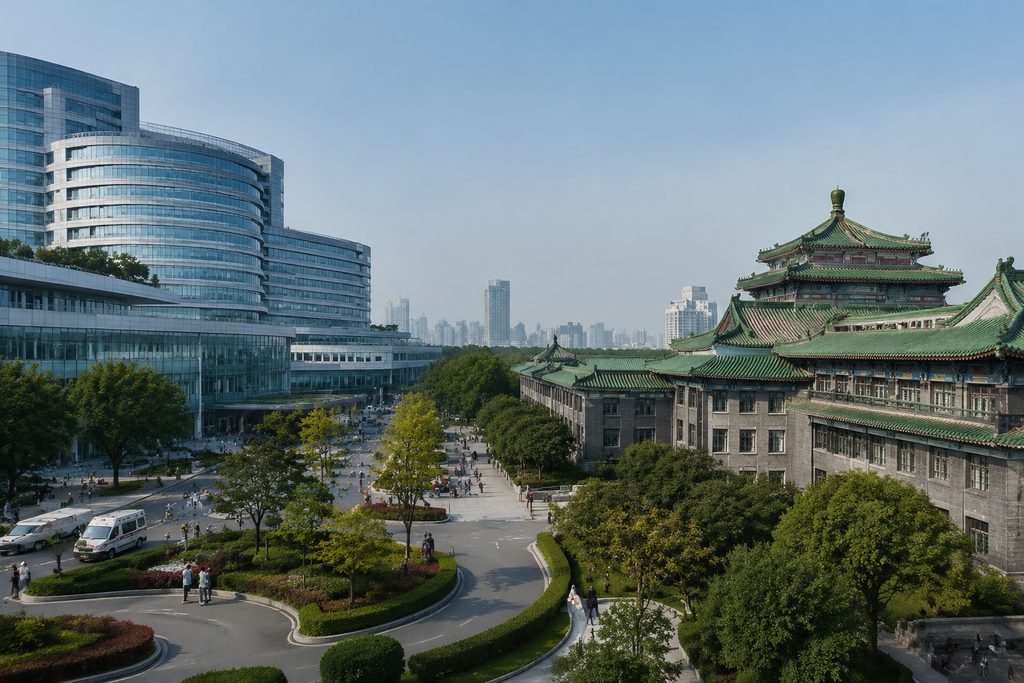
West China Hospital of Sichuan University sits in the top tier of Chinese medical institutions. Its hematology department handles a patient volume that most Western centers would struggle to comprehend — over 200,000 outpatient hematology visits annually. For international patients weighing treatment options, understanding the real costs, the booking pathway, and the clinical strengths matters more than a hospital’s reputation. This guide breaks down each of those pieces.
Key Takeaways
- West China Hospital’s hematology department ranks among China’s top 10 for blood disorders, with particular strength in leukemia, lymphoma, and hematopoietic stem cell transplantation.
- Treatment costs at West China typically run 60–80% below comparable US private-pay rates, though final figures vary by diagnosis, protocol, and length of stay.
- Foreign patients cannot simply show up and register at the public outpatient clinic — international care requires coordination through the hospital’s international or VIP channel, which changes both pricing and logistics.
- Bone marrow transplant pricing in China for international patients generally ranges from $80,000 to $150,000 depending on transplant type and donor source, a fraction of the $400,000–$800,000 billed in the US.
The Problem: Blood Disorder Treatment Costs Are Crushing Western Patients
A single course of induction chemotherapy for acute myeloid leukemia in the United States routinely exceeds $150,000 before supportive care. Add consolidation cycles, possible transplant, and a 30-day hospital stay, and total charges can pass $1 million. Even insured patients face deductibles and out-of-pocket maximums that wipe out savings. The uninsured face medical bankruptcy. That is the reality for the 1.3 million Americans living with or in remission from blood cancers.
Wait times compound the financial strain. In Canada’s public system, the median wait from specialist referral to first hematology consultation runs 4 to 8 weeks for urgent cases and significantly longer for non-urgent ones. The UK’s NHS target of a 62-day cancer pathway from urgent referral to first treatment has been missed consistently since 2015. For a disease like acute leukemia, where treatment delay directly correlates with worse outcomes, those numbers are terrifying.
Patients are not passive in this. A 2023 survey by Patients Beyond Borders found that 18% of American medical travelers cited “shorter wait times” as their primary motivation, while 46% cited cost. Blood disorders sit near the top of conditions driving international treatment searches. The question is no longer whether to look abroad. It is where.
Why West China Hospital Hematology Delivers Results
West China Hospital is not a boutique clinic. It is one of the largest single-campus hospitals in the world, with over 4,300 beds and a daily outpatient volume exceeding 20,000 visits. The hematology department operates 5 dedicated wards with more than 250 beds — a scale that generates clinical experience most Western hematology units simply cannot match.
Clinical Volume Drives Better Outcomes
West China’s hematology team performs over 300 hematopoietic stem cell transplants annually, placing it among the highest-volume transplant centers in Asia. Compare that to the average US transplant center, which performs 50–100 per year. Volume matters in transplant medicine. The Center for International Blood and Marrow Transplant Research has repeatedly shown that centers performing more transplants report lower transplant-related mortality. When your physician has seen 500 cases of a rare lymphoma subtype, the 501st case benefits from that accumulated judgment.
West China also operates one of China’s largest bone marrow donor registries, with over 1.2 million registered donors in the Sichuan branch alone. For patients needing an unrelated donor transplant, this local registry depth can shorten donor search timelines compared to smaller national registries.
Technology and Efficiency at Scale
The hematology lab at West China runs 24/7 with in-house flow cytometry, cytogenetics, molecular diagnostics, and next-generation sequencing. A bone marrow biopsy processed on Monday returns a full panel — morphology, immunophenotyping, karyotyping, and mutation analysis — by Friday. In many Western academic centers, sending molecular panels to external reference labs adds 2 to 3 weeks to the diagnostic pipeline. For acute leukemia patients, that diagnostic speed translates directly into faster treatment initiation.
CAR-T cell therapy, now standard for relapsed/refractory B-cell malignancies, is available at West China through both commercial products and clinical trials. China approved its first domestic CAR-T product in 2021, and by 2025, over 10 CAR-T products have received regulatory clearance. West China participates in multiple CAR-T trials, giving international patients access to therapies that may not yet be approved in their home countries.
Cost Advantage Without Quality Compromise
Why is West China Hospital hematology cost so much lower than Western benchmarks? Structural economics, not quality shortcuts. Chinese physician salaries, while rising, remain a fraction of US physician compensation. Hospital construction and equipment costs amortize across vastly higher patient volumes. A flow cytometer at West China processes 300 samples daily versus 40 at a typical US community hospital. The fixed cost per test collapses.
| Hematology Service | West China (International Patient) | US Private Pay (Average) |
|---|---|---|
| Initial hematology consultation with specialist | $150–$300 | $400–$800 |
| Bone marrow biopsy with full pathology panel | $800–$1,500 | $4,000–$8,000 |
| Induction chemotherapy (AML, 30-day inpatient) | $25,000–$45,000 | $150,000–$250,000 |
| Autologous stem cell transplant | $50,000–$80,000 | $350,000–$500,000 |
| Allogeneic stem cell transplant (matched sibling) | $80,000–$120,000 | $400,000–$600,000 |
| CAR-T cell therapy (commercial product) | $120,000–$180,000 | $500,000–$600,000 |
These figures reflect international patient pricing, which runs 1.5 to 2 times the local Chinese rate. They remain a fraction of US charges. The cost gap is structural and persistent, not a promotional discount.
Is West China Hospital Good for Blood Disorders? What the Rankings Actually Say
Short answer: yes, with caveats. The Fudan University Hospital Rankings — China’s most authoritative hospital evaluation system, updated annually since 2010 — places West China Hospital’s hematology department in its national top 10 for the specialty. The hospital overall holds the highest “A++++” tier in the comprehensive ranking, a designation shared by only a handful of institutions nationwide.
But rankings tell part of the story. What matters for international patients is clinical focus. West China’s hematology department has dedicated subspecialty teams for acute leukemia, lymphoma, myeloma, myelodysplastic syndromes, aplastic anemia, and coagulation disorders. That means the physician treating your mantle cell lymphoma sees mantle cell lymphoma all day, every day — not one case a month scattered among general hematology.
The department also runs one of China’s largest hemophilia treatment centers and a designated national clinical research center for hematological diseases. For patients with rare blood disorders, this concentration of expertise is exactly what you want.
One honest caveat: West China is a public hospital first. The international patient pathway exists, but it is not a Western-style “medical tourism package” operation. You will not find a glossy brochure with bundled pricing. What you will find is genuine clinical depth at a price point that makes treatment financially survivable. Our team has helped patients navigate both the strengths and the friction points of this system.
How to Book an Appointment at West China Hospital Hematology as a Foreigner
This is where most international patients hit a wall. The public outpatient registration system at West China operates through a Chinese-language app and on-site kiosks. Walk in without Chinese language skills or a local ID, and you will struggle to get past the front gate. The hospital’s international medical center exists precisely to bridge this gap, but it requires advance coordination.
The practical pathway looks like this:
Step 1: Gather your medical records. Complete blood counts, bone marrow biopsy reports, cytogenetics, molecular testing, imaging, and a summary letter from your current hematologist. All documents need professional translation into Chinese. This is non-negotiable — Chinese physicians will not make treatment decisions based on English-language records alone.
Step 2: Submit for remote evaluation. The international medical center reviews your translated records and determines whether your case falls within their hematology team’s scope. This step typically takes 5 to 10 business days. Some cases are declined — usually because the patient’s condition is too unstable for travel or the requested treatment is not available.
Step 3: Schedule a video consultation or written second opinion. Before committing to travel, most patients benefit from a remote consultation. A written second opinion from a West China hematology specialist costs $300–$500. A video consultation with a top specialist runs $500–$800. These fees are credited in full toward on-the-ground coordination if you proceed to treatment in China within 90 days.
Step 4: Plan your visit. Once the clinical team confirms they can help, you arrange travel. Foreign patients seeking medical treatment in China apply for an S2 visa, which covers short-term private affairs including medical treatment. Your hospital invitation letter and treatment plan serve as supporting documents. Family members accompanying you apply for the same S2 category. Processing typically takes 1 to 4 weeks depending on your home country’s Chinese embassy or consulate.
Step 5: Arrive and begin the in-person evaluation. No responsible hospital will schedule chemotherapy or transplant based on remote records alone. Expect an in-person consultation, repeat testing where needed, and a treatment plan confirmation before any therapy begins. This is standard practice at every reputable center worldwide.
Important: The M visa is a commercial and trade visa. It is not for medical treatment. Applying under the wrong visa category can result in denial or entry complications. Always confirm current visa requirements with your nearest Chinese embassy, as rules change.
Bone Marrow Transplant Price China: What International Patients Actually Pay
The bone marrow transplant price China international patients face depends heavily on transplant type. Autologous transplants — where your own stem cells are harvested and reinfused after high-dose chemotherapy — run $50,000 to $80,000 at West China. Allogeneic transplants from a matched sibling donor run $80,000 to $120,000. Unrelated donor transplants and haploidentical (half-matched) transplants, which are far more common in China than in the West, run $100,000 to $150,000.
These prices cover the transplant procedure, the 4 to 6 week inpatient stay, immunosuppressive therapy, and standard supportive care. They do not cover complications requiring extended ICU stays, which can add $2,000 to $5,000 per day. Nor do they cover donor search fees, which range from $5,000 to $15,000 for unrelated donors depending on registry source.
China’s haploidentical transplant program deserves special mention. Because China’s one-child policy limited sibling donor availability for decades, Chinese transplant centers developed world-leading expertise in half-matched transplants from parents or children. West China performs hundreds of these procedures annually with outcomes comparable to matched sibling transplants — a capability many Western centers are only beginning to adopt.
For comparison, the same allogeneic transplant in the US averages $400,000 to $600,000 before complications. In Germany, €250,000 to €400,000. In the UK, the NHS covers transplant costs for residents, but private-pay international patients face £200,000 to £350,000. The China price advantage is not marginal. It is transformative for families deciding between treatment and financial ruin.
West China Hospital Medical Tourism Hematology Package: What Exists and What Does Not
Let us be direct: West China Hospital does not sell a “hematology package” in the way a Thai or Indian medical tourism facilitator might. There is no all-inclusive price list with airport pickup, hotel, treatment, and follow-up bundled into one neat figure. The Chinese public hospital system does not work that way.
What exists instead is a coordinated care pathway. The hospital’s international medical center provides English-speaking staff, priority scheduling within the international channel, and assistance with admission paperwork. External coordination — translation, visa guidance, accommodation, local transportation, and bilingual accompaniment during hospital visits — is handled by organizations like ours. We are not the hospital. We are the bridge to it.
This distinction matters. Patients who expect a resort-style medical tourism experience will be disappointed. Patients who understand they are accessing a high-volume public hospital through its international channel — with all the clinical depth and operational friction that implies — will find the experience manageable and the outcomes worth it.
Practical Considerations: Documentation, Payment, and Follow-Up for Blood Disorder Patients
Traveling to China for hematology treatment requires more preparation than a typical medical trip. Blood disorder patients are often immunocompromised. Long flights, new environments, and treatment delays all carry risk. Plan accordingly.
Medical records. Bring everything: original pathology slides if possible, all imaging on CD or USB, complete lab reports, current medication list with generic names, and a detailed treatment history. Chinese hematologists will want to review every prior cycle of chemotherapy, every transfusion, every complication. Gaps in your records mean repeat testing, which means delay and added cost.
Visa timing. The S2 visa typically allows stays of up to 180 days. For transplant patients requiring 3 to 6 months of post-transplant monitoring, this usually suffices. If your treatment plan extends beyond 180 days, the S1 visa covers longer stays. Apply early — embassy processing times vary widely by country, and you do not want visa delays to postpone treatment.
Payment methods. Chinese public hospitals require prepayment for inpatient care. The international medical center typically requires a deposit before admission, with additional payments as treatment progresses. Major international credit cards are accepted, but transaction limits and foreign exchange fees apply. Wire transfers are standard for larger amounts. Cash payments over certain thresholds trigger additional paperwork under Chinese anti-money-laundering regulations.
Insurance. Most Western insurers do not have direct billing arrangements with Chinese public hospitals. You pay upfront and submit claims for reimbursement. Check your policy’s out-of-network international coverage before committing. Some insurers require pre-authorization for international treatment — skipping this step can void coverage.
Language. Even in the international medical center, not every nurse, technician, or pharmacist speaks English. For inpatient stays lasting weeks, a bilingual companion during key moments — admission, treatment consent, discharge planning — reduces errors and anxiety. Our team provides this service from $300 per day.
Follow-up after returning home. Chinese hematologists will provide a detailed discharge summary and treatment plan. Your home hematologist needs to accept ongoing care. Establish this relationship before you travel. Remote follow-up with West China via video consultation is possible, but day-to-day management of complications must happen locally.
Frequently Asked Questions
West China’s hematology department consistently ranks in China’s top 10 for the specialty, alongside centers like Peking Union Medical College Hospital and Ruijin Hospital in Shanghai. Its particular strengths are hematopoietic stem cell transplantation, acute leukemia management, and rare blood disorder diagnosis. For international patients, the choice between top Chinese hematology centers often comes down to specific disease subtype, available clinical trials, and practical logistics like flight connections and local support.
Treatment quotes from the international medical center cover hospital services: physician fees, nursing, medications, laboratory testing, imaging, and the inpatient stay itself. They do not include international travel, visa fees, accommodation outside the hospital, meals for family members, translation services, or post-discharge rehabilitation. Budget separately for these items. A 30-day inpatient chemotherapy course with complications requiring ICU time will cost more than the initial quote. Ask for a written cost estimate before committing, and understand that it is an estimate, not a guarantee.
Can I book an appointment at West China Hospital hematology without going through an intermediary?
Yes, but it is difficult. The international medical center accepts direct inquiries by email and phone. The challenges are language, document preparation
For more medical information and treatment options in China, visit chinamedservices.com (China Medical Services).
