Nanfang Hospital Oncology for International Patients: Costs, Process & What to Know
Opening with a scenario that matters. When 42-year-old Daniel from Manchester heard “stage II colorectal cancer” in February, the first number he searched was not survival rates. It was cost. His NHS oncologist quoted a treatment pathway that would begin within six weeks. Daniel started looking elsewhere. Not because the care was poor — because he wanted options, and he wanted them faster. That search led him to Guangzhou.
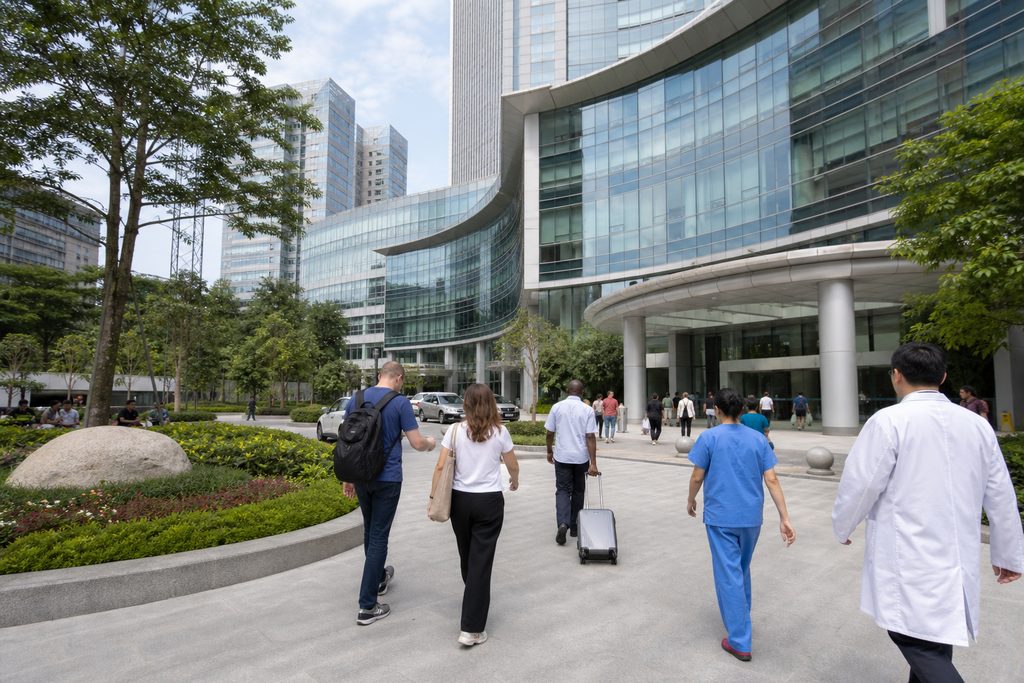
Nanfang Hospital, officially Nanfang Hospital of Southern Medical University, sits in the Baiyun District of Guangzhou. It is one of the largest and most academically active hospitals in southern China. For Daniel, the question was simple: what would Nanfang Hospital oncology cost actually look like for someone flying in from abroad? The answer is more nuanced than a single number. This article breaks down the real costs, the process for foreign patients, and the honest trade-offs of pursuing cancer care in China.
Key Takeaways
- Nanfang Hospital is a top-tier teaching hospital in Guangzhou, with oncology ranked among China’s strongest programs — part of the 340+ top-ranked hospitals we track across 37 cities.
- Chemotherapy at a top Chinese public hospital typically costs 60–80% less than equivalent US private-pay rates, though final Nanfang Hospital oncology cost varies by drug regimen, stage, and length of stay.
- International patients cannot simply walk in and book a bed. You need medical records reviewed first, then an S2 visa, then an in-person consultation before any admission.
- Language is the single largest operational barrier. Nanfang’s international department exists, but day-to-day ward communication is overwhelmingly in Mandarin.
The Problem: Cancer Care Costs Are Crushing Western Patients
Cancer is expensive everywhere. But the gap between what an insured patient pays in the UK, Canada, or Germany and what an uninsured or underinsured patient pays in the United States is staggering. According to a 2022 study published in JAMA Oncology, the average out-of-pocket cost for a privately insured US cancer patient exceeds $5,000 per year — and that is with insurance. For the uninsured, a single cycle of standard chemotherapy can run $10,000 to $30,000 at US hospital outpatient rates.
Wait times compound the problem. In Canada’s public system, the median wait from referral to first oncology consultation was 27 days in 2023, according to the Fraser Institute. In the UK, the NHS target of 62 days from urgent GP referral to first treatment has been missed consistently since 2016. For patients with aggressive disease, those weeks matter.
Daniel’s situation was different but familiar. He had NHS coverage, but he wanted a second opinion and the option to start treatment sooner than the queue allowed. He also wanted to understand whether paying privately in China could get him comparable care at a fraction of the UK private rate.
That is the real question most international patients are asking. Not “is China better?” but “what does the full picture look like, and can I afford it?”
Why Nanfang Hospital Is Worth Considering for International Patients
Clinical Volume and Subspecialty Depth
Nanfang Hospital of Southern Medical University is a 2,200-bed teaching hospital with a daily outpatient volume that routinely exceeds 10,000 visits. Its oncology department handles a caseload that would be unimaginable at most Western centers. That volume creates subspecialty depth: medical oncologists who focus only on gastrointestinal cancers, thoracic surgeons who perform only lung resections, interventional radiologists who do only tumor ablation.
The Fudan University Hospital Rankings — China’s most authoritative hospital ranking system — place Nanfang’s oncology program among the top tier nationally. The rankings use five grade bands (A++++ to A) for the overall top 100 hospitals, and Nanfang has consistently appeared in the upper bands. For oncology specifically, the hospital is regularly cited among the strongest programs in southern China. You can explore how it compares to other top programs on our oncology department rankings page.
Technology Adoption Moves Fast Here
Chinese hospitals adopt new oncology technologies quickly, partly because patient volume justifies the capital investment. Nanfang has been an early adopter of robotic-assisted surgery for certain tumor types, and its radiation oncology department operates multiple linear accelerators with intensity-modulated radiation therapy (IMRT) and volumetric modulated arc therapy (VMAT) capabilities. PET-CT imaging is available on-site, which matters because many international patients need staging scans before treatment decisions are made.
And the pace is different. In many Western systems, scheduling a PET-CT can take two to three weeks. At Nanfang, the same scan can often be completed within 48 hours of a doctor’s order. That operational speed changes treatment timelines.
Cost Structure: Why the Same Treatment Costs Less
The most common question we hear is whether lower cost means lower quality. For most oncology treatments, the answer is no — and the reason is structural, not magical.
Chinese public hospitals operate on thin margins but enormous volume. A chemotherapy infusion chair at Nanfang may be used for 12 to 16 patients per day. The nursing staff is specialized by tumor type. Drug costs in China have fallen sharply since the government’s national drug procurement program began in 2018, which forced pharmaceutical companies to bid for hospital contracts. Generic chemotherapies like paclitaxel, cisplatin, and 5-FU are now dramatically cheaper in China than in the US or Europe. Targeted therapies and immunotherapies — including several PD-1 inhibitors developed by Chinese companies — are also priced lower than their Western equivalents.
That means the Nanfang Hospital oncology cost for a standard chemotherapy cycle might run $800 to $2,500, depending on the regimen. The same cycle at a US hospital, uninsured, could exceed $15,000. Even for complex regimens with targeted agents, Chinese costs typically land at 30–50% of US private-pay rates.
What a Cancer Treatment Journey at Nanfang Actually Looks Like
This is the section that matters most for anyone searching “book cancer treatment Guangzhou.” Because the process is not what most Western patients expect.
You cannot email the hospital and book a bed. You cannot call the oncology department and reserve a chemotherapy slot. Chinese public hospitals operate on a consultation-first model. Here is the real sequence:
Step 1: Records review. Before you travel, your existing medical records — pathology reports, imaging, treatment history — need to be translated into Chinese and reviewed by the relevant oncology subspecialty. This can be done remotely. A written second opinion from a Nanfang oncologist typically costs $300–500 and takes 5–10 working days.
Step 2: Video consultation (optional but recommended). For $100–300, you can speak directly with the oncology team via video. This is where you ask the hard questions: What regimen would you recommend? What are the expected side effects? How long would treatment take? The consultation fee is credited in full toward any later on-the-ground coordination service within 90 days.
Step 3: Travel and in-person consultation. You fly to Guangzhou on an S2 visa — the short-stay visa category used for medical treatment and private affairs in China. Family members accompanying you also apply for S2. You then attend an in-person consultation at Nanfang’s international department or the relevant oncology clinic. The doctor will order any additional tests and, only after reviewing results, confirm whether admission for treatment is appropriate.
Step 4: Admission and treatment. If admission is recommended, the hospital will schedule your treatment. For chemotherapy, this usually means day-infusion visits rather than overnight stays. For surgery, you will be admitted to a ward. Payment is required upfront or in staged deposits — Chinese public hospitals do not bill insurance companies directly. You pay, then claim reimbursement from your insurer later.
Reality check: Nanfang’s international department exists and handles foreign patients, but the hospital is not a Western-style international hospital. Most ward nurses speak little English. You will need a bilingual companion or interpreter for consultations, pharmacy visits, and any billing discussions. This is not optional — it is the single biggest operational risk in the entire process.
Nanfang Hospital Oncology Cost: Breaking Down the Numbers
For a standard chemotherapy course of 4–6 cycles, expect $4,000–15,000 in hospital charges, depending on the regimen. For surgery plus adjuvant chemotherapy, a realistic total is $25,000–45,000. Add $8,000–12,000 for travel, accommodation, and bilingual support over a 4–6 week stay. These are reference ranges, not quotes — final costs depend entirely on your diagnosis, stage, and treatment plan.
Nanfang Hospital is a fully accredited tertiary hospital with intensive care, emergency, and surgical backup on site. Medical complications are handled within the hospital system. The practical challenge for international patients is communication during an emergency — which is why having a bilingual companion available around the clock is strongly recommended. For serious complications, your home insurance may cover medical evacuation, but you should confirm that before traveling. Chinese hospitals do not assume liability for international patients the way some Western hospitals do; you are responsible for your own continuity of care after discharge.
Your Next Step
If you are considering Nanfang Hospital for oncology care, the right first step is not buying a plane ticket. It is getting your records reviewed by the right subspecialty team so you know whether this path is even viable for your case. We help international patients navigate that process — from records translation and remote consultations to on-the-ground bilingual support in Guangzhou. We are not a hospital, we do not provide diagnoses, and we cannot guarantee treatment outcomes. What we do is make the process less overwhelming. Start with a free consultation to discuss your case and whether Nanfang is the right fit.
Cancer treatment abroad is a serious decision. But for patients facing long waits or unaffordable bills at home, knowing the real Nanfang Hospital oncology cost — and the real process — can turn an impossible choice into a practical one.
Frequently Asked Questions
Yes. The hospitals used for international patients are JCI-accredited and follow the same international safety standards as top hospitals in the US and Europe. Surgical teams perform high volumes of procedures — often more than their Western counterparts — which studies show leads to better outcomes.
Costs vary by procedure and hospital, but international patients typically save 40-80% compared to US prices — even when factoring in travel and accommodation. A consultation with our team will give you an exact, all-inclusive quote with no hidden fees.
Send us your existing medical reports to get started. We handle everything from hospital selection and appointment scheduling to visa assistance and post-operative recovery planning. Your medical records are reviewed by the specialist before you even book a flight.
For more medical information and treatment options in China, visit chinamedservices.com (China Medical Services).
