Beijing Ditan Hospital Infectious Disease: A Guide for International Patients
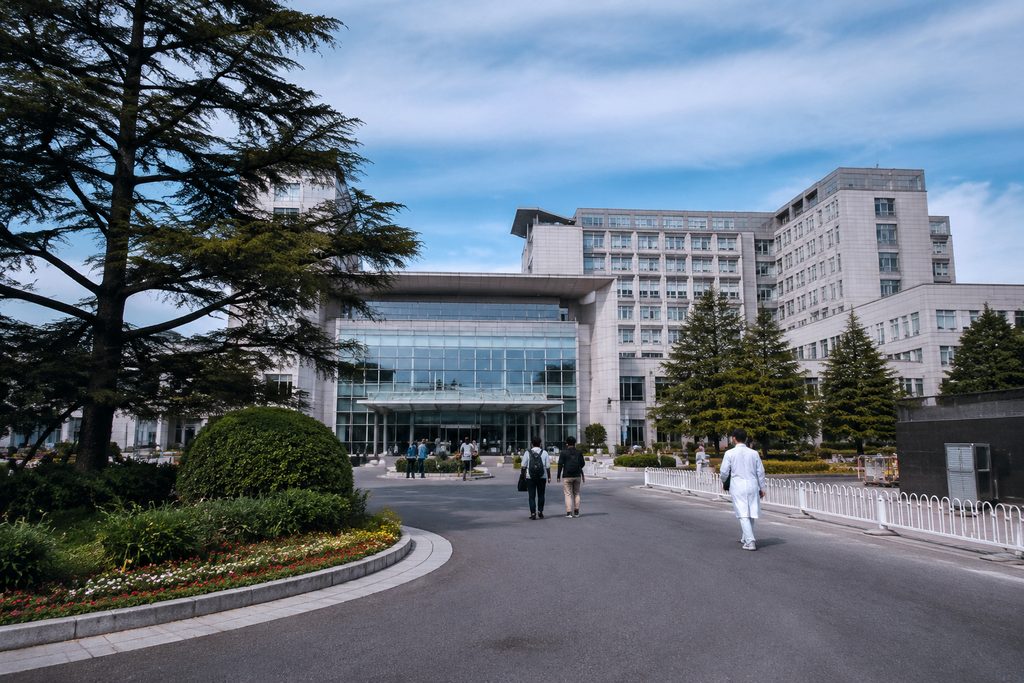
Have you ever searched for a specialist, only to find every hospital website reads like a wall of Chinese characters you cannot decode? That is exactly where most international patients land when they look for Beijing Ditan Hospital infectious disease cost for foreigners. The information exists. It is just not written for you. We are going to fix that here.
Beijing Ditan Hospital, affiliated with Capital Medical University, is one of China’s most recognized centers for infectious diseases. For a foreigner weighing treatment options, the questions are practical: Is this the right hospital for my condition? What will it cost? How do I even get an appointment? This article answers those questions directly, without the fluff.
We work as a medical concierge team connecting international patients with China’s top-tier hospitals. We are not doctors. We are the bridge between you and the specialists at institutions like Ditan. Our role is to translate the system, not to replace your physician.
How This Actually Works, Step by Step
Let us walk through the real sequence. You are sitting at home, holding lab results or a diagnosis, and you want a Chinese infectious disease specialist to weigh in. Here is what happens.
First, you send us your existing medical records. Lab reports, imaging summaries, pathology results, current medication list — whatever you have. We translate them into Chinese for the hospital’s review. This is not a formality. Chinese hospitals require Chinese-language records for any serious consultation.
Second, we identify the appropriate department at Beijing Ditan Hospital. Infectious disease is broad: hepatitis B and C, HIV, tuberculosis, fungal infections, tropical diseases. Ditan has separate clinical teams for each. We route your case to the right one based on your records, not a guess.
Third, the department reviews your case. A senior physician looks at your translated records and gives a preliminary assessment. This step matters because it tells you whether traveling to Beijing makes sense at all. Sometimes the answer is no — and that saves you a flight.
Fourth, you choose your engagement level. A written second opinion costs between $300 and $500 from a top-tier specialist. A video consultation runs $100 to $300 for a standard international department session, or $500 to $800 if you want a named senior expert. Multidisciplinary team reviews start at $1,500. These are reference ranges, not fixed quotes. Final pricing varies by hospital and case complexity.
Fifth, if the remote consultation confirms a treatment plan, we coordinate your arrival. That includes S2 visa guidance, appointment scheduling through the hospital’s international channel, and a bilingual medical companion to navigate the hospital on the ground. Companion services start from $300 per day.
Beijing Ditan Hospital Infectious Disease Cost for Foreigners: What the Numbers Actually Look Like
Let us talk about the number you actually searched for. The Beijing Ditan Hospital infectious disease cost for foreigners is not published on a single price list. Chinese public hospitals bill by item: each consultation, each lab test, each imaging study, each day of hospitalization. So cost depends entirely on what your case requires.
That said, we can give you realistic ranges based on what international patients typically encounter at Ditan through its international and VIP channels.
| Item | Estimated Cost (USD) | Notes |
|---|---|---|
| Initial specialist consultation (international channel) | $100 – $300 | Varies by specialist seniority |
| Comprehensive lab panel (hepatitis, HIV, liver function) | $150 – $400 | Depends on number of markers tested |
| Abdominal ultrasound | $50 – $150 | Standard imaging |
| FibroScan (liver stiffness assessment) | $80 – $200 | Non-invasive fibrosis measurement |
| CT scan (chest or abdomen) | $150 – $400 | Varies by contrast and region |
| Inpatient stay (standard ward, per day) | $200 – $600 | Excludes medication and procedures |
| Inpatient stay (VIP/international ward, per day) | $500 – $1,500 | English-speaking staff, private room |
Compare this to the United States, where a single infectious disease consultation without insurance routinely runs $300 to $600, a CT scan costs $1,000 to $3,000, and a hospital day averages $2,800. Even at the upper end of Ditan’s international-channel pricing, most patients pay 60% to 80% less than equivalent care in the U.S. or Western Europe.
These figures are reference ranges gathered from our coordination experience, not official hospital quotes. Your final cost depends on your specific diagnosis, the specialists involved, and whether you use the standard public channel or the international/VIP channel. Always confirm pricing with the hospital before committing.
A note on the two channels. The standard public outpatient route is cheaper, but you cannot pre-book it from overseas — you show up, queue, and see whichever physician is on duty that day. The international or VIP channel costs roughly 1.5 to 2 times more, but you can schedule in advance, you get senior specialists, and you get English-language support. For most foreigners, the premium is worth it.
A Realistic Timeline
People underestimate how long the process takes. Here is an honest timeline, including the steps everyone forgets.
| Stage | Typical Duration | What Happens |
|---|---|---|
| Day 1–3 | Record collection and translation | You send us your medical files. We translate and format them for the hospital. |
| Day 4–10 | Department review | The relevant Ditan department evaluates your records and confirms they will accept your case. |
| Day 10–14 | Remote consultation or second opinion | Written opinion or video call with the specialist team. |
| Week 3–4 | Decision and planning | If you decide to travel, we begin visa documentation and appointment scheduling. |
| Week 4–6 | S2 visa processing | Chinese embassy or consulate processing times vary by country. Budget 2 to 4 weeks. |
| Week 6–8 | Arrival and in-person consultation | You meet the specialist. Additional testing may be ordered. |
| Week 8–12 | Treatment initiation | Depending on diagnosis, treatment begins. For chronic conditions like hepatitis, this may be medication-based and ongoing. |
The step people forget is document translation. Chinese hospitals will not review English-language records for a formal consultation. That translation step adds 2 to 3 days at minimum, and longer if your records are extensive. Budget for it.
What Can Go Wrong — and What Happens Then
We would rather you hear this from us than discover it in Beijing.
Your records are incomplete. The specialist cannot assess your condition without baseline labs, imaging, or prior treatment history. If your records are missing key data, the hospital may ask you to repeat tests in China before any consultation proceeds. That adds cost and time. The fix: send everything you have, even if it seems irrelevant. The specialist decides what matters.
The visa gets delayed. S2 visa processing times vary by country and season. Some embassies take two weeks; others take six. If your visa is delayed, your appointment may need to be rescheduled. The hospital’s international department will usually accommodate one reschedule without penalty, but repeated changes can push you back weeks.
The specialist recommends against travel. This happens more often than people expect. If your condition is stable and manageable with medication available in your home country, a Chinese specialist may tell you that flying to Beijing is unnecessary. That is not a failure — it is a good outcome. You paid a few hundred dollars for a second opinion that saved you a $3,000 flight and weeks of disruption.
Language friction persists. Even with an English-speaking physician, nurses, lab technicians, and pharmacy staff may not speak English. A bilingual medical companion solves this, but it is an additional cost. Budget for it from the start.
Is Beijing Ditan Hospital Good for Treating Hepatitis? Evaluating the Evidence
This question comes up constantly. Is Beijing Ditan Hospital good for treating hepatitis? The short answer is yes. The longer answer requires context.
Ditan Hospital was founded in 1946 as Beijing’s dedicated infectious disease hospital. It has spent nearly eight decades focused on exactly this category of illness. The hospital’s hepatology division handles hepatitis B, hepatitis C, autoimmune hepatitis, and cirrhosis at a volume that few Western centers match. China carries a significant hepatitis B burden — approximately 87 million people live with chronic HBV — which means Chinese hepatologists see more cases in a month than many Western specialists see in a year.
Volume matters in infectious disease. A physician who treats 500 hepatitis B patients a year develops pattern recognition that a physician treating 50 cannot. That is not a knock on Western doctors. It is a statement about exposure.
Ditan also participates in national antiviral treatment programs and has access to the same first-line medications used internationally: entecavir, tenofovir, pegylated interferon. The medication protocols align with global guidelines from the American Association for the Study of Liver Diseases and the European Association for the Study of the Liver.
What Ditan does not offer is a Western-style patient experience. The hospital is large, busy, and built for volume. Hallways are crowded. Wait times exist. If you expect a boutique experience, you will be disappointed. If you expect clinical competence at a fraction of Western cost, you will likely be satisfied.
For a broader look at how Ditan compares to other top institutions in the capital, our Beijing hospital guide breaks down the major public hospitals by specialty and international accessibility.
How to Book an Appointment at Beijing Ditan Hospital as a Foreigner
The mechanics of how to book an appointment at Beijing Ditan Hospital as a foreigner are straightforward once you understand the system. There are three routes.
Route one: the standard public channel. You cannot pre-book from overseas. You arrive in Beijing, go to the hospital’s registration window with your passport, and take a number. You will see whichever physician is on duty in the infectious disease or hepatology department that day. Cost is lowest. Language support is minimal. This route works for simple follow-ups, not for first-time international patients with complex cases.
Route two: the international department. You or your coordinator contacts the international department directly, submits your records, and schedules a specific specialist. This requires Chinese-language communication or a coordinator who handles it for you. Cost is higher. English support is available. This is the route most international patients should use.
Route three: a medical concierge or coordinator. This is where we come in. We handle the translation, the department routing, the scheduling, and the on-the-ground logistics. You pay a coordination fee, but you skip the friction of navigating a Chinese hospital system from abroad.
Whichever route you choose, bring your passport, your original medical records, and a list of current medications. The hospital will create a medical card for you on your first visit. That card is your key to every subsequent appointment, lab test, and prescription.
Infectious Disease Treatment Price China International Patient: A Cost Comparison
Let us address the broader question: what does infectious disease treatment price China international patient actually look like compared to Western alternatives?
For a hepatitis C treatment course, direct-acting antivirals in China cost roughly $5,000 to $15,000 for a full course, depending on the specific regimen. In the United States, the same medications list at $25,000 to $95,000 before insurance. Even with insurance, many American patients face out-of-pocket costs exceeding the full Chinese price.
For HIV management, first-line antiretroviral therapy in China costs $100 to $300 per month through public hospital channels. In the U.S., the same medications run $2,000 to $4,000 per month at list price. The Chinese government subsidizes many antiretroviral drugs, which keeps costs low even for international patients paying out of pocket.
For tuberculosis treatment, a standard six-month drug regimen in China costs $500 to $2,000. In the U.S., the medications alone can run $10,000 to $30,000, not including physician visits and monitoring.
These are medication costs, not total treatment costs. Add consultations, imaging, and hospitalization as needed. But the pattern holds: Chinese infectious disease treatment consistently runs 60% to 90% below U.S. list prices.
The cost advantage is real, but it comes with trade-offs: language barriers, unfamiliar processes, and distance from your home support network. The patients who benefit most are those with a confirmed diagnosis, a clear treatment plan, and a coordinator who handles the logistics.
HIV Specialist Beijing Ditan Hospital English Speaking: What to Know
If you search for an HIV specialist Beijing Ditan Hospital English speaking, you should know that Ditan operates one of China’s largest HIV clinical programs. The hospital has treated HIV patients since the early days of China’s epidemic response and maintains dedicated outpatient clinics for antiretroviral management, opportunistic infection treatment, and drug resistance testing.
English-speaking capacity varies. Senior physicians in the international department generally speak functional English. Nursing staff and technicians often do not. If you need English support throughout your visit — not just during the physician consultation — plan for a bilingual companion or bring someone who speaks Chinese.
One practical note: China’s HIV treatment guidelines align closely with WHO recommendations. First-line regimens in China are the same as those used in Europe and North America. If you are already on a specific regimen, bring your medication list and any resistance testing results. The specialist will want to review them before making any changes.
For a broader view of how Ditan fits into China’s infectious disease landscape, our specialty hospital rankings page shows where top institutions stand across 45 clinical specialties.
Practical Considerations: Records, Visa, Payment, and Follow-Up
Before you commit to anything, sort out these logistics.
Records. Bring originals and digital copies of everything: lab reports, imaging (CDs or files, not just written summaries), pathology slides if relevant, and a complete medication list. Chinese specialists want primary data, not summaries.
Visa. You need an S2 visa for short-term medical treatment in China. Your accompanying family members also apply for S2 visas. If your treatment will exceed 180 days, you need an S1 visa. The hospital can provide a supporting letter confirming your appointment and treatment plan, which strengthens your application. Processing times vary by country — start early.
Payment. Chinese public hospitals require prepayment. You deposit funds at admission, and the hospital deducts as services are provided. International credit cards are not always accepted. Bring a debit card that works in China or arrange a bank transfer in advance. Private international hospitals in Beijing accept direct insurance billing, but Ditan is a public hospital — expect to pay out of pocket and seek reimbursement from your insurer afterward.
Insurance. Check with your insurer before traveling. Some international policies cover treatment at Chinese public hospitals. Many do not. Get pre-authorization in writing if your policy covers it. Do not assume.
Follow-up at home. Infectious disease treatment often continues for months after you leave China. Before you depart, ask the specialist for a written treatment summary and a follow-up plan in English. Your home physician will need it. Ditan’s international department can provide this on request.
If you are still weighing whether China makes sense for your condition, our guide to China’s top-ranked hospitals offers a useful overview of what the country’s best institutions do well — and where they fall short.
Frequently Asked Questions
Not through the standard public channel. You can, however, book through the international department if you have Chinese-language support or a coordinator handling the communication. The standard route requires in-person registration.
How much does a full infectious disease workup cost at Ditan for a foreigner?
A comprehensive first
For more medical information and treatment options in China, visit chinamedservices.com (China Medical Services).
