Peking University First Hospital Urology: Costs and Access for International Patients
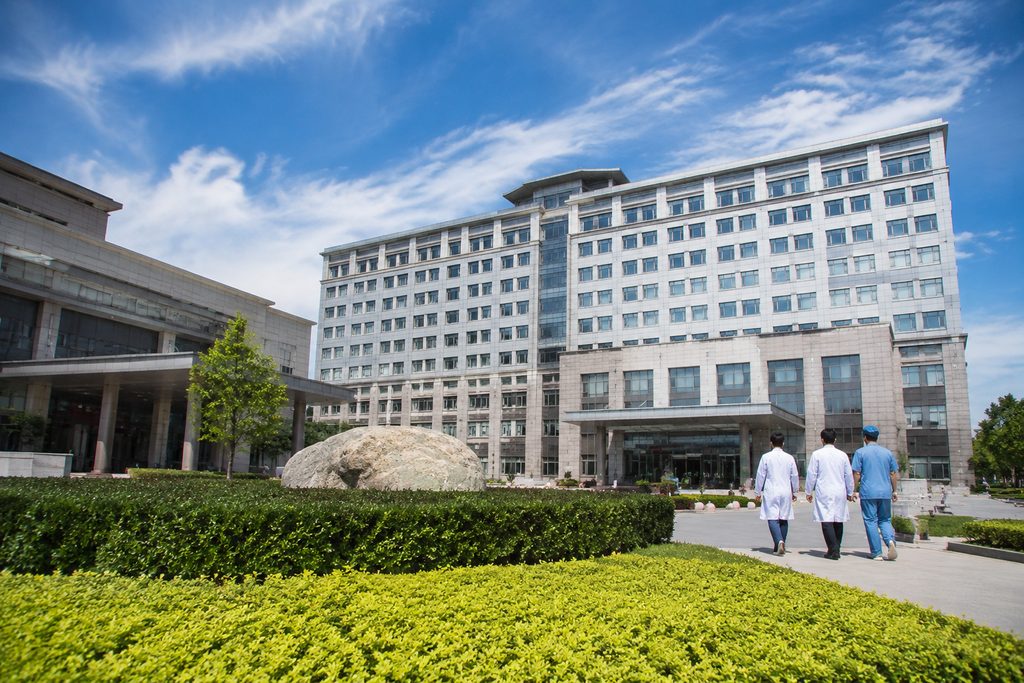
You’ve probably heard that getting top-tier medical care in China means either paying Western private-hospital prices or wrestling with a system you can’t navigate. For urology, that assumption falls apart quickly. Peking University First Hospital (PKUFH) runs one of China’s most respected urology departments — and the Peking University First Hospital urology price for international patients lands far below what you’d pay in the US, UK, or Australia for comparable expertise.
But here’s what most overseas patients don’t realize: you can’t just email the hospital and book a surgery slot. The system works differently. Understanding that difference is the difference between a smooth experience and a wasted trip.
Key Takeaways
- PKUFH’s urology department is consistently ranked among China’s top programs, with the hospital itself placed in the top tier of the Fudan University Hospital Rankings.
- Urology procedures in China typically cost 70–80% less than equivalent care in the United States, even through international patient channels.
- Public hospital outpatient clinics cannot be pre-booked from overseas — you need either a local coordinator or the hospital’s international/VIP pathway.
- S2 visa is the correct category for medical treatment in China; M visa is for commercial activity and does not apply to medical travel.
The Problem: Urology Care at Western Prices Is Breaking People
A robotic-assisted radical prostatectomy in the United States runs anywhere from $35,000 to $70,000 depending on the hospital and insurance arrangement. Even with coverage, out-of-pocket costs routinely exceed $8,000. In the UK, NHS waiting times for non-emergency urology procedures stretched past 18 weeks for many patients in 2024, with some trusts reporting waits beyond a year for benign conditions like kidney stone removal or BPH surgery.
That’s the reality for millions of patients facing urological issues — kidney stones, prostate conditions, bladder cancer, urinary tract reconstruction. The pain is real, the wait is long, and the bill is staggering. And if you’re uninsured or underinsured, the math simply doesn’t work.
Meanwhile, China’s top urology centers handle surgical volumes that dwarf most Western departments. Volume matters in surgery. A surgeon who performs 300 prostatectomies a year has seen complications and anatomical variations that a surgeon doing 60 a year may never encounter.
Why Peking University First Hospital Urology Delivers Results
Clinical Volume That Builds Surgical Muscle
PKUFH is a massive academic medical center, the kind that sees over 10,000 outpatient visits on a single busy day. Its urology department is one of the largest in northern China, handling complex cases referred from across the country. That means the surgeons here have seen the hard cases — the failed prior surgeries, the anatomical anomalies, the advanced tumors. For an international patient, that depth translates into confidence that your case won’t be the first of its kind on the table.
The Fudan University Hospital Rankings place PKUFH in the top tier (A++++ band) among China’s roughly 35,000 hospitals. The urology specialty consistently appears among the top programs in the country’s specialty reputation rankings. That’s not marketing language — it’s a peer-reviewed assessment by Chinese clinicians themselves.
Technology Without the Premium Price Tag
Chinese hospitals adopted robotic surgery platforms later than Western centers, but they adopted them at scale. PKUFH operates multiple robotic systems, and its urologists routinely perform robotic-assisted prostatectomy, partial nephrectomy, and cystectomy. The difference is cost structure. A robotic procedure in the US carries a premium because of capital costs, malpractice insurance, and administrative overhead. In China, those overhead costs are structurally lower.
That doesn’t mean the equipment is inferior. It means the economics are different. The same da Vinci system, the same training standards, a fraction of the bill.
Peking University First Hospital Urology Price: The Math That Changes Decisions
Let’s talk numbers. The Peking University First Hospital urology price for common procedures through its international patient pathway typically falls in these ranges — though final quotes always depend on your specific diagnosis, complexity, and chosen room category:
| Procedure | China (International Pathway) | United States (Average) |
|---|---|---|
| Robotic radical prostatectomy | $15,000 – $25,000 | $35,000 – $70,000 |
| Percutaneous nephrolithotomy (kidney stones) | $6,000 – $10,000 | $25,000 – $45,000 |
| Transurethral resection of bladder tumor | $4,000 – $8,000 | $15,000 – $30,000 |
| Laparoscopic partial nephrectomy | $12,000 – $20,000 | $30,000 – $55,000 |
These figures reflect the international department or VIP channel pricing — roughly 1.5 to 2 times standard public rates — and they still come in at 70–80% below US benchmarks. That’s the structural advantage of China’s hospital economics: lower labor costs, high patient throughput, and state-subsidized infrastructure. Quality doesn’t drop with price. The surgeons are the same ones operating in the public wards; you’re paying for coordination, English-language support, and a smoother admission process.
How to Book Urology Treatment at Peking University First Hospital
The single biggest misconception international patients have is that they can email the hospital, send their scans, and get a surgery date. That’s not how Chinese public hospitals work — not even the famous ones. The standard outpatient pathway requires in-person registration on the day of the visit. You queue, you get a number, you see the doctor. Surgery is only scheduled after that face-to-face consultation.
For international patients, there are two realistic routes.
The first is the hospital’s international medical department. PKUFH has dedicated staff who handle foreign patients, arrange appointments with senior specialists, and provide interpretation during consultations. You contact them directly, send your medical records for review, and they coordinate the visit. The catch: they handle a high volume of inquiries, and response times can stretch.
The second route is working with a medical coordination service — which is where China Medical Services fits. We translate your records, route them to the right department, and arrange the appointment through official channels. We don’t skip queues or buy access. We handle the logistics so you’re not navigating a Chinese hospital system alone.
The practical sequence for how to book urology treatment at Peking University First Hospital looks like this:
- Step 1: Gather all existing medical records — imaging, lab results, pathology reports, prior surgical notes. These must be in English or translated to Chinese.
- Step 2: Submit records for a written second opinion. A PKUFH urologist reviews your case and provides a treatment recommendation. This costs $300–500 and gives you a clear picture of whether traveling is worthwhile.
- Step 3: If surgery is indicated, schedule a video consultation ($500–800 for a top specialist) to discuss the plan directly.
- Step 4: Travel to Beijing on an S2 visa, with the hospital’s invitation letter supporting your application.
- Step 5: Attend the in-person consultation, complete pre-operative testing, and schedule the procedure according to the surgeon’s availability.
Expect the entire process from first contact to surgery date to take 3–6 weeks, depending on record completeness and specialist availability.
Is Peking University First Hospital Good for Urology? What the Evidence Says
The short answer: yes, by any objective measure. The longer answer requires understanding how Chinese hospitals are evaluated.
The Fudan University Hospital Rankings — China’s most authoritative hospital assessment system — places PKUFH in the A++++ tier, the highest of five bands. Only a handful of hospitals nationwide reach this level. In urology specifically, PKUFH’s department appears in the top 10 of the Fudan specialty reputation rankings, a distinction earned through peer voting by urologists across China who know which departments actually deliver.
What does that mean for you as a foreign patient? It means the surgeons you’ll meet have trained at one of China’s oldest and most rigorous medical institutions. Peking University Health Science Center dates back to 1912. The urology department has been a standalone unit since the 1940s — one of the first in China. This isn’t a new program finding its footing. It’s a mature department with decades of accumulated surgical experience.
And the international patient pathway exists precisely because Beijing attracts medical travelers from across Asia, the Middle East, and increasingly Europe and North America. The hospital knows how to handle foreign patients. That institutional familiarity reduces friction.
Practical Considerations: Visas, Payment, and What to Bring
Let’s cover the logistics that actually matter when you’re planning urology treatment in Beijing.
Visa: You’ll apply for an S2 visa, which covers short-term private affairs including medical treatment. Your accompanying family members also apply for S2. If your treatment and recovery will exceed 180 days, you’ll need an S1 visa instead. The hospital or your coordination service provides an invitation letter and treatment confirmation that supports your application. Approval is not guaranteed — each Chinese embassy and consulate applies its own scrutiny — but a complete medical file and clear treatment plan substantially improve your odds.
Payment: Chinese public hospitals require pre-payment. You’ll deposit funds at admission, and the hospital draws down as services are provided. International departments typically accept wire transfers and major credit cards, though payment methods vary. Insurance reimbursement is your responsibility — most Chinese public hospitals do not bill international insurers directly. You pay, then claim.
Records: Bring everything. Original imaging on CD or USB, not just printed reports. Pathology slides if relevant. A detailed medication list. Prior surgical notes. The more complete your file, the faster the clinical team can assess your case.
Language: Even in the international department, not every nurse or technician speaks English. A bilingual companion who handles registration, payment queues, pharmacy pickups, and interpretation during tests makes the difference between a stressful week and a manageable one. That’s a service we provide — from $300 per day for a full day of accompaniment.
Follow-up: Plan for at least 7–14 days in Beijing after surgery before flying home. Your surgeon will want to see you for wound checks and early recovery assessment. Long-haul flights immediately after urological surgery increase clot risk — follow your surgeon’s guidance on when it’s safe to travel.
Frequently Asked Questions
No. Chinese public hospitals, including PKUFH, require an in-person consultation before scheduling surgery. You can complete a written second opinion and video consultation remotely, but the final surgical booking happens after you meet the surgeon face-to-face. Anyone promising a locked surgery date before you travel is not being honest with you.
That happens, and it’s usually a good thing. The point of the second opinion is to get an independent assessment from a top-tier urology team. Sometimes they’ll recommend a less invasive approach, sometimes a more aggressive one. You’re never obligated to proceed. The consultation fee covers the medical opinion, not a commitment to surgery. If you decide not to travel, you’ve spent a few hundred dollars for clarity — cheap compared to a wasted trip.
PKUFH is a full-service academic medical center with intensive care, interventional radiology, and every specialty you’d need for managing complications. You won’t be transferred elsewhere. That said, complication rates are not zero anywhere — no honest surgeon promises otherwise. What you’re getting is a hospital with the infrastructure and experience to handle the hard cases. For follow-up after you return home, your local urologist takes over, and the PKUFH team can provide treatment summaries and imaging records to support that transition.
For most foreign patients, yes. The standard public route means queuing at 6 AM for a registration number, navigating a system entirely in Chinese, and potentially waiting weeks for a specialist appointment. The international pathway costs roughly 1.5 to 2 times more, but you get English-speaking coordination, priority scheduling, and a private or semi-private room. If you value your time and sanity, the premium is justified.
Your Next Step
Peking University First Hospital offers international patients a rare combination: top-tier urological expertise, surgical volume that builds genuine skill, and a price structure that makes treatment accessible without insurance battles. The trade-off is that the system requires navigation — records in order, visa in hand, and someone on the ground who speaks the language.
That’s what we do at China Medical Services. We’re not a hospital and we don’t provide medical advice. We handle the logistics: record translation, appointment coordination through official hospital channels, bilingual accompaniment, and visa guidance. If you’re considering urology treatment at PKUFH, start with a conversation. Tell us your diagnosis, send your records, and we’ll tell you honestly whether this route makes sense for your case. No pressure, no obligation — just a clear picture of your options.
For more medical information and treatment options in China, visit chinamedservices.com (China Medical Services).
