Peking Union Medical College Hospital Vascular Surgery: A Guide for International Patients
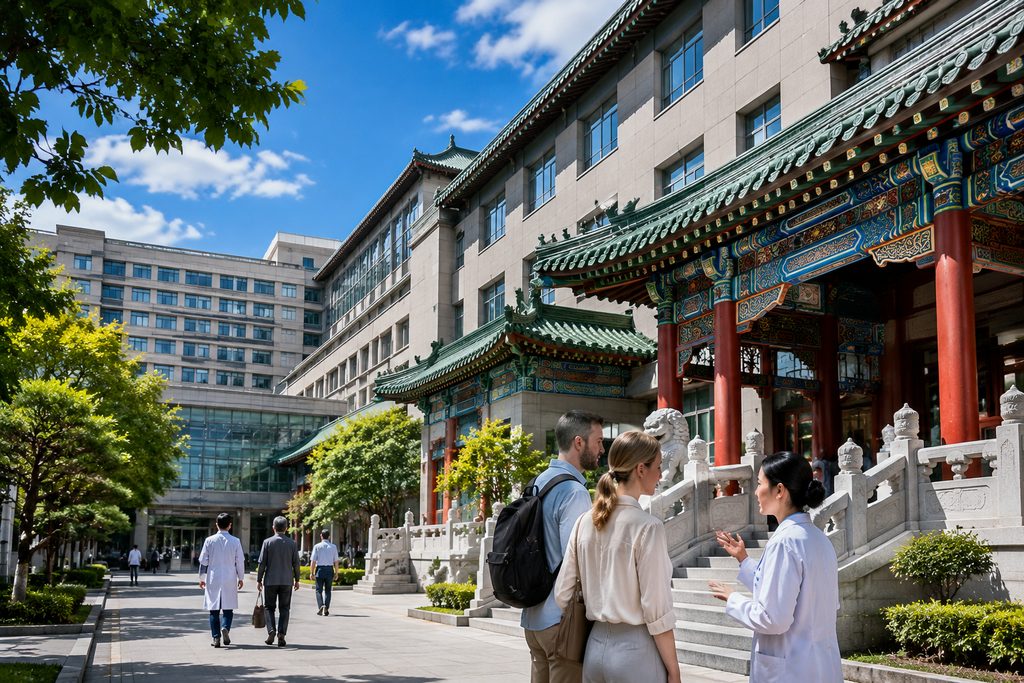
Peking Union Medical College Hospital Vascular Surgery for International Patients: What to Know Before You Plan
Have you been told you need vascular surgery and wondered whether traveling to China for the procedure makes sense? You are not alone. Each year, a growing number of international patients evaluate Peking Union Medical College Hospital vascular surgery cost against what they would pay at home. The answer often surprises them. But cost is only one part of the equation. This guide walks through what actually happens when a foreign patient pursues vascular care at one of China’s most respected medical institutions.
Peking Union Medical College Hospital, known locally as PUMCH and formally as Peking Union Medical College Hospital, sits in central Beijing. It consistently appears in the top tier of the Fudan University hospital rankings, a classification system covering China’s top 100 hospitals. For vascular surgery specifically, the hospital’s department handles the full spectrum of arterial and venous disease, from complex aortic repairs to lower limb revascularization. Our team at China Medical Services has helped patients from North America, Europe, the Middle East, and Southeast Asia navigate this exact process. Here is what we have learned.
How This Actually Works, Step by Step
The path from initial inquiry to post-operative recovery follows a predictable sequence. Understanding it removes most of the anxiety international patients feel.
First, you send your existing medical records. This means imaging reports, angiograms, CT scans, ultrasound results, blood work, and any prior surgical notes. We translate these into Chinese and route them to the vascular surgery department for review. The review typically takes three to five business days. What comes back is a preliminary assessment: whether your case is appropriate for treatment at PUMCH, which specialist would likely take the case, and what additional testing might be needed.
Second, you decide on a consultation format. A written second opinion costs between $300 and $500 and gives you a documented analysis of your condition plus treatment direction. A video consultation with a vascular specialist runs $500 to $800 and lets you speak directly with the team. For complex cases involving multiple vascular territories, a multidisciplinary team video consultation costs $1,500 to $2,000. Any of these fees are credited in full toward on-the-ground coordination if you proceed to treatment within 90 days.
Third, if you move forward, we coordinate the in-person visit. This includes hospital registration, scheduling the face-to-face consultation, arranging any pre-operative testing, and providing a bilingual medical companion from $300 per day. The companion handles queues, payments, translation, and navigation. Without this support, even a straightforward hospital visit can consume an entire day.
Fourth, surgery is scheduled. No hospital in China, including PUMCH, will confirm a surgery date before the surgeon has met you in person. This is a hard rule of the Chinese public hospital system. The in-person consultation must happen first. Only then can the surgical team commit to a date.
Peking Union Medical College Hospital Vascular Surgery Cost: The Real Numbers
Let us talk about the figure most patients search for first. The Peking Union Medical College Hospital vascular surgery cost varies significantly by procedure type, case complexity, and whether you use the standard public channel or the international VIP channel. Here are realistic ranges based on cases we have coordinated, cross-referenced with published hospital fee schedules.
| Procedure | Estimated Cost at PUMCH (USD) | Typical US Cost (USD) |
|---|---|---|
| Lower limb arterial bypass | $12,000 – $20,000 | $60,000 – $120,000 |
| Carotid endarterectomy | $8,000 – $15,000 | $35,000 – $80,000 |
| Endovascular aneurysm repair (EVAR) | $25,000 – $40,000 | $80,000 – $150,000 |
| Open abdominal aortic aneurysm repair | $20,000 – $35,000 | $70,000 – $140,000 |
| Varicose vein radiofrequency ablation (one leg) | $3,000 – $6,000 | $8,000 – $20,000 |
| Dialysis access fistula creation | $2,500 – $5,000 | $10,000 – $25,000 |
These figures cover the hospital portion: surgeon fees, operating room time, anesthesia, standard ward stay, and routine post-operative care. They do not include international VIP channel markups, which typically run 1.5 to 2 times the standard rate. They also exclude travel, accommodation, and our coordination fees. The final quote always depends on your specific anatomy, comorbidities, and the surgeon’s chosen approach. No responsible provider will give you a fixed price before reviewing your imaging.
Why the gap? Chinese public hospitals operate at enormous scale. PUMCH performs thousands of vascular procedures annually. Volume drives efficiency. Labor costs for nurses, technicians, and support staff are structurally lower than in the US or Western Europe. But you are not buying a discount product. You are buying access to a surgical team that handles complex vascular pathology daily, often with case volumes exceeding what a typical Western vascular surgeon sees in a year.
A Realistic Timeline
People underestimate how long the full arc takes. Here is an honest breakdown, including the waiting steps nobody mentions in brochures.
| Stage | What Happens | Typical Duration |
|---|---|---|
| Week 1–2 | You gather and send medical records; we translate and submit | 5–10 business days |
| Week 2–3 | Vascular department reviews; preliminary assessment returned | 3–7 business days |
| Week 3–5 | Video consultation or written second opinion | 1–2 weeks scheduling lead time |
| Week 5–8 | S2 visa application with hospital invitation letter | 2–4 weeks, varies by embassy |
| Week 8–9 | Travel to Beijing; in-person consultation and pre-op testing | 3–5 days in hospital |
| Week 9–10 | Surgery scheduled and performed | 1–2 weeks after in-person consult |
| Week 10–14 | Post-operative recovery, follow-up imaging, discharge | 1–3 weeks depending on procedure |
Total realistic timeline: two to four months from first contact to completed surgery. Anyone promising faster is either cutting corners or unaware of how Chinese hospital logistics actually work. The S2 visa alone can take a month depending on your home country’s Chinese embassy workload. Document translation is not instantaneous. And the vascular surgery department at PUMCH is busy. Senior surgeons have packed schedules. You are not walking in and getting operated on the same week.
What Can Go Wrong — and What Happens Then
We believe in telling patients the truth before they book a flight. Here are the failure modes we have seen, and what the recourse actually looks like.
Your case is declined after review. This happens. Not every vascular condition is appropriate for treatment at PUMCH. The department may determine your anatomy is too high-risk, or that your condition is better managed conservatively, or that the specific procedure you want is not the right approach. What happens then? You receive a written explanation from the reviewing team. We then work with you to identify alternatives — another top-tier hospital in our network of 340+ facilities, or a different treatment pathway entirely. The consultation fee is not refunded, but you are not locked into anything.
The surgeon changes the plan after seeing you in person. This is common and usually good news. Imaging tells a story, but a physical exam, a fresh duplex ultrasound, and a conversation with you can change the surgical strategy. What you discussed on video might become a different procedure — less invasive, or occasionally more extensive. You retain full decision rights. The surgeon will not operate without your informed consent.
Complications occur. Vascular surgery carries real risk: bleeding, infection, graft occlusion, nerve injury, stroke in carotid cases. PUMCH has the infrastructure to manage these — dedicated vascular ICU beds, interventional radiology on standby, and experienced nursing teams. But no hospital eliminates risk. You should understand that a complication in a foreign country, far from your home support network, is harder to navigate emotionally. Our bilingual companion remains with you through the acute phase. We also coordinate communication with your family back home.
Insurance reimbursement is denied or delayed. Chinese public hospitals require pre-payment. You pay the estimated surgical cost upfront, and the hospital settles the final amount on discharge. Your international insurance company reimburses you afterward — if your policy covers treatment abroad. Some policies exclude China. Some require pre-authorization. Check this before you commit. We provide itemized invoices and translated medical records to support your claim, but we cannot force an insurer to pay.
Is Vascular Surgery Safe in China? What the Numbers Show
This question comes up in nearly every initial consultation. The honest answer requires nuance.
China’s top-tier public hospitals operate under regulatory oversight from the National Health Commission. Infection control protocols, surgical safety checklists, and adverse event reporting are mandated. PUMCH specifically maintains accreditation and participates in international quality reviews. The hospital’s vascular surgery department performs a high volume of procedures — and in vascular surgery, volume correlates with outcomes. Studies published in peer-reviewed journals have repeatedly shown that higher surgical volume predicts lower mortality for procedures like abdominal aortic aneurysm repair and carotid endarterectomy. PUMCH’s case volume places it firmly in the high-volume category.
But safety is not just about the operating room. It is about communication. A patient who cannot understand discharge instructions, medication schedules, or warning signs of complications faces elevated risk regardless of surgical skill. That is why we insist on bilingual support. It is not a luxury. It is a safety intervention.
For international patients specifically, the international VIP channel at PUMCH provides English-speaking coordination, private rooms, and expedited scheduling. The cost runs 1.5 to 2 times the standard rate. For many patients, the reduced friction justifies the premium. For others, the standard channel with our bilingual companion is sufficient. Both are legitimate paths. Neither compromises the quality of the surgical team — you are seeing the same senior vascular surgeons either way.
How to Evaluate Whether PUMCH Is the Right Choice for You
Not every vascular patient should go to PUMCH. Here is the decision framework we use with our clients.
Consider PUMCH if your case is complex. Aortic arch pathology, redo bypass surgery, combined arterial and venous disease, or vascular conditions complicated by diabetes or renal failure — these are cases where PUMCH’s depth of experience matters. The hospital sees the hard cases that community hospitals refer upward. If your local vascular surgeon has told you your case is “unusual” or “high-risk,” that is a signal to consider a high-volume center.
Consider alternatives if your case is routine. A straightforward varicose vein ablation or a simple dialysis fistula does not require a trip to Beijing. You might be better served by a private international hospital with JCI accreditation and direct insurance billing, such as those listed in our private hospital directory. The surgical outcome will be similar, and the logistics will be simpler.
Consider a different top-tier public hospital if your condition has a specific sub-specialty angle. China’s Fudan rankings include a vascular surgery category, and several hospitals compete for the top positions. Our department rankings page breaks down the top 10 hospitals for vascular surgery and other specialties. PUMCH is excellent, but it is not the only excellent option. Fuwai Hospital, for instance, handles a massive volume of cardiovascular procedures including complex vascular work. The right choice depends on your specific diagnosis.
What about the question of how to book vascular surgery at Peking Union Medical College Hospital? The answer is that you cannot book surgery directly. Not from abroad, not even from within China. You book a consultation. The surgery follows. This is true for every public hospital in China. Private international hospitals sometimes allow more direct scheduling, but PUMCH operates under public hospital rules. Anyone who tells you they can lock in a surgery date before the surgeon has seen you is misrepresenting how the system works.
Practical Considerations: Visa, Payment, Records, and Follow-Up
These are the details that determine whether your trip goes smoothly or becomes a logistical nightmare.
Visa. You need an S2 visa for medical treatment in China. The S2 is a short-stay visa category used for private affairs, including medical treatment. Your accompanying family member also applies for an S2. Stays beyond 180 days require an S1 visa. The hospital provides an invitation letter and treatment confirmation documents that support your application. Processing time varies by embassy — plan for two to four weeks. We guide you through the document package, but approval is always at the discretion of the Chinese embassy or consulate. No one can guarantee a visa.
Payment. Chinese public hospitals require upfront deposit. The estimated surgical cost is paid before admission, and the hospital settles the difference on discharge. Bring a payment method that works in China — international credit cards are accepted at PUMCH’s international department, but daily limits can be an issue. Wire transfers are more reliable for large amounts. Your insurance reimbursement happens after the fact, assuming your policy covers treatment in China.
Records. Bring everything. Original imaging on CD or USB, not just printed reports. Prior operative notes if this is a redo procedure. A complete medication list with dosages. Allergy information. Your most recent blood work. Missing records cause delays. We help you assemble and translate the package, but the source documents must come from you.
Follow-up at home. Vascular surgery requires long-term surveillance. Bypass grafts need duplex ultrasound monitoring. Aortic stent grafts need annual CT scans. Before you leave Beijing, get a written follow-up protocol from the surgical team — what to monitor, how often, what warning signs warrant immediate attention. Then find a local vascular specialist at home who will accept the Chinese operative report and imaging. Some Western surgeons are reluctant to take over care from a foreign hospital. Identify your home follow-up provider before you travel, not after you return.
Frequently Asked Questions
Lower limb arterial bypass at a top-tier public hospital in Beijing typically ranges from $12,000 to $20,000. Carotid endarterectomy runs $8,000 to $15,000. These figures cover the hospital portion only and vary by case complexity, length of stay, and whether you use the international VIP channel.
At top-ranked hospitals like PUMCH, safety standards are comparable to Western academic medical centers. High surgical volume, mandated safety protocols, and experienced ICU support all contribute. The main risk factor for international patients is communication breakdown, which is why bilingual support matters as much as the surgeon’s skill.
No. Chinese public hospital rules require an in-person consultation before any surgery can be scheduled. You can arrange a video consultation or written second opinion in advance, but the surgical date is only confirmed after the surgeon meets you face-to-face and reviews your case in person.
Peking Union Medical College Hospital is consistently ranked among China’s top hospitals for vascular surgery. Other strong options include Fuwai Hospital in Beijing and Zhongshan Hospital in Shanghai. The best choice depends on your specific diagnosis, case complexity, and whether you prefer a public hospital with an international department or a private JCI-accredited facility.
Most packages cover the hospital portion: surgeon fees, operating room, anesthesia, standard ward, and routine post-operative care. They typically exclude travel, accommodation, visa fees, coordination services, and any complications requiring extended ICU stay. Always ask for a written breakdown of what is included before committing.
Your Next Step
The decision to pursue vascular surgery abroad is significant. It deserves careful evaluation, not a rushed booking. Our team at China Medical Services exists to make that evaluation grounded in facts rather than guesswork. We do not perform surgery, and we do not promise outcomes. What we do is connect you with the right specialists at hospitals like PUMCH, handle the translation and coordination, and stand beside you through the process.
If you are weighing your options, start with a conversation. Send us your records, and we will help you understand whether PUMCH is the right fit for your case. You can learn more about our coordination services at our patient services page. No
For more medical information and treatment options in China, visit chinamedservices.com (China Medical Services).
