Is Medical Imaging Safe in China? Standards, Costs, and How to Verify Quality
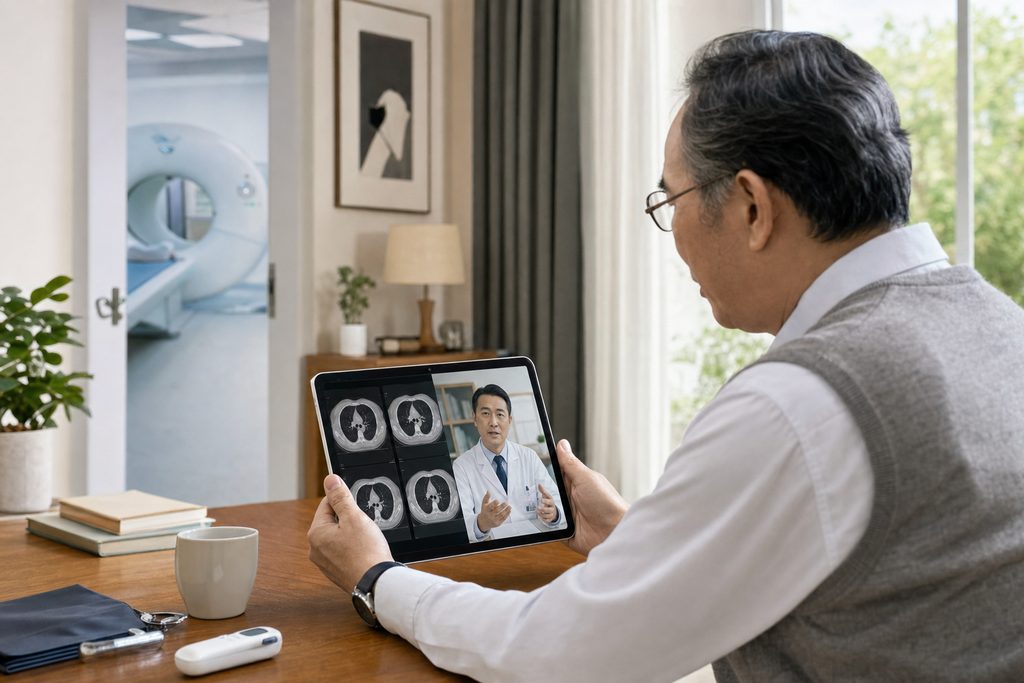
Have you ever looked at an MRI report from another country and wondered whether you can actually trust what it says? That question sits at the heart of every international patient’s decision to seek diagnosis abroad. The short answer to is medical imaging safe in China is yes — at accredited, top-tier hospitals, the equipment, protocols, and radiologist training meet or exceed international benchmarks. But the honest answer requires context. Safety depends on where you go, who reads the scan, and how the images are handled. This article explains exactly what you need to know before you book a CT scan in Beijing or an MRI in Shanghai.
China operates more than 35,000 hospitals nationwide. The top 5% — roughly 340+ facilities ranked by the Fudan University hospital rankings and JCI accreditation — perform imaging at a level comparable to major centers in the United States, Germany, and Singapore. The gap between a top-tier academic hospital and an unranked county facility is enormous. Understanding that gap is the first step toward making a safe decision.
How This Actually Works, Step by Step
You are sitting at home with a referral from your local doctor. You need an MRI, a CT, or a PET-CT. Here is the real sequence when you work with a medical coordination team in China.
First, you send your existing medical records — referral notes, previous scans, blood work, anything relevant. Our team translates these documents into Chinese and forwards them to the appropriate department at a top-tier hospital. A radiologist or specialist reviews your case and confirms whether imaging is clinically appropriate. This step matters. Chinese hospitals will not perform unnecessary scans simply because a patient requests them, especially at the international departments.
Second, the hospital confirms the specific imaging protocol. For a liver lesion, that might be a multiphase contrast-enhanced MRI at 3 Tesla. For a lung nodule, a low-dose CT. The protocol is set by the reading radiologist, not by the patient. You receive a clear explanation of what the scan involves, how long it takes, and what preparation is required — fasting, contrast allergy screening, kidney function tests.
Third, you arrive for the scan. A bilingual medical companion meets you at the hospital, handles registration and payment, and stays with you through the entire process. The scan itself takes anywhere from 10 minutes for a standard CT to 45 minutes for a full-body MRI. Afterward, the images are reviewed by a board-certified radiologist. At major academic centers, complex cases are often read by subspecialists — a neuroradiologist for brain imaging, a musculoskeletal radiologist for joint scans.
Fourth, you receive the written report. In most cases, reports are available within 24 to 72 hours. You also receive the raw DICOM files on a CD or USB drive, which you can take back to your home physician. This is standard practice and you should insist on it.
Is Medical Imaging Safe in China: Equipment Standards and Accreditation
The direct answer to is medical imaging safe in China is tied to one factor more than any other: equipment and accreditation status. The country’s top hospitals operate some of the most advanced imaging technology in the world. Fuwai Hospital in Beijing, which performs over 14,000 cardiac surgeries annually, runs multiple 3 Tesla MRI machines and dual-source CT scanners. Peking Union Medical College Hospital operates PET-MRI systems that are still rare in many Western countries. Shanghai’s Zhongshan Hospital, affiliated with Fudan University, handles one of the highest imaging volumes globally — which translates into radiologists who see rare pathology every single day.
But equipment is only half the story. Safety in medical imaging means three things: radiation dose management, contrast agent protocols, and diagnostic accuracy. On all three fronts, top Chinese hospitals perform well.
Radiation dose is tracked and minimized. Modern CT scanners in China’s top facilities use iterative reconstruction software that reduces radiation exposure by 30% to 60% compared to older machines. The Chinese Society of Radiology publishes dose reference levels that align with international standards from the International Commission on Radiological Protection. Hospitals that participate in JCI accreditation — and many of the private international facilities do — undergo regular audits of their radiation safety procedures.
Contrast agents present a separate risk. Gadolinium-based contrast for MRI and iodine-based contrast for CT can trigger allergic reactions or, rarely, kidney damage. Before any contrast-enhanced scan, Chinese hospitals require a recent creatinine test to assess kidney function. Allergy history is reviewed. Emergency response protocols are in place. This is standard practice at any reputable facility — but it is not universal at smaller, unranked hospitals.
The practical takeaway: choose a hospital from the Fudan Top 100 list or a JCI-accredited private facility, and the imaging safety profile is comparable to what you would find in any developed country. Choose an unvetted facility, and you are taking an unnecessary risk.
A Realistic Timeline
People underestimate how long the process takes. Here is a realistic breakdown, assuming you are coordinating from overseas.
| Stage | What Happens | Typical Duration |
|---|---|---|
| Day 1–3 | You send medical records; our team translates and forwards them to the hospital | 2–3 days |
| Day 3–7 | Radiologist reviews records and confirms imaging protocol | 2–5 days |
| Day 7–14 | Appointment scheduling at the hospital imaging department | 3–10 days |
| Day 14–30 | Visa processing (S2 visa for medical treatment) and travel arrangements | 1–3 weeks |
| Day 30–32 | Arrival in China; hospital registration and pre-scan preparation | 1–2 days |
| Day 32–33 | Imaging performed | Same day |
| Day 33–36 | Radiologist report finalized; DICOM files delivered | 24–72 hours |
| Day 36+ | Follow-up consultation with specialist (if needed) | 3–7 days |
Document translation is the step people forget. A referral letter written in English must be professionally translated into Chinese before a top hospital will accept it. This adds 2 to 3 days. Visa processing adds another 1 to 3 weeks, depending on your home country’s Chinese embassy workload. If you need an S2 visa, the hospital must provide an invitation letter — which only happens after your appointment is confirmed.
And here is a reality check: you cannot simply walk into a public hospital’s general outpatient department and demand an MRI the same day. The general queue at a major Beijing hospital can stretch for days or weeks. The international department or VIP channel is different — appointments are scheduled in advance, and scan times are often within 48 hours of arrival. That is what the coordination fee covers: not queue-jumping, but official scheduling through the hospital’s designated international service desk.
What Can Go Wrong — and What Happens Then
Let us be direct about the failure modes. They exist, and pretending otherwise does not serve anyone.
The most common problem: a patient arrives with a scan request that the Chinese radiologist deems unnecessary. Perhaps the referral is vague, or the clinical question is unclear. What happens then? The hospital will not perform the scan. This is actually a safety feature — unnecessary radiation exposure is a real harm. Our team would then arrange a video consultation with a Chinese specialist to clarify the clinical need and determine the appropriate imaging. That consultation costs between $100 and $300, and it usually resolves the issue.
Another failure mode: the scan is performed, but the report is written in dense medical Chinese with no English translation. This happens more often than you might expect at public hospitals. The fix is straightforward — our team arranges a certified medical translation of the report, usually within 24 hours. The DICOM images themselves are language-neutral, so your home physician can read them regardless.
A third issue: contrast reactions. Anaphylactic reactions to iodine-based contrast occur in approximately 0.04% to 0.22% of patients. Every reputable Chinese hospital has emergency crash carts and trained staff in the imaging suite. But the response time is faster at top-tier academic centers than at smaller facilities. If you have a history of contrast allergy, this must be flagged before scheduling.
Finally, there is the question of report quality. Can you trust radiology reports from China? At top hospitals, yes. Radiologists at Fudan-ranked centers complete 5-year residency programs, subspecialty fellowships, and read thousands of cases annually. But at unranked hospitals, training varies. The answer depends entirely on where you go. This is not a country-level question — it is a hospital-level question.
Can You Trust Radiology Reports from China: What the Numbers Mean
The phrase “can I trust radiology reports from China” deserves a more nuanced answer than a simple yes or no. Here is what actually determines report quality.
Volume matters. A radiologist at a major Chinese academic center may read 50 to 100 CT studies per day. That is an extraordinary volume — far higher than the typical Western radiologist’s daily load. High volume cuts both ways. On one hand, pattern recognition becomes deeply ingrained; rare findings are less likely to be missed because the radiologist has seen them before. On the other hand, fatigue is real. Top hospitals manage this with subspecialty division — chest radiologists read only chest CTs, neuro-radiologists read only brain MRIs. This is the standard at Fudan Top 100 hospitals.
Second opinion culture is growing. Many Chinese hospitals now have formal double-reading protocols for complex oncology cases. A second radiologist independently reviews the scan before the report is finalized. If you want an additional layer of verification, you can request a written second opinion from a different hospital entirely. That costs between $300 and $500, and it provides an independent assessment of the same images.
What about the equipment itself? A 1.5 Tesla MRI produces lower-resolution images than a 3 Tesla machine. An old 16-slice CT scanner misses small pulmonary nodules that a 64-slice or 256-slice scanner catches. When you are comparing hospitals, ask about the specific machine model. Top-tier Chinese hospitals publish their equipment lists. If a facility cannot tell you what scanner they use, that is a red flag.
For patients seeking the best diagnostic imaging clinic China has to offer, the answer is rarely a standalone clinic. The best imaging happens inside major hospital systems — because the radiologists there are integrated with clinical departments. A scan read in isolation, without access to the patient’s full clinical picture, is a weaker scan. This is why we recommend imaging at hospitals rather than independent imaging centers.
Medical Imaging Scan Packages Abroad: Cost Reality Check
Cost is the reason most international patients consider China for imaging. The numbers are stark.
| Imaging Study | China (Top-Tier Hospital) | United States (Average) | Europe (Average) |
|---|---|---|---|
| MRI (single region, no contrast) | $150–$400 | $1,200–$3,000 | $600–$1,500 |
| MRI (with contrast) | $250–$600 | $2,000–$4,500 | $800–$2,000 |
| CT scan (chest or abdomen) | $100–$300 | $800–$2,500 | $400–$1,200 |
| PET-CT (whole body) | $700–$1,200 | $4,000–$7,000 | $2,500–$5,000 |
| Full-body screening package | $500–$1,500 | $3,000–$8,000 | $2,000–$5,000 |
The MRI scan cost Shanghai patients typically encounter at a top public hospital’s international department runs from $150 to $400 for a single region without contrast. Add contrast, and the price climbs to $250 to $600. A CT scan price Beijing hospital patients pay at a facility like Peking Union Medical College Hospital’s international wing ranges from $100 to $300 for a standard chest or abdominal study. These prices vary by hospital and case complexity — a cardiac MRI with stress testing costs more than a routine knee MRI.
What about medical imaging scan packages abroad? Many hospitals offer bundled screening packages — head MRI, chest CT, abdominal ultrasound, blood work — for $500 to $1,500. These packages are popular with medical tourists who want a comprehensive checkup during a single visit. The quality is high at top hospitals, but be clear about what the package includes. A “full-body MRI” is not actually full-body; it covers specific regions. Read the fine print.
One caution: do not chase the lowest price. A $50 CT scan at an unaccredited facility is not a bargain — it is a risk. The savings from choosing a top-tier hospital over a budget clinic amount to a few hundred dollars. The cost of a missed diagnosis is incalculable.
Practical Considerations: Records, Visa, Payment, and Follow-Up
Bring all prior imaging. Every previous scan, on CD or USB, in DICOM format. Chinese radiologists will compare new images against old ones. A lung nodule that has been stable for two years means something different than a new nodule. Without priors, the radiologist is working blind.
Visa category is specific. Foreign nationals seeking medical treatment in China apply for an S2 visa, annotated for medical purposes. Family members accompanying the patient also apply for S2 visas. The hospital must provide an official invitation letter confirming your appointment before the visa application can proceed. Processing time varies by embassy, but plan for 2 to 4 weeks. Do not book flights until the visa is issued.
Payment is upfront at public hospitals. The international department will give you a cost estimate before the scan. You pay the full amount before the procedure. If you have international insurance, you submit the claim afterward for reimbursement. Private international hospitals like United Family or Jiahui often handle direct insurance billing — which is a significant convenience factor.
Language is a real barrier at public hospitals, even in international departments. Signage may be bilingual, but the technologist performing your scan likely speaks only Chinese. A bilingual medical companion handles this — explaining the procedure, relaying your concerns, and ensuring you understand the preparation instructions. This is not a luxury; it is a safety measure.
Follow-up at home is part of the plan. Before you leave China, confirm that you have the written report in English, the DICOM files on physical media, and contact information for the reading radiologist’s department. Your home physician should be able to access everything without needing to contact the Chinese hospital directly. If questions arise later, our team can facilitate communication with the radiology department.
Frequently Asked Questions
At Fudan-ranked and JCI-accredited hospitals, yes. Equipment is modern, radiologists are well-trained, and radiation dose protocols align with international standards. The safety gap appears at unranked facilities, where equipment may be older and quality control less rigorous.
Reports from top-tier academic hospitals are reliable. Radiologists at these centers complete rigorous training and read high volumes of cases. For added assurance, request a written second opinion from an independent hospital — this costs $300 to $500 and provides verification of the initial reading.
An MRI at a top Shanghai hospital’s international department costs $150 to $400 for a single region without contrast, and $250 to $600 with contrast. Prices vary by hospital and case complexity. Private international hospitals charge more, typically $500 to $1,000.
Yes. Medical treatment requires an S2 visa, annotated for medical purposes. The hospital provides an invitation letter after your appointment is confirmed. Family members traveling with you also need S2 visas. Processing takes 2 to 4 weeks.
Packages typically bundle multiple studies — often head MRI, chest CT, abdominal ultrasound, and blood work — for $500 to $1,500 at top Chinese hospitals. Review exactly which body regions are covered. “Full-body” packages are limited to specific regions, not a true head-to-toe scan.
Your Next Step
Medical imaging in China is safe, accurate, and dramatically less expensive than in
For more medical information and treatment options in China, visit chinamedservices.com (China Medical Services).
