Should You Go to China for IVF? A Couple’s Decision Companion
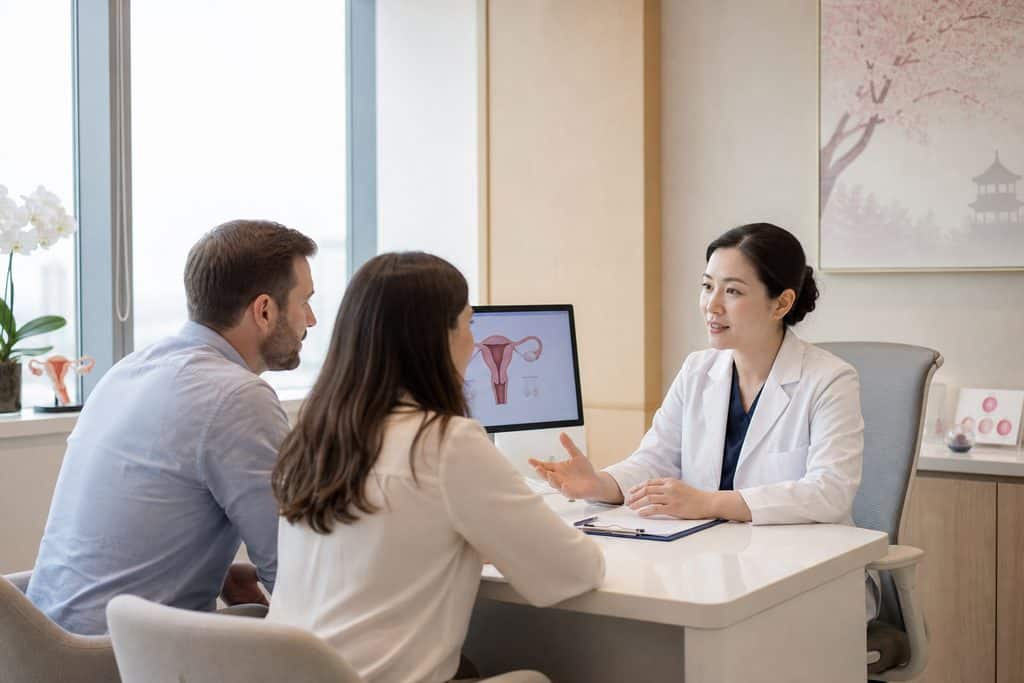
According to the Chinese Society of Reproductive Medicine, over 100,000 IVF cycles were performed in China in 2023. A growing share involves international couples. The reason is straightforward: ivf cost China for foreigners typically runs between $4,000 and $8,000 per cycle at top public hospitals. Comparable cycles in the United States average $15,000 to $25,000. That price gap sends many couples to their laptops at midnight, searching for answers about legality, quality, and logistics. This guide walks through what actually happens — no marketing gloss, no false promises.
We coordinate care for international patients at more than 340 top-ranked Chinese hospitals across 37 cities. That includes reproductive medicine departments at major public institutions and private international clinics. We see the same questions from every couple: Is it legal? Will the doctors understand us? What if something goes wrong? Here is the full picture.
How This Actually Works, Step by Step
You do not fly to China and walk into a hospital expecting same-day treatment. The sequence matters. Here is the real path.
First, you gather your existing records. Semen analysis, hormone panels, any prior IVF cycle summaries, surgical history. Translation into Chinese helps but is not always mandatory at international departments. Our team reviews what you have and identifies gaps.
Second, you choose between a written second opinion or a video consultation. A written second opinion from a top reproductive specialist costs $300–500. A video consultation with a senior specialist runs $500–800. Either way, the doctor reviews your records before you commit to travel.
Third, the clinic confirms whether IVF is medically appropriate. Chinese law permits IVF for married heterosexual couples. Single women and same-sex couples face restrictions. That is a legal fact, not a policy preference. We tell every caller this on the first call.
Fourth, you travel on an S2 visa with supporting documents from the hospital. The S2 covers short-term private affairs, including medical treatment. Processing takes one to three weeks depending on your consulate.
Fifth, you complete the stimulation cycle, retrieval, fertilization, and transfer. A full cycle takes three to six weeks on the ground. Some couples return home between retrieval and transfer; most stay for the full sequence.
Is IVF Legal for Foreigners in China? The Honest Answer
Yes, IVF is legal for foreigners in China — with conditions. The National Health Commission requires that couples be legally married and that both partners provide passports and marriage certificates. The marriage certificate must be authenticated or notarized, depending on the hospital’s rules. Unmarried couples will be turned away. Same-sex couples will be turned away. This is not negotiable at any licensed clinic.
Some couples ask whether they can do IVF in China without citizenship. You do not need Chinese citizenship. You need a valid passport, a marriage certificate, and medical clearance from the treating hospital. That is the full legal requirement for foreign nationals.
But there is a nuance. Public hospitals often require in-person registration before scheduling IVF. You cannot book a cycle entirely by email from abroad. The hospital’s international department can sometimes pre-review records and schedule a first appointment, but the actual treatment plan is confirmed after you arrive and meet the doctor. Private international clinics are more flexible with remote scheduling, though their prices run higher — often $8,000 to $15,000 per cycle.
A Realistic Timeline
People underestimate the lead time. Here is what a typical journey looks like for a couple starting from zero.
| Stage | Duration | What Actually Happens |
|---|---|---|
| Record collection and translation | 1–2 weeks | You gather prior tests. We arrange certified translation if needed. |
| Remote consultation | 1–3 weeks | Written second opinion or video call. Doctor reviews your case. |
| Visa processing (S2) | 1–3 weeks | Hospital issues an invitation letter. You apply at the consulate. |
| Travel and first appointment | 1 week | You arrive, meet the doctor, sign consent forms. |
| Stimulation and monitoring | 10–14 days | Daily injections, ultrasound checks every 2–3 days. |
| Egg retrieval | 1 day | Minor procedure under sedation. You rest one day. |
| Embryo culture and transfer | 3–5 days | Fresh transfer or freeze-all. Doctor decides based on your hormone levels. |
| Pregnancy test | 10–14 days after transfer | Blood test at the clinic. Results same day. |
Total time from first email to pregnancy test: roughly two to four months. Shorter if you already have records and a valid visa. Longer if your consulate is slow or your cycle requires a freeze-all protocol.
What Can Go Wrong — and What Happens Then
IVF fails. That is the uncomfortable truth. The live birth rate per embryo transfer in China averages 35–45% for women under 35, dropping to 15–25% for women over 40. A failed cycle is not a sign that you chose the wrong clinic. It is the statistical reality of assisted reproduction.
What happens then? You decide whether to attempt another cycle. Many clinics offer discounted packages for repeat cycles. Frozen embryos from your first retrieval can be used without repeating the stimulation phase, which reduces cost and time.
Other failure modes include ovarian hyperstimulation syndrome (OHSS), which occurs in 1–5% of cycles. Top clinics monitor hormone levels aggressively to catch early signs. If OHSS develops, you may need hospitalization for fluid management. That is rare but real.
Language breakdowns are another risk. A nurse explaining injection timing in rapid Mandarin while you nod politely — that is how mistakes happen. A bilingual medical companion costs from $300 per day and eliminates this risk. We have seen couples attempt it alone, end up in the wrong building, and miss a monitoring appointment. The cost of a companion is trivial compared to the cost of a disrupted cycle.
How Much Does IVF Cost in Shanghai, Beijing, and Beyond?
Let us talk numbers. How much does ivf cost in Shanghai specifically? At public hospital international departments, a standard cycle runs $4,500 to $7,000. That includes stimulation drugs, monitoring, retrieval, fertilization, and fresh transfer. At private international clinics like Jiahui or United Family, the same cycle costs $8,000 to $15,000.
Beijing is similar. The best ivf clinic Beijing success rates cluster around 40–50% for women under 35 at top centers like Peking University Third Hospital. Their international department charges $5,000 to $8,000 per cycle. Private options run higher.
China ivf packages for international patients vary widely. Some private clinics bundle hotel, airport transfer, and a dedicated coordinator into the price. Others charge for each service separately. Read the fine print. A “package” that excludes medication or embryo freezing is not a package — it is a base fee with add-ons.
Compare this to the US, where a single cycle averages $18,000–$25,000 without medication. Or the UK, where private cycles run £5,000–£8,000. China’s price advantage is real, but it comes with travel costs and the logistical burden of treatment abroad.
Practical Considerations: Records, Visas, Payment, and Follow-Up
Records come first. Bring every piece of paper you have. Hormone panels, semen analyses, prior IVF records, surgical notes, genetic carrier screening. If anything is missing, the clinic will order new tests in China, which adds time and cost.
Visa category matters. The S2 visa is the correct short-stay category for medical treatment. Your hospital issues an invitation letter. The consulate processes the application. Do not apply for an M visa — that is for commercial trade, not medical care.
Payment is straightforward. Public hospitals require prepayment. You deposit funds at admission and draw down as services are rendered. International insurance sometimes reimburses after the fact, but Chinese public hospitals rarely bill insurers directly. Private international clinics often accept direct billing from major insurers. Check before you commit.
Follow-up after returning home is the forgotten step. Your local OB-GYN will need the full cycle summary in English. Request this before leaving China. Some clinics provide it automatically; others need a nudge. We handle this for our clients because it is the kind of detail that gets lost in the exhaustion of travel.
Frequently Asked Questions
Yes. Chinese citizenship is not required. You need a valid passport, a legal marriage certificate, and medical clearance from the treating hospital. Foreign nationals undergo IVF in China every day.
Expect $4,500 to $7,000 per cycle at public hospital international departments. Private international clinics charge $8,000 to $15,000. Medication is usually included in the cycle fee but confirm before signing.
Top centers like Peking University Third Hospital report live birth rates of 40–50% per transfer for women under 35. Rates decline with age. Always ask for age-adjusted data, not the clinic’s overall average.
No. Chinese law requires a legal marriage certificate for IVF. Unmarried couples, including same-sex couples, cannot access IVF at licensed clinics in China.
China does not issue a separate medical visa. The S2 visa covers short-term private affairs, including medical treatment. Your hospital provides a supporting letter for the application.
Your Next Step
The decision to pursue IVF abroad is heavy. You are weighing cost against distance, success rates against unfamiliarity. We do not make that decision for you. What we do is make the information real: our team connects you with reproductive specialists at top Chinese hospitals, arranges remote consultations, and coordinates the logistics if you choose to travel. We do not promise success rates or guarantee outcomes. We promise accurate information and honest coordination. If you want to explore whether China is right for your situation, start with a free consultation.
China offers real advantages for IVF: lower cost, experienced clinicians, and high-volume centers. But it is not for everyone. Legal restrictions, language barriers, and the emotional weight of treatment far from home are real. Go in with open eyes. Ask hard questions. And if you decide to proceed, do it with a plan.
For more medical information and treatment options in China, visit chinamedservices.com (China Medical Services).
