Executive Health Checkup in China: Top Hospitals, Real Costs, and How to Book
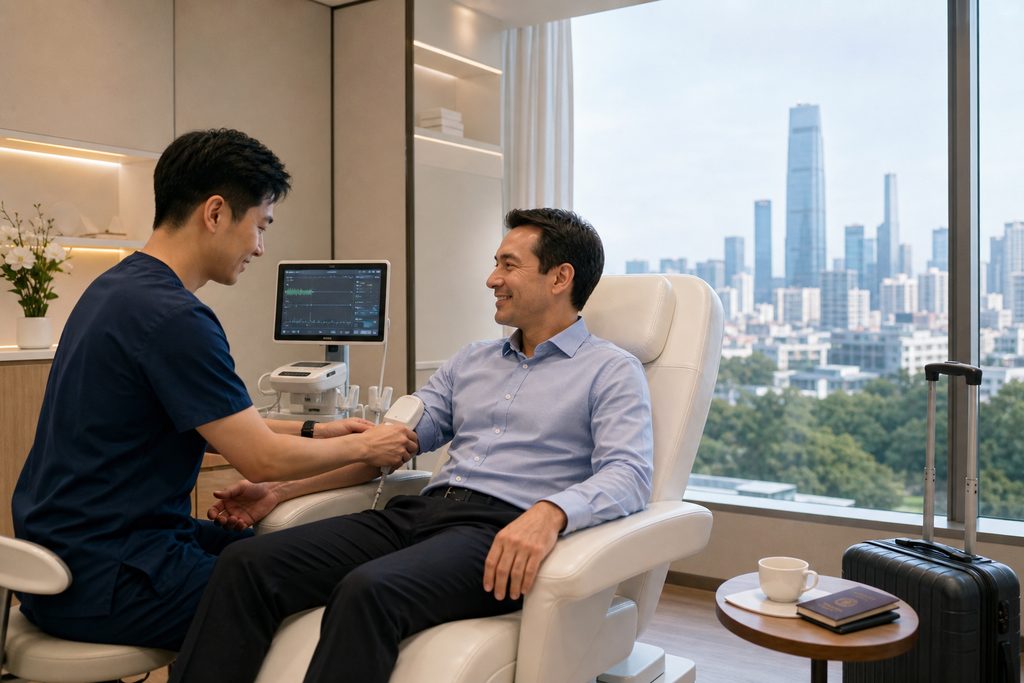
When Daniel, a 47-year-old procurement director from Manchester, booked his annual physical back home, the earliest slot was 11 weeks out. He needed a comprehensive cardiovascular, metabolic, and cancer screening panel before a new insurance policy kicked in. Frustrated, he started searching for alternatives. That search led him to a question we hear constantly: which hospital in China offers executive health checkup, and what does the executive health checkup China price actually include?
The short answer: several top-ranked public and private hospitals in Beijing, Shanghai, and Guangzhou run dedicated executive health screening centers. Think Peking Union Medical College Hospital, Zhongshan Hospital Fudan University, and Jiahui Health. The cost ranges from roughly $800 to $5,000 depending on depth of imaging, specialist consultations, and whether you opt for a private international wing.
But the real question is not just which hospital. It is whether the model fits your situation — your time, your risk profile, your tolerance for a system that operates differently from Western clinics.
Key Takeaways
- Top Chinese hospitals run executive screening centers that complete a full-body workup in 4 to 8 hours, often with same-day preliminary results.
- Executive health checkup China price typically runs from $800 to $5,000 — roughly 30% to 50% of comparable VIP packages in the US or UK.
- Language is the single biggest barrier: most public hospital screening floors operate in Mandarin, which is why bilingual coordination matters.
- You cannot simply email a public hospital and lock in a slot. Booking requires a local contact, hospital card creation, and often prepayment.
The Problem: Western Executive Physicals Are Slow, Fragmented, and Expensive
A 2023 survey by the International Federation of Health Plans found that the average executive physical in the United States — including advanced imaging, cardiac stress testing, and specialist consults — costs between $4,000 and $10,000. In the UK, private providers like Bupa and Nuffield Health charge £1,500 to £4,000 for comprehensive health assessments. And the wait? In publicly funded systems, non-urgent imaging like whole-body MRI can take months. In private systems, you pay a premium but still juggle multiple appointments across different clinics.
That fragmentation is the hidden cost. You see a cardiologist on Tuesday, a radiologist on Thursday, a gastroenterologist the following week. Each visit means separate scheduling, separate paperwork, separate waiting rooms. By the time results trickle in, three weeks have passed.
For executives and business owners, time is the scarcest resource. A health check that takes three half-days and two weeks to complete is not just inconvenient — it is a scheduling liability. And if you are traveling internationally for work, the window to get screened may be very narrow.
Why Executive Health Checkup in China Delivers Results
Volume Creates Efficiency That Western Clinics Cannot Match
Chinese top-tier hospitals process enormous patient volumes daily. Peking Union Medical College Hospital sees over 10,000 outpatient visits per day. That scale forces operational efficiency. Executive screening centers are designed as assembly lines of diagnostics: blood draw, ultrasound, CT, MRI, endoscopy, specialist review — all on one floor, in one morning. A patient walks a defined circuit. Nurses direct traffic. Results flow into a central electronic record reviewed by a coordinating physician before you leave the building.
By contrast, a typical Western executive physical spreads the same tests across multiple departments and buildings. The bottleneck is not technology. It is scheduling logistics.
Imaging Technology Is Current-Generation, Not Legacy Equipment
Many of China’s top hospitals have invested heavily in imaging hardware over the past decade. Zhongshan Hospital Fudan University in Shanghai operates multiple 3T MRI units and dual-source CT scanners. Fuwai Hospital runs dedicated cardiac imaging suites that handle over 14,000 cardiac surgeries annually, supported by high-throughput CT angiography. For a patient seeking a full-body checkup, this means access to modern equipment without the months-long queue common in single-payer systems.
Private international hospitals like Jiahui and United Family take a different approach: lower volume, Western-style service, English-speaking staff, and direct insurance billing. Their executive screening packages are pricier than public options but smoother for first-time visitors to China.
Cost Advantage Without Quality Compromise
The executive health checkup China price sits well below Western benchmarks for a structural reason: labor costs for nurses, technicians, and junior physicians are lower. That does not mean the interpreting physicians are less qualified. The senior radiologists and cardiologists reviewing your scans at a Fudan-ranked hospital are typically trained at top domestic programs, many with international fellowships. The cost difference comes from operational economics, not from cutting corners on expertise.
Consider a concrete comparison. A comprehensive VIP screening package at a top Shanghai public hospital — including cardiac ultrasound, carotid Doppler, low-dose chest CT, abdominal ultrasound, tumor markers, and specialist review — runs approximately $1,200 to $2,500. A comparable package at a US academic medical center would run $5,000 to $8,000. Same imaging modalities. Same specialist review. Different cost base.
How Executive Health Screening Actually Works in a Chinese Hospital
The process differs sharply from what most Western patients expect. There is no leisurely consultation first. You do not sit down with a doctor who then orders tests. Instead, you select a package — or a physician reviews your history and recommends one — and you move through the stations.
A typical full-day executive screening at a public hospital international wing looks like this:
| Time | Station | What Happens |
|---|---|---|
| 7:30 AM | Registration | Hospital card created, package confirmed, payment processed |
| 7:45 AM | Blood draw | Fasting labs: CBC, metabolic panel, lipids, tumor markers, thyroid, HbA1c |
| 8:15 AM | Anthropometrics | Height, weight, body composition, blood pressure, resting ECG |
| 8:40 AM | Ultrasound | Abdominal, thyroid, carotid, and (for men) prostate or (for women) pelvic |
| 9:30 AM | Imaging | Low-dose chest CT, optional coronary calcium score, optional brain MRI |
| 10:30 AM | Cardiac stress | Treadmill ECG or stress echocardiogram, depending on package tier |
| 11:15 AM | Specialist review | Internal medicine physician reviews preliminary results, flags abnormalities |
| 12:00 PM | Lunch + report prep | Preliminary summary issued; full imaging report within 24-72 hours |
For endoscopy — gastroscopy or colonoscopy — expect a separate session, typically the following day, since sedation and bowel prep require scheduling. Some packages bundle endoscopy into a two-day executive screening.
So how long does a full executive physical take in China? The core screening runs 4 to 6 hours. Add endoscopy and you are looking at two days. Add cardiac catheterization or advanced neurology consults and it stretches to three. The key difference from Western models: you block out days, not weeks.
Choosing a Hospital: Public International Wing vs. Private International Hospital
This is the decision that most shapes your experience — and the executive health checkup China price you will pay.
Public hospital international wings, like the International Medical Services at Peking Union Medical College Hospital or the VIP Clinic at Zhongshan Hospital, offer access to the same senior specialists who staff the main hospital. You pay a premium over the standard public rate — roughly 1.5 to 2 times — but still far less than Western private care. The tradeoff: service style is efficient but not luxurious. English support exists but is inconsistent. You will still encounter Mandarin signage and staff who default to Chinese.
Private international hospitals — Jiahui, United Family, Parkway, Raffles — flip that equation. English is the working language. The environment feels like a Western clinic. Insurance direct billing is standard. But the physician pool is smaller, and for complex findings you may be referred to a public hospital specialist anyway. A VIP health screening package at a private international hospital in Shanghai typically runs $2,000 to $5,000.
For most international patients, the pragmatic path is a hybrid: use a public hospital international wing for the core screening and specialist access, with a bilingual coordinator to smooth the logistics. That is precisely the model we see work best for clients who ask us to book an executive medical checkup China hospital appointment.
VIP Health Screening Packages Beijing Cost: What the Numbers Look Like
Beijing and Shanghai dominate the executive screening market, and pricing between the two cities is broadly similar. Here is a realistic breakdown based on published package tiers and our coordination experience. Figures vary by hospital and case complexity.
| Package Tier | Typical Inclusions | Beijing/Shanghai Price Range |
|---|---|---|
| Standard Executive | Labs, ECG, chest X-ray or low-dose CT, abdominal ultrasound, basic tumor markers, physician review | $800 – $1,500 |
| Comprehensive Executive | Above + cardiac ultrasound, carotid Doppler, stress ECG, full tumor marker panel, thyroid ultrasound, same-day specialist consult | $1,500 – $2,800 |
| Premium / VIP | Above + whole-body MRI or brain MRI, coronary calcium score, endoscopy (separate day), multi-specialist review, English report translation | $2,800 – $5,000+ |
Private international hospital packages add 30% to 50% on top of these ranges. The premium buys service, not better scanners.
Is executive health checkup in China worth it? For a patient who needs comprehensive imaging and specialist review within a fixed travel window, the answer is often yes — provided you have coordination support. For someone who only needs routine labs and a physical exam, the savings may not justify the travel.
Practical Considerations: Documentation, Visa, Payment, and Follow-Up
Booking an executive screening in China as a foreigner requires more than picking a date. Here is what actually matters.
Medical records. Bring any prior imaging, lab results, and a list of current medications. If you have a specific concern — a family history of colon cancer, a prior abnormal ECG — state it before booking so the package can be adjusted. Hospitals do not automatically tailor packages; you must ask.
Visa. For medical travel to China, the applicable short-stay category is the S2 visa, which covers private affairs including medical treatment. Family members accompanying you also apply for S2. Requirements vary by embassy and case, and you will need supporting documents from the hospital or your coordination service. Approval is never guaranteed. Do not book flights until the visa is issued.
Payment. Public hospitals in China generally require prepayment for executive screening packages. International credit cards are accepted at international wings and private hospitals, but not always at standard public counters. Wire transfer in advance is common. Insurance: Chinese public hospitals do not typically bill international insurers directly. You pay, then claim reimbursement. Private international hospitals with JCI accreditation often handle direct billing.
Language. Even in international wings, the default language is Mandarin. Reports are issued in Chinese unless you specifically request and pay for English translation. A bilingual companion who can translate findings in real time changes the experience entirely.
Follow-up. Full imaging reports take 24 to 72 hours. If something abnormal appears, the hospital will recommend next steps — additional imaging, a specialist consult, or a biopsy. You are not obligated to pursue treatment in China. You can take the reports home. Many patients use the Chinese screening as a second data point alongside their home-country care.
Frequently Asked Questions
Not through standard public hospital channels. Public hospital appointment systems require a local phone number and often a hospital card issued in person. The international wing may accept email inquiries, but response times are unpredictable. A coordination service that handles registration, card creation, and package selection is the practical route for most foreign patients.
The standard executive tier at a public hospital international wing — roughly $800 to $1,500 — covers the core labs, imaging, and physician review most people need. Skip whole-body MRI and advanced cardiac imaging unless you have specific risk factors. Those add-ons drive the price up quickly without proportionally increasing diagnostic yield for low-risk patients.
The hospital will flag the finding in your report and recommend follow-up. You can pursue that follow-up in China — at the same hospital or a specialized center — or take the report to your home physician. We have seen both paths work. The key is that you leave with a clear written record, including imaging files, that any physician anywhere can review.
Package prices at public hospitals are generally fixed. What is negotiable is scope: swapping one imaging modality for another, adding a specialist consult, or bundling endoscopy. Private international hospitals have more flexibility, especially for group bookings or repeat patients. Ask before you pay, not after.
No. Executive screening packages are self-referred. You select the package, or a physician at the screening center reviews your history and recommends adjustments. A home-country referral is useful for context but not required.
Your Next Step
If you are considering an executive health checkup in China, start by defining what you actually need: which imaging, which specialist reviews, what timeline. Then match that to a hospital — public international wing for specialist depth, private international for service comfort. We help international patients navigate that matching process, handle booking and bilingual coordination, and ensure you understand your results before you leave the building. You can explore our hospital coordination and bilingual companion services or browse our database of top-ranked Chinese hospitals to see what fits. And if you want a straightforward conversation about options, request a free consultation — no pressure, just clarity.
Executive screening in China is not for everyone. But for the right patient — time-constrained, cost-conscious, willing to navigate a different system — it delivers a level of diagnostic efficiency that is genuinely hard to find elsewhere. The key is going in with clear expectations and the right support on the ground.
For more medical information and treatment options in China, visit chinamedservices.com (China Medical Services).
