Brain Tumor Surgery Cost in China: 2026 Price Guide for International Patients
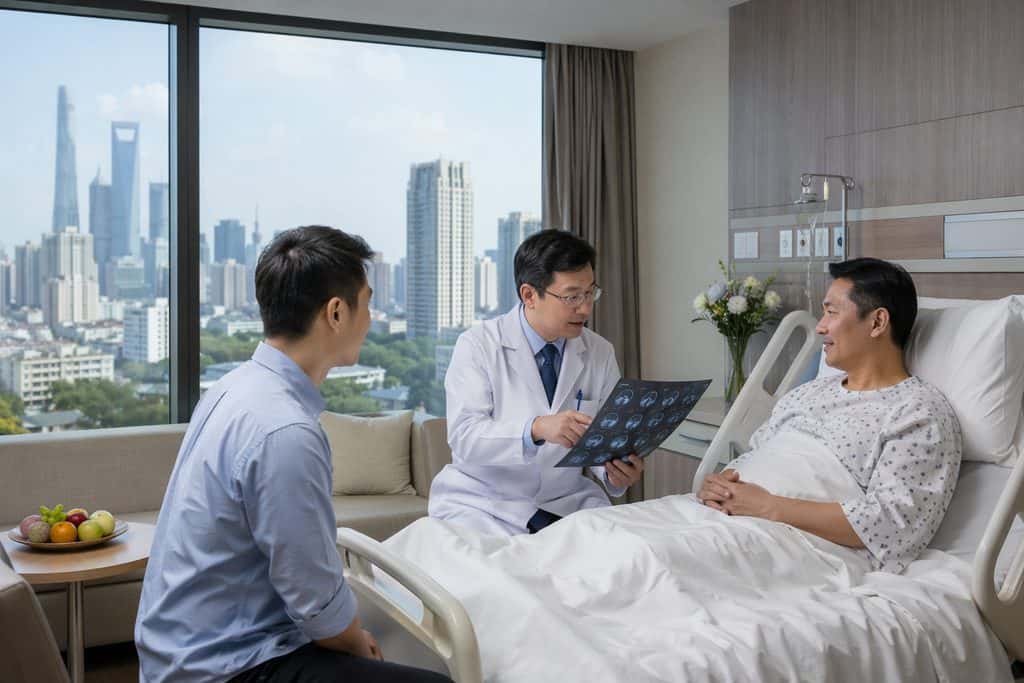
You’ve probably heard that surgery in China means compromising on quality. The reality is exactly the opposite. The country’s top neurosurgery centers now perform more complex brain tumor resections each year than almost any other healthcare system on earth, using the same intraoperative MRI suites, neuronavigation platforms, and microsurgical techniques you would find at leading Western hospitals. The difference shows up on the invoice, not the operating table.
Brain tumor surgery cost in China typically ranges from $18,000 to $45,000 for a craniotomy and tumor resection at a top-tier public hospital, depending on tumor type, location, and the hospital’s tier. That figure covers the surgeon’s fee, anesthesia, operating room time, ICU stay, standard ward recovery, and routine pathology. By comparison, the same procedure in the United States commonly runs between $70,000 and $250,000 before insurance adjustments. The gap is real, but so are the variables that determine where you land within that range.
Our team at China Medical Services has spent years helping international patients navigate these decisions. What follows is a practical breakdown of what brain tumor surgery actually costs in China, which hospitals deliver the strongest outcomes, and how the process works from your first inquiry to your flight home.
How This Actually Works, Step by Step
You do not book brain tumor surgery in China like a hotel room. The sequence matters, and skipping steps creates delays. Here is the real path.
First, you send your existing medical records: MRI or CT scans in DICOM format, pathology reports if a biopsy was already done, and a summary of your symptoms and current medications. Our team translates these into Chinese and forwards them to the neurosurgery department at one to three candidate hospitals. A senior neurosurgeon reviews the case. This written second opinion typically costs $300 to $500 and takes three to seven business days.
If the surgeon confirms that surgery is indicated and that the tumor is operable, we arrange a video consultation. You speak directly with the specialist, ask about approach, risks, and recovery. That conversation costs $500 to $800 for a top-specialist session. Only after you and the surgeon agree on the plan do we move to scheduling.
At this point you apply for an S2 visa, which is the short-stay category used for medical treatment and private affairs in China. Processing usually takes five to ten business days once your passport and hospital invitation letter are submitted. Meanwhile, the hospital reserves an operating room slot through its international department. Public hospitals generally require a deposit of 50% to 100% of the estimated surgical cost before admission. Private international hospitals may accept direct insurance billing, but most public hospitals do not.
You fly to the city where the hospital is located. A bilingual medical companion meets you at the airport, takes you to the hospital for pre-operative testing, and stays with you through admission, surgery, and discharge. That companion service starts at $300 per day. Most patients need five to ten days of support, sometimes less if a family member travels with them.
What Determines Your Brain Tumor Surgery Cost in China
Several factors move the price. Understanding them helps you compare quotes honestly.
Tumor location is the biggest variable. A convexity meningioma near the brain’s surface is technically straightforward. A skull base tumor wrapped around the optic nerve or a deep-seated glioma near the motor cortex demands longer operating time, more sophisticated monitoring, and sometimes a second surgeon. Operating time alone can swing the cost by $5,000 to $10,000.
Hospital tier matters too. A public Grade A tertiary hospital in Beijing or Shanghai charges less than a private international hospital for the same surgery. Public hospital prices reflect government-regulated fee schedules. Private facilities like United Family or Jiahui add English-speaking staff, Western-style rooms, and direct insurance billing, but their neurosurgery fees often run 1.5 to 2 times higher. The question is not which one is better. The question is which one fits your clinical risk and your budget.
| Hospital Type | Estimated Cost Range (USD) | What It Includes | Best For |
|---|---|---|---|
| Top public hospital, standard ward | $18,000 – $32,000 | Surgery, ICU, shared or semi-private room, basic pathology | Cost-conscious patients with a companion |
| Top public hospital, international/VIP ward | $28,000 – $45,000 | Surgery, private room, English coordination, expedited scheduling | Patients wanting comfort without private-hospital pricing |
| Private international hospital | $40,000 – $70,000+ | Surgery, private room, full English staff, direct billing | Patients with international insurance or higher budgets |
These figures are estimates, not quotes. Every hospital confirms its own price after reviewing your scans. But they give you a realistic frame for planning.
A Realistic Timeline
People underestimate the waiting steps. Here is what a typical timeline looks like from first contact to discharge, assuming no major complications.
| Stage | Duration | What Happens |
|---|---|---|
| Initial inquiry and record collection | 2–5 days | You gather scans, reports, and medical history; we translate and submit |
| Written second opinion | 3–7 business days | Senior neurosurgeon reviews your case and responds |
| Video consultation scheduling | 3–10 days | Specialist’s availability determines the slot |
| S2 visa processing | 5–10 business days | Requires passport, hospital invitation letter, application |
| Pre-operative testing in China | 2–4 days | Blood work, ECG, additional imaging if needed |
| Surgery and ICU stay | 1–3 days | Craniotomy and immediate post-operative monitoring |
| Ward recovery | 7–14 days | Standard for uncomplicated brain tumor resection |
| Follow-up and discharge planning | 2–3 days | Pathology results, wound check, medication plan |
Total time from first inquiry to discharge: typically five to eight weeks. The document translation and visa steps are the ones patients forget to budget for. Start them early.
What Can Go Wrong — and What Happens Then
Brain tumor surgery carries genuine risks. Any honest discussion includes them.
Neurological deficits can occur. Depending on tumor location, surgery may affect speech, movement, or vision. Top Chinese neurosurgery departments mitigate this with awake craniotomy and intraoperative neurophysiological monitoring, but no center eliminates the risk. If a deficit appears, rehabilitation begins immediately in the hospital. China’s larger neurosurgery centers have dedicated neurorehabilitation units, and many patients extend their stay for two to four weeks of intensive therapy before flying home.
Post-operative swelling or bleeding may require a second operation. This happens in a small percentage of cases worldwide. The hospital’s quoted price covers the initial surgery; a second emergency procedure adds cost. Ask the hospital’s international department about their policy before you commit. Some cap additional fees for complications arising within the first 72 hours.
Pathology results may surprise you. The tumor might be a higher grade than imaging suggested. That changes the follow-up plan: radiation, chemotherapy, or targeted therapy. Chinese hospitals can arrange these on-site, but you may also choose to continue treatment at home. Get the full pathology report and a written treatment recommendation before leaving China.
And yes, language barriers can cause friction. Public hospital nurses on standard wards rarely speak English. This is where a bilingual companion earns their fee: chasing lab results, clarifying medication schedules, translating surgeon rounds. Without that support, small misunderstandings can compound.
How to Evaluate a Neurosurgery Hospital in China
Not every hospital that advertises to foreigners delivers equal outcomes. Here is how we assess them, and how you can too.
Look at surgical volume first. A center that performs 500 brain tumor resections a year has teams that have seen rare complications and know how to handle them. Fudan University‘s specialty reputation rankings list China’s top neurosurgery departments, and several Beijing and Shanghai hospitals appear consistently. You can browse our department rankings across 45 specialties to see which hospitals lead in neurosurgery.
Check the equipment. Intraoperative MRI, neuronavigation, and fluorescence-guided resection are standard at top centers. Ask whether the hospital uses 5-ALA or similar agents for glioma surgery. If the answer is vague, that tells you something.
Ask about the surgeon’s personal volume, not just the department’s. A department may do 800 cases a year, but your surgeon might do 30. Request the specific surgeon’s annual resection count. Senior neurosurgeons at top Chinese hospitals often perform 100 to 200 tumor surgeries annually. That repetition matters.
For patients asking “is brain tumor surgery safe in China,” the honest answer is that safety depends on hospital selection more than country. A top-tier Chinese neurosurgery center is as safe as a top-tier Western center for most tumor types. A mid-tier hospital is not. Choose deliberately. Our Top 100 hospital database filters by Fudan ranking and JCI accreditation to separate the strong centers from the rest.
Practical Considerations: Records, Visa, Payment, Insurance, Follow-Up
Bring everything. DICOM-format scans on a CD or USB drive, not just printed films. Full pathology reports if a biopsy exists. A list of every medication with dosages. A summary of prior surgeries or radiation. The more complete your file, the faster the surgical team can assess you.
The S2 visa is the correct category for medical treatment. It is not an M visa. M visas are for commercial and trade activities. Applying for the wrong category delays everything. Your hospital invitation letter must state the treatment purpose clearly. Family members accompanying you apply for their own S2 visas. Processing times vary by consulate, so apply as soon as the hospital confirms your case.
Payment at public hospitals is upfront. Most require a deposit covering the estimated total before admission. International wire transfers take three to five business days to clear. Plan for that. Private international hospitals may bill your insurer directly, but confirm before booking.
Insurance reimbursement depends on your policy. Many international insurers will reimburse treatment at Chinese hospitals that hold JCI accreditation or appear on approved lists. Ask your insurer which Chinese hospitals qualify before you commit to one. Get pre-authorization in writing if possible.
Follow-up at home is essential. You need a neurosurgeon or neurologist in your home country willing to review the Chinese hospital’s discharge summary and imaging. Some refuse. Find one before you travel. The Chinese hospital can provide English-language records and often arrange a video follow-up at three months.
Frequently Asked Questions
At a top public hospital in Shanghai, brain tumor removal typically costs between $20,000 and $38,000 depending on tumor complexity and ward type. Shanghai’s leading neurosurgery centers include Zhongshan Hospital and Huashan Hospital, both of which handle high volumes of complex intracranial cases.
For the balance of price and clinical strength, public Grade A tertiary hospitals in Beijing and Shanghai are the strongest options. They combine high surgical volume, modern equipment, and government-regulated pricing. Private international hospitals offer more comfort but at roughly double the cost. The best choice depends on your tumor type, budget, and need for English-language support.
At top-ranked neurosurgery centers, safety outcomes are comparable to leading Western hospitals for most tumor types. The key is selecting a hospital with high surgical volume, modern intraoperative technology, and experienced surgeons. A mid-tier or low-volume hospital carries higher risk. This is why hospital selection matters more than country selection.
Some private international hospitals offer medical tourism China brain tumor surgery packages that bundle surgery, hospital stay, and airport transfers. Public hospitals generally do not package services this way. Instead, you work through the hospital’s international department or a coordination service to arrange each component separately. Packages can simplify logistics but often cost more than itemized arrangements.
Most top Chinese neurosurgery hospitals have on-site radiation oncology and medical oncology departments. If your pathology report indicates additional treatment, the same hospital can usually provide it. Alternatively, you can return home with a written treatment plan and complete follow-up care locally. Ask for the full pathology and a detailed recommendation before discharge.
Your Next Step
Brain tumor surgery cost in China is a fraction of Western prices, but the real value is in choosing the right surgeon and hospital for your specific case. That decision deserves more than a Google search. Our team helps you gather records, identify suitable hospitals, arrange written second opinions and video consultations, and coordinate the logistics if you decide to proceed. We do not perform surgery, and we do not guarantee outcomes. We make the path clearer.
If you are weighing your options, start with a conversation. Send your records through our patient consultation page and we will help you figure out whether treatment in China makes sense for your situation. No pressure, no obligation. Just a clearer picture of what is possible.
For more medical information and treatment options in China, visit chinamedservices.com (China Medical Services).
