Breast Augmentation Cost in China: A 2026 Price Guide for International Patients
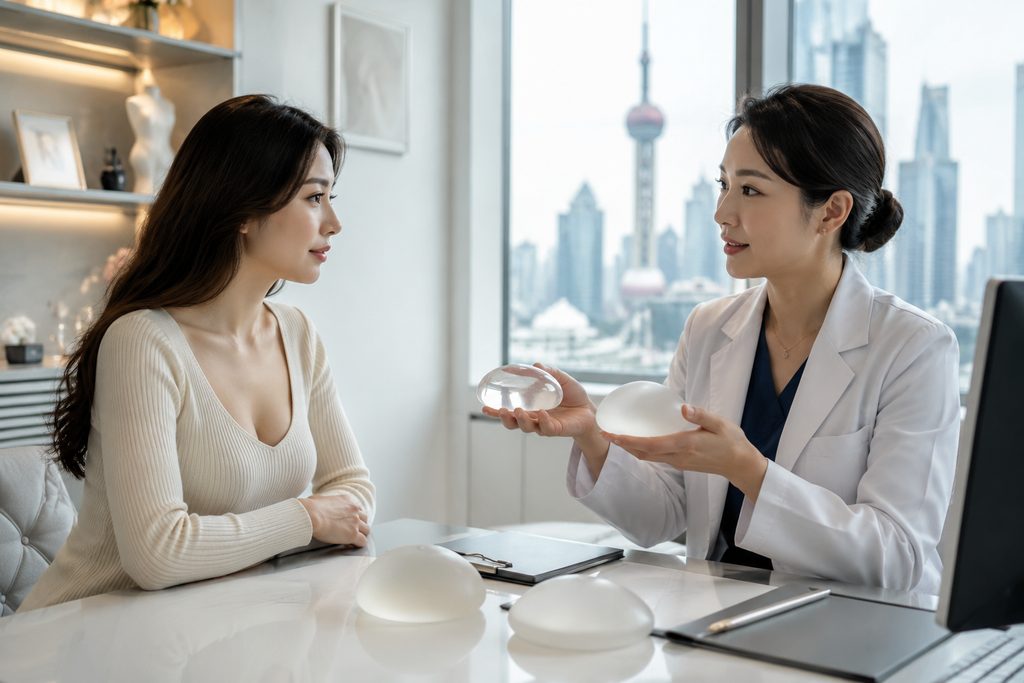
Have you ever wondered whether the price tag on a breast augmentation in your home country is actually paying for better surgery — or just higher overhead? It is a fair question. The breast augmentation cost China clinics offer routinely lands between $3,500 and $8,000 for a full procedure with implants, anesthesia, and a short hospital stay. That is a fraction of the $12,000 to $20,000 commonly quoted in the United States or Australia. But the lower number only matters if the hospitals behind it can be trusted. Here is what our team at China Medical Services sees in real patient files every week — and what you should verify before booking anything.
How This Actually Works, Step by Step
You send us your existing medical records first. That means recent breast imaging if you have it, a list of any prior surgeries, allergies, and a brief note on what size or shape you are considering. No need to fly anywhere yet. A plastic surgery department at a top-tier Chinese hospital reviews those records and gives you a written assessment — whether you are a suitable candidate, which implant type fits your anatomy, and what the realistic outcome range looks like.
Then comes a video consultation. You speak directly with the surgical team through a translator we provide. You can ask about incision technique, implant placement, capsular contracture rates, and revision policy. After that, if you decide to proceed, we help you lock in a surgical date through the hospital’s international department. You apply for an S2 visa with the hospital’s invitation letter. You fly in, complete pre-operative labs, have surgery, stay for observation, and fly home with a follow-up plan.
What Actually Drives Breast Augmentation Cost China Patients Pay
Three variables move the number more than anything else: implant brand, hospital tier, and whether you go through the standard public channel or the international VIP department. Let’s break those down without the brochure language.
| Cost Component | Public Hospital (Standard) | Public Hospital (International/VIP) | Private International Hospital |
|---|---|---|---|
| Surgeon fee | $800–$1,500 | $1,500–$3,000 | $2,500–$4,500 |
| Implants (pair, imported) | $1,200–$2,500 | $1,200–$2,800 | $1,500–$3,000 |
| Anesthesia + OR | $600–$1,200 | $900–$1,800 | $1,200–$2,200 |
| Hospital stay (1–2 nights) | $200–$500 | $400–$900 | $600–$1,500 |
| Post-op garments & meds | $100–$250 | $100–$250 | $150–$300 |
| Typical total | $3,500–$5,500 | $4,800–$7,500 | $6,000–$9,500 |
These are working ranges from 2025–2026 patient files, not quotes. Every hospital prices differently, and complex cases — revision surgery, tuberous breast correction, simultaneous lift — push the total higher. The average price of breast enhancement surgery China hospitals report in the standard public channel sits around $4,200 to $4,800. Add VIP coordination and English-speaking nursing, and you are looking at $6,000 and up.
Now, how much is breast implants in Shanghai specifically? Shanghai’s public plastic surgery departments — including those at Shanghai Ninth People’s Hospital, which handles one of the highest volumes of breast procedures in Asia — tend to run 10–15% above the national average. Expect $4,500–$7,000 in the international department. Private clinics in Shanghai like Jiahui or United Family quote $7,000–$10,000 for a full augmentation package. Beijing runs close behind Shanghai. Chengdu and Guangzhou often come in 10–20% lower for equivalent implant brands.
A Realistic Timeline
People underestimate the waiting steps. Here is what a typical journey actually looks like, assuming no complications and a responsive patient.
| Stage | What Happens | Duration |
|---|---|---|
| Week 1 | You send records; we translate and submit them | 3–5 days |
| Week 2 | Hospital reviews records; written second opinion issued | 5–10 days |
| Week 3–4 | Video consultation with surgical team | 1–2 weeks scheduling lead |
| Week 5–6 | S2 visa application with hospital invitation letter | 1–3 weeks depending on embassy |
| Week 7–8 | Fly to China; pre-op labs and imaging; surgery | 3–5 days on the ground |
| Month 2–3 | Initial recovery at home; remote follow-up | 6–8 weeks |
| Month 6 | Final result assessment via video or photos | 1 session |
The step people forget is document translation and notarization. Some hospitals require certified translations of prior surgical notes or imaging reports before they will book a surgical slot. That alone can add five business days. And visa processing varies wildly — an S2 visa in Bangkok might take four days, while the same application in London could take three weeks.
What Can Go Wrong — and What Happens Then
Let’s be direct. Capsular contracture happens in roughly 5–10% of breast augmentations globally, including in China. That is not a China-specific risk; it is a breast implant risk. If it occurs, the same hospital that performed your surgery can schedule a capsulectomy or implant exchange. You would pay for the revision — most hospitals do not bundle free revision into the initial package price, though some private international clinics include one revision within 12 months. Read the contract before you sign.
What if the result is not what you expected? Size regret is common in the first month and usually resolves. True asymmetry or malposition requires revision, typically after six months once the implant has settled. The key is having a written post-operative pathway before surgery — which hospital contact handles complications, what the revision fee structure is, and whether remote follow-up is included.
Another failure mode: flying home too early. We have seen patients book a return flight four days post-op and then deal with swelling, pain, and anxiety alone at home. Most surgeons in China recommend staying in-country for 7–10 days after surgery for drain removal and a first post-op check. Budget for that hotel stay.
Is Breast Augmentation in China Safe? What the Numbers Say
This is the question behind every other question. The honest answer: safety depends far more on the specific hospital and surgeon than on the country. China has roughly 35,000 hospitals. The top 5% — around 340+ facilities — include plastic surgery departments that perform breast augmentations daily, with JCI accreditation or Fudan ranking pedigree. Those departments use the same implant brands you would find in Seoul or Los Angeles: Mentor, Motiva, Sebbin, and domestic brands approved by China’s NMPA.
Infection rates in accredited Chinese hospitals run comparable to international benchmarks, typically under 2% for primary augmentation. The risk rises in unaccredited cosmetic clinics — the kind that advertise on social media with heavy discounts. That is where we tell patients to be careful. A $2,500 breast augmentation in an unlicensed clinic is not a bargain; it is a gamble with anesthesia safety and implant provenance.
So is breast augmentation in China safe? In a top-tier public hospital’s plastic surgery department or a JCI-accredited private international hospital, yes — with the same caveats you would apply in any country. Verify the surgeon’s case volume. Ask for the implant serial number and warranty card. Confirm the anesthesiologist is a physician, not a nurse. These are the checks that matter.
Choosing the Best Plastic Surgery Hospital in Beijing for Breast Implants
Beijing has three types of facilities worth considering. First, the public giants: Peking Union Medical College Hospital (PUMCH) and Plastic Surgery Hospital of the Chinese Academy of Medical Sciences. The latter performs thousands of breast procedures annually and is widely regarded among domestic surgeons as the reference center for complex cases. Second, university-affiliated departments like Beijing University Third Hospital, known for reconstructive expertise. Third, private international options like United Family Beijing, where English-speaking staff and direct insurance billing make the process smoother for Western patients.
But “best” is the wrong frame. The right frame is “best for your case.” A surgeon who excels at submuscular placement with smooth round implants may not be the right choice for someone wanting subfascial Motiva placement. Ask for before-and-after photos of cases similar to your body type. Ask how many augmentations the specific surgeon — not the department — performed last year. A number under 100 should give you pause.
Our top hospitals database lists Fudan-ranked facilities by city and specialty, including plastic surgery departments. And for patients weighing public versus private care, the private international hospital guide explains JCI accreditation and insurance direct billing in plain terms.
Practical Considerations: Records, Visa, Payment, and Follow-Up
You will need a recent mammogram or breast ultrasound if you are over 35, or any age if you have a family history of breast cancer. Bring a list of every medication and supplement you take — some, like fish oil and vitamin E, must stop two weeks before surgery. Bring a companion if possible. You will not be able to lift luggage for two weeks.
Visa: for medical treatment in China, the S2 visa is the correct category. The hospital’s international department issues an invitation letter confirming your surgical booking. Family members traveling with you also apply for S2 visas. Processing times vary by embassy, so start at least six weeks before your intended surgery date.
Payment: public hospitals require pre-payment before admission, typically via bank transfer or UnionPay. International credit cards are not always accepted at public hospital cashiers. Private international hospitals accept Visa and Mastercard and often bill insurers directly. Bring a payment method that works in China — or arrange one before you fly.
Language: even in Beijing and Shanghai, most public hospital staff do not speak English. That is not a criticism; it is a fact. A bilingual medical companion handles registration, payment, pharmacy pickup, and translation during surgeon consultations. Without one, a simple post-op dressing change can take three hours of confused wandering.
Frequently Asked Questions
Most international patients pay between $4,500 and $8,000 through a public hospital’s international department or a private international hospital. The standard public channel costs less — $3,500 to $5,500 — but you will need a bilingual companion to navigate it.
Yes, but only through the hospital’s international or VIP channel. Standard public outpatient clinics do not accept advance bookings from overseas. You can book a breast augmentation package China hospitals offer through their international departments, which typically include surgery, implants, hospital stay, and post-op follow-up in one quoted price.
South Korea’s average runs $6,000–$10,000 in clinics popular with foreign patients. China’s average price of breast enhancement surgery in top public hospitals is $4,200–$5,500. The gap narrows when comparing private international hospitals in Shanghai or Beijing to Korean clinic prices.
In accredited hospitals, yes. The safety profile matches international benchmarks when the facility is JCI-accredited or Fudan-ranked and the surgeon performs the procedure regularly. Avoid unaccredited cosmetic clinics offering unusually low prices — that is where the real risk concentrates.
Plastic Surgery Hospital of CAMS and PUMCH are the most cited public options for volume and expertise. For English-speaking care and insurance billing, United Family Beijing is the common private choice. The best plastic surgery hospital in Beijing for breast implants depends on your anatomy, implant preference, and budget — not a single ranking.
Your Next Step
You now know the real price ranges, the timeline, the risks, and the questions to ask. The next step is getting a written assessment of your specific case before spending money on flights. Our team at China Medical Services coordinates written second opinions, video consultations, and on-the-ground bilingual support for patients considering surgery in China. We do not perform surgery, and we do not promise outcomes. We help you get clear answers from real hospitals. If you want to start with a written second opinion, tell us about your case here.
For more medical information and treatment options in China, visit chinamedservices.com (China Medical Services).
