IVF in China: Full Cycle Timeline, Real Costs, and What to Expect
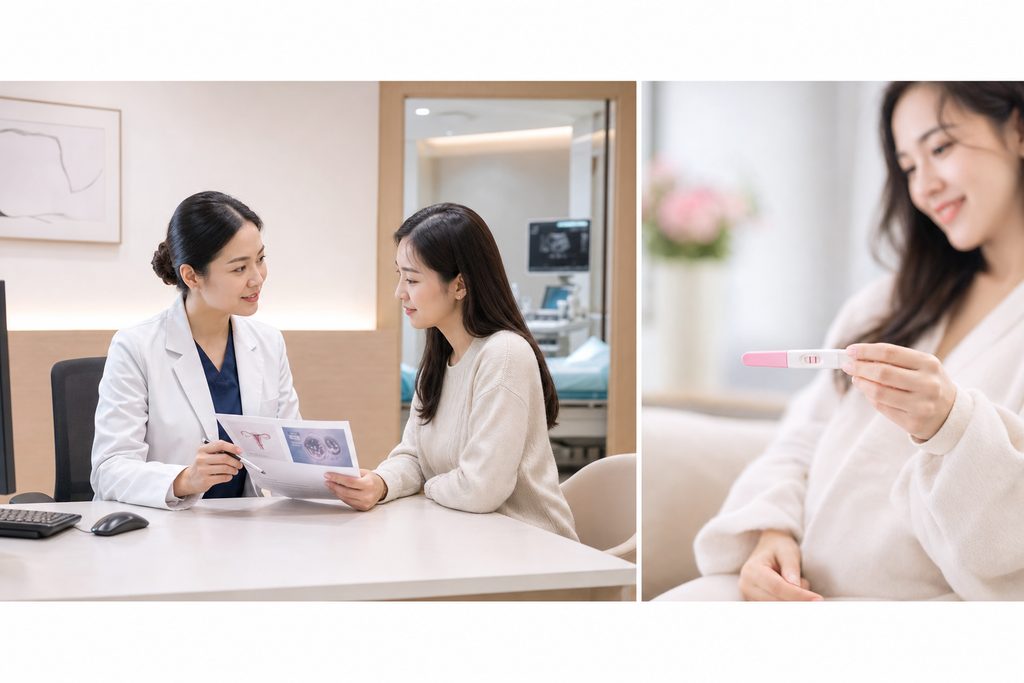
While patients in the United Kingdom face NHS waiting lists that can stretch beyond 18 months for fertility treatment in some regions, a foreign patient can often begin her first IVF stimulation cycle at a top-tier Chinese reproductive center within 4 to 6 weeks of submitting complete medical records. The contrast is stark. One system asks you to wait; the other asks you to prepare.
That speed does not mean a rushed process. A full IVF cycle—from your first consultation to a pregnancy test—typically takes 6 to 8 weeks in China. Some patients complete it faster. Others need multiple cycles, which extends the timeline considerably. The question is not just how long IVF takes, but what happens during each phase, what you can control, and where the real bottlenecks are for international patients.
Key Takeaways
- A single IVF cycle in China runs approximately 6 to 8 weeks from initial consultation to pregnancy test, with the ovarian stimulation phase lasting 10 to 14 days.
- Total ivf cost in China at a public tertiary hospital ranges from $4,000 to $8,000 per cycle, while private international clinics charge $10,000 to $20,000—still well below US averages of $23,000+.
- Language barriers and hospital navigation are the biggest hurdles for foreigners; most top reproductive departments operate in Mandarin only.
- You cannot book a first appointment online from overseas at most public hospitals. A proxy consultation or international department channel is the realistic entry point.
The Problem: IVF Timelines and Costs Are Crushing Patients in Western Systems
In the United States, a single IVF cycle costs between $15,000 and $30,000, and most insurance plans do not cover it. The Society for Assisted Reproductive Technology (SART) reports that the average patient needs 2.3 cycles to achieve a live birth. That puts the realistic out-of-pocket figure at $35,000 to $70,000. Many patients finance this with loans or drain retirement accounts.
In Canada, the situation is different but no less frustrating. Provincial funding exists in Ontario and Quebec, but wait times for funded cycles at public clinics run 12 to 18 months. Private clinics are faster—if you can pay $10,000 to $20,000 per cycle. The United Kingdom’s NHS offers funded IVF, but eligibility criteria are tight. Women over 40 often do not qualify. Same-sex couples face a postcode lottery. And even when you qualify, the wait from GP referral to starting stimulation can exceed a year in many trusts.
So what happens if nothing changes? You keep waiting. Your ovarian reserve declines. Every month matters, and the system treats time as if it were free.
Why China Delivers Results for International IVF Patients
Clinical Volume Drives Embryologist Expertise
China’s top reproductive medicine centers handle case volumes that dwarf most Western clinics. Peking University Third Hospital in Beijing performs over 30,000 IVF cycles annually. CITIC-Xiangya in Changsha reports similar figures. By comparison, a busy US clinic might complete 1,000 to 2,000 cycles per year.
Volume matters in embryology. The embryologist who handles 5,000 ICSI procedures a year has seen every possible anomaly. That hands-on repetition translates into better blastocyst culture rates and fewer laboratory errors. Chinese labs also adopted time-lapse embryo monitoring early, which means you get more data on embryo development before transfer day.
Cost Structure Without Quality Compromise
Let’s address the obvious objection. Lower cost does not mean lower quality. The ivf cost in China is lower for structural reasons, not because corners are cut. Physician salaries are lower. Hospital infrastructure is subsidized. Medication costs are a fraction of US prices because many fertility drugs are manufactured domestically. A cycle of gonadotropins that costs $3,000 in the US might cost $800 in China for the same active ingredient.
The clinical outcomes are comparable. The Chinese Society of Reproductive Medicine reports clinical pregnancy rates of 45% to 55% per embryo transfer for women under 35 at top centers. That aligns with SART data for leading US clinics. You are not buying inferior care. You are buying care in a different economic environment.
Technology and Speed at Scale
Chinese reproductive centers adopted preimplantation genetic testing (PGT-A) rapidly. Most top-tier hospitals offer it as a standard add-on, not an exotic option. The same applies to blastocyst culture, vitrification for egg freezing, and time-lapse incubation. And because these centers operate at scale, you rarely wait for equipment or lab capacity. The bottleneck is your own cycle timing, not the clinic’s schedule.
What Is the Average IVF Cycle Length? A Week-by-Week Breakdown
If you search “how long is ivf process from start to finish,” you will get vague answers. Here is the concrete timeline at a Chinese reproductive center, assuming no delays in document review.
| Phase | Duration | What Happens |
|---|---|---|
| Remote consultation & record review | 1–2 weeks | You send existing fertility records, hormone panels, semen analysis, and any prior IVF cycle summaries. The Chinese specialist reviews them and recommends a protocol. |
| Arrival & baseline testing | 2–4 days | Blood work, ultrasound, infectious disease screening. Some tests must be done in China for regulatory compliance. |
| Ovarian stimulation | 10–14 days | Daily injections. Monitoring every 2–3 days via ultrasound and blood tests. |
| Egg retrieval | 1 day | Outpatient procedure under sedation. Takes 20–30 minutes. |
| Embryo culture & possible PGT-A | 3–6 days (or 2–3 weeks with PGT-A) | Embryos develop in the lab. If genetic testing is requested, biopsy samples are sent out and results take longer. |
| Embryo transfer | 1 day | Fresh transfer on day 3 or day 5, or frozen transfer in a later cycle. |
| Pregnancy test (beta-hCG) | 10–14 days after transfer | Blood test confirms pregnancy. |
Total time on the ground in China: roughly 3 to 4 weeks for a fresh cycle. If you opt for a frozen transfer with PGT-A, you may return home after retrieval and come back for transfer in a subsequent month. That changes the ivf timeline China for foreigners significantly—many patients make two shorter trips instead of one long stay.
Best IVF Clinic Shanghai Success Rates: How to Evaluate Providers Honestly
Patients searching for the best ivf clinic Shanghai success rates often want a ranking. The honest answer is more nuanced. Shanghai has several reproductive centers with strong reputations. Shanghai Ninth People’s Hospital is known for high-volume IVF and a minimalist stimulation protocol that reduces medication costs. Shanghai Jiai Genetics & IVF Institute, affiliated with Fudan University, is one of the earliest IVF centers in China and handles complex cases. Renji Hospital’s reproductive medicine department is another major player.
But here is what you need to understand about success rates. Chinese hospitals report clinical pregnancy rates per transfer, not cumulative live birth rates per started cycle. A clinic might advertise a 60% pregnancy rate per transfer while only 30% of patients who start a cycle end up with a baby. The denominator matters. When evaluating any clinic, ask these questions directly: What is your live birth rate per started cycle for women in my age group? How many cycles do your patients typically need? What is your blastocyst conversion rate?
Also note that public hospital reproductive departments in Shanghai operate in Mandarin. Your consultation will be in Chinese unless you arrange interpretation. Private international clinics like Jiahui and United Family offer English-speaking fertility specialists, but their ivf cost in China runs higher—often $12,000 to $18,000 per cycle. That is still below US private clinic pricing, but it is not the bargain you get at a public tertiary center.
For a broader look at reproductive medicine rankings across China, our specialty department pages summarize the Fudan Hospital Rankings for reproductive medicine and other fields.
Practical Considerations: Visas, Payments, and Medical Records for IVF in China
Not directly through public hospitals. You cannot reserve a treatment slot online from another country. What you can do is arrange a proxy consultation—a local coordinator visits the hospital with your records, meets the reproductive specialist, and obtains a preliminary treatment plan and cost estimate. That gives you something concrete before you travel. Some private international clinics do offer book ivf treatment China package options with bundled pricing, but public hospitals do not operate that way.
You discuss next steps with your specialist. Most clinics recommend waiting one to two menstrual cycles before starting another stimulation. Frozen embryos from the first cycle can be transferred in a subsequent month without repeating the full process. A frozen embryo transfer cycle costs significantly less—often $1,500 to $3,000. The emotional weight of a failed cycle is real, and you should factor that into your decision to travel abroad for treatment.
Plan for 3 to 4 weeks if you are doing a fresh transfer. That covers baseline testing, stimulation, retrieval, transfer, and the first pregnancy test. If you choose PGT-A or a frozen transfer protocol, you can split this into two trips: about 10 to 14 days for stimulation and retrieval, then 5 to 7 days for the transfer cycle. Your specialist will confirm the exact protocol after reviewing your records.
Your Next Step
The IVF timeline in China is not mysterious. Six to eight weeks per cycle, with 3 to 4 weeks of that spent in-country. The costs are transparent, the clinical volume is high, and the technology is current. What is less transparent is navigating a Chinese hospital system in a language you do not speak. That is where we come in. China Medical Services connects international patients with top-ranked reproductive centers, arranges bilingual medical companions, and coordinates proxy consultations so you can get a treatment plan before you board a plane. We are not a hospital and do not provide medical advice. But we do help you get the right records in front of the right specialist. If you are considering IVF in China, start with a conversation. Tell us about your situation, and we will map out a realistic path forward.
Frequently Asked Questions
Yes. The hospitals used for international patients are JCI-accredited and follow the same international safety standards as top hospitals in the US and Europe. Surgical teams perform high volumes of procedures — often more than their Western counterparts — which studies show leads to better outcomes.
Costs vary by procedure and hospital, but international patients typically save 40-80% compared to US prices — even when factoring in travel and accommodation. A consultation with our team will give you an exact, all-inclusive quote with no hidden fees.
Send us your existing medical reports to get started. We handle everything from hospital selection and appointment scheduling to visa assistance and post-operative recovery planning. Your medical records are reviewed by the specialist before you even book a flight.
For more medical information and treatment options in China, visit chinamedservices.com (China Medical Services).
