Eczema Treatment in China: Real Costs for International Patients
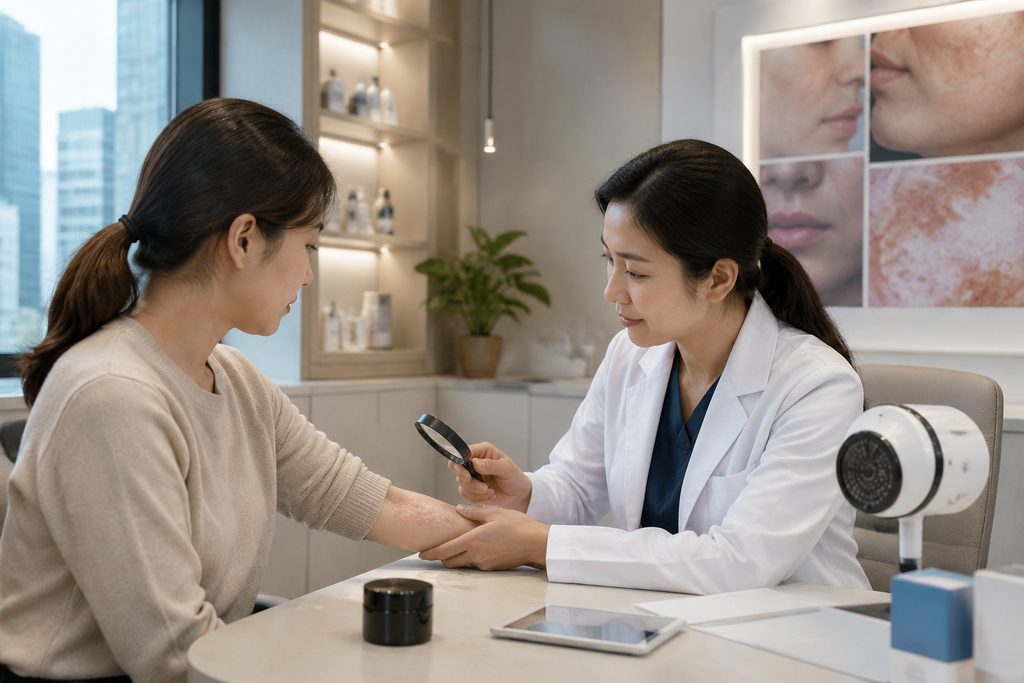
You’ve probably assumed that seeking medical care abroad means either paying Western prices or accepting questionable quality. The eczema treatment cost China presents sits in neither of those boxes. A consultation with a senior dermatologist at a top-tier Chinese hospital often costs less than a routine copay in the United States, yet the hospital behind it may handle more dermatology cases in a month than many Western facilities see in a year.
We see this confusion constantly. Patients from London, Dubai, and Singapore arrive with the same question: how much does eczema treatment cost in China, really? The honest answer depends on the hospital tier, the treatment approach, and whether you need ongoing care or a one-time consultation. What follows is a breakdown based on real hospital pricing structures we work with daily — not marketing estimates.
Before the numbers, understand one thing. Eczema — atopic dermatitis — is not a single-treatment condition. Some patients need a topical regimen review. Others require biologic therapy like dupilumab. Some seek traditional Chinese medicine (TCM) as a complement. Each path carries a different price tag. We’ll walk through all of them.
How This Actually Works, Step by Step
You’re sitting at home with a diagnosis, a stack of prescriptions that stopped working, or a child whose flare-ups keep getting worse. The path to treatment in China starts with documents, not plane tickets.
First, you send us your existing medical records. Dermatology reports, allergy test results, current medication list, photos of affected skin. Our team translates these into Chinese medical terminology — a step that matters more than most people realize. A poorly translated “rash” versus “chronic lichenified plaques” leads to very different clinical conversations.
Second, we match your case to the right department. For straightforward eczema, a general dermatology department works. For severe or treatment-resistant atopic dermatitis, you want a hospital with a dedicated allergy and immunology unit. For patients interested in integrating TCM, we look at hospitals with integrated dermatology-TCM programs. The dermatology specialty rankings guide this decision.
Third, you choose your access channel. Public hospital outpatient clinics require in-person registration and same-day queuing — no advance booking from overseas. The international medical departments at the same hospitals allow scheduled appointments with English-speaking coordination. The price difference is roughly 1.5x to 2x for international department access. Both routes lead to the same specialists.
Fourth, you arrive, attend your consultation, receive a treatment plan, and decide whether to proceed locally or continue care at home. Some patients fly in for a single comprehensive evaluation. Others stay for a two-week intensive topical treatment course. The timeline section below covers both.
Eczema Treatment Cost China: A Tiered Breakdown
Let’s talk concrete numbers. These reflect current pricing at public hospital international departments and private international hospitals across major Chinese cities. All figures are in USD and vary by hospital and case complexity.
| Service | Public Hospital (Standard OPD) | Public Hospital (International Dept) | Private International Hospital |
|---|---|---|---|
| Initial dermatology consultation | $15–40 | $80–200 | $150–350 |
| Follow-up consultation | $10–30 | $60–150 | $120–280 |
| Allergy patch testing (per panel) | $30–80 | $60–150 | $100–250 |
| Topical treatment course (2 weeks, outpatient) | $100–300 | $200–600 | $400–1,200 |
| Phototherapy session (narrowband UVB) | $20–50 | $40–100 | $80–180 |
| Biologic therapy (dupilumab, per dose, drug only) | $600–900 | $600–900 | $800–1,200 |
| Full allergy workup (blood + patch + food panel) | $150–400 | $300–700 | $500–1,200 |
Compare this to the United States, where an initial dermatology visit without insurance runs $200–450, phototherapy sessions cost $100–300 each, and dupilumab without coverage reaches $3,500–4,000 per dose. The eczema treatment cost China offers runs roughly one-third to one-fifth of American out-of-pocket rates.
For patients asking specifically how much does eczema treatment cost in Shanghai, the numbers land at the higher end of the public international department range. Shanghai’s dermatology departments at hospitals like Huashan and Ruijin are among China’s busiest, and international department pricing reflects demand. But even Shanghai pricing stays well below Western private care. A comprehensive Shanghai evaluation — consultation, testing, treatment plan — typically runs $500–1,200 total.
A Realistic Timeline
Medical tourism eczema treatment China price estimates mean nothing without a timeline. Here’s what actually happens, including the waiting steps people forget.
| Stage | Duration | What Happens |
|---|---|---|
| Document collection and translation | 3–7 days | You gather records; we translate into Chinese medical format |
| Hospital matching and appointment request | 2–10 days | We contact the international department; confirm specialist availability |
| Visa processing (S2) | 1–4 weeks | You apply at your local Chinese embassy with hospital invitation letter |
| Travel and arrival | 1–2 days | Flight, hotel check-in, settling in |
| Initial consultation and testing | 1–3 days | Consultation, skin examination, allergy testing if indicated |
| Treatment initiation | Same week | Topical regimen, phototherapy start, or biologic first dose |
| Follow-up before departure | Day 7–14 | Assessment of treatment response, adjustment of plan |
| Remote follow-up | Ongoing | Video consultations at $150–300 per session |
The total in-country stay for most eczema patients runs 7 to 14 days. That covers initial evaluation, treatment initiation, and a follow-up before departure. Patients pursuing TCM protocols sometimes stay 2–3 weeks for daily acupuncture or herbal preparation sessions.
Visa timing catches people off guard. The S2 visa — the correct category for medical treatment and private affairs — takes one to four weeks depending on your embassy. Some patients assume a tourist visa works. It doesn’t for scheduled medical care, and Chinese hospitals increasingly require proper visa documentation for international department registration. We provide the hospital invitation letter that supports S2 applications, but approval always rests with the embassy.
What Can Go Wrong — and What Happens Then
Let’s be honest about failure modes. This is where trust gets built or broken.
The appointment gets rescheduled. Top Chinese specialists have demanding schedules. A dermatology professor may be called into a hospital-wide consultation or a government meeting. If your appointment shifts by a day or two, we rebook and adjust your itinerary. If the specialist becomes unavailable entirely, we offer an alternative at the same department or a comparable hospital. You don’t lose your consultation fee.
The treatment doesn’t work as expected. Eczema is notoriously variable. A topical regimen that works for one patient fails for another. If you’re in-country when this becomes clear, we arrange a follow-up consultation — often within 24–48 hours through the international department. If you’ve already returned home, video consultation bridges the gap. The Chinese dermatology approach tends to be aggressive about step-up therapy, meaning they move quickly from topicals to phototherapy to biologics when indicated.
Language barriers surface despite planning. International departments have English-speaking coordinators, but the nursing staff on regular wards may not. If you’re admitted for intensive treatment — rare for eczema, but possible for severe cases requiring wet wrap therapy — our bilingual companion bridges every interaction. This is not a luxury. It’s the difference between knowing when your dressing change happens and lying in a bed guessing.
Insurance reimbursement gets complicated. Chinese public hospitals operate on a pay-first model. You pay the full amount at the time of service, then file with your insurer at home. Private international hospitals often bill insurers directly. We provide itemized invoices and medical documentation formatted for international insurance claims. But we cannot guarantee your insurer’s reimbursement decision.
Choosing the Right Hospital: What the Numbers Mean
The best dermatology hospital for eczema Beijing offers differs from the best option in Shanghai or Guangzhou. Rankings help, but they don’t tell the full story.
Beijing’s dermatology strength concentrates in a few institutions. Peking Union Medical College Hospital (PUMCH) runs one of China’s most respected dermatology departments, with particular depth in autoimmune and allergic skin conditions. Beijing Friendship Hospital has a strong integrated TCM-dermatology program. If you’re searching for the best dermatology hospital for eczema Beijing patients recommend, PUMCH’s international department is the standard answer — but it’s also the busiest, with appointment lead times that can stretch two to three weeks during peak seasons.
Shanghai offers Huashan Hospital, whose dermatology department is widely considered among China’s top two or three. Ruijin Hospital, affiliated with Shanghai Jiao Tong University, runs a strong allergy and immunology program that handles complex atopic dermatitis cases. For patients asking how much does eczema treatment cost in Shanghai, expect the higher end of the ranges above — but also expect shorter wait times than Beijing for international department slots.
Guangzhou and Shenzhen present different value propositions. Guangzhou’s dermatology departments are solid but less internationally oriented than Shanghai’s. Shenzhen’s private international hospitals — including the University of Hong Kong-Shenzhen Hospital — offer Western-style care with direct insurance billing. Prices run higher, but the experience feels familiar to Western patients.
Is eczema treatment in China safe? The short answer: yes, at accredited institutions. The longer answer requires context. China’s top 100 hospitals — the ones in our database — are ranked by the Fudan University hospital ranking system, which evaluates clinical capability, research output, and peer reputation. These are not small clinics. They are massive academic medical centers where dermatology departments see hundreds of patients daily. The volume creates expertise. But safety also depends on communication. A patient who cannot explain their medication history or understand post-treatment instructions faces real risk. That’s why we insist on either strong English support at the hospital or a bilingual companion.
If you’re considering a book eczema treatment package China option, understand what “package” actually means. Some agencies market all-inclusive packages with fixed prices. We don’t operate that way. Your treatment plan depends on your specific eczema subtype, severity, and history. A package price that looks attractive may include services you don’t need or exclude the specialist you actually require. We prefer transparent, line-item pricing based on the hospital’s actual charges.
Practical Considerations: Records, Visas, Payment, and Follow-Up
Before you book a flight, sort out the practical layer.
Medical records. Bring everything. Previous dermatology notes, allergy test results, medication history, photos of flare-ups at their worst and during calm periods. Chinese dermatologists value photographic documentation highly. Organize records chronologically. We handle translation, but the source documents matter.
Visa category. S2 for treatment stays under 180 days. Accompanying family members also apply for S2. The hospital’s international department provides an invitation letter confirming your appointment. This letter supports but does not guarantee visa approval. Apply at least one month before your intended travel date.
Payment. Chinese hospitals require payment at the time of service. Credit cards work at international departments and private hospitals; standard outpatient clinics often require cash or Chinese mobile payment. We advise patients on payment logistics before arrival. Medical costs are paid directly to the hospital — never through us. Our coordination fee is separate and transparent.
Insurance. If your home insurer covers international treatment, you’ll need pre-authorization and itemized documentation. Chinese hospitals provide these, but formatting may differ from Western standards. We help assemble claim packages. If your insurer doesn’t cover international care, the out-of-pocket eczema treatment cost China presents is often still lower than US insured copays for equivalent care.
Follow-up at home. Eczema doesn’t end when you leave China. The treatment plan includes a maintenance phase. Some medications prescribed in China may not be available in your home country, or may require a local physician’s prescription. We flag these issues before you depart and provide documentation your home doctor can use. Video follow-ups at $150–300 keep continuity with your Chinese dermatologist.
Frequently Asked Questions
At a public hospital international department, expect $80–200 for the initial consultation and $300–700 for a full allergy workup including patch testing. A straightforward topical treatment plan typically totals $500–1,000 including all consultations and testing. At private international hospitals, the same process runs $1,000–2,500.
Yes, at top-tier pediatric dermatology departments. Chinese pediatric dermatologists manage high volumes of atopic dermatitis, and treatment protocols align with international guidelines. The key is choosing a hospital with a dedicated pediatric dermatology unit — not a general dermatology clinic. We help match pediatric cases to appropriate departments.
Dupilumab is approved and available in China at major hospitals. The drug cost per dose runs $600–900, comparable to many Asian markets but far below US list prices. Availability is generally good at top-tier hospitals, though supply can fluctuate. Your dermatologist determines whether biologic therapy is indicated based on your eczema severity and treatment history.
Public hospital international departments offer access to China’s top specialists at prices roughly 1.5x to 2x standard outpatient rates. You get the same doctors as regular patients, with English coordination and scheduled appointments. Private international hospitals offer Western-style comfort, direct insurance billing, and shorter wait times — but their dermatology departments may not match the clinical volume of top public hospitals. For complex or treatment-resistant eczema, we typically recommend public hospital international departments.
You need an S2 visa, which covers medical treatment and private affairs for stays under 180 days. It is not a “medical visa” in the formal sense — that category doesn’t exist as such for China. The S2 application requires supporting documents from the hospital confirming your appointment. Your family members traveling with you also apply for S2 visas.
Your Next Step
The eczema treatment cost China offers is genuinely lower than Western alternatives — often dramatically so. But cost is only one variable. The right hospital, the right specialist, and clear communication matter just as much for a good outcome.
We are China Medical Services, a team that connects international patients with 340+ top-ranked Chinese hospitals across 37 cities. We don’t practice medicine. We handle the logistics — hospital matching, appointment coordination, document translation, visa guidance, and bilingual accompaniment — so you can focus on your treatment. If you’re considering eczema care in China, start with a free consultation to discuss your situation and see whether this path makes sense for you.
Eczema is frustrating enough without adding logistical chaos. Get the right information first. The rest follows.
For more medical information and treatment options in China, visit chinamedservices.com (China Medical Services).
