Cancer Screening Cost China: Full-Body Scan Prices for Foreigners
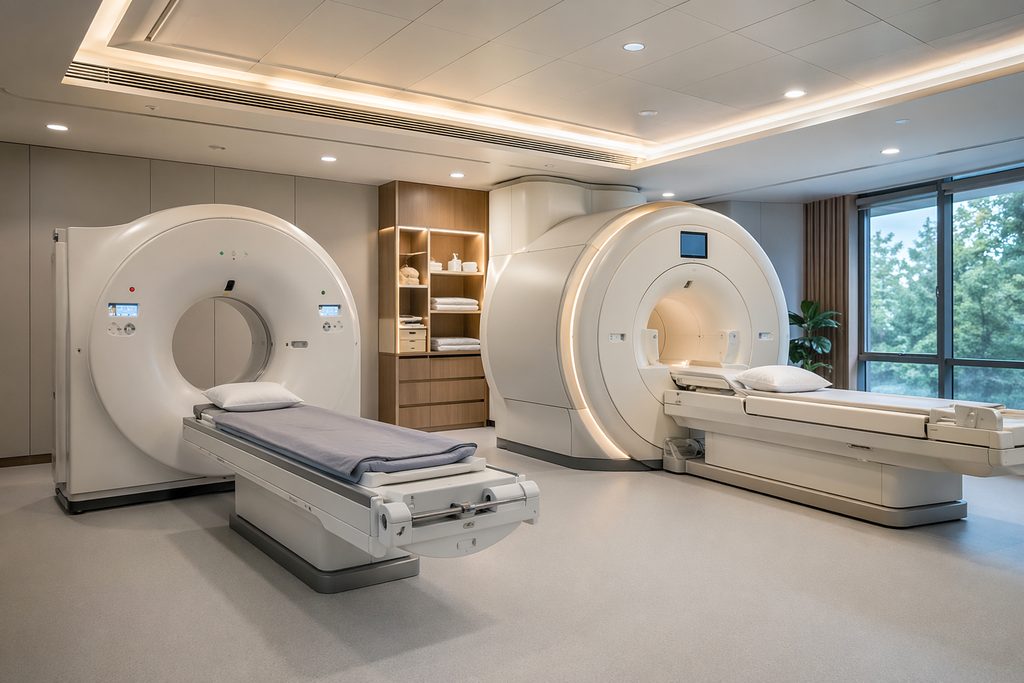
According to data from the International Agency for Research on Cancer, China recorded approximately 4.82 million new cancer cases in 2022. That staggering number drives a massive domestic screening industry. For international patients, the question is simpler: what is the actual cancer screening cost China hospitals quote, and what do you get for that money? A basic tumor marker panel at a public tertiary hospital in Beijing might run $150–$400. A comprehensive private hospital package with PET-CT, endoscopy, and same-day specialist review can reach $2,500–$5,000. The gap reflects a fragmented system where price depends heavily on hospital tier, imaging depth, and whether you use the international department. Our team at China Medical Services has coordinated screening bookings for patients from 40+ countries, and the most common mistake is not the cost — it is paying for the wrong package.
How This Actually Works, Step by Step
The process starts before you book a flight. You send us your age, family history, current symptoms if any, and any prior imaging or lab reports. We translate those records into Chinese. A specialist at the relevant department reviews them and recommends a screening scope — not a generic package, but a targeted one. That written recommendation comes back to you with a price range from two or three hospitals.
Then you choose. Some patients want the fastest full-body scan available. Others want the deepest organ-specific screening for a known risk. Once you confirm, we coordinate the appointment, arrange a bilingual medical companion, and handle the hospital registration. On the day, you fast, arrive early, and move through stations: blood draw, ultrasound, CT or MRI, endoscopy if ordered, and finally a face-to-face or written summary with the reviewing physician.
Results for imaging are typically available same-day or within 48 hours. Pathology from any biopsy takes 3–7 working days. You leave with translated reports and a clear follow-up plan.
What Affects Cancer Screening Cost China Most
Three variables dominate. Hospital tier is the first. A top-ranked public hospital like those on the Fudan Top 100 list charges less for the raw scan than a private international hospital, but the public route requires navigating Chinese-language registration, longer queues, and no hand-holding. The private route adds English-speaking staff, faster scheduling, and direct insurance billing — at roughly 1.5 to 2 times the public price.
Imaging modality is the second variable. Ultrasound is cheap. Low-dose chest CT is moderate. Whole-body PET-CT is the most expensive single item, often $800–$1,500 alone. MRI of the brain or abdomen adds $300–$700 per region. Endoscopy — gastroscopy plus colonoscopy — typically costs $400–$1,000 including sedation and pathology processing.
The third variable is depth of interpretation. A radiologist’s written report is standard. A senior oncologist’s second-read of that imaging, with a 30-minute consultation, adds $100–$300. A multidisciplinary team review of complex findings can add $1,500–$2,000. None of these are hidden fees — they are options you choose.
Cancer Screening Packages Shanghai Price: What You Actually Pay
Shanghai is where most international patients start. The city hosts 18 hospitals on the Fudan Top 100 list, and its private international sector is the most developed in mainland China. A cancer screening packages Shanghai price comparison looks like this:
| Package Type | What’s Included | Typical Price (USD) |
|---|---|---|
| Basic public hospital panel | Tumor markers (CEA, AFP, CA19-9, CA125, PSA), chest X-ray, abdominal ultrasound | $150–$400 |
| Mid-tier private package | Above plus low-dose chest CT, thyroid ultrasound, full blood panel, physician review | $600–$1,200 |
| Comprehensive private package | Above plus brain MRI, abdominal MRI, gastroscopy, colonoscopy, same-day specialist consult | $2,000–$4,000 |
| Full-body PET-CT package | Whole-body PET-CT, tumor markers, physician report, translated summary | $2,500–$5,000 |
These are ranges from real quotes we have coordinated. Final pricing varies by hospital and case complexity. A 45-year-old with no symptoms pays less than a 60-year-old with a family history of colorectal cancer who needs both endoscopies and additional imaging.
How Much Is a Full Body Cancer Scan in China Compared to the West?
The question how much is a full body cancer scan in China usually comes from patients who have already priced it at home. In the United States, a whole-body MRI at a private clinic runs $2,500–$5,000. A PET-CT scan alone often bills at $3,000–$7,000. In the UK, private whole-body MRI packages start around £1,500–£3,000. In China, the equivalent full-body scan — MRI plus CT plus ultrasound plus blood work — costs $1,000–$3,000 at a top hospital. That is a 40–70% saving for comparable imaging quality.
But the comparison is not purely financial. Chinese hospitals run these scans at high volume. A single radiology department at a major Shanghai hospital may process 500+ CT scans daily. That repetition builds technical proficiency. The radiologists reading your images have seen rare presentations that a Western general radiologist encounters once a year. This is why some patients fly to China specifically for a second-opinion scan after an inconclusive result at home.
A Realistic Timeline
People underestimate the lead time. Here is what a typical international screening journey actually looks like:
| Stage | What Happens | Duration |
|---|---|---|
| Day 1–3 | You submit records and screening goals; we translate and route to the right department | 2–3 days |
| Day 4–7 | Specialist reviews records, recommends screening scope, hospital quotes come back | 3–5 days |
| Day 8–14 | You confirm package and dates; we book the appointment and companion | 3–7 days |
| Day 15–30 | S2 visa application with hospital invitation letter; flight and accommodation booking | 1–3 weeks |
| Day 31–35 | You arrive, complete the screening (1–2 days), receive preliminary results | 2–3 days |
| Week 6–8 | Final pathology (if any biopsy taken), translated full report, follow-up video consult | 1–2 weeks |
The S2 visa is the correct category for medical treatment and private affairs in China. Processing times vary by embassy and season. We provide the hospital invitation letter and supporting documents, but approval is always at the consulate’s discretion. Do not book non-refundable flights before the visa is in hand.
What Can Go Wrong — and What Happens Then
Incidental findings are the most common complication. A full-body scan finds something — a lung nodule, a thyroid lesion, a liver cyst — in roughly 30–40% of asymptomatic adults. Most are benign. But now you need follow-up imaging or a biopsy, and that was not in the original package price. We tell every patient this before booking: a screening is not a diagnosis. It is a map. Sometimes the map shows a road you did not expect to travel.
Another failure mode is inadequate prep. Endoscopy requires a 12-hour fast and bowel preparation. Skipping the prep means the colonoscopy is incomplete, and you have paid for a partial exam. Our companion reviews prep instructions with you the day before, in your language.
Then there is the language barrier at public hospitals. Registration kiosks, lab queues, and result collection are all Chinese-only. Without a bilingual companion, a simple blood draw can take two hours of confusion. We do not send patients into public hospitals without one.
Finally, some patients expect a definitive “you do not have cancer” statement. No screening delivers that. What you get is: no evidence of malignancy on the tested regions, with a list of recommended follow-ups. That is the honest limit of the technology.
Is Cancer Screening in China Reliable? What the Data Shows
The question is cancer screening in China reliable deserves a direct answer. Yes — with conditions. The equipment at top-tier hospitals is current-generation: Siemens, GE, Philips, Canon. Many facilities replace scanners every 5–7 years. The radiologists are board-certified and, at the 340+ hospitals we work with, typically read thousands of cases annually. The Fudan ranking system evaluates clinical reputation and research output, and the hospitals on that list meet international standards.
But reliability is not uniform. A small private clinic in a second-tier city may use older equipment and employ less experienced readers. That is why hospital selection matters more than price negotiation. For cancer screening, we recommend hospitals ranked among China’s top 10 for oncology or diagnostic imaging. You can browse those by specialty on our department rankings page.
One more data point. A 2023 study published in The Lancet Regional Health – Western Pacific examined low-dose CT lung cancer screening in China and found detection rates comparable to Western programs. The technology and protocols are not the weak point. The weak point is coordination — knowing which scan to order, at which hospital, and how to act on the result.
Best Hospital for Cancer Screening Beijing: Where to Look
Beijing is the other major entry point. The city hosts 21 hospitals on the Fudan Top 100 list — more than any other Chinese city. For the best hospital for cancer screening Beijing has to offer, the candidates fall into two groups.
Public powerhouses: Peking Union Medical College Hospital (PUMCH) and the Chinese Academy of Medical Sciences Cancer Hospital. Both are among China’s top-ranked oncology institutions. Their imaging departments are excellent, their specialists are world-class, and their prices are moderate. The trade-off: public registration is entirely in Chinese, and international patients cannot book ahead through normal channels. You need the hospital’s international department or a coordination service.
Private international options: United Family Beijing and Raffles Hospital Beijing. English-speaking staff, JCI accreditation, direct insurance billing, and faster scheduling. Prices run 1.5–2 times the public rate, but the experience is closer to what a Western patient expects.
Neither category is “better” in absolute terms. The right choice depends on your budget, your tolerance for friction, and whether you need a specific specialist. Our team has coordinated screenings at both types of facilities, and we are honest about the trade-offs.
Practical Considerations: Records, Visa, Payment, and Follow-Up
Bring every prior imaging study on CD or USB, not just the written report. Chinese radiologists want the raw DICOM files to do their own comparison. Bring pathology slides if you have had a prior biopsy. Bring a list of all medications with generic names.
The visa is S2, not M. We repeat this because patients keep reading outdated advice. The S2 visa covers short-term private affairs including medical treatment. Your family members accompanying you apply for S2 as well. The hospital’s international department issues an invitation letter that supports the application. Processing takes 1–3 weeks depending on your home country’s consulate.
Payment at public hospitals is prepaid — you deposit funds at registration, and the hospital deducts as services are rendered. Private international hospitals accept major credit cards and often bill your insurer directly. If you use insurance, confirm coverage for overseas screening before you book. Many policies exclude preventive screening abroad.
Follow-up at home is the step people forget. A Chinese screening report is not automatically accepted by your home physician. You may need a local specialist to review and re-order confirmatory tests. Budget for that. The Chinese report is a strong starting point — it is not the end of the conversation.
Frequently Asked Questions
For a comprehensive package at a top public hospital using the international department, budget $1,500–$3,500 including imaging, blood work, and physician review. At a private international hospital, budget $2,500–$5,000. These ranges include the screening itself, not flights, accommodation, or visa fees.
Yes. Book cancer screening medical tourism China packages directly through hospital international departments or coordination services like ours. A referral is not required for screening. However, if you have specific symptoms or a known family history, we strongly recommend a pre-screening video consultation so the scope is targeted rather than generic.
Usually yes, but with caveats. Chinese imaging reports follow international reporting standards at top hospitals. Your home physician may still want to review the raw images or repeat certain tests. Plan for a handoff appointment after you return.
You are already in the right place. Chinese top-tier hospitals can move from finding to biopsy to pathology within days, not weeks. If surgery or treatment is recommended, you can choose to proceed in China or return home with the complete diagnostic workup. The decision is always yours.
Your Next Step
Cancer screening in China is not a purchase — it is a sequence of decisions. Which hospital. Which scans. Which reader. How to act on the result. We are China Medical Services, and we coordinate that sequence for international patients across 37 cities and 340+ top-ranked hospitals. We do not perform scans or interpret images. We handle the logistics, the language, and the hospital communication so you can focus on the result. If you are considering screening here, start with a free consultation — tell us your history and goals, and we will tell you honestly whether China makes sense for your case.
For more medical information and treatment options in China, visit chinamedservices.com (China Medical Services).
