Kidney Stone Removal Cost in China: A 2025 Pricing Guide for International Patients
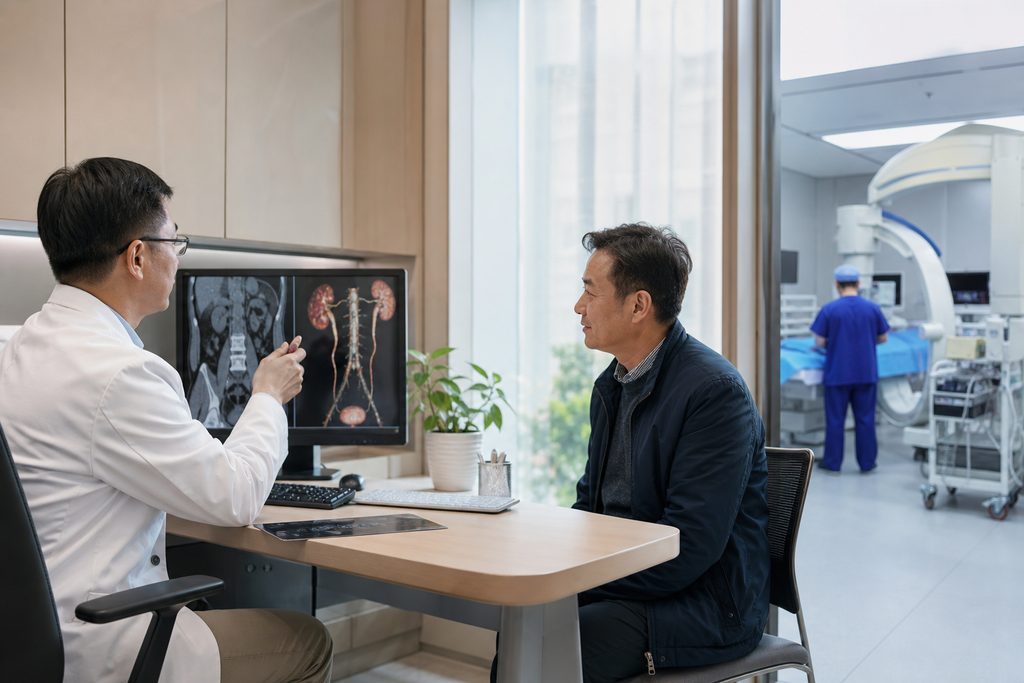
While an uninsured American patient can face a bill exceeding $30,000 for a straightforward ureteroscopy with laser lithotripsy, the same procedure at a top-tier Chinese hospital typically runs between $4,000 and $8,000 — and that includes the surgeon’s fee, anesthesia, and a two-night stay. The math is stark. But price alone rarely tells the full story.
Kidney stones are miserable. The flank pain, the nausea, the urgent trips to the ER — roughly 1 in 10 people will experience a kidney stone at some point. For patients in the United States, Canada, the UK, or Australia, the diagnosis often comes with a second shock: the treatment bill. That’s what pushes many to search for kidney stone removal cost China in the first place.
Our team at China Medical Services has spent years helping international patients navigate exactly this decision. We don’t perform surgeries. We connect you with the hospitals that do — and we make sure you understand the real numbers before you book a flight.
How This Actually Works, Step by Step
You’re not going to land in Beijing and walk into a hospital expecting same-day surgery. That’s not how the Chinese system works — and frankly, it’s not how you’d want it to work. Here’s the actual sequence.
First, you send us your existing medical records: CT scans, ultrasound reports, blood work, urine analysis, and any notes from your urologist. If your documents aren’t in English, we arrange certified translation. If they’re in English, most Chinese hospital international departments can review them directly.
A urologist at a partner hospital reviews your case. For most stone patients, this takes 3 to 5 business days. The review determines two things: whether you actually need surgery at all, and which procedure fits your stone’s size, location, and composition. Stones under 5mm often pass on their own with medication and hydration. Stones between 5mm and 10mm may respond to extracorporeal shock wave lithotripsy (ESWL) — no incision, no scope, just sound waves. Stones over 10mm or those lodged in awkward positions usually require ureteroscopy with laser lithotripsy or, for very large stones, percutaneous nephrolithotomy (PCNL).
Once the specialist confirms surgery is appropriate, we coordinate your appointment through the hospital’s international department or VIP channel. This is the step most foreign patients underestimate. Public hospital walk-in registration won’t secure you a surgical slot. The international department exists precisely for this — it handles scheduling, English-speaking staff, and pre-admission paperwork.
You’ll receive a written treatment plan with a cost estimate. You review it. You ask questions. Only then do you commit.
Kidney Stone Removal Cost in China: Real Numbers for 2025
No. Chinese public hospitals require a formal in-person consultation before any surgical admission. You can, however, complete a remote written second opinion or video consultation first — this lets a Chinese urologist review your scans and confirm that surgery is appropriate before you travel. If you’re looking to book kidney stone treatment medical tourism China, the correct sequence is: remote review, then visa, then travel, then in-person consultation, then surgery.
Plan for 7–10 days minimum. That covers pre-op consultation and imaging (1 day), surgery and hospital stay (1–2 days), and initial recovery before flying home (3–5 days). If you need a ureteral stent removed cystoscopically, that may extend your stay or require a second brief visit. Some patients choose to have the stent removed at home by their local urologist.
Your home urologist manages post-operative complications. Before leaving China, request complete operative notes, discharge summaries, and imaging in English. Chinese hospitals with international departments provide these routinely. If you need to consult the Chinese surgeon remotely, video follow-up consultations are available for $100–300.
At top-ranked hospitals, yes. The urology departments at Peking University First Hospital, PLA General Hospital, and Shanghai Changhai Hospital perform thousands of stone procedures annually with complication rates comparable to major Western centers. The key is choosing a hospital from the top tier — the Fudan rankings or JCI accreditation list — not a random local facility. Our top hospitals directory lists verified institutions by city and specialty.
Your Next Step
Kidney stone removal in China isn’t right for everyone. It makes the most sense for patients facing high out-of-pocket costs at home, those with complex stones requiring specialized care, or expatriates already in Asia. The savings are real, but they come with logistical complexity that shouldn’t be underestimated.
We help with that complexity. China Medical Services connects international patients with verified Chinese hospitals, coordinates remote consultations, arranges bilingual companions, and guides you through the S2 visa process. We don’t perform medical procedures, and we don’t promise outcomes. What we do is make the path from diagnosis to treatment clearer and less lonely.
If you’re weighing your options, start with a free consultation. Send us your records. We’ll tell you honestly whether China makes sense for your case — and if it does, we’ll show you exactly how to proceed.
Frequently Asked Questions
Yes. The hospitals used for international patients are JCI-accredited and follow the same international safety standards as top hospitals in the US and Europe. Surgical teams perform high volumes of procedures — often more than their Western counterparts — which studies show leads to better outcomes.
Costs vary by procedure and hospital, but international patients typically save 40-80% compared to US prices — even when factoring in travel and accommodation. A consultation with our team will give you an exact, all-inclusive quote with no hidden fees.
Send us your existing medical reports to get started. We handle everything from hospital selection and appointment scheduling to visa assistance and post-operative recovery planning. Your medical records are reviewed by the specialist before you even book a flight.
For more medical information and treatment options in China, visit chinamedservices.com (China Medical Services).
