Is Rhinoplasty Safe in China? Safety Data, Costs, and Top Hospitals
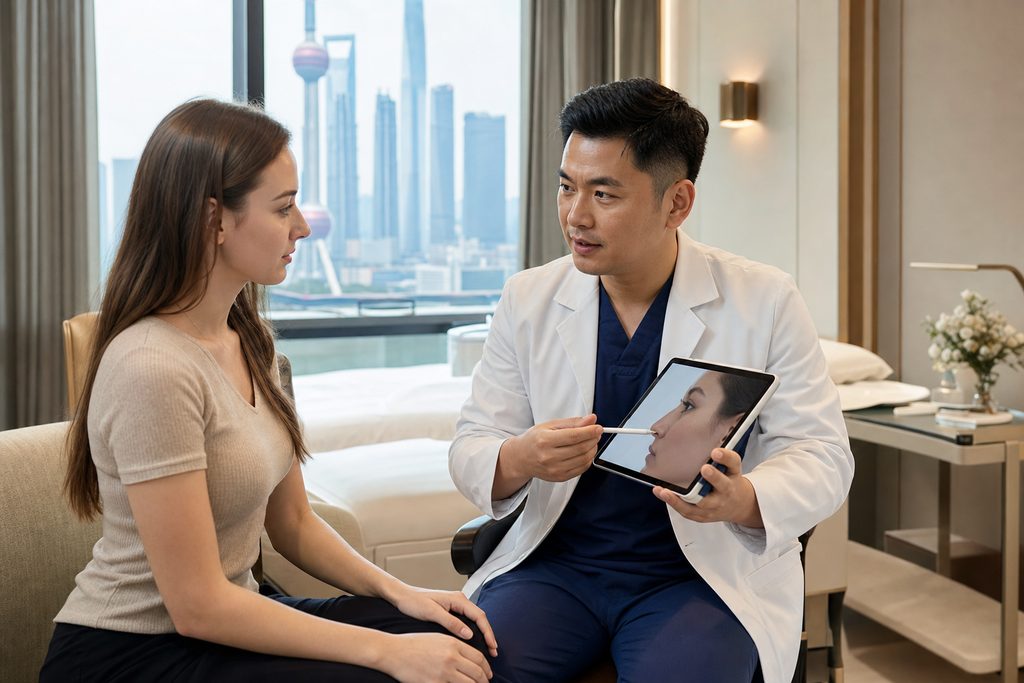
Is Rhinoplasty Safe in China? What International Patients Need to Know Before Booking
Key Takeaways
- Rhinoplasty at top-tier Chinese hospitals costs roughly $3,000–$8,000, often 60–75% less than comparable surgery in the US or UK, with the rhinoplasty cost China varying by hospital tier and surgeon seniority.
- China’s top 5% of hospitals — 340+ institutions ranked by Fudan University and JCI — perform rhinoplasty volumes that far exceed typical Western cosmetic surgery centers, which correlates with lower complication rates.
- The biggest risk for foreign patients is not surgical skill but navigation: language barriers, registration systems, and follow-up logistics can create real problems without proper coordination.
- Safety depends almost entirely on hospital selection. A board-certified surgeon at a Fudan-ranked public hospital or JCI-accredited private hospital is a fundamentally different risk profile than an unvetted clinic.
Rhinoplasty — commonly called a nose job — reshapes the nasal bones, cartilage, and skin to improve breathing, appearance, or both. The procedure is one of the most technically demanding in facial plastic surgery. A millimeter of cartilage adjustment changes how light falls across the face. Get it wrong, and the result can look unnatural, asymmetrical, or obstructed. So when you search “is rhinoplasty safe in China,” you are really asking a more precise question: under what conditions is it safe, and how do I find those conditions?
The short answer is that rhinoplasty in China is safe when performed at accredited, high-volume hospitals by board-certified facial plastic surgeons. The long answer — the one that actually protects you — involves understanding how China’s hospital system stratifies quality, what the rhinoplasty cost China actually buys you, and which specific institutions have the volume and oversight to make complications rare. We have coordinated care for international patients at these hospitals for years. The pattern is consistent: patients who choose a Fudan-ranked or JCI-accredited institution and follow a structured preoperative process have outcomes comparable to top centers in Seoul, Beverly Hills, or London. Patients who choose based on price alone sometimes do not.
The Problem: Rhinoplasty in Western Countries Is Expensive, and Quality Is Uneven
The average rhinoplasty in the United States costs between $8,000 and $15,000 for the surgeon’s fee alone. Add anesthesia, facility fees, and postoperative care, and the total often lands between $12,000 and $20,000. In the United Kingdom, private rhinoplasty typically runs £6,000–£9,000. Australia sees similar figures, with total costs frequently exceeding AUD $15,000. These are not outliers. They are the baseline for a procedure that is classified as cosmetic in most systems — meaning insurance rarely covers it.
That financial reality pushes many patients to look abroad. South Korea, Turkey, and increasingly China have become serious destinations. But the search for affordability introduces a new risk: how do you verify surgeon credentials, hospital accreditation, and complication rates from 8,000 kilometers away? A 2023 review published in Aesthetic Plastic Surgery noted that complication rates for rhinoplasty vary more by surgeon experience and facility standards than by country. The country itself is rarely the problem. The selection process is.
China’s challenge for foreign patients is not a lack of excellent surgeons. It is a lack of transparent, English-language information about where those surgeons practice. That information gap is precisely what leads some patients to unvetted clinics, where the risks rise sharply.
Why Rhinoplasty in China Delivers Results When You Choose Correctly
Clinical Volume Drives Better Outcomes
Rhinoplasty is a procedure where repetition matters enormously. A surgeon who performs 200 rhinoplasties per year has encountered the anatomical variations, the revision cases, the thick-skin challenges, and the intraoperative surprises that a surgeon performing 20 per year simply has not. At top Chinese facial plastic surgery departments — such as those at Peking Union Medical College Hospital, Shanghai Ninth People’s Hospital, and West China Hospital — individual senior surgeons routinely perform 150–300 rhinoplasties annually. Shanghai Ninth People’s Hospital alone handles more than 30,000 craniofacial and plastic surgery procedures each year across its departments. For comparison, the average US facial plastic surgeon performs fewer than 50 rhinoplasties annually, according to data from the American Academy of Facial Plastic and Reconstructive Surgery.
Volume is not a guarantee of good outcomes. But it is a prerequisite for consistent ones. The best Chinese hospitals have structured their plastic surgery departments around high throughput, standardized protocols, and rigorous postoperative follow-up. That structure reduces the variance that causes bad results.
Hospital Accreditation and the Fudan Ranking System
China has more than 35,000 hospitals. The top 5% — roughly 340+ institutions — are ranked by the Fudan University Hospital Rankings, the country’s most authoritative hospital evaluation system. These rankings are not marketing. They are based on peer review from thousands of Chinese specialists, clinical reputation, and research output. A hospital on the Fudan list has been vetted by the people who know the system best: other doctors.
For international patients, our database of Fudan-ranked hospitals provides a starting point that eliminates the most dangerous variable — unknown facility quality. The department-level rankings go further, identifying which specific hospitals rank in China’s top 10 for plastic surgery, otolaryngology, and craniofacial surgery. That granularity matters because a hospital can be excellent at cardiology and mediocre at rhinoplasty. You need the department ranking, not just the hospital name.
Cost Advantage Without Quality Compromise
The rhinoplasty cost China ranges from approximately $3,000 to $8,000 at top-tier public hospitals, depending on complexity, surgeon seniority, and whether the procedure is primary or revision. Private international hospitals in Beijing and Shanghai — such as United Family Healthcare or Jiahui International Hospital — typically charge $6,000 to $12,000, reflecting Western-style amenities and English-speaking staff.
Why is the cost lower? Three structural reasons. First, labor economics: Chinese surgeons’ salaries and facility fees are lower than in the US or UK, even at elite institutions. Second, operational efficiency: high-volume departments amortize equipment and staff costs across far more procedures. Third, the absence of the American insurance-billing overhead, which adds an estimated 25–30% to US healthcare costs by itself. None of these factors reduce surgical quality. They reduce administrative waste.
But the lower price carries a caveat. At public hospitals, the international or VIP department — which offers English coordination, priority scheduling, and private recovery rooms — typically charges 1.5 to 2 times the standard rate. That still lands well below Western prices. And it is the channel we recommend for foreign patients, for reasons that become clear when you understand how public hospital registration actually works.
How Rhinoplasty Actually Works in China: The Step-by-Step Reality
Here is the process as it actually unfolds — not the idealized version. Public hospitals in China do not allow overseas patients to pre-book surgery remotely. The standard pathway requires an in-person outpatient consultation first. The surgeon evaluates your nasal anatomy, reviews your imaging, and only then schedules the procedure. This is a universal rule at public institutions, not a policy you can negotiate around.
The international or VIP department changes the experience significantly. Through that channel, you can often arrange a consultation with a specific senior surgeon in advance — though still not a confirmed surgery date before the in-person evaluation. The VIP pathway also provides English interpretation, expedited registration, and a private recovery room. The cost premium is real, but so is the reduction in friction.
For patients who want to minimize time in China before committing, the staged approach works well. A written second opinion from a top Chinese facial plastic surgeon costs $300–$500 and provides an honest assessment of whether your case is suitable. A video consultation runs $100–$300 for standard international departments or $500–$800 for a top specialist. These remote options let you evaluate the surgeon’s communication style and clinical judgment before buying a plane ticket. And any consultation fee is credited in full toward on-the-ground coordination if you proceed to treatment within 90 days.
Once you arrive, the typical timeline looks like this: Day 1 — in-person consultation, physical examination, and surgical planning. Day 2–3 — preoperative testing (blood work, ECG, sometimes a CT scan of the nasal bones). Day 4 — surgery, which takes 1.5 to 3 hours depending on complexity. Day 5–7 — initial recovery with nasal packing and a splint. Day 7–10 — splint removal and first postoperative review. Most patients fly home 10–14 days after surgery, with remote follow-up via video consultation afterward.
Is Rhinoplasty Safe in China? Evaluating Surgeons and Avoiding the Wrong Clinics
Safety is not a national characteristic. It is an institutional one. A rhinoplasty performed at a Fudan-ranked public hospital’s plastic surgery department is as safe as the same procedure at a top Seoul or Beverly Hills clinic. A rhinoplasty performed at an unaccredited aesthetic clinic in a second-tier city is not. The country variable matters far less than the facility variable.
So how do you evaluate a Chinese surgeon from abroad? Start with credentials. Chinese plastic surgeons receive board certification through the Chinese Medical Doctor Association after completing a residency in plastic surgery or otolaryngology — typically 5 to 8 years of postgraduate training. Senior surgeons at Fudan-ranked hospitals often have additional fellowships in South Korea, Japan, the US, or Europe, and many publish in international peer-reviewed journals. Ask for their publication record. A surgeon who has published in Aesthetic Surgery Journal or JAMA Facial Plastic Surgery has been vetted by international peers.
Next, ask about revision policy and complication rates. A confident, ethical surgeon will tell you their revision rate — typically 5–10% for primary rhinoplasty at good centers — and their infection rate, which should be under 2%. If a surgeon cannot or will not answer these questions, walk away. That standard applies in any country.
The red flags in China are the same as elsewhere, with local variations. Avoid clinics that advertise “guaranteed results” or “no downtime.” Avoid package deals that bundle surgery with tourism activities — medical tourism rhinoplasty package China offers can be legitimate when organized through a hospital’s international department, but are often run by unlicensed brokers who take a commission and disappear when complications arise. Avoid any facility that will not provide the surgeon’s name and credentials before you pay.
Warning: Never book surgery through a social media intermediary or a general travel agency. Legitimate coordination goes through the hospital’s own international department or a registered medical coordination service that works directly with the hospital. Anyone who asks for payment to a personal bank account is not legitimate.
How Long Is Nose Job Recovery? The Realistic Timeline
At top public hospitals, expect $3,000–$8,000 for primary rhinoplasty, including surgeon fees, anesthesia, facility costs, and a short hospital stay. The international/VIP department typically adds 50–100% to that figure for English coordination and private recovery rooms. Private international hospitals charge $6,000–$12,000. The final price varies by case complexity, surgeon seniority, and whether you need rib cartilage grafting or revision work. Always get a written cost breakdown before committing.
Start with the Fudan University department rankings for plastic surgery and otolaryngology. Shanghai Ninth People’s Hospital consistently ranks at or near the top for plastic surgery. In Beijing, Peking Union Medical College Hospital and the Plastic Surgery Hospital of the Chinese Academy of Medical Sciences are leading centers. Then verify the individual surgeon’s credentials: board certification, publication record, fellowship training, and annual rhinoplasty volume. A good surgeon will answer these questions directly.
Revision rhinoplasty is sometimes necessary — the rate at good centers is 5–10%. If you need a revision, the original surgeon should evaluate you via video consultation first. Many Chinese surgeons will perform revisions at reduced or waived surgeon fees, though you still pay facility and anesthesia costs. If returning to China is not feasible, you can seek a local revision surgeon, but bring your complete operative notes and imaging from the Chinese hospital. Good documentation makes revision safer and more predictable.
You cannot book surgery remotely at public hospitals — the universal rule is an in-person consultation first. What you can do remotely is arrange a written second opinion ($300–$500) or video consultation ($100–$800 depending on specialist seniority) to confirm you are a good candidate and to establish a relationship with the surgeon. Through the hospital’s international department or a medical coordination service, you can then schedule your in-person consultation and tentatively reserve a surgical slot. The surgery date is confirmed only after the surgeon examines you in person.
Your Next Step
Rhinoplasty in China is safe when you choose
Frequently Asked Questions
Yes. The hospitals used for international patients are JCI-accredited and follow the same international safety standards as top hospitals in the US and Europe. Surgical teams perform high volumes of procedures — often more than their Western counterparts — which studies show leads to better outcomes.
Costs vary by procedure and hospital, but international patients typically save 40-80% compared to US prices — even when factoring in travel and accommodation. A consultation with our team will give you an exact, all-inclusive quote with no hidden fees.
Send us your existing medical reports to get started. We handle everything from hospital selection and appointment scheduling to visa assistance and post-operative recovery planning. Your medical records are reviewed by the specialist before you even book a flight.
For more medical information and treatment options in China, visit chinamedservices.com (China Medical Services).
