Is Breast Augmentation Safe in China? A Data-Driven Guide for International Patients
Have you ever looked at a price quote for surgery abroad and wondered what, exactly, you were paying for? That question sits at the heart of any decision about cosmetic surgery. And it becomes sharper when the destination is unfamiliar. For many Western patients, the phrase breast augmentation cost China triggers a cascade of questions about safety, quality, and hidden risks. The numbers look compelling—often 40% to 60% lower than comparable procedures in the United States or Australia. But a low price means nothing if the operating room standards, implant quality, or aftercare fall short.
We work with international patients navigating exactly this decision. Our team at China Medical Services coordinates hospital access across 340+ top-ranked facilities in 37 cities. We do not perform surgery. We do not promise outcomes. What we do is walk you through what the evidence actually shows about safety, cost, and process in Chinese hospitals—so you can decide with your eyes open.
How This Actually Works, Step by Step
Here is the real sequence, not the brochure version. You start with medical records: any prior mammograms, ultrasound reports, notes from previous consultations. If you have none, that is fine—you will get imaging in China. You send us those records. A board-certified plastic surgeon at a hospital we work with reviews them. You receive a written assessment: whether you are a candidate, which implant approach fits your anatomy, and what the surgeon recommends. That written second opinion costs between $300 and $500 and is for reference only, not a prescription.
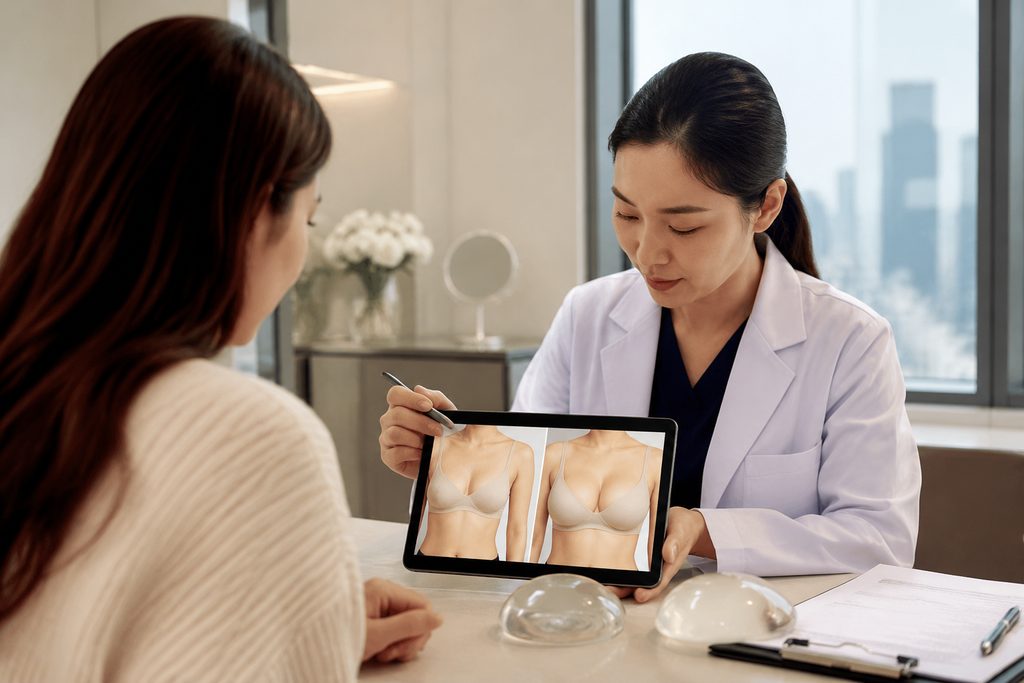
Next comes a video consultation if you want one. You speak directly with the surgical team. You ask about implant brands, incision techniques, capsular contracture rates, revision policies. The surgeon asks about your medical history, medications, smoking status, and expectations. This call typically costs $100 to $300 for a standard hospital international department, or $500 to $800 for a top specialist. Any consultation fee is credited in full toward on-the-ground coordination if you proceed to surgery within 90 days.
Then you travel. You arrive in Beijing, Shanghai, or another major city. A bilingual medical companion meets you at the hospital, handles registration, translates every conversation, and stays with you through discharge. Surgery happens. You recover in a hospital room or nearby hotel. You attend follow-up appointments. You fly home with documentation and a direct line to the surgical team for questions.
That is the whole arc. No shortcuts. No mystery.
Is Breast Augmentation Safe in China? What the Data Shows
At top-tier Chinese hospitals through international channels, expect $6,000 to $12,000 total. Private international hospitals run $10,000 to $18,000. In the United States, total costs for board-certified plastic surgeons in major cities commonly reach $15,000 to $25,000. The cost advantage in China is meaningful but not extreme at the top end. The bigger advantage is surgeon volume and scheduling speed.
You will need to see a local plastic surgeon. Chinese hospitals provide documentation—operative notes, implant details, imaging—to facilitate this handoff. Some offer remote consultation by video for follow-up questions. Revision surgery within the first year for surgical complications may be offered at reduced or no cost by the original hospital, but this must be confirmed in writing before your initial surgery. Your travel insurance likely does not cover elective cosmetic complications, so plan accordingly.
Packages exist, but they vary widely in quality. A legitimate package includes hospital coordination, translation, and logistics—not the surgery itself, which the hospital bills separately. Be wary of low all-inclusive prices that bundle surgery with hotels. Those often indicate junior surgeons, lesser-known implants, or excluded follow-up care. Reputable coordination is transparent: you see the hospital’s own bill for surgery, separate from coordination fees.
Plan for 10 to 14 days total. Surgery itself requires one night in hospital. You need 7 to 10 days before flying home to allow for drain removal, the first follow-up appointment, and basic recovery. Flying earlier increases the risk of deep vein thrombosis and makes managing any early complication much harder. Some patients stay longer if they want a second follow-up before departure.
Your Next Step
Breast augmentation in China can be safe, high-quality, and meaningfully less expensive than in Western countries—when you choose the right hospital and surgeon, and when you have someone on the ground who speaks both languages and understands both medical systems. The risks are real but manageable with proper vetting and realistic expectations.
We are China Medical Services. We help international patients navigate the Chinese healthcare system—hospital matching, appointment coordination, document translation, and bilingual medical companionship. We do not perform surgery, and we do not promise outcomes. We connect you with accredited hospitals and qualified surgeons, then support you through the process.
If you are considering breast augmentation in China, start with a conversation. Send us your questions and any records you have. We will review them with a relevant specialist and give you an honest assessment of your options. Request a free consultation and let us help you decide if this path is right for you.
Frequently Asked Questions
Yes. The hospitals used for international patients are JCI-accredited and follow the same international safety standards as top hospitals in the US and Europe. Surgical teams perform high volumes of procedures — often more than their Western counterparts — which studies show leads to better outcomes.
Costs vary by procedure and hospital, but international patients typically save 40-80% compared to US prices — even when factoring in travel and accommodation. A consultation with our team will give you an exact, all-inclusive quote with no hidden fees.
Send us your existing medical reports to get started. We handle everything from hospital selection and appointment scheduling to visa assistance and post-operative recovery planning. Your medical records are reviewed by the specialist before you even book a flight.
For more medical information and treatment options in China, visit chinamedservices.com (China Medical Services).
