Cancer Treatment in China for Foreigners: How the Process Works and What It Costs
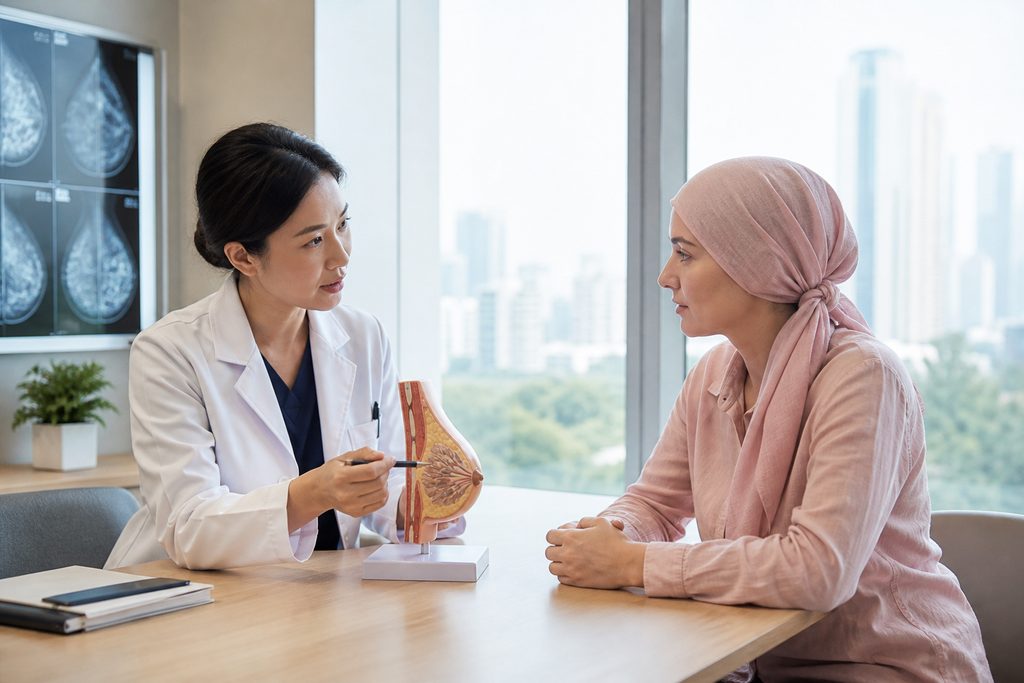
When 42-year-old Michael from Manchester received a stage III colorectal cancer diagnosis, his NHS oncologist outlined a treatment plan but couldn’t start chemotherapy for seven weeks. The delay terrified him. He started searching online. One of the phrases he typed was “how does cancer treatment work in China for foreign patients.” He found fragmented information, some of it contradictory, much of it promotional. What he needed was a straight answer about the actual sequence of events, the real costs, and whether the quality would match what he’d get at home. That’s what this guide addresses.
Cancer treatment for international patients in China follows a structured but unfamiliar path. It differs from the Western model in several important ways. You cannot simply book a surgery date online. You cannot walk into a top oncology department without preparation. But with the right documentation and coordination, the process is navigable—and the cancer treatment cost China for foreigners often runs 50–80% below comparable care in the United States, even at elite institutions.
How This Actually Works, Step by Step
The sequence matters. Here is the real flow, based on how public and international departments at Chinese hospitals actually operate.
Step 1: Gather your complete medical records. This means pathology reports, imaging studies (CT, MRI, PET-CT), surgical notes, and current medication lists. Everything should be in English or accompanied by certified translations. Chinese oncologists will not make treatment decisions without reviewing the original imaging—not just the written reports. Digital copies on a USB drive or via secure file transfer work best.
Step 2: Choose your hospital tier. This is where most foreigners get confused. China has roughly 35,000 hospitals. The top tier—the ones that matter for complex oncology—comprises perhaps 340+ top-ranked hospitals across 37 cities. Within that group, a smaller subset has dedicated international medical departments with English-speaking coordinators. These are the realistic options for a foreign patient who does not speak Mandarin.
Step 3: Submit your records for review. Depending on the hospital, this goes through their international department or a designated coordinator. The review typically takes 5–10 business days. You receive a written opinion: whether the hospital will accept your case, which department would handle it, and what additional tests might be needed.
Step 4: Video consultation. Most international departments now offer remote consultations with the treating oncologist or surgical team. This is where you discuss treatment philosophy, expected timeline, and whether your case is a good fit. Expect to pay $100–300 for a standard international department video consult, or $500–800 for a top-specialist consultation.
Step 5: Travel and in-person consultation. You arrive on an S2 visa (the appropriate category for short-stay medical treatment and private affairs). The first in-person visit is a face-to-face consultation, not surgery. The hospital may order repeat imaging or additional blood work. Surgery or chemotherapy is scheduled only after this step.
Step 6: Admission and treatment. Once the treatment plan is confirmed, the hospital schedules admission. For surgery, this typically happens 1–3 weeks after the in-person consultation. For chemotherapy or radiotherapy, the schedule depends on the department’s capacity.
Cancer Treatment Cost China for Foreigners: What the Numbers Actually Look Like
Cost is the most common reason Western patients consider China. The numbers justify the interest. But you need to understand what the figures include—and what they don’t.
| Treatment | China (Top Public Hospital, International Dept.) | United States (Average) | Approximate Savings |
|---|---|---|---|
| Radical prostatectomy (robotic) | $15,000–25,000 | $40,000–70,000 | 55–65% |
| Breast lumpectomy + sentinel node biopsy | $6,000–12,000 | $25,000–45,000 | 70–75% |
| Colorectal resection (laparoscopic) | $12,000–20,000 | $50,000–90,000 | 70–80% |
| Chemotherapy (per cycle, standard regimen) | $800–2,500 | $5,000–15,000 | 75–85% |
| Radiation therapy (full course, IMRT) | $8,000–18,000 | $50,000–100,000 | 80–85% |
These are ranges, not quotes. The final cancer treatment cost China for foreigners varies by hospital, case complexity, and whether you go through the standard public pathway or the international VIP channel. The international channel typically costs 1.5–2 times the standard public rate, but includes English coordination, expedited scheduling, and private or semi-private rooms.
What about the question “is cancer treatment safe in China?” The honest answer: at top-tier institutions, yes. The hospitals on the Fudan University Hospital Rankings—the most authoritative hospital ranking in China—perform volumes that Western centers rarely match. Fuwai Hospital in Beijing performs over 14,000 cardiac surgeries annually. Cancer centers like Fudan University Shanghai Cancer Center and Sun Yat-sen University Cancer Center in Guangzhou treat patient volumes that give their surgical teams deep experience with complex cases. Volume drives competence. That’s not marketing language; it’s epidemiology.
Safety also depends on hospital selection. A foreign patient who chooses a random provincial hospital based on a low price quote is taking a real risk. A patient who selects a Fudan-ranked oncology department or a JCI-accredited private international hospital is choosing care comparable to good Western centers. The difference is not the technology—China’s top hospitals use the same linear accelerators, robotic surgical systems, and chemotherapy protocols as major Western centers. The difference is process, communication, and coordination. That’s where preparation matters.
Best Cancer Hospital in Shanghai for International Patients: How to Evaluate
Shanghai is the most common entry point for foreign cancer patients. It has 18 hospitals on the Fudan Top 100 comprehensive list, more than any city except Beijing. The question “which is the best cancer hospital in Shanghai for international patients” doesn’t have a single answer—it depends on the cancer type.
For lung cancer, thoracic surgery, and breast cancer, Fudan University Shanghai Cancer Center is the reference point. Its oncology departments consistently rank among China’s top 10 in Fudan’s specialty reputation rankings. For liver cancer and hepatobiliary surgery, Zhongshan Hospital Fudan University has one of the highest-volume liver surgery programs in the world. For hematologic malignancies, Ruijin Hospital’s hematology department is nationally renowned. The point: “best” is specialty-specific.
Private international hospitals in Shanghai—United Family, Jiahui, Parkway—offer English-speaking staff, JCI accreditation, and Western-style care coordination. They are appropriate for chemotherapy, follow-up, and less complex surgical procedures. For complex resections or rare cancers, the public top-tier hospitals with international departments generally offer deeper subspecialty expertise.
When evaluating any hospital, ask these questions: What is the department’s annual case volume for your specific cancer? Does the hospital have JCI accreditation or a dedicated international department? Will you have a single point of contact who speaks English? What is the stated process for post-operative complications? The answers reveal more than any ranking list.
A Realistic Timeline
At top-tier institutions—Fudan-ranked oncology departments and JCI-accredited international hospitals—the technology, protocols, and surgical volumes are comparable to good Western centers. Some Chinese cancer centers perform substantially higher volumes of specific procedures than most Western hospitals. The quality gap appears when patients choose lower-tier hospitals without adequate vetting. Hospital selection is the single most important decision you will make.
You cannot book surgery remotely. Chinese public hospitals require an in-person consultation before scheduling any procedure. What you can do remotely is submit your records, have a video consultation, receive a preliminary treatment plan, and coordinate your visa and travel. The in-person step is mandatory—the hospital will not waive it.
You need an S2 visa for short-term medical treatment and private affairs. Accompanying family members also apply for S2 visas. If your treatment will require more than 180 days in China, an S1 visa is the appropriate category. The hospital’s international department will provide an invitation letter to support your application.
Some international health insurance policies cover treatment in China, particularly at JCI-accredited private hospitals that offer direct billing. Most US and European domestic policies do not cover treatment abroad. Check with your insurer before committing. Chinese public hospitals require prepayment—you pay first, then seek reimbursement if your policy allows it.
Your Next Step
Cancer treatment in China for foreigners is not a simple transaction. It’s a process with real steps, real timelines, and real trade-offs. The cost advantage is substantial. The quality at top hospitals is real. But the logistics—visa, records, language, coordination—require preparation.
We help international patients navigate that process. Our team at China Medical Services matches patients with appropriate hospitals, coordinates appointments, and provides bilingual accompaniment. We do not practice medicine. We do not guarantee outcomes or promise access to specific doctors. What we do is make a complex system navigable. If you’re considering cancer treatment in China, start with a conversation. Request a free consultation, and we’ll help you understand whether this path makes sense for your specific case.
Take the first step when you’re ready. The information is here.
Frequently Asked Questions
Yes. The hospitals used for international patients are JCI-accredited and follow the same international safety standards as top hospitals in the US and Europe. Surgical teams perform high volumes of procedures — often more than their Western counterparts — which studies show leads to better outcomes.
Costs vary by procedure and hospital, but international patients typically save 40-80% compared to US prices — even when factoring in travel and accommodation. A consultation with our team will give you an exact, all-inclusive quote with no hidden fees.
Send us your existing medical reports to get started. We handle everything from hospital selection and appointment scheduling to visa assistance and post-operative recovery planning. Your medical records are reviewed by the specialist before you even book a flight.
For more medical information and treatment options in China, visit chinamedservices.com (China Medical Services).
