PET-CT Scan Wait Times in China: A Complete Timeline Guide for Foreigners
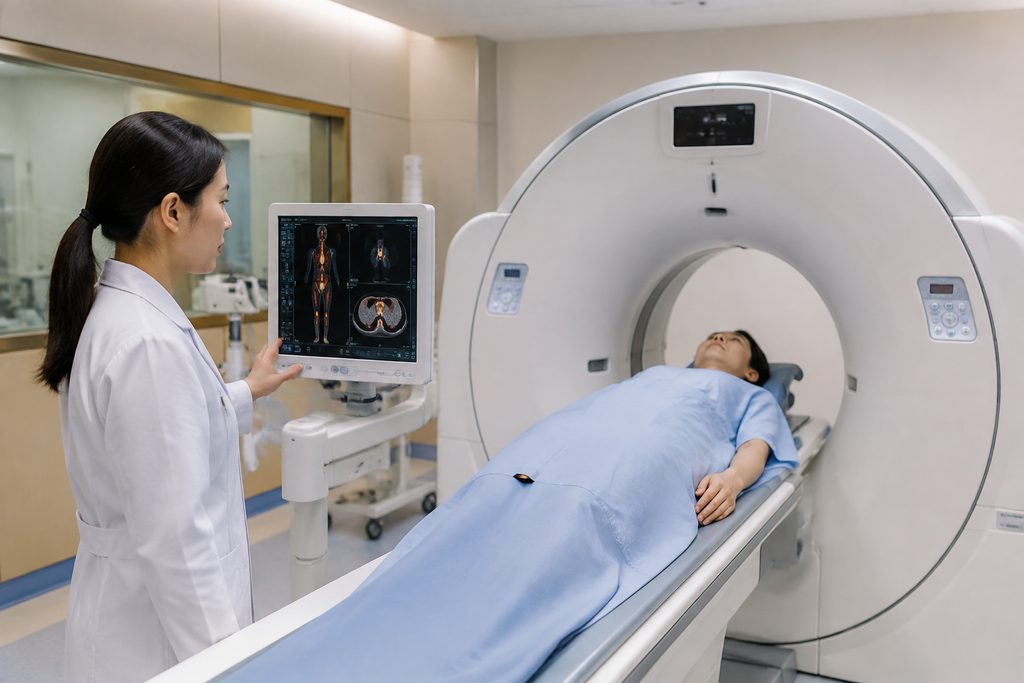
When 54-year-old Daniel from Manchester got his oncology referral, the first thing his consultant mentioned was a PET-CT scan. The second thing was the wait. Back home, he was quoted six weeks just to get on the schedule. Six weeks of not knowing. For Daniel, that was six weeks too long. His search for alternatives led him to look at options abroad, and one question kept coming up: how long is the wait for a PET-CT scan in China?
The short answer? In most major Chinese cities, a self-pay patient can typically get a PET-CT scan scheduled within 2 to 7 days. Sometimes even faster. But the full picture is more nuanced than a single number. Wait times vary by city, hospital type, and whether you are navigating the system alone or with coordination support. This guide breaks down the actual timeline, the costs, and the practical steps for booking a scan as an international patient.
Key Takeaways
- Most private international hospitals and top-tier public hospital VIP departments in China can schedule a PET-CT scan within 2–7 days for self-pay patients.
- The pet ct scan cost China patients pay typically ranges from $700 to $1,500, depending on the hospital tier and whether a full-body or regional scan is ordered.
- Public hospital standard outpatient departments often require an in-person consultation first, which can add days or weeks to the process for foreigners without local language support.
- Fast-track options exist but require knowing which hospitals accept direct international bookings and what documentation to prepare in advance.
The Problem: Diagnostic Waiting Games Cost More Than Time
In the United Kingdom, the NHS target for urgent cancer referrals is a maximum two-week wait to see a specialist. But the actual wait for a PET-CT scan after that referral can stretch to four, six, or even eight weeks depending on your postcode. In Canada, the median wait for a PET-CT scan was 27.2 days in 2023, according to the Fraser Institute’s annual survey. In some provinces, it exceeds 60 days. In the United States, the bottleneck is often insurance pre-authorization, which can add one to three weeks before the scan is even scheduled.
These delays are not just inconvenient. They are clinically significant. A 2022 study published in the Journal of Nuclear Medicine found that every four-week delay in staging PET-CT for non-small cell lung cancer was associated with a measurable increase in tumor progression risk. For pancreatic cancer, where median survival is measured in months, a six-week diagnostic delay can mean the difference between resectable and unresectable disease.
That is the reality that pushes patients like Daniel to look elsewhere.
Why China Delivers Results for Diagnostic Imaging
China has built one of the world’s largest fleets of PET-CT scanners. The country now operates more than 800 PET-CT units, a number that has grown dramatically since 2018. To put that in perspective, the United States has approximately 2,300 units serving a population of 330 million. China has 800 units serving 1.4 billion. The ratio is lower, but the distribution is concentrated in major cities where international patients actually go.
More importantly, the operational model is different. Chinese hospitals run imaging departments at extraordinary volumes. A single large hospital in Shanghai or Beijing may perform 40 to 80 PET-CT scans per day. That volume creates scheduling flexibility that smaller Western facilities simply cannot match.
Volume Creates Same-Week Availability
When a hospital performs 60 scans daily, fitting in one more patient is an operational decision, not a logistical crisis. That is why private international hospitals in Shanghai, Beijing, and Guangzhou routinely offer PET-CT appointments within 48 to 72 hours of booking. Some facilities can accommodate next-day scans for urgent cases.
The public hospital VIP departments follow a similar pattern. These are the international medical centers attached to China’s top-tier teaching hospitals. They operate on a separate scheduling track from the standard outpatient system, which means foreign patients are not competing with the thousands of local patients who queue daily.
Technology Matches Western Standards
The scanners themselves are current-generation equipment. Most top-tier Chinese hospitals use PET-CT systems from Siemens, GE, or United Imaging, a Shanghai-based manufacturer that has captured significant global market share. The tracer used, typically 18F-FDG, is produced locally in urban cyclotron facilities, which keeps supply chains short and costs manageable.
This is not a backwater operation running outdated machines. The Chinese Society of Nuclear Medicine reports that over 70% of PET-CT units in China are now digital or time-of-flight systems, which offer improved image quality and reduced radiation dose compared to older analog scanners.
Cost Advantage Without Quality Compromise
Let us address the obvious question: why is the pet ct scan cost China patients see so much lower than what they would pay at home? A full-body PET-CT in the United States routinely bills at $4,000 to $7,000 before insurance. In the UK, private clinics charge £1,500 to £2,500. In China, the same scan at a top-tier hospital typically costs $700 to $1,500.
The structural reasons are straightforward. Chinese hospitals amortize their equipment costs across far higher patient volumes. Labor costs for technologists and radiologists are lower, though the specialists are fully trained and often fellowship-trained abroad. The tracer production is localized, eliminating import costs. None of this reflects a compromise in image quality or interpretive accuracy. It reflects a fundamentally different cost structure.
How Long Is the Wait for a PET-CT Scan in China: A Realistic Timeline
The wait for a PET-CT scan in China depends almost entirely on which type of facility you choose. Here is what the timeline actually looks like for an international patient, based on current scheduling patterns at major hospitals.
Private International Hospitals: 1 to 3 Days
Facilities like United Family Healthcare, Jiahui Health, and ParkwayHealth operate on a private-pay model designed for expatriates and medical travelers. Their scheduling systems are built for speed. A patient who contacts these hospitals on a Monday with a doctor’s referral can typically be scanned by Wednesday or Thursday. Some locations offer Saturday appointments.
The trade-off is cost. Private international hospitals charge at the higher end of the range, typically $1,000 to $1,500 for a full-body PET-CT. But for a patient who values speed and English-speaking staff above all else, this is the fastest route.
Public Hospital VIP Departments: 3 to 7 Days
China’s top-ranked public hospitals, including Peking Union Medical College Hospital in Beijing and Zhongshan Hospital in Shanghai, operate dedicated international medical centers. These departments serve foreign patients and Chinese nationals willing to pay VIP rates. The scheduling window here is typically three to seven days.
Why the extra days? These hospitals require a brief consultation with a nuclear medicine physician before the scan. That consultation is usually available on short notice, but it adds a step. The benefit is access to some of China’s most experienced radiologists and oncologists at a price point of $800 to $1,200 for the scan itself.
Standard Public Hospital Outpatient: 1 to 4 Weeks
This is where the timeline stretches. A foreigner who walks into a standard public hospital outpatient department without coordination support will face the same queues as local patients. That means registering for a hospital card, queuing for a consultation, getting the scan order, then queuing again to schedule the scan. Without Chinese language skills, this process is slow and frustrating. The wait can extend to several weeks.
This is also where the value of bilingual coordination becomes obvious. The scan itself is the same quality regardless of which department orders it. The difference is entirely in the navigation.
Fast-Track Booking: Can Foreigners Get a PET-CT Scan in Beijing or Shanghai Quickly?
The question many international patients ask is whether they can book a PET-CT scan in China before they even arrive. The answer is yes, with the right approach.
Private international hospitals and public hospital VIP departments both accept advance bookings from overseas patients. The process typically works like this: you send your referral letter and relevant medical records by email. The hospital’s international coordination team reviews them and confirms the scan is appropriate. They then schedule the appointment and send you a confirmation letter, which you use for your visa application.
This is where the timeline for a fast track PET CT scan for international patients China really matters. A patient who starts this process two weeks before travel can arrive in Shanghai or Beijing with the scan already booked for the day after landing. The scan itself takes 30 to 45 minutes. Results are typically available within 24 to 48 hours, with a written report in English if requested.
Can foreigners get a pet ct scan in Beijing specifically? Yes. Beijing has more Fudan-ranked top hospitals than any other Chinese city, and several of them operate international departments that accept direct foreign bookings. The same applies to Shanghai, Guangzhou, and Chengdu.
Practical tip: If you are traveling specifically for a PET-CT scan, request a full-body scan rather than a regional one. The cost difference is modest, and the additional information can be valuable for staging or ruling out distant disease.
What the Numbers Mean: Private PET CT Scan Shanghai Price and Other Cost Breakdowns
Cost is the second question every patient asks, right after wait time. Here is a realistic breakdown of what you can expect to pay for a private PET CT scan Shanghai price and equivalent scans in other major cities.
| Facility Type | Typical Wait Time | Full-Body PET-CT Cost (USD) | English Report Available |
|---|---|---|---|
| Private International Hospital (Shanghai/Beijing) | 1–3 days | $1,000–$1,500 | Yes, standard |
| Public Hospital VIP Department | 3–7 days | $800–$1,200 | Yes, on request |
| Standard Public Hospital Outpatient | 1–4 weeks | $700–$1,000 | Rarely, translation needed |
| US Hospital (for comparison) | 1–3 weeks | $4,000–$7,000 | Yes, standard |
| UK Private Clinic (for comparison) | 1–2 weeks | $2,000–$3,200 | Yes, standard |
These figures are ranges, not quotes. The final price varies by hospital and case complexity, and some facilities charge separately for the radiologist’s written report or for a CD of the images. Always confirm the total cost in writing before you travel.
For patients booking a PET-CT scan as part of a broader medical tourism trip to China, the cost advantage compounds. A scan that saves $3,000 compared to US pricing can cover a significant portion of the flight and accommodation costs for a short trip.
Practical Considerations: Documentation, Visas, and Payment for a PET-CT Scan in China
Booking a scan is one thing. Actually getting to the scanner requires handling a few practical details. Here is what you need to know before you commit to traveling.
What Documents You Need
Every hospital will ask for a referral letter from a licensed physician. This letter should state the clinical reason for the scan, the specific area to be scanned (or full-body if that is what was ordered), and any relevant medical history. You will also need to bring any previous imaging reports and, ideally, the actual image files on a CD or USB drive. The radiologist will want to compare.
If you have a history of diabetes, bring that documentation too. PET-CT scans require fasting, and diabetic patients need special instructions about medication timing before the FDG tracer is injected.
Visa Category for Medical Travel
Foreign nationals traveling to China for medical treatment, including diagnostic scans, generally apply for an S2 visa. This is the short-stay visa category used for private affairs, including medical treatment. The S2 visa typically allows stays of up to 180 days, though the exact duration is at the discretion of the Chinese embassy or consulate processing your application.
Your hospital booking confirmation letter is an important supporting document for the S2 application. Make sure the letter clearly states the purpose of your visit and the scheduled dates. We always advise patients to check the latest requirements with their nearest Chinese embassy before applying, as documentation standards can change.
Payment Methods and Insurance
Chinese hospitals, including the VIP departments, operate on a pre-payment model. You pay for the scan before it is performed. Most facilities accept international credit cards, but some public hospital VIP departments only accept UnionPay or cash. Confirm payment methods in advance.
If you have international health insurance, check whether it covers diagnostic imaging performed abroad. Some insurers reimburse for overseas scans if the patient can demonstrate that the wait at home was clinically unreasonable. You will need the itemized receipt and the English-language report to file a claim. Private international hospitals in China are more familiar with this process and can usually provide the documentation insurers expect.
Language and Interpretation
The scan itself requires minimal communication. You lie still on a table for 30 to 45 minutes. But the consultation before the scan and the discussion of results afterward both require clear communication. Private international hospitals have English-speaking staff as standard. Public hospital VIP departments usually have English-speaking coordinators, though the radiologist may prefer to communicate through an interpreter for anything complex.
This is where having a bilingual companion makes a real difference. Not for the scan itself, but for everything around it: the registration desk, the payment counter, the consultation room, the pharmacy if any pre-scan medication is needed.
Frequently Asked Questions
Yes. Chinese hospitals will not perform a PET-CT scan without a referral from a licensed physician. The referral should state the clinical indication for the scan. This is a safety requirement, not a bureaucratic hurdle. The hospital’s nuclear medicine team will review your case before confirming the appointment.
Most hospitals deliver a written report within 24 to 48 hours after the scan. Private international hospitals often provide results on the same day for morning appointments. The report can be provided in English if you request it at the time of booking. The images themselves are typically available on CD immediately after the scan.
The equipment is equivalent. Top Chinese hospitals use the same Siemens, GE, and United Imaging scanners found in Western facilities. The tracer is the same 18F-FDG compound. Accuracy depends more on the experience of the reading radiologist than on the machine itself. At China’s top-ranked nuclear medicine departments, the reading physicians are board-certified and many have trained internationally. If you are concerned, ask which radiologist will read your scan before you book.
Yes, and this is common. Many international patients schedule a PET-CT scan alongside specialist consultations or a comprehensive health screening. The coordination effort is higher, but it maximizes the value of the trip. If you plan to do this, book the scan first and arrange consultations around it, since the scan often informs what the specialists will discuss.
The radiologist will flag any incidental findings in the report. If the finding requires follow-up, the hospital can usually arrange a consultation with the relevant specialist on short notice. You are never obligated to continue treatment at the same hospital. The report and images are yours to take to any physician anywhere in the world.
Your Next Step
The wait for a PET-CT scan does not have to be measured in weeks or months. China’s top hospitals offer same-week scheduling for self-pay international patients at a fraction of Western prices. The key is knowing which facilities accept direct foreign bookings and having your documentation in order before you travel.
At China Medical Services, we help international patients navigate this process. We are not a hospital and we do not provide diagnoses. What we do is handle the coordination: confirming which hospitals have current availability, arranging bookings, and providing bilingual support on the ground. If you are considering a PET-CT scan in China, start with a conversation about your specific situation. The scan itself is the easy part. Getting there should be too.
For more medical information and treatment options in China, visit chinamedservices.com (China Medical Services).
