Skin Rejuvenation in China: Real Costs, Top Clinics, and What to Expect
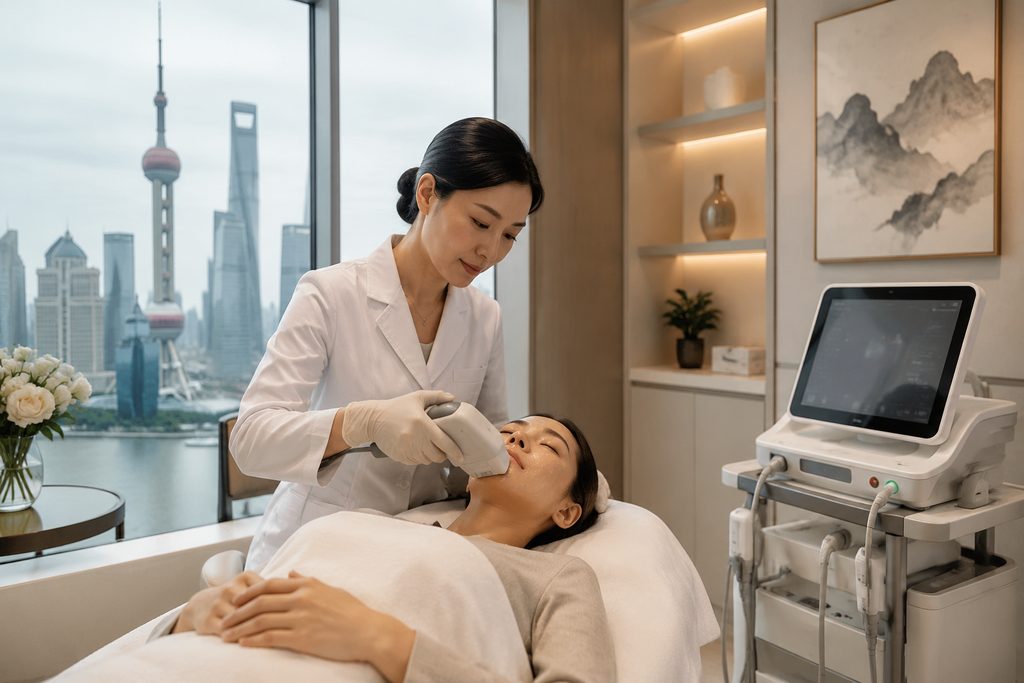
Can I Get Skin Rejuvenation in China? Yes — Here’s What Nobody Tells You About the Costs
Skin rejuvenation sounds like a luxury spa term. Strip away the marketing, and it means using medical devices — lasers, radiofrequency, microneedling, injectables — to reverse sun damage, soften wrinkles, tighten lax skin, and fade pigmentation. When international patients ask us about skin rejuvenation cost China, they are usually comparing numbers they saw at home. A fractional CO2 laser session in Los Angeles might run $2,500. In Shanghai, a comparable treatment at a top-tier hospital’s dermatology department often lands between $400 and $900. That gap explains the growing interest in medical tourism skin treatment China. But price is only one part of the story. The real question is whether the quality, safety, and coordination justify the trip.
Our team at China Medical Services has walked through this process with patients from North America, Europe, and the Gulf. We don’t perform treatments. We handle the logistics — hospital matching, appointment coordination, bilingual accompaniment, visa guidance. What follows is an honest breakdown of how skin rejuvenation actually works in China, what it costs, where to go, and what can go wrong.
How This Actually Works, Step by Step
You are not booking a facial. You are booking a medical procedure, even if it is outpatient and non-surgical. The sequence matters because it determines how fast you can be treated and how much you pay.
First, you send us photos and a description of your concern — acne scars, melasma, fine lines, enlarged pores, or general dullness. We forward these to the dermatology or cosmetic laser department at two or three candidate hospitals. A doctor reviews them and gives a preliminary opinion on which modality fits: fractional laser, IPL, picosecond laser, radiofrequency microneedling, or a combination. No one in China will give you a precise treatment plan without seeing your skin in person. Written second opinions on aesthetic procedures are directional, not prescriptive.
Second, you choose a hospital and a date window. Public top-tier hospitals require in-person registration and a face-to-face consultation before any laser is fired. Private international hospitals like United Family or Jiahui can sometimes confirm a same-week appointment, but the consultation still comes first. The doctor examines your skin, reviews your history of keloids or hyperpigmentation, and sets parameters. That consultation costs between $50 and $150 depending on the institution.
Third, treatment happens. Most laser sessions take 30 to 60 minutes. You pay the hospital directly. The machine, the doctor’s seniority, and the city all affect the final number. Afterward, you get aftercare instructions — usually strict sun avoidance and a specific moisturizer for seven to ten days.
What Does Skin Rejuvenation Actually Cost in China?
The skin rejuvenation cost China patients care about is not a single number. It is a range that shifts with the device, the hospital tier, and the city. Let’s break it down by modality.
| Treatment | China (Top Public/International) | United States (Average) | Notes |
|---|---|---|---|
| Fractional CO2 laser (full face) | $400–$900 | $1,800–$3,500 | Downtime 5–7 days; best for deep wrinkles and acne scars |
| Picosecond laser (PicoSure/PicoWay class) | $250–$600 | $800–$1,800 | Pigmentation, melasma, tattoo removal; minimal downtime |
| IPL / Photofacial | $150–$400 | $500–$1,200 | Redness, sun spots, mild texture; 3–5 sessions typical |
| Radiofrequency microneedling (Morpheus8 class) | $500–$1,000 | $1,500–$3,000 | Skin tightening, scar remodeling; 1–3 sessions |
| HIFU (Ultherapy class) | $600–$1,500 | $2,500–$4,500 | Non-invasive lifting; results over 2–3 months |
These are not quotes. They are observed ranges from hospitals across Beijing, Shanghai, and Guangzhou, and they vary by hospital and case complexity. A dermatology professor at Huashan Hospital will charge more than a junior doctor at a mid-tier private clinic. That price difference is often worth it, especially for darker skin types where laser parameter selection determines whether you get improvement or post-inflammatory hyperpigmentation.
The laser skin resurfacing price China patients find online is frequently quoted from aesthetic chain clinics, not hospital departments. Those chains can be cheaper — sometimes $200 for a full-face fractional session — but the operator may not be a physician. In China, laser operators in beauty clinics are sometimes nurses or technicians. At public hospital dermatology departments, a doctor performs or directly supervises the procedure. That distinction matters more than the machine brand.
Is Skin Rejuvenation Safe in China?
The short answer: yes, if you choose the right institution. The longer answer requires context. China performs an enormous volume of laser and aesthetic procedures. Shanghai’s Huashan Hospital dermatology department alone handles tens of thousands of laser cases annually. Volume breeds competence — but it also breeds variability. The gap between a top-tier teaching hospital and a storefront beauty salon is vast.
So is skin rejuvenation safe in China? At the 340+ top-ranked hospitals in our database — institutions ranked by Fudan University’s hospital evaluation and JCI-accredited private facilities — safety protocols are comparable to Western academic centers. These hospitals use FDA-approved or CFDA-approved devices, maintain sterile protocols, and have dermatologists on site to manage complications. What they don’t have is the same level of hand-holding. A Chinese public hospital dermatology department can feel like a high-volume clinic: efficient, sometimes brusque, and not designed for long consultations. That’s exactly where a bilingual medical companion changes the experience.
But there are real risks. The most common complication we see in international patients is not infection or burns — it is miscommunication. A patient with Fitzpatrick skin type IV or V who does not clearly communicate a history of melasma or keloid scarring can end up with hyperpigmentation that takes months to fade. A patient who flies home two days after an aggressive fractional laser and boards a 14-hour flight without proper wound care risks prolonged redness. These are avoidable, but only with clear communication and realistic scheduling.
A Realistic Timeline
People underestimate the coordination time. Here is what a typical journey looks like for a patient flying from London or Dubai to Shanghai for laser treatment.
| Stage | What Happens | Duration |
|---|---|---|
| Week 1 | Send photos and history; we shortlist 2–3 hospitals; doctors give preliminary modality suggestions | 3–7 days |
| Week 2–3 | Confirm hospital choice; apply for S2 visa; book flights and accommodation | Visa processing: 4–10 business days |
| Day 1 in China | In-person consultation with dermatologist; skin assessment; patch test if recommended | 1–2 hours |
| Day 2–3 | First treatment session | 30–60 minutes |
| Day 3–7 | Recovery period in China; follow-up visit if needed | 3–5 days recommended for fractional laser |
| Month 1–3 | Results develop; second session scheduled if protocol requires multiple passes | Varies by modality |
Most laser protocols require more than one session. IPL for sun damage typically needs three to five sessions spaced four weeks apart. Fractional CO2 for acne scars often needs two to three. That means either multiple trips or a longer stay. Some patients combine a two-week trip with two sessions and accept that the final result will come after they return home. Others plan a three-month gap between trips. There is no shortcut around skin biology.
What Can Go Wrong — and What Happens Then
Let’s be direct about failure modes, because they exist and you should plan for them.
The first is under-treatment. A cautious doctor sets conservative laser parameters, especially on a first visit with a foreign patient. You fly home, wait eight weeks, and see minimal improvement. The recourse is a second session with adjusted settings — but that means another trip or finding a local provider to continue the protocol. We tell patients to expect this possibility and to discuss parameter escalation explicitly during the consultation.
The second is post-inflammatory hyperpigmentation (PIH). This is the most common adverse outcome for patients with darker skin tones. It looks like brown patches where the skin was treated. It usually fades with time and topical treatment, but it can take three to six months. The recourse is a prescription regimen — hydroquinone, tretinoin, or tranexamic acid — and strict sun protection. Top-tier Chinese dermatologists manage PIH frequently because it is common in Asian skin. But you need a doctor who is comfortable prescribing, not just a laser technician.
The third is scheduling failure. You book flights and a hotel, then the hospital reschedules your appointment. Public hospitals in China are busy. A professor’s clinic day can shift. The recourse is flexibility — build two or three buffer days into your itinerary. Our coordination team handles rescheduling, but we cannot control hospital calendars.
How to Choose Between Shanghai, Beijing, and Private International Clinics
The best skin clinic Shanghai question comes up constantly. Shanghai has a strong case. Huashan Hospital’s dermatology department is one of the most respected in Asia, with deep experience in laser treatment of Asian skin types. Shanghai Ninth People’s Hospital is renowned for plastic and reconstructive surgery, including laser resurfacing. The city also has excellent private options — Jiahui International Hospital and United Family Shanghai offer English-speaking dermatologists and Western-style consultation rooms.
Beijing is not far behind. Peking Union Medical College Hospital (PUMCH) has a dermatology department that handles complex cases. Air Force Medical Center and Beijing Anzhen Hospital have strong cosmetic laser programs. If you are asking how much is fractional laser in Beijing, expect a range of $500 to $1,000 per full-face session at a top hospital — slightly higher than Shanghai on average, partly because of demand from domestic and international patients.
Private international hospitals deserve a separate mention. They cost more — sometimes double the public hospital price — but they offer direct insurance billing, guaranteed English communication, and a more relaxed pace. For a patient who has never been to China and feels anxious about the language barrier, that premium can be worth it. For a patient who wants the absolute best clinical expertise and is willing to navigate a busier environment, a public top-tier hospital with a bilingual companion is often the better value.
Our top-ranked hospital database groups Fudan-ranked institutions by city, which helps when you are comparing dermatology departments across Beijing, Shanghai, and Guangzhou. For a deeper look at specific departments, our specialty pages list top-ten hospitals by field.
Practical Considerations: Records, Visa, Payment, and Follow-Up
You don’t need a referral letter for aesthetic treatment, but you do need to bring any relevant history: previous laser treatments, filler or botox injections, retinoid use, history of cold sores, and any tendency toward keloid scarring. A concise one-page summary in English is fine; we translate it if needed.
Visa: foreigners traveling to China for medical treatment use the S2 visa, annotated for medical purposes. Family members accompanying you also apply for S2. Processing takes four to ten business days depending on the consulate. An invitation letter from the hospital’s international department strengthens the application. We guide patients through this, but we never guarantee approval — that decision belongs to the consulate.
Payment: public hospitals require prepayment at the cashier. You load money onto a hospital card, and each service deducts from it. International credit cards are not always accepted; UnionPay, Alipay, WeChat Pay, and cash are standard. Private international hospitals accept major credit cards and often bill insurers directly. If you plan to claim reimbursement from your home insurer, request itemized receipts and a discharge summary in English before you leave.
Follow-up: most laser patients need a check-in at one week and one month. That can happen via video consultation with the treating doctor or with your home dermatologist. We arrange the video follow-up through the hospital’s international department if the doctor offers it. Not all do, so confirm this before committing to treatment.
Frequently Asked Questions
Yes, usually by 60 to 80 percent for comparable technology and physician supervision. A fractional CO2 session that costs $2,500 in the US often costs $400 to $900 in Shanghai or Beijing. But factor in flights, accommodation, and the reality of multiple sessions before you calculate savings.
At private international hospitals, yes. At public top-tier hospitals, some senior dermatologists speak English, but you cannot rely on it. A bilingual medical companion solves this — we handle registration, translation during the consultation, and aftercare instructions. Expect to pay from $300 per day for this service.
Ask for the device brand and model before you book. Legitimate hospitals use FDA-cleared or CFDA-registered devices — names like Fraxel, PicoSure, PicoWay, M22, Thermage, Ultherapy, or their Chinese-registered equivalents. If a clinic cannot tell you the machine name, walk away. At top-tier hospitals, the device is listed on the department’s equipment roster.
Sometimes, but don’t count on it. A cautious doctor may want a patch test, especially for darker skin types. A busy department may not have a treatment slot the same day. Build at least one buffer day between consultation and treatment. For aggressive lasers, some doctors prefer to wait 24 to 48 hours after a patch test before treating the full face.
You contact the treating hospital’s international department or your coordinator. We facilitate a video consultation with the treating doctor where possible. For urgent issues — infection, severe blistering — you should see a local dermatologist immediately and request records to share with the Chinese team. This is why we recommend staying in China for at least three to five days after an aggressive laser, so early complications can be managed on site.
Your Next Step
Skin rejuvenation in China is a legitimate, high-value option for international patients who do their homework. The technology is current, the top hospitals are excellent, and the cost savings are real. What protects you is not the price — it is the institution you choose and the clarity of communication around your skin type, history, and expectations.
We are China Medical Services. We match international patients with appropriate hospitals, coordinate appointments, provide bilingual companions, and guide visa and travel logistics. We do not perform treatments and we do not promise outcomes. If you are considering skin rejuvenation in China, start with a conversation. Send us your concerns and photos, and we will tell you honestly whether this makes sense for you. Request a free consultation here.
Your skin is worth the right questions. Ask them early, and you will save more than money — you will save time, discomfort, and regret.
For more medical information and treatment options in China, visit chinamedservices.com (China Medical Services).
