Skin Lesion Biopsy: When to Get Checked and What It Costs in China
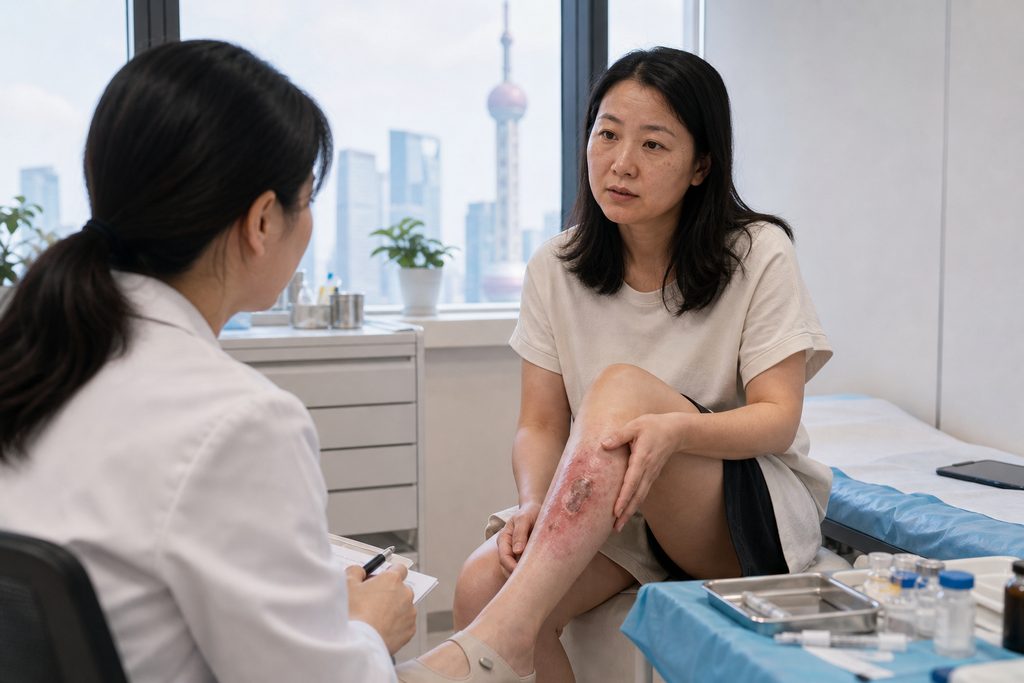
When 34-year-old Emma from Manchester noticed a small, flat mole on her calf had started to darken at one edge, she did what most people do: she watched it. Three months later, the edge looked uneven and the color had split into two shades of brown. Her UK GP referred her to a dermatologist. The wait? Eleven weeks. Emma started searching for alternatives — and one phrase kept appearing in her research: skin biopsy cost China. She had never considered medical travel before. But when a mole changes, waiting is not a neutral act.
Skin cancer is the most common cancer in the United States. The American Academy of Dermatology reports that approximately 1 in 5 Americans will develop skin cancer in their lifetime, and melanoma — the deadliest form — kills about 20 Americans every single day. The problem is not that we lack treatment. The problem is that the diagnostic step, the biopsy, is often delayed by cost, insurance friction, or months-long dermatology queues. This article explains when a biopsy is actually necessary, how the procedure works, what it costs in China, and which hospitals in Beijing and Shanghai are known for dermatologic diagnosis. No hype. No pressure. Just the facts a smart patient needs to make a decision.
Key Takeaways
- A skin biopsy costs between $80 and $250 in Chinese public hospitals — roughly 1/3 to 1/8 of the typical US price after insurance.
- Chinese dermatology departments at top hospitals perform thousands of biopsies annually, with pathology reports often returned in 3 to 5 working days.
- Language and registration are the real barriers for foreign patients — not medical quality or wait times.
- Any mole that changes in size, shape, color, or sensation within weeks to months should be evaluated by a dermatologist within 2 to 4 weeks.
The Problem: Waiting Months for a 15-Minute Diagnostic Procedure
In the United Kingdom, the National Health Service target for urgent skin cancer referrals is a two-week wait to see a specialist. Reality often falls short. A 2023 report by the British Association of Dermatologists found that over 30% of English dermatology departments missed that target, with some patients waiting 8 to 14 weeks for a first consultation. In Canada, the median wait time between GP referral and dermatologist appointment is 10.3 weeks, according to the Fraser Institute. Australia performs better, but rural patients still face 6 to 8 week delays in several states.
In the United States, the barrier is different. It is not the queue — it is the bill. A punch biopsy in a private dermatology office typically costs $300 to $700 without insurance, depending on the region and whether pathology is included. With high-deductible health plans, many patients pay the full amount out of pocket. Some skip the biopsy entirely. That is the dangerous part. Melanoma caught at stage 0 or 1 has a 5-year survival rate above 98%. Caught at stage 4, that number drops below 25%. A biopsy is not a luxury. It is the difference between a local excision and systemic chemotherapy.
Why China Delivers Results for Skin Lesion Diagnosis
China’s top-tier hospitals process diagnostic volumes that are hard to grasp from a Western perspective. A single dermatology department at a major Beijing hospital may see 1,500 to 2,500 outpatients per day. That is not an exaggeration — it is the operational reality of a system serving 1.4 billion people. For a foreign patient with a concerning mole, that volume translates into something simple: you can be seen quickly, biopsied quickly, and receive a pathology report within days, not months.
Clinical Volume and Dermatopathology Expertise
When is a skin biopsy necessary? The answer depends on clinical judgment, but the judgment is sharper when a dermatologist sees thousands of lesions every year. Chinese dermatologists at top hospitals evaluate pigmented lesions daily — not weekly. The pathology departments attached to these hospitals process enormous specimen volumes, which builds diagnostic accuracy. A 2022 study published in the Journal of the American Academy of Dermatology found that dermatopathologists with higher case volumes demonstrated significantly better concordance in melanocytic lesion diagnosis than lower-volume peers. Volume is not a marketing slogan. It is a diagnostic asset.
Speed Without Sacrificing Accuracy
In most Chinese public hospital dermatology departments, a skin biopsy is performed as an outpatient procedure during the first or second consultation. The specimen goes to the hospital’s own pathology lab. Routine histopathology reports typically return in 3 to 5 working days. Immunohistochemistry — the staining that distinguishes melanoma subtypes — may add 3 to 7 more days. Compare that to a common US timeline: 1 to 2 weeks for a dermatologist appointment, 1 to 2 weeks for biopsy scheduling, and 7 to 10 days for pathology. The total often stretches to a month or more. In China, the entire process — first visit to final report — can be completed within 7 to 10 days.
Skin Biopsy Cost China: The Numbers That Matter
Let us be direct about the skin biopsy cost China offers. A punch biopsy or shave biopsy at a top-tier Chinese public hospital typically costs between $80 and $250, including basic histopathology. At a private international hospital in Shanghai or Beijing, the same procedure runs $200 to $500. For comparison, the US average is $300 to $700, and UK private clinics charge £250 to £600. The savings are real, but they are not the main reason to fly 10 hours for a 15-minute procedure. The main reason is speed and access to high-volume dermatopathology without a three-month queue.
How Do I Know If My Mole Needs a Biopsy? The ABCDE Criteria
This is the question every worried patient asks: how do I know if my mole needs a biopsy? The answer starts with the ABCDE rule, developed by dermatologists at NYU Langone Health and endorsed by the American Academy of Dermatology. You do not need a medical degree to apply it. You need a mirror, good lighting, and the willingness to see what is actually there.
A — Asymmetry. Draw an imaginary line through the mole. Do the two halves match? If not, note it. B — Border. A benign mole has a smooth, even edge. A concerning lesion has a notched, blurred, or jagged edge. C — Color. Multiple shades of brown, black, red, white, or blue within a single mole is a warning sign. D — Diameter. Larger than 6 millimeters — about the size of a pencil eraser — deserves attention, though melanomas can be smaller. E — Evolving. This is the most important letter. Any change in size, shape, color, elevation, or new symptom like bleeding, itching, or crusting within weeks to months is a strong indication for evaluation.
If a lesion meets one or more of these criteria, a dermatologist should see it. Not next season. Within 2 to 4 weeks. And if the dermatologist recommends a biopsy, the question is not whether to do it — it is where and how fast.
Best Dermatology Hospital in Beijing for Skin Lesion Evaluation
Foreign patients often ask about the best dermatology hospital in Beijing for skin lesion evaluation. The honest answer is that several hospitals share the top tier, and the best choice depends on your specific lesion and whether you want public-sector volume or private-sector comfort.
Peking Union Medical College Hospital, known as PUMCH, operates one of China’s most respected dermatology departments. It is consistently ranked among the top dermatology programs in the Fudan University Hospital Rankings, which evaluate China’s 35,000+ hospitals and place only the top 5% in the national elite tier. PUMCH’s dermatology service handles complex referrals from across the country. For a foreign patient, the challenge is that public registration is conducted in Chinese and same-day queues are long. This is where a bilingual coordinator changes the experience.
Beijing’s private international hospitals — such as Beijing United Family Hospital — offer English-speaking dermatologists, direct insurance billing, and faster appointment slots. The trade-off is that the dermatologist biopsy price Shanghai and Beijing private hospitals charge runs higher than public rates. Some patients choose a hybrid path: consultation at a private clinic, biopsy at a public hospital’s international department, or vice versa. Both options are legitimate. What matters is that the pathology lab is reputable and the reporting is thorough. You can review our directory of top-ranked Chinese hospitals by specialty to compare public and private options side by side.
Book Skin Cancer Screening China: What the Process Actually Looks Like
If you decide to book skin cancer screening China, you should know exactly what to expect. The process is straightforward, but it is not identical to what you would experience in London or New York.
Step 1: Pre-arrival consultation. You send photos of the lesion and any prior dermatology records. A Chinese dermatologist reviews the materials and advises whether an in-person visit is warranted. This step costs $100 to $300 for a video consultation and prevents wasted travel if the lesion is clearly benign or better managed at home.
Step 2: In-person evaluation. You arrive in Beijing or Shanghai. The dermatologist examines the lesion with a dermatoscope — a handheld polarized-light microscope. Dermoscopy improves melanoma detection accuracy by 10 to 27 percent compared to naked-eye examination, according to a Cochrane systematic review. If the lesion appears benign, you go home with documentation. If it is suspicious, the doctor recommends a biopsy on the spot.
Step 3: The biopsy itself. A punch biopsy removes a 3 to 4 millimeter cylinder of tissue under local anesthesia. A shave biopsy removes the raised portion of a lesion. Both take under 15 minutes. One or two sutures may be placed. You walk out immediately.
Step 4: Pathology and follow-up. The specimen is processed in the hospital’s pathology department. You receive the report in 3 to 5 working days. If the result is malignant, the same hospital can typically schedule definitive excision within 1 to 2 weeks — sometimes faster through the international department.
| Procedure | China Public Hospital | China Private International | United States | United Kingdom (Private) |
|---|---|---|---|---|
| Dermatologist consultation | $30–80 | $100–250 | $150–350 | £150–300 |
| Punch biopsy (including pathology) | $80–250 | $200–500 | $300–700 | £250–600 |
| Dermoscopy as part of consultation | Usually included | Usually included | Often $50–100 extra | Often included |
| Pathology report turnaround | 3–5 working days | 3–7 working days | 7–14 days | 7–14 days |
| Excisional surgery for confirmed melanoma | $800–2,500 | $2,000–5,000 | $4,000–15,000 | £3,000–8,000 |
All figures are approximate ranges in USD unless noted. Actual prices vary by hospital and case complexity. Sources: hospital published price lists, patient-reported data, and national health service tariff schedules.
Practical Considerations: Documentation, Visa, and Getting Your Results Home
If you are traveling from abroad for a skin lesion evaluation, three practical matters need attention before you book a flight.
Medical records. Bring any prior dermatology notes, biopsy reports, and photos of the lesion taken over time. A series of smartphone photos taken monthly is genuinely useful — it shows evolution, which is the single most important diagnostic clue. If you have had a previous biopsy elsewhere, bring the pathology slides if you can obtain them. Chinese pathologists can review outside slides, though a second opinion on the tissue itself is more definitive than a review of someone else’s written report.
Visa category. Foreign nationals traveling to China for medical treatment use the S2 visa, which covers short-term private affairs including medical visits. For stays longer than 180 days, the S1 visa applies. The hospital or coordinating service provides a treatment invitation letter and appointment confirmation to support the visa application. Approval is never guaranteed, and requirements vary by Chinese embassy or consulate, so confirm the current rules with the mission in your country before booking flights.
Payment and insurance. Chinese public hospitals require prepayment for outpatient procedures — you deposit funds at registration and the hospital deducts charges. International credit cards are not accepted at most public hospital cashiers. Bring a UnionPay card, Alipay with a linked foreign card, or sufficient cash. Private international hospitals accept major credit cards and often bill insurers directly. If you have a policy that covers overseas treatment, request the itemized invoice and pathology report before leaving — these are required for reimbursement.
Language. Public hospital dermatology departments operate in Chinese. Registration kiosks, queue numbers, and pathology pickup windows are all Chinese-language. A bilingual medical companion who handles queueing, payment, and interpretation changes the experience from stressful to manageable. Our team provides this service for patients who need it, including coordination for appointments and on-the-ground support. You can also review specialty-ranked dermatology departments to understand which hospitals fit your needs.
Frequently Asked Questions
The local anesthetic injection stings for about 10 seconds. After that, the procedure itself is painless. You may feel pressure or tugging, but no sharp pain. The site heals within 1 to 2 weeks, and the small scar fades over several months.
If the pathology report shows melanoma, the next step is a wider excision with a margin of normal skin around the original site. The margin size depends on the tumor thickness reported by the pathologist. In China, this surgery is performed by dermatologic surgeons or plastic surgeons, often within 1 to 2 weeks of the biopsy result. You would also discuss whether sentinel lymph node biopsy is indicated, which depends on tumor depth and other features.
No reputable dermatologist will biopsy a lesion without first examining it. The consultation determines whether a biopsy is warranted and which type — punch, shave, or excisional — is appropriate. Skipping the consultation step is not a shortcut; it is a diagnostic error.
Top-tier Chinese hospital pathology departments are accredited and participate in international quality assurance programs. The Fudan University Hospital Rankings evaluate pathology capabilities as part of their assessment. For complex or ambiguous cases, you can request a second pathology opinion from a Western lab — the tissue block or slides can be sent internationally with proper documentation.
No. Chinese hospitals do not require a GP referral for dermatology consultations. You can book directly. However, bringing a referral letter or prior records from your home doctor helps the Chinese dermatologist understand your history and any previous evaluations.
Your Next Step
A changing mole is not something to watch for another season. The ABCDE criteria exist because early detection changes outcomes — and the data supporting that is overwhelming. If you have a lesion that worries you, the next step is a dermatologist’s eyes on it, preferably within the next few weeks.
China Medical Services helps international patients navigate the Chinese hospital system — from hospital matching and appointment coordination to bilingual accompaniment and pathology result translation. We are not a hospital and we do not provide diagnoses. What we do is make the path shorter and clearer for patients who have already decided they need answers. If you would like to understand your options for a skin lesion evaluation in Beijing or Shanghai, request a free consultation and we will help you sort through the practical details.
For more medical information and treatment options in China, visit chinamedservices.com (China Medical Services).
