Should I Get a Brow Lift? A Realistic Look at Costs, Recovery, and China
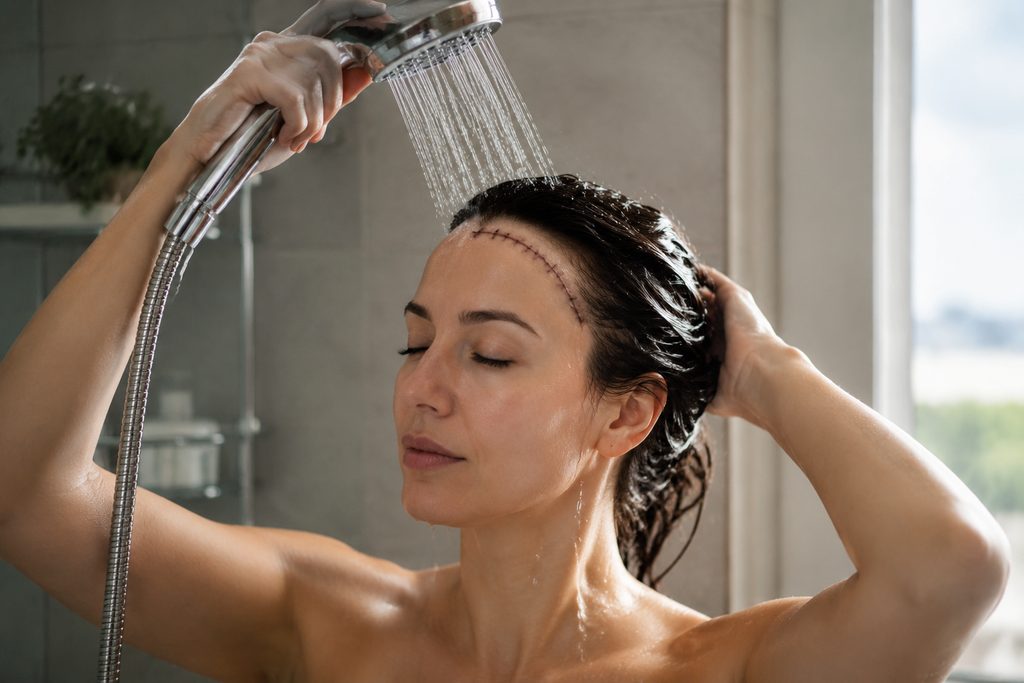
A brow lift — sometimes called a forehead lift — raises sagging brows, smooths horizontal forehead lines, and opens up the upper eye area. It is not a facelift. It does not remove excess eyelid skin. It targets the brow position and the deep creases above it. If your resting expression looks tired, angry, or sad when you feel fine, that is the problem a brow lift solves.
But should you get one? That depends on three things: what is actually causing the heaviness you see, whether a less invasive option would work, and where you plan to have the procedure. Brow lift cost China runs significantly lower than in the United States or Western Europe — often 60% to 70% less — but price alone should never drive this decision.
Our team at China Medical Services helps international patients evaluate Chinese hospitals and coordinate care. We have seen the full range: excellent outcomes from top-tier plastic surgery departments, and also patients who arrived with unrealistic expectations. This guide gives you the honest framework we use when someone asks us, “Should I get a brow lift?”
How This Actually Works, Step by Step
You are considering surgery. Here is the real sequence, whether you stay home or come to China.
First, you need a diagnosis of the problem. A brow lift addresses brow ptosis — the medical term for brows that sit lower than they should. But what looks like brow ptosis might actually be excess upper eyelid skin, which requires a blepharoplasty, not a brow lift. Or it could be both. A qualified surgeon examines your face at rest and in animation, measures your brow position against standard reference points, and photographs you for the record.
Second, you choose a surgical technique. The endoscopic approach uses 3 to 5 small incisions behind the hairline and a tiny camera. The coronal approach uses one long incision across the top of the scalp. The temporal or limited-incision lift uses shorter cuts at the temples. Each has different scar visibility, recovery time, and lifting power.
Third, you undergo pre-operative clearance. Blood work, an ECG if you are over 50 or have cardiac risk factors, and a review of medications. Blood thinners, aspirin, and certain supplements must stop 10 to 14 days before surgery.
Fourth, the procedure itself. Under local anesthesia with sedation or general anesthesia, depending on the technique and your preference. Endoscopic brow lifts take 1 to 2 hours. A coronal lift takes longer.
Fifth, recovery. Stitches come out within 7 to 10 days. Swelling peaks around day 3 and fades over two weeks. You can usually return to non-strenuous work after 10 to 14 days. Full scar maturation takes 6 to 12 months.
If you are coming from abroad, add document preparation before all of this: medical records, photographs, and a video consultation with the surgical team. That is how patients typically start with us — a written second opinion or video consultation before any travel commitment.
What Brow Lift Cost China Actually Looks Like
Let us talk numbers, because that is what most international patients search for first.
In the United States, a brow lift averages $4,000 to $7,000 for the surgeon’s fee alone. Add anesthesia, facility fees, and post-operative care, and the total commonly lands between $8,000 and $15,000. In Western Europe, expect similar figures — £5,000 to £9,000 in the UK, €6,000 to €12,000 in Germany or France.
In China, the same procedure at a top-tier public hospital or reputable private international hospital typically costs between $1,800 and $4,500, depending on technique, surgeon seniority, and whether you use the international VIP channel or the standard public pathway. That is the brow lift cost China range we consistently see quoted for international patients. The figure varies by hospital and case complexity, and it always requires confirmation after a proper evaluation.
| Item | United States | China (Top-Tier Hospital) |
|---|---|---|
| Surgeon’s fee | $4,000 – $7,000 | $1,200 – $3,000 |
| Anesthesia | $800 – $1,500 | $200 – $500 |
| Facility / operating room | $1,500 – $3,000 | $300 – $800 |
| Post-op care & follow-up | $700 – $2,000 | $100 – $300 |
| Typical total | $8,000 – $15,000 | $1,800 – $4,500 |
What about Shanghai specifically? Endoscopic brow lift price Shanghai tends to sit at the higher end of the China range — $2,500 to $4,500 — because Shanghai’s top hospitals, like Zhongshan Hospital Fudan University and Huashan Hospital, command premium pricing for their plastic surgery departments. Beijing is comparable. Chengdu or Hangzhou may run slightly lower.
But remember: the public hospital pathway in China generally does not allow overseas patients to book surgery in advance. You must attend an in-person consultation first, then schedule the procedure. If you want to lock in a date before flying, that requires the hospital’s international department or VIP channel, which typically costs 1.5 to 2 times the standard rate. That premium is the price of certainty, English-speaking coordination, and streamlined scheduling.
A Realistic Timeline
People underestimate the calendar. Here is what a typical journey looks like for an international patient planning a brow lift in China.
| Stage | What Happens | Duration |
|---|---|---|
| Week 1 | You send photos, medical history, and any prior surgical records. We translate and forward to the relevant department. | 3–5 days for document review |
| Week 2 | Video consultation with the surgical team. They assess candidacy and recommend a technique. | 1–2 weeks to schedule |
| Week 3–4 | You decide. We coordinate the appointment and begin visa documentation. S2 visa processing at your local Chinese embassy or consulate. | 1–4 weeks depending on country |
| Week 5 | Travel to China. In-person consultation and pre-operative tests. | 2–3 days |
| Week 5–6 | Surgery and immediate recovery. Stitches out at day 7–10. | 7–10 days on the ground |
| Month 2–3 | Most swelling resolved. You look presentable in public. Scars still pink but fading. | Ongoing |
| Month 6–12 | Final result visible. Scar maturation complete. | Ongoing |
Two waiting steps catch people off guard. First, document translation and hospital review — plan at least a week. Second, visa processing. China does not have a dedicated “medical visa.” The S2 visa covers short-term private affairs, including medical treatment, but you must provide supporting documents from the hospital. Your accompanying family member also needs an S2. Processing times vary dramatically by country, so start early.
And no, the M visa is not relevant here. That is for commercial and trade activities. Using it for medical travel would be incorrect.
What Can Go Wrong — and What Happens Then
Every honest surgeon will tell you the same thing: brow lifts are safe, but they are not risk-free. Here are the real failure modes.
Asymmetry. Brows heal at slightly different positions in a small percentage of cases. A 2 to 3 millimeter difference is usually imperceptible. More than that may require a revision, typically performed after 6 months once tissues settle. Revision rates for brow lifts run around 3% to 5% in published series.
Scar visibility. Endoscopic scars hide in the hairline, but if you have thin hair or a receding hairline, they may show. The coronal approach leaves a long scar that is permanent, though usually hidden by hair. If scar visibility matters to you, the temporal lift is the most conservative option.
Nerve injury. The frontal branch of the facial nerve controls forehead movement. Permanent injury is rare — under 1% in experienced hands — but temporary weakness or numbness affects up to 10% of patients and resolves over weeks to months. Hair loss around incisions can also occur, usually temporary.
Overcorrection. A “surprised” look that never settles. This happens when the surgeon lifts too aggressively. It is more common with the coronal technique and with less experienced surgeons. Revision involves lowering the brow, which is technically harder than lifting it.
What is the recourse? For international patients, the key is choosing a hospital with a plastic surgery department that handles revisions — not just primary cases. Ask directly: “If I need a revision, who performs it, and what is the cost?” In China, top-tier departments like those at Peking Union Medical College Hospital or Shanghai Ninth People’s Hospital — one of the highest-volume plastic surgery centers in the world — have deep revision experience. That matters.
Is Brow Lift Surgery Safe in China? How to Vet a Surgeon
The question patients actually ask us is blunt: is brow lift surgery safe in China? The honest answer is that safety depends less on the country and more on the specific hospital and surgeon. China has both world-class centers and clinics you should avoid. The gap between them is wider than in most Western countries.
How do you tell the difference?
Look at the hospital’s ranking. The Fudan University hospital rankings, published annually, evaluate China’s 35,000+ hospitals and identify the top 100. A hospital on that list — especially in plastic surgery or its parent specialty — meets rigorous standards for volume, outcomes, and academic output. Our top hospital database organizes these by city so you can see what is actually in Beijing, Shanghai, or Guangzhou.
Look at the surgeon’s case volume. A surgeon performing 50+ brow lifts per year is in a different league from one doing 10. Ask for the number. Good surgeons will tell you.
Look at the department’s international experience. Does the hospital have an international patient center? Do they routinely treat foreigners? Language barriers are real. A brilliant surgeon who cannot communicate with you creates risk. That is why many international patients choose a private international hospital like United Family or Jiahui, where English-speaking staff and Western-style care are standard. Our private hospital guide explains the trade-offs: higher cost, but smoother communication and direct insurance billing in many cases.
And what about the search for the best brow lift surgeon Beijing? Beijing has strong options — Peking Union Medical College Hospital’s plastic surgery department is among the most respected in the country, and the city hosts several high-volume private clinics. But “best” is subjective. What you want is a surgeon who does this specific procedure frequently, shows you before-and-after photos of their own patients, and answers your questions without defensiveness.
Red flags we tell patients to watch for: clinics that quote a price without seeing your photos, surgeons who promise a specific result, facilities that cannot show you their license and accreditation, and anyone who pressures you to decide quickly. None of those are acceptable.
How Long Is Brow Lift Recovery Time? What to Expect Week by Week
How long is brow lift recovery time? Most patients return to desk work after 10 to 14 days. But “recovery” has phases, and they are not equal.
Days 1–3: The worst of it. Swelling, tightness, mild to moderate pain managed with oral medication. You will have a bandage or compression dressing. Sleep with your head elevated at 30 to 45 degrees. Cold compresses help, but do not press on the incisions.
Days 4–7: Swelling starts to subside. Bruising may appear around the eyes and drift downward — gravity does that. You can shower carefully after day 2 or 3, depending on your surgeon’s instructions. Avoid bending over or lifting anything heavy.
Day 7–10: Stitches or staples come out. You can wear makeup to cover residual bruising. Most patients feel comfortable appearing in public, though some swelling remains.
Weeks 2–4: You look largely normal. Exercise restrictions continue — no running, heavy lifting, or inverted yoga poses for at least 3 to 4 weeks. The forehead may feel numb or tight. That is normal.
Months 1–3: Numbness fades. Scars are pink and slightly raised. You can resume all activities, including vigorous exercise, by week 6 in most cases.
Months 6–12: Scars flatten and fade to white. The final brow position settles. This is when you evaluate whether the result matches the plan.
If you are flying home after surgery in China, plan to stay at least 10 to 14 days on the ground. Flying too soon after facial surgery increases swelling and, theoretically, the risk of complications. Most surgeons want to see you for at least one post-operative visit before you board a long-haul flight.
Practical Considerations: Records, Visa, Payment, and Follow-Up
If you are serious about having a brow lift in China, four practical matters need attention before you book anything.
Medical records. Bring everything: prior facial surgery notes, current medication list, allergy history, and recent photographs from multiple angles. If you have had Botox or fillers in the forehead or brow area, tell the surgeon when and how much. Recent Botox affects brow position assessment and may need to wear off before surgery.
Visa. As covered earlier, the S2 visa is the correct category for medical treatment and private affairs. You will need an invitation or confirmation letter from the hospital. We help patients prepare this documentation, but approval is always at the discretion of the Chinese embassy or consulate in your country. Apply early. Do not book flights until the visa is in hand.
Payment. Chinese public hospitals generally require pre-payment for surgical procedures. International insurance is rarely accepted directly at public hospitals — you pay, then claim reimbursement. Private international hospitals may bill your insurer directly, but always verify coverage before committing. A brow lift is cosmetic, so most insurers will not cover it regardless of where it is performed. Budget for the full amount out of pocket.
Follow-up at home. Your Chinese surgeon will give you a discharge summary and post-operative instructions. Take photographs at regular intervals — week 1, week 2, month 1, month 3, month 6 — and send them to the department. Most top hospitals offer remote follow-up for international patients. If a complication arises, you need a local provider who can examine you in person. Identify one before you travel.
If you are still deciding whether to travel, consider a staged approach. A written second opinion costs $300 to $500 and gives you a specialist’s assessment of whether a brow lift is even the right procedure. A video consultation costs $100 to $800 depending on the seniority of the specialist and lets you ask questions directly. Both are credited in full toward on-the-ground coordination if you proceed within 90 days.
Frequently Asked Questions
This is the most common confusion. A brow lift raises the eyebrows and smooths the forehead. A blepharoplasty removes excess skin and fat from the eyelids. If your main concern is sagging skin on the upper lids, you may need a blepharoplasty. If your brows sit low and make you look tired or angry, a brow lift is the answer. Many patients need both. A proper consultation with measurements and photographs will clarify this.
Can I book brow lift surgery in China as a package before I arrive?
You can coordinate the process in advance — consultation, appointment scheduling, and logistics — through a hospital’s international department or a service like ours. But no reputable hospital will schedule surgery without an in-person consultation first. The surgeon must examine you. Anyone offering a book brow lift surgery China package that guarantees a surgery date before you have been evaluated is cutting corners. What you can do is lock in a consultation slot and the supporting coordination,
For more medical information and treatment options in China, visit chinamedservices.com (China Medical Services).
