Chemical Peel for Acne Scars: Real Results, Costs, and China Options
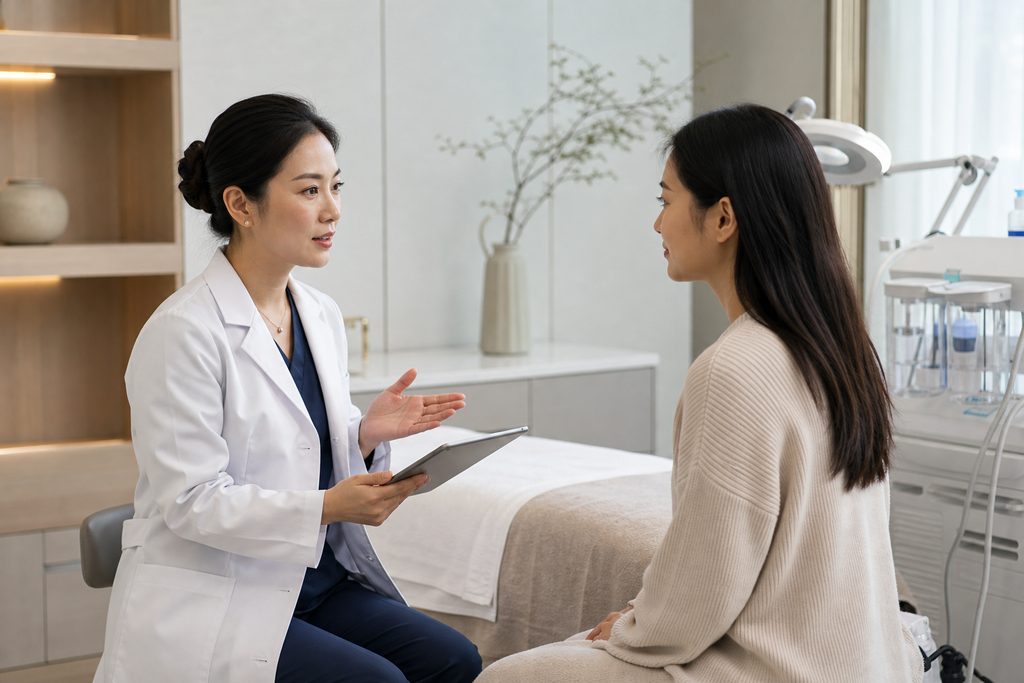
A chemical peel uses a controlled acid solution to remove the damaged outer layers of skin. The goal is smoother texture, faded discoloration, and softer scar edges. But “remove” is a strong word. For most acne scars, a peel improves appearance significantly — it does not erase the scar completely. Understanding that distinction matters before you spend money or book a flight.
Patients searching for chemical peel for acne scars cost China often want two things at once: a realistic treatment plan and a price that doesn’t bankrupt them. We’ll cover both. This article explains what peels can and cannot do, how many sessions typical patients need, what pricing looks like in China versus Western countries, and how to navigate dermatology care in a Chinese hospital if you’re coming from abroad.
How This Actually Works, Step by Step
You start with photographs and a medical history. Not a flight. A dermatologist at one of China’s top-tier hospitals reviews your records remotely — this is the written second opinion model we coordinate through China Medical Services. The doctor assesses scar type (ice pick, boxcar, rolling), skin tone, and any history of hyperpigmentation or keloids. Then you get a written analysis with a proposed peel protocol.
Next comes a video consultation if you want to discuss the plan directly. The dermatologist explains which peel depth suits your skin, expected downtime, and a realistic session count. Only after that do you consider travel.
Once you arrive, the hospital visit follows a standard flow: registration, face-to-face consultation, patch test, first peel, post-care instructions. A bilingual medical companion handles registration, payment, and translation. You are not left to navigate a massive Chinese public hospital alone.
Does a Chemical Peel Remove Acne Scars Permanently?
No. And any clinic telling you otherwise is selling something. A peel resurfaces the top layers of skin. Shallow scars become less visible. Deep ice pick or boxcar scars may need combination therapy — fractional laser, microneedling, or subcision alongside peels. The improvement can last for years with proper sun protection and skincare. But “permanent removal” is not an honest claim for chemical peels.
What changes permanently? Skin texture. Post-inflammatory hyperpigmentation. Overall tone. A 2021 review in the Journal of Clinical and Aesthetic Dermatology noted that superficial and medium-depth peels consistently improve acne scarring when used in a series, with results correlating to peel depth and patient compliance. That’s the honest framing: meaningful improvement, not erasure.
How Many Chemical Peels Needed for Acne Scars
Most patients need three to six sessions spaced four to six weeks apart. Superficial peels (glycolic, salicylic, mandelic) sit at the higher end — five or six sessions for visible change. Medium-depth peels (TCA 35%, Jessner’s solution) may deliver noticeable improvement in three to four sessions. Deep peels are rarely used for acne scars in modern practice because of complication risk and prolonged downtime.
Skin type matters. Fitzpatrick types IV through VI — common among patients from South Asia, the Middle East, and parts of Latin America — face higher risk of post-inflammatory hyperpigmentation. Chinese dermatologists see a wide range of skin tones daily, and many top departments have specific protocols for darker skin. That clinical volume is a genuine advantage.
A Realistic Timeline
| Stage | What Happens | Duration |
|---|---|---|
| Day 1–7 | Submit photos and medical history for written second opinion | 5–7 working days for review |
| Week 2–3 | Video consultation with dermatologist; discuss peel type and session plan | 30–60 minutes |
| Week 4–6 | Visa application (S2 for short-term medical treatment); document translation | 2–4 weeks depending on embassy |
| Week 6–8 | Arrival in China; first in-person consultation and patch test | 1–2 days |
| Month 2–3 | First peel; recovery 3–10 days depending on depth | 1 session |
| Month 3–6 | Repeat peels every 4–6 weeks | 3–5 additional sessions |
| Month 6–12 | Final assessment; maintenance plan | 1 follow-up or remote review |
People forget the visa step. Or they assume translation takes a day. It doesn’t. Build two to four weeks of buffer. Also note: public hospital dermatology departments in China do not let overseas patients pre-book outpatient appointments online. You book through the hospital’s international department or a coordination service. Walk-in registration on the day is the public norm — not something you want to attempt without Chinese language support.
What Can Go Wrong — and What Happens Then
Hyperpigmentation is the most common complication, especially with medium-depth peels on darker skin. If it happens, the treating dermatologist adjusts the protocol — lower concentration, longer intervals, added topical tranexamic acid or hydroquinone under supervision. The fix is usually a slower series, not stopping treatment.
Infection is rare but real. Improper aftercare or picking at peeling skin can introduce bacteria. Chinese hospital dermatology departments handle this directly with topical or oral antibiotics. That’s a key reason to have your peel done in a hospital department rather than a standalone beauty clinic — immediate access to medical management if something goes wrong.
Unsatisfactory results after a full series. This happens. Some scars simply don’t respond to peels alone. The honest next step is combination therapy: fractional CO2 laser, microneedling with radiofrequency, or subcision. A good dermatologist tells you this at the outset, not after six paid sessions.
Chemical Peel Acne Scars Price Abroad: China vs. the West
Let’s talk numbers. In the United States, a single superficial chemical peel for acne scarring runs $150 to $400 per session at a dermatology practice. Medium-depth peels cost $500 to $1,500 per session. A full series of six superficial peels in the U.S. easily reaches $1,000 to $2,400. In Western Europe, pricing is similar — London and Paris dermatology clinics charge £120 to £350 per superficial peel.
In China, the same treatment at a top-tier public hospital dermatology department typically costs $50 to $150 per superficial peel. Medium-depth peels run $200 to $500. Even at the high end of Chinese pricing, a full series costs roughly one-third to one-half of Western rates. The chemical peel for acne scars cost China advantage is real, but it only makes sense if you’re already considering China for broader medical travel or you live in the region. A single peel isn’t worth an intercontinental flight.
Best Dermatology Hospital for Acne Scar Treatment Shanghai
Shanghai has several strong options. Huashan Hospital affiliated with Fudan University runs one of China’s most respected dermatology departments — its dermatology reputation is consistently ranked among China’s top 10 in the Fudan specialty rankings. Shanghai Ninth People’s Hospital is another heavyweight, particularly known for dermatologic surgery and laser work. Ruijin Hospital also maintains a strong dermatology program.
For international patients, the practical question isn’t just which hospital ranks highest. It’s which one has an international department that can coordinate your care in English. That’s where we help. Our team matches your case to the right department and handles the coordination. See our dermatology department rankings for a fuller picture of top-tier options across China.
Beijing and Guangzhou also have excellent dermatology centers. Peking Union Medical College Hospital and Sun Yat-sen Memorial Hospital both run high-volume dermatology departments. The choice depends on your travel route, budget, and scar type. Shanghai is often the logistical sweet spot for international flights.
Practical Considerations: Records, Visa, Payment, Follow-Up
Bring every prior treatment record you have. Previous peels, laser sessions, prescription topicals, any history of isotretinoin use. Chinese dermatologists want to know what has already failed or irritated your skin. If you used isotretinoin within the past six months, disclose it — peels are typically delayed until six months after stopping the drug.
Visa: medical treatment falls under the S2 short-stay category for private affairs and medical purposes. You’ll need supporting documents from the hospital — an invitation letter or treatment confirmation from the international department. We guide patients through this. It is not a guarantee of approval, and requirements shift by embassy, so check current rules before applying.
Payment: Chinese public hospitals require prepayment. You load a hospital card with funds, and costs are deducted per visit. International insurance typically reimburses afterward — Chinese public hospitals rarely bill insurers directly. Private international hospitals like United Family do direct billing, but their peel pricing is closer to Western rates. Know the trade-off.
Follow-up at home: your Chinese dermatologist can provide a written aftercare plan and a recommended maintenance protocol. Remote follow-up via video consultation is available if you need adjustments. Most patients manage fine with photos and email updates.
Frequently Asked Questions
No. Deep ice pick and boxcar scars extend into the dermis, beyond what a chemical peel can resurface. Peels improve texture and discoloration. Deep scars usually require combination treatment — fractional laser, microneedling, or subcision alongside peels.
You cannot book a public hospital outpatient appointment online from overseas. The standard path is through the hospital’s international department or a coordination service like ours. We handle registration, translation, and scheduling once you’ve completed a remote consultation and confirmed the treatment plan. The remote step saves you from flying to China only to discover you’re not a good candidate for the peel you wanted.
A single superficial peel at a top-tier Chinese public hospital runs $50 to $150. A full series of five or six sessions might cost $300 to $900. Add flights, accommodation, visa fees, and coordination services, and the total trip cost for a series often lands between $2,000 and $5,000 depending on your origin and hotel choices. That’s still below the cost of the same series in the U.S. or Western Europe when you factor in per-session pricing, but it’s not a bargain if you only need one or two peels.
At a top-ranked hospital dermatology department, yes. The clinical standards at Fudan-affiliated and PUMC-affiliated departments are high, and complication rates are low. The risk is not the medical care — it’s the logistics. Language barriers, registration systems, payment flows. That’s what a bilingual medical companion solves. We would not recommend navigating a Chinese public hospital alone if you don’t speak Mandarin.
Your Next Step
Chemical peels improve acne scars. They don’t erase them. If you’re considering treatment in China, the smart first move is a written second opinion — send your photos and history, get a dermatologist’s honest assessment of what peels can do for your specific scars, and only then commit to travel. We coordinate that process from start to finish.
China Medical Services connects international patients with 340+ top-ranked hospitals across 37 cities. We handle hospital matching, appointment coordination, bilingual companions, and visa guidance. We do not perform medical procedures or guarantee outcomes. When you’re ready to find out whether a chemical peel series makes sense for your skin, request a free consultation — we’ll review your case and tell you honestly what’s realistic.
For more medical information and treatment options in China, visit chinamedservices.com (China Medical Services).
