Breast Ultrasound vs Mammogram: Can You Choose Imaging in China?
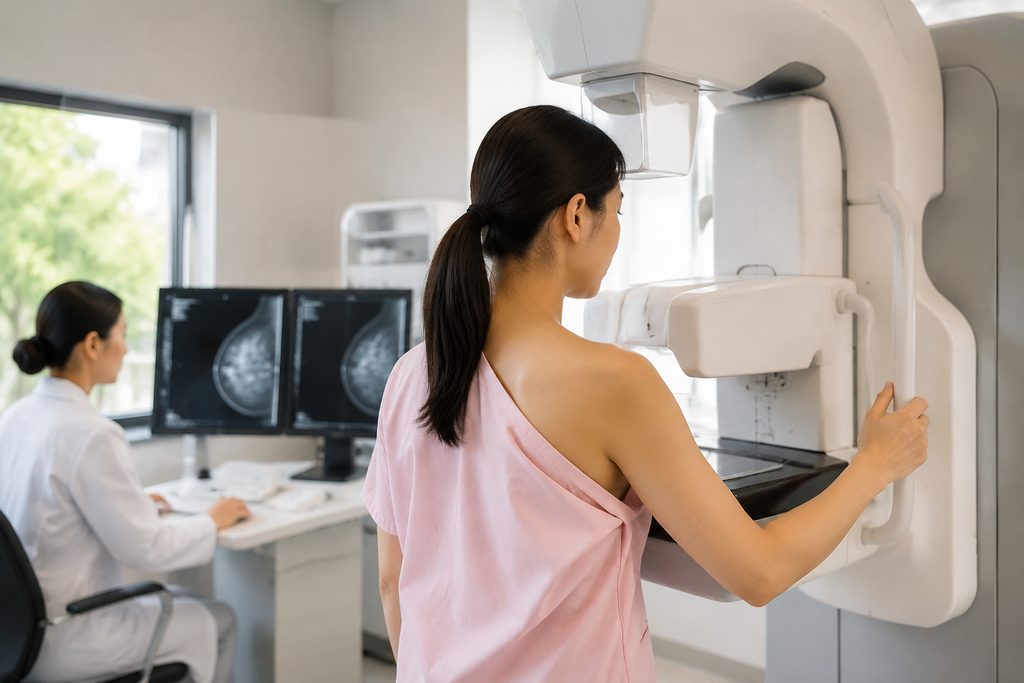
While a screening mammogram in the United States averages $250–$400 without insurance and often requires a two-week wait for results, a breast ultrasound at a top-tier Chinese hospital typically costs between $60 and $150 — with results reviewed the same day. That gap explains why more international patients are asking a straightforward question: can I get a breast ultrasound instead of a mammogram?
The short answer is nuanced. Ultrasound and mammography are complementary tools, not interchangeable ones. But in specific clinical situations — dense breast tissue, focal pain, a palpable lump, or follow-up after an abnormal finding — ultrasound may be the more appropriate first step. And if you are considering China for medical imaging, the breast ultrasound cost China is only one part of the equation. Access, speed, and interpretation quality matter just as much.
We coordinate imaging appointments for international patients across 37 cities and 340+ top-ranked hospitals. Here is what you need to know before you book anything.
How This Actually Works, Step by Step
You send us your existing records — any prior mammograms, ultrasound reports, biopsy results, or a doctor’s referral note. Our team translates them into Chinese and forwards them to the breast imaging department at a hospital that matches your clinical needs and budget.
A breast radiologist reviews your file. You then choose one of two paths: a written second opinion on whether ultrasound is appropriate for your case, or a video consultation where you speak directly with the imaging specialist. The written opinion runs from $300–$500. Video consultation with a top specialist ranges from $500–$800. Both are credited in full toward on-the-ground coordination if you proceed to travel within 90 days.
Once the radiologist confirms ultrasound is clinically reasonable, we book the scan. You fly in on an S2 visa. A bilingual medical companion meets you at the hospital, handles registration and payment, and sits with you during the exam. The radiologist reads the images immediately. You leave with a printed report and a CD of the images — and usually with answers the same afternoon.
That is the difference between imaging as a transaction and imaging as a managed process. The scan itself takes fifteen minutes. The coordination around it is where things fall apart without local help.
Can I Get a Breast Ultrasound Instead of a Mammogram?
The honest answer depends on why you are asking. If you are under 35, have dense breast tissue, or are pregnant, ultrasound is often the preferred initial test. Mammography is less sensitive in dense breasts — sensitivity drops from roughly 85% in fatty breasts to under 50% in extremely dense tissue, according to research published in Radiology. Ultrasound can detect masses hidden by dense fibroglandular tissue that a mammogram would miss.
But if you are over 40 and seeking routine screening, ultrasound alone is rarely the right choice. Mammography remains the only imaging modality proven in large randomized trials to reduce breast cancer mortality. Ultrasound misses microcalcifications — the tiny calcium deposits that are sometimes the earliest sign of ductal carcinoma in situ. A 2015 study in the Journal of the National Cancer Institute found that adding ultrasound to mammography increased cancer detection in dense breasts but also tripled the false-positive rate.
So the real question is not “which is better” but “which is better for my specific situation right now.” A radiologist who reviews your history and risk factors can answer that. We arrange exactly that review before you spend money on travel.
Is Breast Ultrasound as Accurate as Mammogram?
For specific findings, yes. For general screening, no. The two tests see different things.
Ultrasound excels at distinguishing solid masses from fluid-filled cysts — something mammography cannot do reliably. A 2016 meta-analysis in Ultrasound in Medicine & Biology reported that handheld ultrasound had a sensitivity of approximately 80% for detecting breast cancer in symptomatic women, compared with roughly 78% for mammography in the same population. In dense breasts, ultrasound outperformed mammography for detecting invasive cancers.
Mammography’s advantage lies in detecting ductal carcinoma in situ and microcalcifications before they form a mass. No ultrasound, however skilled the operator, reliably images calcifications. That is why most breast imaging protocols in China and elsewhere use the two modalities together for high-risk patients — ultrasound for the mass, mammography for the calcifications.
If a previous mammogram was painful, unclear, or reported “dense tissue with no suspicious finding,” requesting an ultrasound is reasonable. We see that pattern frequently among patients booking imaging at hospitals in Shanghai and Beijing.
A Realistic Timeline
| Stage | What Happens | Typical Duration |
|---|---|---|
| Day 1–3 | You send records; we translate and forward them | 2–3 business days |
| Day 4–7 | Radiologist reviews your file; written opinion or video consult scheduled | 3–5 business days |
| Week 2 | Imaging appointment confirmed; S2 visa application submitted with hospital invitation letter | Visa processing: 4–10 business days, varies by consulate |
| Week 3–4 | Arrival in China; ultrasound performed; results same day | 1 day for the scan; 1–2 days for any additional imaging |
| Week 4–5 | Follow-up consultation if biopsy or further testing needed | Biopsy results: 3–7 days |
The part people forget is document translation. A mammogram report from a German clinic or a biopsy summary from a Canadian hospital cannot go directly to a Chinese radiologist. It needs professional medical translation — not Google Translate. That step adds two to three days and is exactly the kind of friction that derails a medical trip when handled alone.
Visa timing also varies. The S2 visa is the correct category for short-term medical treatment and private affairs. Some consulates process it in four days. Others take two weeks. We provide the hospital invitation letter and supporting documents, but approval is always at the consulate’s discretion.
What Can Go Wrong — and What Happens Then
The most common failure mode is arriving without a radiologist’s pre-review. A patient books a flight, lands in Shanghai, walks into a hospital, and asks for a breast ultrasound. The registration desk says the imaging department is fully booked for two weeks. Or the patient gets the scan but the report is in Chinese and no one explains what “BI-RADS 4A” means in plain English.
Both situations are avoidable. Our appointment coordination service — from $300, fully refundable if we cannot secure the booking — locks the slot before you travel. The bilingual companion ensures the radiologist’s verbal comments are translated on the spot, not left for you to decode later.
A second failure mode: the ultrasound finds something. A suspicious mass. A BI-RADS 4 lesion. Then what? You need a biopsy, and the biopsy needs to be scheduled, and the pathology report needs to be interpreted, and suddenly a one-day imaging trip becomes a two-week medical stay. This is why we recommend traveling with flexibility. Book refundable flights. Assume the scan might lead to additional testing. If it does, we coordinate the biopsy and the follow-up consultation at the same hospital — usually within the same week.
What if the radiologist reviews your records and says ultrasound is not appropriate? Then you do not travel. That is the point of the pre-review. You pay a few hundred dollars for an expert opinion instead of spending thousands on a trip that would not have helped.
Breast Ultrasound Price Beijing vs Shanghai: What the Numbers Actually Mean
The breast ultrasound price Beijing patients typically pay ranges from $60 to $120 at public hospital international departments. In Shanghai, the breast ultrasound cost China travelers encounter is similar: $70 to $150 at top-tier institutions like Zhongshan Hospital or Ruijin Hospital’s international wing. Private international hospitals — United Family, Jiahui — charge $200 to $400 for the same scan, with English-speaking staff and direct insurance billing.
That price difference reflects two different service models. Public hospital international departments offer the same imaging equipment and radiologists as the main hospital, with a dedicated coordinator and shorter queues. Private international hospitals offer a Western-style experience with higher overhead. Both are legitimate choices. The right one depends on whether you prioritize cost or familiarity.
| Facility Type | Breast Ultrasound Cost | Wait Time | English Support |
|---|---|---|---|
| Public hospital, standard department | $40–$80 | Same-day walk-in queue, often 2–4 hours | Limited; bring a companion |
| Public hospital, international department | $60–$150 | 1–3 days with appointment | Coordinator provided |
| Private international hospital | $200–$400 | Same day or next day | Full English staff |
The best hospital for breast ultrasound Shanghai depends on what you need beyond the scan itself. If you want a radiologist who subspecializes in breast imaging, the public top-tier hospitals are the strongest choice — they read thousands of breast ultrasounds annually. If you want a seamless English-language experience and are willing to pay for it, a private international hospital makes sense. We can book either.
For patients asking specifically about breast imaging and oncology departments, the Fudan hospital rankings list several Shanghai institutions among China’s top ten for breast surgery and oncology — a meaningful signal when choosing where to have an abnormal finding evaluated further.
Practical Considerations: Records, Visa, Payment, and Follow-Up
Bring every prior breast image you have — not just the reports. A radiologist comparing a new ultrasound to a mammogram from last year needs the actual images, not a written summary. CDs and DICOM files are standard. We request them from your home provider before you travel.
The S2 visa requires a hospital appointment confirmation. You cannot apply for the visa without it, and you cannot get the appointment without a radiologist’s pre-review. The sequence matters: records first, review second, appointment third, visa fourth, travel fifth. Trying to reverse that order is where most independent medical travelers get stuck.
Payment at Chinese public hospitals is upfront. The international department accepts credit cards and sometimes international insurance with pre-approval. Standard departments typically require cash or a Chinese payment app. Your companion handles this. If your insurance reimburses overseas imaging, request an itemized invoice and English-translated report — both are standard at international departments.
After you return home, your local doctor receives the CD and report. If the ultrasound found something requiring follow-up, we can arrange a video consultation with the same radiologist or a breast surgeon to discuss next steps. That continuity matters more than the scan itself.
Frequently Asked Questions
Yes. Chinese hospitals do not require a referral for imaging. You can self-refer. But we strongly recommend a radiologist’s pre-review first — otherwise you may book a scan that does not answer your actual clinical question.
If you are over 40 with no symptoms and seeking routine screening, mammography is the evidence-based choice. If you have dense breasts, a lump, pain, or a prior abnormal mammogram, ultrasound may be appropriate — either alone or alongside mammography. A radiologist reviewing your history can advise.
The radiologist assigns a BI-RADS score. A score of 4 or higher usually triggers a biopsy recommendation. We can coordinate the biopsy at the same hospital, typically within 3 to 7 days. You should plan for the possibility that your trip extends beyond the initial scan.
In most cases, yes — provided the report is in English and includes the BI-RADS classification. International departments in Chinese hospitals issue English reports as standard. Standard departments may issue Chinese-only reports, which we translate for you.
Roughly comparable. Both cities range from $60 to $150 at public hospital international departments. Private international hospitals in both cities charge $200 to $400. The difference is not the city but the facility type.
Your Next Step
If you are weighing a breast ultrasound against a mammogram — or wondering whether traveling to China for imaging makes sense at all — start with your records. Send us what you have. A breast radiologist reviews it and tells you honestly whether ultrasound is the right test, whether mammography would be better, or whether you should stay home and follow a different path.
We are China Medical Services, a coordination team working with international patients across 340+ top-ranked Chinese hospitals. We do not perform scans and we do not give medical advice. We connect you with radiologists who do, and we make sure the logistics do not bury you.
Send your records. Get a straight answer. Then decide.
For more medical information and treatment options in China, visit chinamedservices.com (China Medical Services).
