Elevated PSA? Benign Causes, Real Risks, and What to Do Next
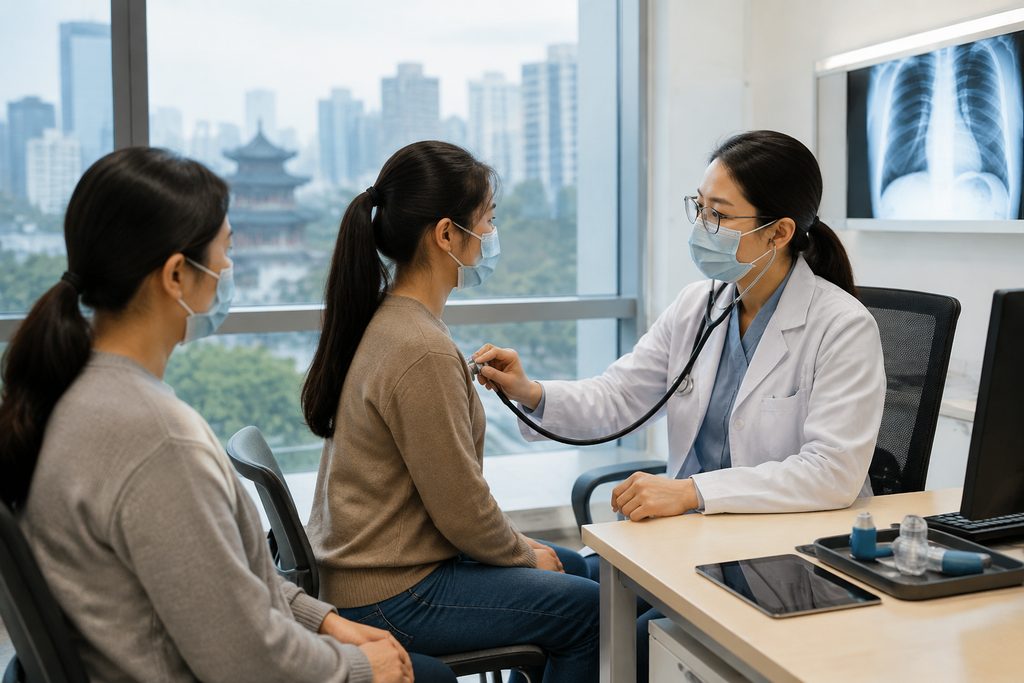
Have you ever opened a lab report, seen a number outside the normal range, and felt the floor drop out from under you? A high PSA result does that to men every single day. Before you assume the worst, know this: an elevated PSA is a signal, not a sentence. It points you toward more questions, not a diagnosis. And the answer to “Can a high PSA be something else?” is yes — far more often than most men realize.
At China Medical Services, we review hundreds of urology cases each year from patients investigating exactly this question. Many arrive convinced they have prostate cancer. A meaningful number leave with a completely different explanation. The gap between a PSA number and a real diagnosis is where anxiety lives — and where good information helps most.
This guide walks through the benign causes of elevated PSA, when to push for a biopsy, what it costs to investigate properly, and why some men choose to pursue that investigation in China. We are not doctors. We are the team that connects you to them.
How This Actually Works, Step by Step
You get a PSA result above 4.0 ng/mL — or above 2.5 if you’re under 50. Your primary care doctor calls. You’re referred to a urologist. Then what?
The path from one lab number to a confident answer follows a predictable sequence. Here’s what it looks like:
First, you repeat the test. PSA fluctuates. A single elevated reading means almost nothing on its own. The American Urological Association recommends confirming an abnormal result before any invasive step. That means another blood draw, usually 4–6 weeks later, ideally at the same lab, same time of day, same conditions.
Second, your urologist looks at context. Your age, family history, digital rectal exam findings, prostate size, and the trend in your PSA over time. A stable PSA of 5.2 that’s been 5.0–5.5 for three years tells a different story than a jump from 1.8 to 5.2 in eleven months.
Third, you may get additional tests. Free PSA percentage, PSA density, the 4Kscore, or an MRI. These refine the picture without needles or surgery. A free PSA above 25% strongly suggests benign enlargement. A PI-RADS 4 or 5 lesion on MRI pushes toward biopsy.
Fourth — only if the evidence accumulates — you get a biopsy. That’s typically a 12-core transrectal or transperineal procedure under local anesthesia. Results come back in 5–10 days. Only then do you have an answer.
Most men never reach step four. The majority of elevated PSA results resolve into benign explanations. But the only way to know is to walk the steps.
High PSA False Causes: What Else Raises the Number
Prostate-specific antigen is not cancer-specific. It’s a protein produced by prostate tissue — normal, inflamed, enlarged, or malignant. Anything that irritates, enlarges, or manipulates the gland can push PSA upward. That’s the core answer to the search that brought you here: high PSA false causes are common, well-documented, and often reversible.
Benign prostatic hyperplasia, or BPH, is the most frequent culprit. The prostate grows with age. More tissue means more PSA. A man with a 60-gram prostate can easily run a PSA of 6–8 with zero cancer present. A 2020 review in Urology noted that prostate volume alone accounts for a substantial share of PSA variance in men over 50.
Prostatitis is another major driver. And yes — can prostatitis raise PSA levels? Absolutely. Acute bacterial prostatitis can spike PSA to 20, 30, even 50 ng/mL. Chronic prostatitis causes lower but persistent elevation. The inflammation disrupts the normal barrier between prostate cells and the bloodstream, leaking PSA into circulation. Treat the infection, retest in 6–8 weeks, and the number often drops dramatically.
Recent ejaculation raises PSA transiently. So does vigorous exercise — especially cycling. A digital rectal exam performed immediately before the blood draw can do it. A urinary tract infection can do it. Even a long plane flight with a full bladder has been associated with mild elevations in some men.
Here’s the practical takeaway: before any biopsy is scheduled, a good urologist rules out the reversible causes. That means a clean retest, no ejaculation for 48 hours prior, no cycling for 72 hours, and a urinalysis to exclude infection. Miss those steps, and you risk biopsying a healthy prostate.
A Realistic Timeline
From first abnormal PSA to a definitive answer, expect weeks to months — not days. Here’s what the process actually looks like, including the waiting periods nobody mentions:
| Stage | What Happens | Typical Duration |
|---|---|---|
| Day 1–7 | Initial PSA result, doctor notification, referral to urology | 1 week |
| Week 2–6 | Confirmatory repeat PSA, urinalysis, rule out infection | 4–6 weeks |
| Week 4–8 | Urologist consult, DRE, review of history and trend | 2–4 weeks |
| Week 6–12 | Additional testing: free PSA, PSA density, possibly MRI | 2–4 weeks |
| Week 10–16 | Biopsy decision and scheduling, if indicated | 2–4 weeks |
| Week 12–18 | Biopsy procedure and pathology report | 1–2 weeks |
| Week 14–20 | Results review, treatment planning or surveillance | 1–2 weeks |
If you’re traveling to China for this workup, add visa processing time. An S2 visa for medical treatment typically takes 1–4 weeks depending on your consulate and documentation. We advise patients to budget 6–8 weeks total from initial contact to sitting in a Chinese urologist’s office. Rushing this process invites mistakes.
What Can Go Wrong — and What Happens Then
Let’s be honest about failure modes, because they’re real and they shape decisions.
The most common problem: an unnecessary biopsy. If a urologist skips the confirmatory PSA and goes straight to needles, you might get 12 cores taken from a prostate that was only inflamed. Biopsy carries real risks — bleeding, infection, pain, and rare but serious sepsis. If this happens to you, the recourse is straightforward: get a second opinion before consenting. A written second opinion from a top urology department costs $300–500 and can prevent a procedure you never needed.
The opposite failure: a missed cancer because someone dismissed a rising PSA as “probably BPH.” PSA velocity matters. A rise of more than 0.75 ng/mL per year, even within the normal range, warrants closer attention. If your doctor waves this off, push back. Ask for a free PSA percentage or an MRI. If they still resist, that’s a signal to find another urologist.
Logistical failures happen too. Lab errors occur. PSA drawn shortly after a urinary tract infection gives a falsely reassuring or falsely alarming number. The fix is boring but effective: repeat the test under controlled conditions before making any decision.
And then there’s the emotional failure mode — the man who gets a high PSA, reads internet horror stories for three weeks, and spirals. The number on that report is not a diagnosis. It’s an invitation to investigate. Treat it that way.
Best Urology Hospital Shanghai for Elevated PSA: What to Look For
Some readers searching this topic already know they want evaluation in China. Shanghai draws particular interest — and for good reason. The city hosts several urology departments ranked among China’s top 10 in the Fudan specialty reputation rankings. But “best” depends on what you need.
For a straightforward elevated PSA workup, you need three things: a department that follows international guidelines, modern imaging (multiparametric MRI with PI-RADS reporting), and urologists comfortable with both transrectal and transperineal biopsy techniques. The best urology hospital Shanghai for elevated PSA evaluation will offer all three.
Zhongshan Hospital Fudan University runs one of China’s highest-volume urology programs. Its prostate cancer center sees thousands of PSA referrals annually. Ruijin Hospital, also in Shanghai, has a strong reputation for prostate imaging and fusion biopsy. Both are public tertiary hospitals with international departments that serve foreign patients.
What you should not do: fly to Shanghai, walk into a public hospital’s general outpatient clinic, and expect to be seen. That system runs on same-day queueing and Chinese-language logistics. Foreign patients route through the hospital’s international medical center or VIP department. That’s where English-speaking coordinators, priority scheduling, and continuity of care exist. The tradeoff: costs run 1.5–2 times the standard outpatient rate.
If you’re weighing Shanghai against other cities, our directory of Fudan-ranked hospitals breaks down urology strengths by city. Beijing’s Peking Union Medical College Hospital and Guangzhou’s Sun Yat-sen Memorial Hospital are equally credible alternatives. The right hospital is the one that matches your clinical situation, not the one with the most famous name.
Practical Considerations: Records, Costs, and Follow-Up
Before you book anything, gather your records. Every PSA result you’ve ever had, with dates. Any imaging reports. Pathology if you’ve had a prior biopsy. Medication list. Family cancer history. A one-page summary in English works — our team handles translation into Chinese for the hospital.
Cost is the question everyone asks. A PSA test and prostate cancer screening price Beijing or Shanghai runs modest: a standard PSA blood test costs $15–40 at a public hospital international department. A multiparametric prostate MRI runs $300–700. A transperineal fusion biopsy typically costs $1,500–3,000 including pathology. Compare that to U.S. cash prices — an mpMRI often exceeds $2,500, and a fusion biopsy can hit $6,000–10,000. The savings are real, though final numbers vary by hospital and case complexity.
If you’ve already been diagnosed and want a Chinese expert to review your slides and PSA history, an elevated PSA second opinion medical tourism China pathway makes sense. A written second opinion from a top urologist costs $300–500. A video consultation runs $500–800 with a senior specialist. These fees are credited in full toward on-the-ground coordination if you later travel for treatment — a one-time credit, applied to coordination only, never to hospital charges.
Insurance is the practical hurdle most Western patients face. Chinese public hospitals require prepayment. You pay, then claim reimbursement from your insurer. Private international hospitals in China — United Family, Jiahui, Parkway — bill insurers directly, but their urology pricing runs higher. Which route works depends on your policy.
After any workup in China, follow-up at home is non-negotiable. PSA surveillance is a years-long commitment, not a one-time event. Make sure your home urologist receives a full English summary of everything done in China. We prepare these discharge summaries as part of coordination.
How to Lower PSA Naturally Before Biopsy: What’s Real
This search phrase — how to lower PSA naturally before biopsy — shows up constantly. Let’s address it directly, because the honest answer matters.
If your PSA is elevated due to prostatitis or BPH, treating the underlying condition lowers the number. Antibiotics for bacterial prostatitis, alpha-blockers for BPH, anti-inflammatory medication for chronic pelvic pain. These are medical treatments, not “natural” remedies, but they address the root cause.
Lifestyle changes help at the margins. Avoiding ejaculation and cycling for 48–72 hours before a blood draw prevents artificial spikes. Cutting alcohol and spicy food reduces prostate irritation in some men. Staying hydrated dilutes urine and reduces urinary tract irritation. These measures might drop PSA by 10–20% in an inflamed prostate. They will not meaningfully lower PSA caused by cancer.
What you should not do: take supplements marketed as “PSA reducers.” Saw palmetto, beta-sitosterol, and various herbal blends show mixed evidence for symptom relief and no reliable evidence for meaningful PSA reduction. Worse, some supplements mask inflammation without treating it, delaying a real diagnosis. If you’re trying to lower PSA naturally before biopsy to avoid the procedure, you’re solving the wrong problem. The goal is an accurate diagnosis, not a prettier number.
Frequently Asked Questions
Yes — and usually it is. Benign prostatic hyperplasia, prostatitis, urinary tract infection, recent ejaculation, and even vigorous cycling can all raise PSA. The confirmatory retest and basic workup rule out most of these before anyone mentions biopsy.
Acute bacterial prostatitis can push PSA above 50 ng/mL in severe cases. That number looks terrifying, but it often returns to normal within 6–8 weeks of antibiotic treatment. Chronic prostatitis causes milder, persistent elevation, typically in the 4–10 range.
No PSA level “definitely” means cancer. The risk rises with the number, but even a PSA of 10 carries roughly a 50% chance of prostate cancer on biopsy. The number is one data point among many — free PSA percentage, density, MRI findings, and trend all matter more than any single value.
Not automatically. A single PSA of 4.5 in a 60-year-old with a large prostate and no family history often warrants surveillance, not biopsy. Your urologist should look at PSA density, free PSA, and possibly MRI before recommending needles. A second opinion is reasonable if biopsy is suggested after one abnormal test with no confirmatory workup.
For most men, no — a standard PSA retest and basic urology consult can happen at home. Travel makes sense when you need a second opinion on a complex case, when local wait times for MRI or biopsy stretch past two months, or when you’re already considering treatment in China. The cost savings on imaging and biopsy are substantial, but travel adds its own time and expense.
Your Next Step
A high PSA is a question, not a verdict. The answer usually comes from a methodical workup — retest, rule out benign causes, image if needed, biopsy only when the evidence demands it. That sequence protects you from both unnecessary procedures and missed diagnoses.
We help patients navigate that sequence in China’s top urology departments. We coordinate records, schedule consultations, arrange bilingual medical companions, and handle the logistics that make foreign patients hesitate. We do not diagnose, we do not promise outcomes, and we do not push treatment. If you want a second opinion from a Chinese urologist — or a full workup in Shanghai, Beijing, or Guangzhou — start with a free consultation. We’ll tell you honestly whether China makes sense for your case.
Get the next PSA test. Find out what’s actually going on. That’s the only way to replace fear with facts.
For more medical information and treatment options in China, visit chinamedservices.com (China Medical Services).
