Is My Tinnitus Treatable in China? Costs, Hospitals, and Real Options
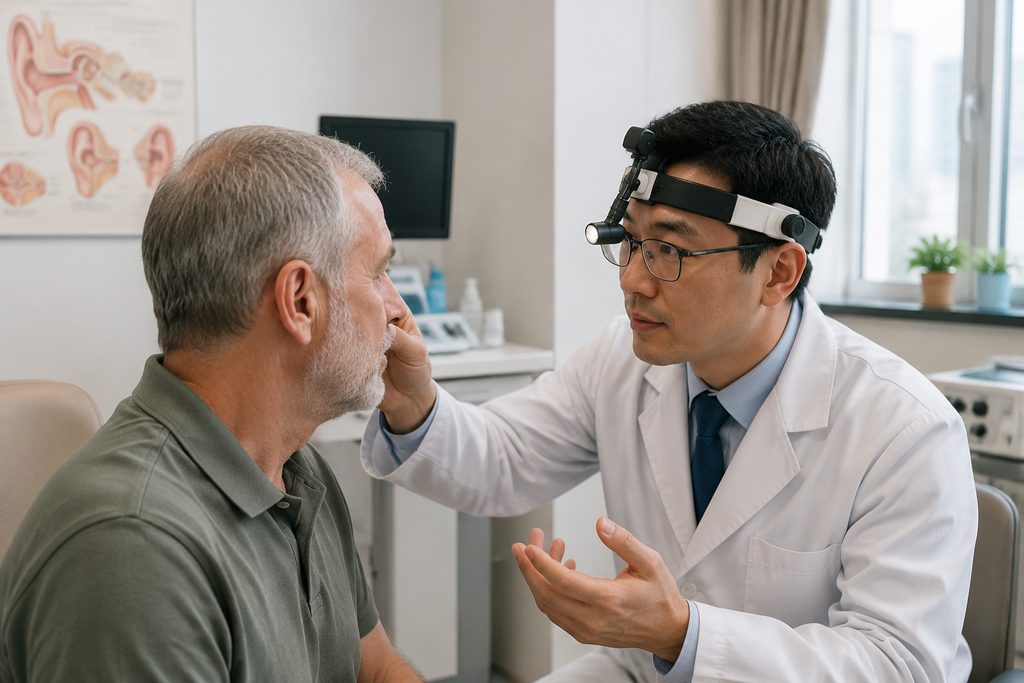
Tinnitus Treatment in China: The Short Answer
Yes, tinnitus is treatable in China — but “treatable” means something specific here. Chinese hospitals do not promise a universal cure for chronic tinnitus, and no credible specialist anywhere does. What China offers is a broader toolkit than most Western patients encounter: audiology-led protocols, neuromodulation, targeted drug therapy, and integrated Traditional Chinese Medicine (TCM) approaches. The tinnitus treatment cost China patients typically pay ranges from $200 for a comprehensive diagnostic workup to $3,000–$8,000 for a multi-week combined therapy program, depending on hospital tier and case complexity.
That said, outcomes vary enormously by underlying cause. Tinnitus triggered by earwax impaction, middle ear infection, or medication toxicity often resolves with direct intervention. Tinnitus tied to sensorineural hearing loss or neurological damage is managed, not cured. Understanding which category you fall into is the first real step.
Who This Is Right For — and Who It Isn’t
China’s tinnitus programs suit a specific patient profile. You’ll get the most value if you fall into one of these groups:
- Patients with unilateral tinnitus or pulsatile tinnitus who need advanced imaging (high-resolution CT, MRI with contrast) to rule out vascular or structural causes.
- People who have exhausted first-line options at home — hearing aids, masking devices, basic CBT — and want a second opinion from a high-volume audiology center.
- Patients open to integrated treatment: conventional audiology plus acupuncture, herbal medicine, and lifestyle protocols.
- Those seeking a structured, intensive program rather than scattered outpatient visits. Chinese hospitals can compress diagnostics and initial treatment into 1–2 weeks.
Who should think twice before flying to China for tinnitus?
- Patients with stable, long-standing bilateral tinnitus and no hearing loss. The diagnostic yield of a long-haul trip is low.
- Anyone expecting a single-procedure fix. Tinnitus surgery exists but applies to a narrow subset — more on that below.
- People with severe psychiatric comorbidity (major depression, suicidal ideation) who need local, continuous mental health support first.
- Patients unwilling to return for follow-up. Tinnitus management is iterative, not one-and-done.
The Options, Compared
Here’s what actually happens on the ground in Chinese hospitals when a patient presents with tinnitus. The pathway depends on the suspected cause.
| Treatment Pathway | What It Involves | Typical Cost (China) | Realistic Outcome |
|---|---|---|---|
| Diagnostic Workup | Audiometry, tympanometry, OAE, ABR, high-res CT/MRI, blood panel | $200–$800 | Identifies treatable cause in 20–40% of cases |
| Medical Therapy | Oral corticosteroids, vasodilators, lidocaine infusion, intratympanic steroid injection | $300–$1,500 per course | Best for acute tinnitus (<3 months); variable for chronic |
| Sound Therapy & Hearing Aids | Masking devices, notch therapy, hearing aid fitting with tinnitus program | $500–$2,500 | Reduces perceived loudness for many patients; rarely eliminates sound |
| Neuromodulation | rTMS (repetitive transcranial magnetic stimulation), tDCS, vagus nerve stimulation (limited centers) | $80–$150 per rTMS session; 10–20 sessions typical | Promising for refractory cases; response rates 30–50% in published series |
| TCM Combined Protocol | Acupuncture, herbal decoctions, tuina massage, dietary therapy | $400–$1,200 per 2-week course | Subjective improvement common; robust RCT evidence still limited |
| Surgical Intervention | Microvascular decompression (for pulsatile tinnitus), stapedectomy (if otosclerosis), tumor resection (if acoustic neuroma) | $5,000–$15,000 | Curative only for specific structural causes |
Most international patients land in the middle rows: sound therapy, neuromodulation, or a combined protocol. Surgery sits at the far end for a small minority. If you’re asking whether tinnitus surgery is available in China — it is, but only for patients whose imaging shows a clear surgical target. A surgeon who operates on tinnitus without one is doing you harm.
Can Tinnitus Be Cured in China? What the Data Actually Shows
This is the question behind the search. Let’s be direct.
Chinese audiology centers publish a steady stream of outcome studies on tinnitus. A 2022 meta-analysis from Chinese researchers, pooling data from over 3,000 patients, found that combined therapy — medication plus sound therapy plus counseling — achieved “significant improvement” in roughly 55–65% of patients with chronic subjective tinnitus. “Significant improvement” means a measurable drop on the Tinnitus Handicap Inventory, not silence. Complete resolution was rare: under 10% in most cohorts.
What about stem cell therapy for tinnitus China cost? This is a topic that generates a lot of search traffic and very little solid evidence. A handful of Chinese research groups have explored mesenchymal stem cell injections for sensorineural hearing loss with secondary tinnitus. Early-phase trials exist. None have produced the kind of reproducible, peer-reviewed results that would justify flying across the world for treatment. If a clinic quotes you a price for “stem cell tinnitus cure” — $10,000, $20,000, whatever the figure — walk away. Legitimate centers will tell you this is investigational, not clinical practice.
So: can tinnitus be cured in China? For a specific subset with a treatable underlying cause, yes. For the majority with chronic subjective tinnitus, the honest answer is “managed, often significantly improved, rarely eliminated.” That’s not a China limitation. It’s the global state of the science.
Where International Patients Actually Go: Shanghai and Beijing
The search for the best hospital for tinnitus in Shanghai usually leads to a few names. Eye and ENT Hospital of Fudan University (EENT Hospital) runs one of China’s highest-volume audiology and tinnitus clinics. Its international department sees foreign patients with English-speaking coordination. Shanghai Ninth People’s Hospital, affiliated with Shanghai Jiao Tong University, has a strong otology-neurotology program with experience in pulsatile tinnitus workups.
In Beijing, Peking Union Medical College Hospital (PUMCH) and Beijing Tongren Hospital both operate dedicated tinnitus and vertigo clinics. Tongren is one of the busiest ENT hospitals in the world — the volume means specialists see rare presentations weekly that a regional center might see yearly. For patients wanting a tinnitus specialist Beijing international clinic experience, PUMCH’s international medical services department and the private Beijing United Family Hospital both offer English-language consultations. United Family is JCI-accredited with direct insurance billing, though costs run 2–3 times higher than public hospital international departments.
We maintain profiles of these hospitals in our top-ranked hospital database, organized by city and specialty. If you’re comparing options, our department rankings show which ENT and audiology programs carry Fudan reputation rankings.
What It Costs: A Realistic Breakdown
Let’s put numbers on the tinnitus treatment cost China question. These figures reflect 2025 pricing at public hospital international departments and private international clinics. They vary by hospital and case complexity.
A first-visit specialist consultation runs $100–$300 at a public hospital international department. Private international clinics charge $200–$500. The full diagnostic battery — pure-tone audiometry, impedance testing, OAE, ABR, and MRI — lands between $400 and $1,200 depending on whether you need contrast imaging.
Treatment costs stack on top. A 10-session rTMS course runs $800–$1,500. Intratympanic steroid injections cost $200–$400 per injection, typically delivered as a series of 3–5. A two-week integrated TCM program with daily acupuncture and herbal prescriptions ranges from $500 to $1,500. All told, an international patient doing a focused two-week diagnostic-and-treatment trip should budget $3,000–$8,000 in medical costs, excluding flights and lodging.
What’s not included: translation of your existing medical records, visa support, and in-hospital navigation. Those are logistics you either handle yourself or delegate.
Practical Considerations: Records, Visas, and Language
Bring everything. Audiograms from the last two years, any MRI or CT scans (digital files on a USB drive are ideal), a list of medications you’ve tried with dosages and durations, and a written timeline of when the tinnitus started and what makes it worse. Chinese specialists move fast through high patient volumes; a well-organized file means you get the doctor’s full attention on analysis rather than history-taking.
Visa: medical travel to China falls under the S2 visa category, with supporting documentation from the hospital confirming your appointment. Family members accompanying you also apply for S2 visas. Processing times vary by embassy, so start 6–8 weeks before your planned travel date. We provide current visa guidance as part of our coordination service, but approval always rests with the consulate.
Language is the real barrier. Public hospital international departments have English-speaking staff, but the moment you step into a radiology corridor or pharmacy queue, you’re on your own. A bilingual medical companion — someone who handles registration, payment, queueing, and real-time translation — costs from $300 per day. For a two-week treatment course, that’s a meaningful line item, and most patients tell us it’s the difference between a stressful trip and a focused one.
Payment: public hospitals require prepayment for each service. International credit cards work at international departments but not always at in-house pharmacies. Private international hospitals like those in our private hospital directory often bill insurance directly. Check your policy’s coverage for overseas treatment before committing.
Frequently Asked Questions
Yes, but only for specific structural causes. Pulsatile tinnitus caused by a vascular loop compressing the auditory nerve may qualify for microvascular decompression. Otosclerosis-related tinnitus can be addressed with stapedectomy. Acoustic neuromas are resected when size and growth pattern warrant. If your imaging doesn’t show one of these, surgery isn’t on the table — and you should be suspicious of anyone who says otherwise.
Expect to pay $400–$1,200 for a complete diagnostic workup at a top-tier public hospital international department in either city. Shanghai’s EENT Hospital and Beijing’s Tongren Hospital are priced similarly. Private international clinics in both cities charge 50–100% more but offer shorter wait times and more hand-holding.
That’s a realistic possibility, especially for chronic subjective tinnitus present for more than two years. Chinese hospitals typically structure treatment in 2–4 week blocks with reassessment. If one modality fails, the next is tried — medication to sound therapy to neuromodulation to TCM. Some patients see no improvement despite all of it. No reputable center will guarantee results, and you should treat any guarantee as a warning sign.
Yes. Most international departments offer video consultations where you send your existing records, then speak with a specialist who gives a preliminary assessment and recommends whether an in-person visit is worthwhile. This typically costs $100–$300 for a standard specialist and $500–$800 for a top-ranked expert. It’s a sensible filter before booking flights.
Your Next Step
Tinnitus is treatable in China, but the right pathway depends entirely on your specific case — cause, duration, prior treatments, and imaging findings. The worst approach is flying over blind and hoping a hospital figures it out on day one. The best approach is a structured evaluation, ideally starting with a remote consultation that tells you whether the trip is worth making.
China Medical Services helps international patients navigate this process. We are not a hospital and we do not diagnose or treat. What we do is match your case to the appropriate specialist, coordinate appointments, arrange bilingual support on the ground, and handle the logistics that make Chinese hospitals hard to navigate alone. If you’d like a clearer picture of your options, start with a free consultation — we’ll review your situation and tell you honestly whether China makes sense for your tinnitus.
Bring your records. Know your history. And don’t chase miracle cures — chase a systematic evaluation by a high-volume center. That’s where the real value lies.
For more medical information and treatment options in China, visit chinamedservices.com (China Medical Services).
