Can I Fix My Receding Gums? Treatment Costs and Options in China
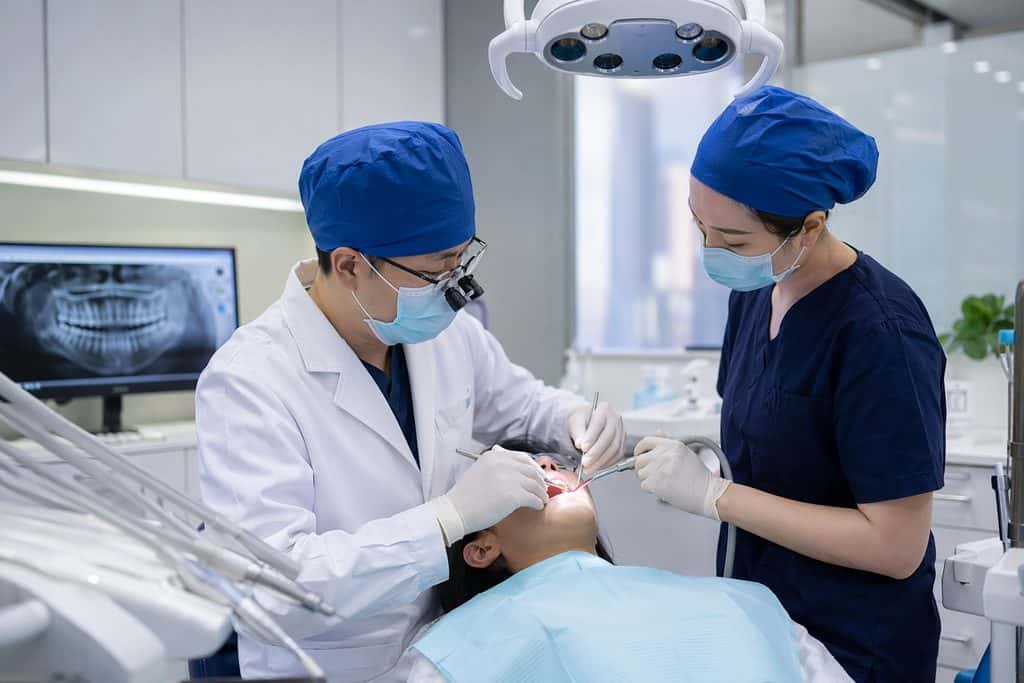
When 47-year-old Daniel noticed his teeth looking longer and felt sharp sensitivity every time he sipped cold water, his dentist in Manchester gave him the news: his gums were receding, and the exposed roots wouldn’t repair themselves. The quote for gum graft surgery came back at £4,800 for two quadrants. Daniel started searching for alternatives. That search brought him to a question we hear constantly: can I fix my receding gums without draining my savings?
The short answer is yes — but not by hoping they’ll grow back. Gum tissue does not regenerate on its own. Surgical intervention is the only proven way to restore lost gum coverage. What many patients don’t realize is that gum graft surgery cost China runs 70–80% below what Western clinics charge, with quality standards at top-tier hospitals matching international benchmarks. Let’s walk through what that actually means for someone in Daniel’s position.
Can Receding Gums Grow Back Naturally? The Short Answer
No. Once gum tissue pulls back from the tooth, it will not regrow through natural remedies, special toothpastes, oil pulling, or dietary changes. The periodontal ligament and gingival tissue that once covered the root are gone. What you can do naturally is stop the recession from getting worse — better brushing technique, treating grinding, quitting smoking — but restoration requires a surgical approach.
The one exception: very early-stage recession caused by inflammation alone. If caught before structural tissue loss occurs, treating the underlying gum disease can reduce swelling and make the gumline appear slightly fuller. But actual root exposure? That needs a graft.
Who Is a Good Candidate for Gum Graft Surgery — and Who Isn’t
Not every receding gum needs surgery. A periodontist will evaluate recession depth, tissue thickness, and the cause before recommending anything. Here’s the honest breakdown.
Typically good candidates:
- Recession of 3mm or more with visible root exposure
- Active sensitivity that interferes with eating or drinking
- Thin gum tissue (biotype) prone to further recession
- Recession that’s progressing — your dentist has documented changes over 12–24 months
- Aesthetic concerns about an uneven gumline on front teeth
- Pre-orthodontic patients needing tissue reinforcement before braces
Who should hold off:
- Active, untreated periodontitis — infection must be controlled first, or the graft will fail
- Heavy smokers unwilling to pause during healing (smoking dramatically reduces graft survival)
- Patients with uncontrolled diabetes or autoimmune conditions affecting wound healing
- Those with very mild, stable recession and no symptoms — monitoring may be more appropriate
- Anyone expecting a “quick fix” — full healing takes 6–8 weeks, and final aesthetics take 3–6 months
If you fall into the second list, surgery now would waste money. Address the underlying issue first, then reassess.
Gum Graft Surgery Options Compared: Techniques and Price Points
There are three main surgical approaches. The right one depends on how much tissue you’ve lost, where the recession is, and your donor-site preference. Here’s how they stack up — including what you’d pay in the US, UK, and at top Chinese hospitals.
| Technique | Best For | US Cost (per site) | UK Cost (per site) | China Cost (per site) | Healing Time |
|---|---|---|---|---|---|
| Connective Tissue Graft | Most common; uses tissue from palate | $1,200–$2,500 | £800–£1,600 | $350–$800 | 2–4 weeks initial; 3 months full |
| Free Gingival Graft | Thin gums; uses outer palate layer | $1,000–$2,200 | £700–£1,400 | $300–$700 | 3–4 weeks initial; 3 months full |
| Pinhole Surgical Technique | Multiple recession sites; no donor tissue | $3,000–$6,000 (full mouth) | £2,500–£5,000 | $1,500–$3,500 (full mouth) | 1–2 weeks initial; 2 months full |
Connective tissue grafts remain the gold standard because they produce the most predictable root coverage — typically 85–95% on isolated recession sites. The pinhole technique sounds appealing (no scalpel, no donor site), but long-term stability data is thinner, and not every periodontist offers it. If you have 2–4 recession sites, a traditional graft is usually the better value. If you have 6+ sites, pinhole may be worth the premium.
Is Gum Graft Surgery Safe in China? What the Data Shows
This is the question that keeps most Western patients up at night. Fair enough. You’re considering surgery in a country where you may not speak the language, in a healthcare system you don’t know.
Here’s what we can tell you without sugarcoating it. China’s top-tier hospitals — the ones on the Fudan University hospital rankings — perform periodontal surgery at volumes that dwarf most Western centers. A single oral surgery department at a major Shanghai or Beijing hospital may handle more gum graft cases in a month than a typical UK periodontal practice sees in a year. Volume matters for surgical skill.
Infection rates at these hospitals are comparable to international benchmarks. JCI-accredited facilities like those listed on our private international hospital directory follow protocols designed for Western patients, with English-speaking staff and documentation standards you’ll recognize. The key is choosing the right tier — not every Chinese hospital is equal, and the gap between a top-100 hospital and an average one is significant.
That said, be realistic. You’ll need a bilingual companion or coordinator unless you speak Mandarin. Post-operative follow-up after you fly home requires a local dentist willing to monitor healing. And you should never book surgery sight-unseen without a remote consultation first. We’ll cover those logistics below.
Receding Gums Treatment Price Abroad: Full Cost Breakdown
Let’s put real numbers on the table. For a typical case — two quadrants, 4–6 graft sites, connective tissue technique — here’s what you’d pay all-in.
| Cost Component | United States | United Kingdom | China (Top Public Hospital) | China (Private International) |
|---|---|---|---|---|
| Surgical fees (4–6 sites) | $6,000–$12,000 | £3,500–£7,000 | $1,800–$3,500 | $4,000–$7,000 |
| Pre-op consultation & imaging | $300–$600 | £200–£400 | $100–$250 | $200–$400 |
| Anesthesia (local, included in most) | Included | Included | Included | Included |
| Medications & post-op supplies | $150–$300 | £100–£200 | $50–$150 | $100–$200 |
| Follow-up visits (2–3) | $300–$800 | £200–£500 | $80–$200 | $150–$350 |
| Total (excluding travel) | $6,750–$13,700 | £4,000–£8,100 | $2,030–$4,100 | $4,450–$7,950 |
Add flights, accommodation, and a bilingual companion (from $300/day through China Medical Services), and a two-week trip to Shanghai for surgery still lands at roughly half to one-third of US out-of-pocket costs. That gap widens if you need more sites grafted.
But here’s the thing: cost shouldn’t be your only driver. If you have a trusted periodontist at home and insurance covers 80%, staying local may be the smarter play. The China option makes the most sense for uninsured or high-deductible patients, expats already in Asia, or anyone needing extensive grafting that would cost $15,000+ at home.
Finding the Best Periodontist for Receding Gums in Shanghai
Shanghai is China’s strongest city for periodontal surgery. Two hospitals stand out consistently in the Fudan specialty rankings for stomatology and oral surgery.
Shanghai Ninth People’s Hospital (Shanghai Jiao Tong University School of Medicine) runs one of Asia’s largest oral and maxillofacial departments. Their periodontology division handles complex gum recession cases referred from across China. Wait times for international patients are shorter than domestic queues, but you’ll still need to go through their international outpatient department.
Zhongshan Hospital Fudan University — better known for cardiac work — also maintains a strong stomatology department with periodontists who routinely treat international patients. Their international medical center coordinates English-language consultations and can arrange surgery on a timeline that works for a visiting patient.
For a Western-style experience with direct insurance billing, JCI-accredited private hospitals like Jiahui and United Family Shanghai employ periodontists trained in the US and Europe. You’ll pay more — roughly double public hospital rates — but the experience feels familiar: English-speaking front desk, electronic records, and no language barrier during post-op instructions.
How do you choose? If budget is the priority and you have a coordinator, a top public hospital delivers excellent surgical skill at the lowest price. If you’re traveling alone and want minimal friction, a private international hospital is worth the premium. We’ve helped patients navigate both paths.
How to Book Gum Graft Surgery in China: A Realistic Timeline
You can’t just email a Chinese public hospital and book a surgery date. The system doesn’t work that way. Here’s the actual path.
Week 1–2: Remote consultation. You send your dental records, photos, and X-rays (or CBCT if you have one). A Chinese periodontist reviews them via video consultation ($100–$300 for a standard international department consult, or $500–$800 for a top specialist). They’ll tell you if you’re a candidate, how many sites need grafting, and which technique they recommend.
Week 3–4: Travel planning and visa. Medical treatment in China falls under the S2 visa category — a short-stay visa for private affairs including medical treatment. You’ll need an invitation letter from the hospital confirming your consultation or treatment plan. Processing typically takes 1–2 weeks at your local Chinese embassy or consulate. Family members accompanying you also apply for S2 visas.
Week 5: Arrival and in-person evaluation. The surgeon examines you in person, confirms the plan, and schedules surgery. In public hospitals, surgery is usually booked 3–7 days after the in-person consult. Private international hospitals can sometimes schedule within 48 hours.
Week 6: Surgery and initial recovery. The procedure itself takes 60–90 minutes under local anesthesia. You’ll need 5–7 days in-country for the initial healing check, suture assessment, and any necessary adjustments before flying home.
Months 2–6: Follow-up at home. Your local dentist monitors healing. The Chinese periodontist can review progress photos via follow-up video consults if needed.
Total time in China: 10–14 days. Total time from first inquiry to surgery: 5–7 weeks.
No legitimate hospital will guarantee a specific surgery date before an in-person evaluation. Anyone promising otherwise is cutting corners. The in-person consult is non-negotiable — it’s how the surgeon confirms recession depth, tissue quality, and the exact graft plan.
Practical Considerations: Records, Payment, and Recovery Logistics
Before you book a flight, get these ducks in a row.
Dental records you’ll need: current panoramic X-ray (within 6 months), intraoral photos showing the recession clearly, a periodontal charting if your dentist did one, and a letter from your dentist summarizing your dental and medical history. If you have a CBCT scan, include it. Send everything digitally — high-resolution photos matter more than you’d think for a remote assessment.
Payment: Chinese public hospitals require upfront payment for international patients. Most accept major credit cards and international bank transfers. Private international hospitals often bill insurance directly — check with your insurer before booking. A typical deposit for scheduled surgery runs 30–50% of the estimated total.
Insurance: Some international health plans cover treatment in China, especially at JCI-accredited facilities. Others won’t touch it. Get pre-authorization in writing before you pay anything. If your insurer denies coverage, the full cost is out-of-pocket — plan accordingly.
Language: Top public hospitals have international departments with English-speaking coordinators, but the surgical team may speak limited English. A bilingual companion who understands dental terminology makes a real difference — not just for translation, but for navigating registration, pharmacy, and payment counters. That’s exactly the service we provide.
After you return home: your local dentist needs to be willing to see you for post-op checks. Some dentists are uncomfortable monitoring another surgeon’s work. Ask yours before you leave. If they decline, find one who will — most periodontists are happy to help, but confirm first.
Frequently Asked Questions
No. Gum tissue does not regenerate once it has receded. You can slow or stop further recession with better brushing technique, treating grinding, and controlling gum disease — but the lost tissue will not return on its own. Surgical grafting is the only treatment that restores coverage over exposed roots.
A successful graft typically lasts 10–20 years or longer, provided you maintain good oral hygiene and address the underlying cause of the recession. Grafts can fail if you continue aggressive brushing, smoke during healing, or develop untreated gum disease. Around 90% of connective tissue grafts survive long-term when performed by an experienced periodontist and cared for properly.
Yes on cost: expect to pay 70–80% less than US prices at top Chinese hospitals. On quality: top-tier Chinese periodontal departments perform very high volumes of these procedures with outcomes comparable to Western centers. The caveat is that quality varies widely between hospitals. Stick to Fudan-ranked or JCI-accredited facilities, and use a coordinator who can verify the surgeon’s credentials.
Graft failure — where the transplanted tissue doesn’t take — happens in roughly 5–10% of cases, usually within the first two weeks. Risk factors include smoking, infection, and poor post-op care. If a graft fails, you’d typically need a revision procedure after 6–8 weeks of healing. That could mean a second trip to China or finding a local periodontist to handle it. Discuss this scenario with the surgeon before your first procedure, and ask about their policy on revision surgery.
Yes. Medical treatment falls under the S2 visa category (short-stay, private affairs including medical treatment). You’ll need an invitation letter from the hospital confirming your treatment plan. The S2 visa typically allows stays of up to 180 days. Accompanying family members apply for the same category. Processing takes 1–2 weeks at your local Chinese embassy or consulate.
Your Next Step
Receding gums won’t fix themselves — but they can be fixed, and you have more options than your local dentist’s quote might suggest. The decision to travel for surgery isn’t right for everyone, but for patients facing five-figure bills at home, China’s top periodontal departments offer a credible, high-volume alternative at a fraction of the cost.
For more medical information and treatment options in China, visit chinamedservices.com (China Medical Services).
