What Is an Allergy Test Like? Steps, Costs, and China Options
When 34-year-old Lena moved to Shanghai for a two-year engineering contract, she assumed her springtime sneezing fits would disappear. They got worse. By her second March in the city, she was waking up with swollen eyelids and a cough that lingered for weeks. Her local pharmacy antihistamines barely touched it. A colleague suggested she find out exactly what she was reacting to — but Lena had no idea where to start. Could she walk into any hospital? Would the language barrier make it impossible? And what would an allergy test actually involve?
This is the reality for thousands of expats and international visitors across China each year. Allergies that were manageable at home can flare unpredictably in a new environment with different pollen, dust mites, food additives, and air quality patterns. The good news: allergy testing in China’s major cities is widely available, often faster to schedule than in many Western countries, and typically costs a fraction of what you’d pay in the US or Europe. An allergy test price China range of $30 to $80 for a standard skin prick panel is common at public hospitals, while comprehensive blood panels at private international clinics run $150 to $400. That compares to $300 to $1,000+ for similar testing in the United States.
But knowing the price is only part of the picture. You need to understand what happens during the test, which method suits your situation, where to go, and how to read the results. Let’s walk through the whole process honestly.
How This Actually Works, Step by Step
The sequence from “I think I have allergies” to “I know exactly what I’m allergic to” usually follows a predictable path in China. Here’s what to expect.
You start by choosing a hospital. For most expats, that means either a public hospital with an international department or a private international clinic. Public hospital international departments — like those at Huashan Hospital or Ruijin Hospital in Shanghai — offer English-speaking coordination and access to senior specialists. Private clinics like United Family or Jiahui provide a more Western-style experience with direct insurance billing. Both routes work; the trade-off is cost and scheduling speed.
Next, you book an initial consultation. This is not the test itself. A dermatologist, allergist, or respiratory specialist will ask about your symptoms, their timing, your family history, and any medications you’re currently taking. Antihistamines can interfere with skin testing, so you’ll usually be told to stop taking them 3 to 7 days before the actual test. This consultation typically costs $20 to $80 at a public hospital international department, or $100 to $250 at a private clinic.
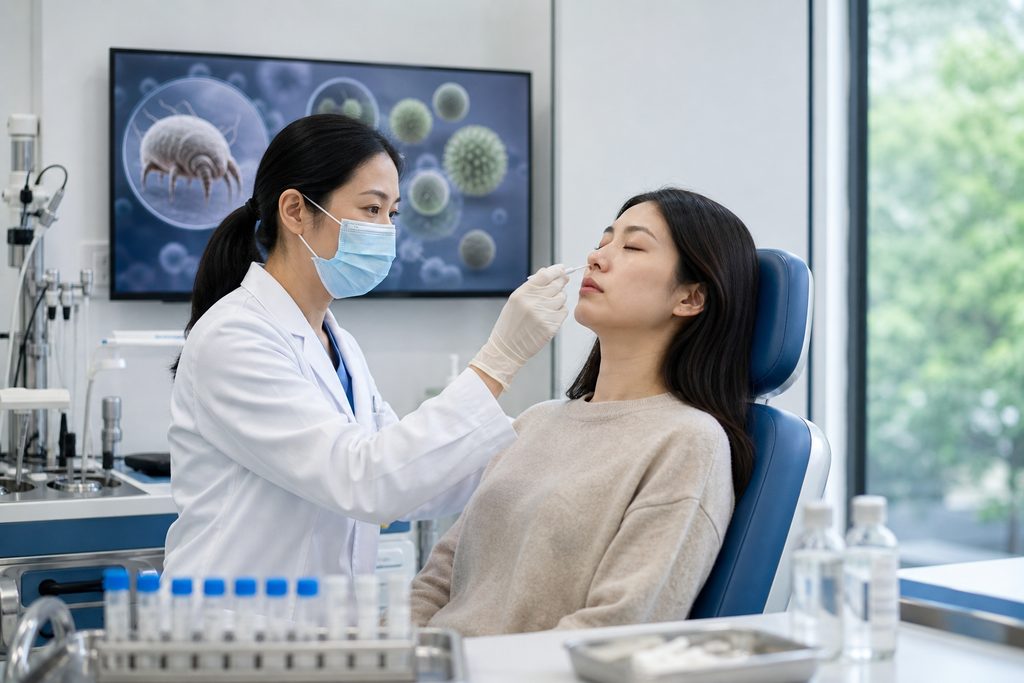
Then comes the test itself. The most common method is a skin prick test, which takes about 30 to 45 minutes total. A nurse or technician places small drops of suspected allergens on your forearm or back, then lightly pricks the skin through each drop with a sterile lancet. It’s not a needle injection — most people describe it as a quick scratch or a mild sting. You wait 15 to 20 minutes, and the doctor measures any raised, red bumps (wheals) that form. A wheal larger than 3 millimeters typically indicates a reaction.
After the test, you receive a written report. This lists each allergen tested and your reaction level, usually on a scale of 0 to 4+. The doctor interprets the results in the context of your symptoms — a positive skin reaction without matching symptoms doesn’t always mean a clinical allergy. You’ll leave with a diagnosis, treatment recommendations, and often a prescription or a management plan.
For patients who cannot stop antihistamines, have severe eczema, or need a broader panel, a blood test (specific IgE testing) is the alternative. A nurse draws a blood sample, sends it to the lab, and results come back in 2 to 5 days. Blood testing is more expensive but avoids the medication restriction issue.
What Does an Allergy Skin Test Actually Feel Like?
If you’re nervous about the procedure, you’re not alone. Many patients expect needles and are relieved to discover the reality is far gentler.
The skin prick test uses tiny lancets that barely penetrate the skin’s surface — typically less than 1 millimeter deep. The sensation lasts about one second per prick. Most patients describe it as similar to a fingernail scratch or the snap of a rubber band. There is no bleeding in most cases. If you’re testing 20 or 30 allergens, the whole application process takes under five minutes.
What surprises people more is the itching. If you’re allergic to something, the test site will start to itch within 10 to 15 minutes. That’s actually a good sign — it means the test is working and identifying real triggers. The itching fades within an hour, and the doctor can apply a topical antihistamine cream if it’s uncomfortable.
For children, the experience is usually easier than a blood draw. The pricks are so shallow that most kids tolerate the test well, especially with a calm parent and a technician who works quickly.
One thing to know: you should not scratch the test sites, even though they itch. Scratching can distort the results and make the wheals look larger than they actually are. The nurse will remind you of this several times during the waiting period.
How Is Allergy Testing Done in Shanghai?
Shanghai has the deepest concentration of allergy testing options in China. The approach varies by hospital type.
At public hospitals like Huashan Hospital’s dermatology department — one of the most respected in the country — you’ll go through the standard outpatient flow. Arrive early, register at the international department window, pay a consultation fee, and wait for your number to be called. The dermatology or allergy clinic will perform skin prick testing on the same day in most cases, assuming you’ve stopped antihistamines beforehand. Expect the entire visit to take 2 to 4 hours, including registration, waiting, consultation, testing, and result reading.
Private international clinics in Shanghai — including United Family, Jiahui, and Parkway — offer a more streamlined experience. You book an appointment online or by phone, arrive at a scheduled time, and rarely wait more than 15 minutes. The consultation, testing, and interpretation happen in one visit, often with the same physician handling all three steps. The cost is higher, but the efficiency and English-language support are worth it for many expats.
Some Shanghai hospitals also offer patch testing for contact allergies — reactions to metals, fragrances, or cosmetics. This test works differently: allergen patches are taped to your back for 48 hours, and you return for readings at 48 and 72 hours. It’s slower but essential if you suspect a contact dermatitis trigger.
Best Hospital for Allergy Test Beijing: Where to Go
Beijing offers equally strong options, with some of China’s most established allergy programs.
Peking Union Medical College Hospital (PUMCH) operates one of the country’s leading allergy departments. Its international medical services department accepts foreign patients and provides English-speaking coordination. Expect to book several days in advance, especially during spring and autumn pollen seasons when allergy appointments fill up quickly. Skin prick testing is routinely performed, and the department also offers comprehensive blood panels for food and environmental allergens.
Beijing United Family Hospital is the most common choice for expats who prioritize convenience and language support. The allergy service there includes pediatric testing, which matters if you’re bringing children. Appointments are usually available within a few days, and the clinic handles insurance directly with many international providers.
For a public hospital experience at a lower cost, Beijing Friendship Hospital‘s dermatology department performs skin testing for common inhalant and food allergens. The international department can arrange a bilingual escort, though the actual testing area may have limited English signage.
One practical note: if you’re deciding between Shanghai and Beijing for testing, don’t overthink it. Both cities have excellent options. Choose based on where you live or where you’re already planning to travel. The testing methodology is standardized across China’s top hospitals, and the results are equally reliable.
A Realistic Timeline
Here’s what a typical allergy testing journey looks like in China, from first inquiry to final results.
| Stage | What Happens | Typical Duration |
|---|---|---|
| Day 1 | You contact a hospital or clinic, describe symptoms, book consultation | Same day; appointment scheduled 1–7 days out |
| Days 2–8 | Stop taking antihistamines (if skin testing planned) | 3–7 days before test |
| Consultation day | Doctor reviews history, confirms test type, performs skin prick test | 2–4 hours total at public hospital; 1–1.5 hours at private clinic |
| Same day (skin test) | Results read and interpreted; written report provided | 15–20 minutes after application |
| Days 2–5 (blood test) | Lab processes specific IgE panel | 2–5 working days |
| Follow-up | Optional video consultation to discuss treatment plan | 5–7 days after results |
The step people forget is the antihistamine washout period. If you’re taking cetirizine, loratadine, or any other antihistamine daily, you cannot simply show up and get tested. The medication suppresses your skin’s reaction and will produce false negatives. Plan for this — it’s the most common reason tests need to be rescheduled.
What Can Go Wrong — and What Happens Then
Allergy testing is generally safe, but it’s not foolproof. Knowing the failure modes helps you plan.
False negatives happen more often than people expect. If you didn’t stop antihistamines long enough, or if you’re taking certain antidepressants or stomach acid medications that suppress histamine response, your skin may not react even to real allergens. The fix is straightforward: your doctor will order a blood test instead, or reschedule the skin test after a longer medication washout.
False positives are the opposite problem. Your skin shows a reaction, but you don’t actually experience symptoms from that allergen in daily life. This is common with food panels — studies suggest that up to 50–60% of positive food skin tests do not correspond to clinical food allergy. A good doctor will never diagnose based on the test alone. They’ll cross-reference your symptom history. If the picture is unclear, an oral food challenge under medical supervision is the definitive test, though it’s typically only done for foods, not environmental allergens.
Rarely, a skin test triggers a systemic reaction — widespread hives, throat tightness, or dizziness. This occurs in fewer than 0.02% of skin prick tests. Testing should always be done in a facility with emergency equipment and trained staff. Every hospital and clinic mentioned in this article meets that standard.
Language gaps can also derail the process. At a public hospital’s standard outpatient department, the registration staff, nurses, and even some doctors may not speak English. You might get the right test but leave without understanding your results. This is where a bilingual medical companion changes the experience — someone who handles registration, translates the doctor’s questions, and ensures you actually understand the report you’re handed.
Is Allergy Testing in China Reliable?
This question comes up constantly, and it deserves a direct answer.
Yes — when done at a legitimate hospital or accredited clinic, allergy testing in China is as reliable as testing anywhere else. The allergen extracts used in Chinese hospitals are typically imported from the same manufacturers that supply European and American clinics — companies like ALK-Abelló and Stallergenes. The testing protocols follow international standards. The doctors reading the results are trained dermatologists or allergists who perform these tests daily.
The reliability concern usually stems from two sources. First, unregulated “allergy testing” offered at some beauty salons, wellness centers, or via mail-order kits. These are not medical tests. They often use unvalidated methods like hair analysis or IgG food panels, which have no scientific basis for diagnosing allergies. Avoid them entirely. Second, the experience at a crowded public hospital outpatient department can feel chaotic, which makes some patients doubt the quality of the care. The care is fine — the navigation is the problem.
If you want maximum confidence, choose a hospital from the Fudan-ranked list of top Chinese medical institutions. Our database of 340+ top-ranked hospitals includes the dermatology and allergy departments with the strongest reputations across 37 cities. These are the same hospitals that handle China’s most complex allergy cases daily.
Book Allergy Panel Test China Expat: Practical Considerations
If you’re an expat planning to book an allergy panel test in China, several practical issues shape the experience.
Records. Bring any previous allergy test results, even from years ago. A history of past reactions helps the doctor select the right panel. If you’ve had severe reactions — anaphylaxis, emergency room visits — bring documentation of those events. It affects which testing method is safest for you.
Visa. If you’re traveling to China specifically for medical evaluation, you’ll need an S2 visa with a notation for medical treatment purposes. This is a short-stay visa category used for private affairs and medical visits. Your hospital or a medical coordination service can provide the supporting documents, including an appointment confirmation and treatment plan. Processing typically takes 1 to 4 weeks depending on your home country’s Chinese embassy or consulate. Apply after you’ve confirmed your appointment, not before.
Payment. Public hospital international departments require upfront payment — cash, Chinese debit card, or international credit card in most cases. They do not bill international insurance directly. You pay, then submit receipts for reimbursement. Private international clinics like United Family and Jiahui often have direct billing agreements with major insurers including Cigna, Aetna, and Allianz. Confirm with your insurer before booking.
Language. Even at international departments, the registration desk and testing room may have limited English. Having someone who speaks both languages removes the friction. This is precisely what our bilingual medical companion service provides — from $300 per day for a full day of registration, translation, and navigation support.
Follow-up at home. If you return to your home country after testing in China, make sure you leave with a clear written report in English. Most international departments provide this automatically. The report should list each allergen, your reaction grade, and the doctor’s interpretation. Your home physician can use this to continue treatment without repeating the tests.
What Does an Allergy Panel Cost in China? A Straight Answer
The allergy test price China varies significantly by hospital type, city, and test method. Here’s a realistic breakdown.
| Test Type | Public Hospital (International Dept) | Private International Clinic |
|---|---|---|
| Skin prick test (20–30 allergens) | $30–$80 | $100–$250 |
| Specific IgE blood panel (20–30 allergens) | $80–$150 | $200–$400 |
| Comprehensive panel (50+ allergens, blood) | $150–$250 | $350–$600 |
| Initial consultation fee | $20–$80 | $100–$250 |
| Patch testing (contact dermatitis) | $50–$100 | $150–$300 |
These are out-of-pocket prices. They vary by hospital and case complexity, and the consultation fee is usually separate from the test fee. For comparison, a standard skin prick panel in the US typically runs $300 to $800, and comprehensive blood panels can exceed $1,000. The savings are real, but they’re not the only reason to test in China — the speed of access matters just as much. In Shanghai or Beijing, you can often get tested within a week of first contact. In many Western countries, the wait for an allergist appointment alone stretches to several months.
If you’re in China and want to understand where to go, our Shanghai hospital guide and Beijing hospital guide provide detailed breakdowns of allergy departments, pricing, and English-language support at each institution.
Frequently Asked Questions
No. Unlike many Western healthcare systems, Chinese hospitals do not require a referral from a primary care physician. You can book directly with a dermatology or allergy department. The initial consultation serves as the screening step, and the doctor will order testing if it’s clinically appropriate.
How long do I need to stop antihistamines before skin testing?
Typically 3 to 7 days, depending on the specific medication. First-generation antihistamines like diphenhydramine clear faster than second-generation ones like cetirizine or fexofenadine. Your doctor will give you an exact timeline during the consultation. Do
For more medical information and treatment options in China, visit chinamedservices.com (China Medical Services).
