Wuhan Union Hospital Oncology for International Patients: Costs, Booking, and What to Expect
Wuhan Union Hospital Oncology for International Patients: A Practical Guide to Costs, Booking, and Realistic Expectations
If you’re researching cancer care in China, you’ve likely come across Wuhan Union Hospital. The name carries weight. It’s one of the oldest Western-medicine hospitals in the country, founded in 1866, and its oncology department consistently ranks among China’s top 10 in the Fudan University specialist reputation rankings. But for an international patient, the question isn’t just whether the hospital is good. It’s whether you can actually get in, what the oncology treatment cost at Wuhan Union Hospital will be, and whether the logistical hurdles are worth it. We’ll walk through all of that — the real numbers, the real process, and the places where things get complicated.
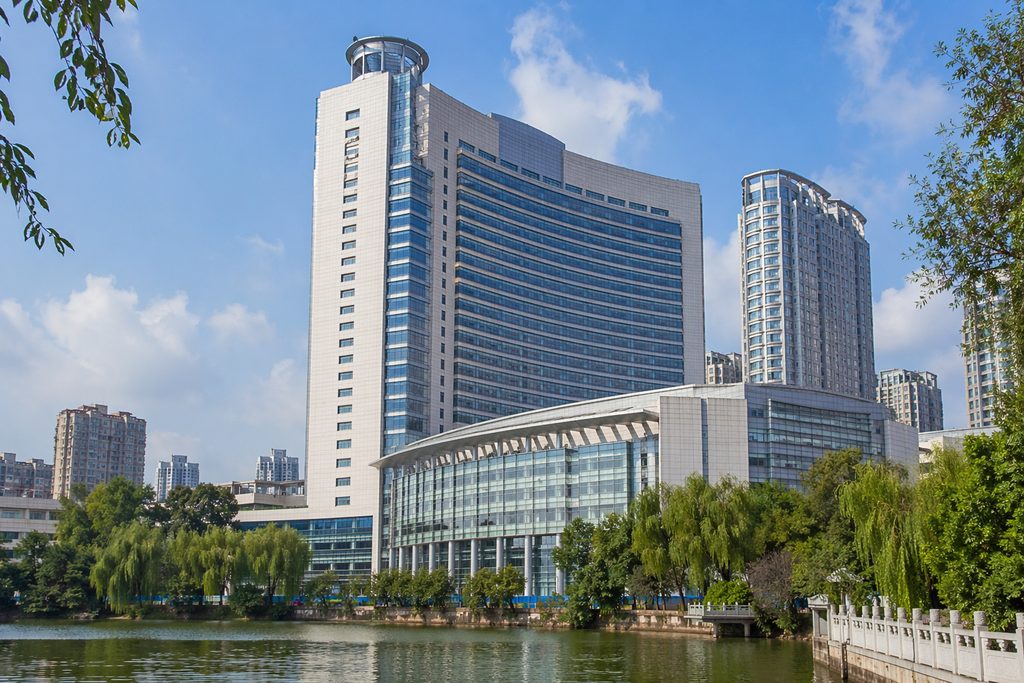
Let’s start with the part that confuses most people. Wuhan Union Hospital is not one hospital in the way Western patients think of it. It’s a sprawling public institution with a main campus in Hankou, a newer cancer center, and a daily outpatient volume that exceeds 10,000 visits. That scale is both a strength and a challenge. You’re not walking into a boutique clinic. You’re entering one of China’s highest-volume cancer treatment ecosystems.
Our team at China Medical Services has spent years helping foreign patients navigate exactly this kind of system. We don’t treat cancer. We make it possible for you to access the doctors who do.
How This Actually Works, Step by Step
You can’t just email the hospital and book a surgery date. That’s not how Chinese public hospitals operate. The oncology treatment cost at Wuhan Union Hospital is only one variable — the booking sequence matters just as much. Here’s the actual sequence.
First, you send us your existing medical records: pathology reports, imaging (CT, MRI, PET-CT), blood work, and a summary of any prior treatment. We translate these into Chinese and submit them to the hospital’s international department or the relevant oncology subspecialty. A specialist reviews your file. This written review typically takes 3 to 7 working days and costs $300–500 depending on the seniority of the reviewing physician.
What comes back is a written opinion: whether your case is appropriate for treatment at Wuhan Union, what the recommended protocol would likely be, and what additional tests you’d need upon arrival. This is not a prescription. It’s an assessment that tells you whether the trip is worth making.
If the opinion is positive, the next step is a video consultation with the treating team. That costs $500–800 for a top specialist and gives you a direct conversation about treatment goals, expected duration, and side-effect management. Only after this do you commit to travel.
Then comes the in-person part. You fly to Wuhan, we arrange your S2 visa documentation, airport pickup, and a bilingual medical companion. Your first hospital visit involves fresh imaging and blood work — Chinese hospitals almost always repeat scans, even if you bring recent ones. The face-to-face consultation happens after those results are in. Admission for chemotherapy, radiation, or surgery is then scheduled based on bed availability and clinical urgency.
What the Oncology Treatment Cost at Wuhan Union Hospital Actually Looks Like
Let’s talk numbers. Because that’s what you searched for.
Wuhan Union Hospital is a public institution, which means its base pricing is regulated. But international patients don’t access the standard public channel. You’ll be treated through the international department or the VIP/special-needs pathway. That increases costs by roughly 1.5 to 2 times the domestic rate. Still, compared to Western pricing, the gap is enormous.
| Treatment | Wuhan Union Hospital (International Patient Estimate) | United States (Approximate) |
|---|---|---|
| Chemotherapy (per cycle, standard regimen) | $1,500 – $4,000 | $10,000 – $30,000 |
| Radiation therapy (full course, IMRT) | $8,000 – $15,000 | $50,000 – $100,000 |
| Major cancer surgery (e.g., gastrectomy, lung resection) | $12,000 – $25,000 | $80,000 – $200,000 |
| Immunotherapy (per dose, depending on drug) | $2,000 – $6,000 | $15,000 – $40,000 |
| PET-CT scan | $500 – $900 | $3,000 – $7,000 |
These are ranges. The final oncology treatment cost at Wuhan Union Hospital depends on your specific diagnosis, drug choices, and whether you need combination therapy. But the pattern holds: you’re typically paying one-fifth to one-tenth of US prices for comparable protocols.
One thing that surprises people: Chinese public hospitals require prepayment. You deposit funds upfront, and treatment is drawn down against that balance. Insurance reimbursement happens afterward, through your own provider. Wuhan Union’s international department can provide itemized invoices and medical documentation for claims, but they won’t bill your insurer directly.
A Realistic Timeline
If you’re asking “how to book cancer treatment at Wuhan Union Hospital,” you need to know the calendar, not just the process. Here’s what a realistic sequence looks like — and where the waiting actually happens.
| Stage | What Happens | Realistic Duration |
|---|---|---|
| Day 1–3 | You send medical records; we translate and prepare the file | 2–3 days |
| Week 1 | Written second opinion from Wuhan Union oncology specialist | 3–7 working days |
| Week 2 | Video consultation with treating team; treatment plan discussion | 1–2 days to schedule |
| Week 2–4 | S2 visa application with hospital invitation letter | 5–15 working days depending on embassy |
| Week 4–5 | Arrival in Wuhan; repeat imaging and blood work at hospital | 2–4 days |
| Week 5–6 | Face-to-face consultation; treatment begins | 1–2 weeks after arrival |
The part people forget is document translation. If your records are in English, French, or Arabic, they need professional medical translation into Chinese before any specialist will review them. That’s not a formality. A poorly translated pathology report can delay everything by weeks.
And visa processing varies wildly by country. Some embassies issue S2 visas in five days. Others take three weeks. We tell every patient to budget a full month from first contact to sitting in a Wuhan Union consultation room.
What Can Go Wrong — and What Happens Then
We’d rather you hear this from us than discover it in a hospital corridor.
The most common failure point: the written opinion comes back negative. Not every case is appropriate for treatment in China. If your cancer is at a stage where the hospital’s protocols offer no meaningful advantage over what’s available at home, the specialist will say so. That’s not a rejection of you. It’s an honest assessment. If this happens, you’ve spent $300–500 on a written opinion and avoided a much more expensive mistake.
Another risk: bed availability. Wuhan Union’s oncology wards run at near-full occupancy. Even with an accepted treatment plan, admission for surgery might wait one to three weeks. For chemotherapy, it’s usually faster. We can’t promise a specific admission date, and no legitimate service can. What we do promise: if we can’t secure the appointment we agreed to coordinate, our hospital appointment coordination fee is fully refunded.
Language is the third failure mode. The international department staff speak English. The ward nurses, pharmacy staff, and radiology technicians often don’t. A bilingual medical companion isn’t a luxury here — it’s the difference between knowing what’s happening and guessing. Our companions handle registration, queueing, payment, and translation throughout each hospital visit.
And sometimes, treatment doesn’t work. No hospital, including Wuhan Union, can guarantee outcomes. We never imply otherwise. If a protocol fails, the treating team will reassess and adjust. That’s standard oncology practice anywhere in the world.
Is Wuhan Union Hospital Good for Oncology? What the Rankings Actually Mean
The short answer is yes — with context. Wuhan Union Hospital’s oncology department appears in the Fudan University China Hospital Specialist Reputation Rankings among the top 10 nationally. That ranking is based on peer assessment from Chinese specialists and clinical research output. It’s not a marketing list. It’s the closest thing China has to an authoritative hospital quality benchmark.
But “good for oncology” means something specific. Wuhan Union excels in gastrointestinal cancers, lung cancer, breast cancer, and hematological malignancies. Its radiotherapy equipment includes modern linear accelerators capable of IMRT and VMAT. The hospital performs a high volume of complex tumor resections, and surgical volume correlates with outcomes in cancer care.
What it isn’t: a Western-style private hospital. The wards are functional, not luxurious. You’ll share space with many other patients. The pace is fast, and doctors have limited time per consultation. If you expect the amenities of a private facility in Singapore or Germany, you’ll be disappointed. If you want access to high-volume specialists and modern equipment at a fraction of Western prices, this is where Wuhan Union fits.
For a broader view of how Wuhan Union compares to other top Chinese oncology centers, see our oncology specialist rankings across China’s top 10 hospitals. If you’re weighing public versus private options, our guide to JCI-accredited private hospitals in China explains the trade-offs clearly.
Practical Considerations: Records, Visa, Payment, and Follow-Up
Let’s get concrete about the things that actually determine whether this works.
Medical records. You need complete documentation: pathology slides (or digital scans), imaging files (DICOM format preferred), treatment history including drug names and dosages, and a current clinical summary from your oncologist. Incomplete records are the single biggest cause of delayed written opinions.
Visa. Medical treatment in China falls under the S2 visa category, not the M visa. M is for commercial and trade activities. We prepare the hospital invitation letter and supporting documents, but approval is always at the discretion of the Chinese embassy or consulate in your country. Family members accompanying you also apply for S2 visas. Stays longer than 180 days require an S1 visa.
Payment. Wuhan Union Hospital accepts international credit cards at the international department, but large treatment deposits are easier via bank transfer. Some patients use Wise or similar services for better exchange rates. You’ll need to demonstrate ability to pay before admission — this is standard for all international patients at Chinese public hospitals.
Insurance. Most international health insurance plans reimburse treatment in China, but you pay first and claim later. Check your policy’s position on treatment at non-network hospitals. Some insurers require pre-authorization. We can provide the documentation your insurer needs, but we don’t bill insurers directly.
Follow-up. If you return home after treatment, your local oncologist needs a complete discharge summary, treatment protocol, and imaging results. Wuhan Union provides these in Chinese; we arrange certified English translation. Ongoing follow-up can happen via video consultation, which is cheaper than flying back for every check.
Wuhan Union Hospital Medical Tourism Package: What’s Realistic
You’ll see the phrase “medical tourism package” in searches about Wuhan Union, but let’s be honest about what that means in practice. The hospital itself doesn’t sell packages. It’s a public institution, not a travel agency. What exists is a coordination service — and that’s what we provide.
A realistic package covers: document translation, written second opinion, video consultation, visa support documentation, airport pickup, hotel booking near the hospital, bilingual companion for all hospital visits, and coordination of admission. The hospital’s medical fees are separate and paid directly to the hospital. Our coordination fees range from $300 for basic appointment coordination to $5,000–8,000 for full end-to-end VIP coordination for complex cases.
The honest version of a “Wuhan Union Hospital medical tourism package” is this: you’re not buying a hotel-and-hospital bundle. You’re buying case management. Someone who translates your records correctly, gets them in front of the right specialist, and walks you through every step in a language you understand. That’s what makes the difference between a smooth process and a stressful one.
Frequently Asked Questions
Expect to pay roughly 1.5 to 2 times the domestic public rate through the international department. In practice, that means chemotherapy cycles from $1,500–4,000, major cancer surgery from $12,000–25,000, and radiation courses from $8,000–15,000. Final costs vary by diagnosis, drug selection, and treatment complexity.
You can’t book directly with the hospital as an overseas patient. The process starts with submitting translated medical records for a written second opinion, followed by a video consultation. Only then can admission be coordinated. This typically takes 4 to 6 weeks from first contact to sitting in a consultation room.
Yes. Its oncology department ranks among China’s top 10 in the Fudan University specialist reputation rankings. It’s particularly strong in gastrointestinal, lung, and breast cancers. But it’s a high-volume public hospital, not a private facility — expect excellent clinical expertise with basic amenities.
You need an S2 visa for short-term medical treatment (under 180 days). Family members accompanying you also apply for S2 visas. The M visa is for commercial activities and has nothing to do with medical treatment. Always confirm current requirements with the Chinese embassy in your country.
You pay the hospital directly, then claim reimbursement from your insurer. The hospital provides itemized invoices and medical documentation for claims. Some insurers require pre-authorization before treatment abroad — check your policy before committing to travel.
Your Next Step
Wuhan Union Hospital oncology for international patients is a realistic option — if you approach it with clear expectations and proper coordination. The oncology treatment cost at Wuhan Union Hospital is a fraction of Western pricing, and the clinical expertise is genuinely top-tier. But the process has real friction: translation, visa, prepayment, and a hospital system that doesn’t cater to foreigners by default.
That’s where we come in. China Medical Services exists to bridge that gap. We don’t practice medicine, and we don’t promise outcomes. What we do is handle the logistics — records translation, specialist access, appointment coordination, bilingual companionship — so you can focus on treatment. If you’re considering Wuhan Union for cancer care, start with a conversation. It’s free, and it’ll tell you whether this path makes sense for your specific case.
Talk to us. We’ll tell you honestly what’s possible — and what isn’t. Get a free consultation with our patient coordination team.
For more medical information and treatment options in China, visit chinamedservices.com (China Medical Services).
