Should I Remove My Skin Cyst? Cost, Recovery, and Hospital Options in China
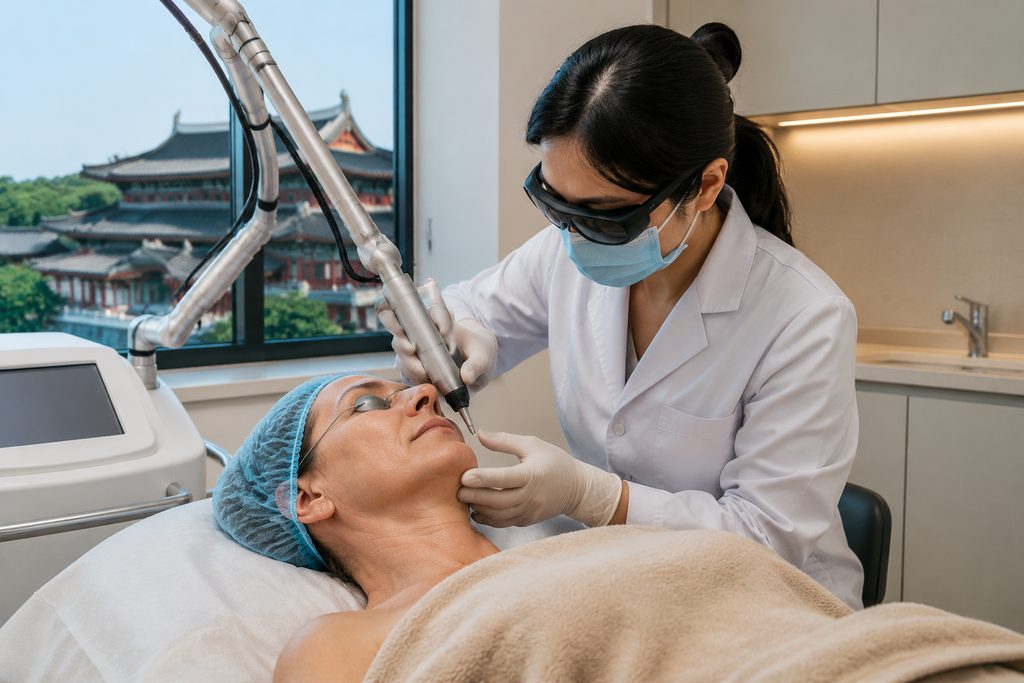
Have you been living with a lump under your skin, poking at it, wondering if it is time to get it taken care of? You are not alone. Epidermoid and sebaceous cysts are among the most common benign skin growths dermatologists see, and the decision to remove one is rarely purely medical — it is often a mix of comfort, appearance, and cost. For many patients in the United States, the United Kingdom, and Australia, the out-of-pocket price of a simple excision can be surprisingly high. That reality is pushing more people to ask a different question: what does cyst removal surgery cost China, and is traveling for it actually sensible?
The short answer is that a straightforward cyst excision at a top-tier Chinese public hospital typically runs between $150 and $600, depending on size, location, and whether you go through the standard outpatient route or an international VIP department. The same procedure in the US often lands between $500 and $2,500 before insurance, and in the UK private sector it can exceed £400 to £1,200. The savings are real. But cost is only one part of the equation — recovery, flight timing, and hospital selection matter just as much.
Key Takeaways
- A simple cyst excision in China costs roughly $150–$600 at public hospitals, compared to $500–$2,500 in the US — a 70–90% reduction in many cases.
- Most patients can fly 48–72 hours after an uncomplicated cyst removal, though wound care and suture removal timing should guide your return date.
- Healing takes 2–4 weeks for the surface wound, with full scar maturation continuing for 6–12 months.
- Language barriers and hospital navigation are the biggest practical hurdles — not clinical quality. Top Chinese dermatology departments match international standards.
The Problem: A Minor Procedure With a Major Price Tag
Skin cysts rarely threaten your health. That is precisely why so many people postpone removal for years. The lump grows slowly, occasionally flares up, and then settles back down. But the moment it becomes painful, inflamed, or simply embarrassing, the calculus shifts.
Here is the financial reality. In the United States, a cyst removal billed as a surgical excision (CPT code 11400–11406 for benign lesions) can generate a facility fee, a pathology fee, and a surgeon’s fee. Even with insurance, a high-deductible plan can leave you paying the full amount. A 2023 analysis of commercial claims data found that the median allowed amount for excision of a benign skin lesion was approximately $640, with the 90th percentile exceeding $1,900. Add an initial consultation at $150–$300, and the total climbs quickly.
In the United Kingdom, NHS removal is free but subject to clinical prioritization — cosmetic or asymptomatic cysts often wait months, and some Clinical Commissioning Groups restrict removal unless the cyst is recurrent, infected, or functionally impairing. Private dermatology clinics in London quote £350–£800 for a straightforward excision, with histology often billed separately.
So the patient faces a strange situation: a 20-minute procedure that costs as much as a major car repair. That mismatch is what drives international patients to investigate alternatives. And China, with its enormous clinical volume and structural cost advantages, has become a legitimate destination for exactly this kind of minor surgical care.
Why China Delivers Results for Cyst Removal
Clinical Volume Creates Routine Expertise
Chinese dermatology departments operate at a scale that is difficult to comprehend from a Western perspective. A single tertiary hospital dermatology clinic in Shanghai or Beijing may see 800 to 1,500 outpatients per day. Cyst excisions, mole removals, and minor skin surgeries are performed dozens of times daily in a single department. The surgeon removing your cyst has likely performed the identical procedure hundreds or thousands of times.
Compare that to a typical Western private dermatology practice, where a practitioner might perform a handful of excisions per week. Volume does not guarantee skill, but for a routine procedure like sebaceous cyst excision, repetition breeds efficiency. Incisions are smaller, operative time is shorter, and complication rates trend lower when a surgeon’s hands know the procedure by memory.
But volume alone is not the point. The point is that Chinese public hospitals concentrate the most experienced specialists in a handful of institutions. The Fudan University hospital rankings — the most authoritative hospital evaluation system in China — identify the top dermatology departments with remarkable consistency year after year. These are not obscure clinics. They are massive academic medical centers with research output, international collaborations, and dermatopathology labs that process tens of thousands of specimens annually.
Cost Structure: Why the Same Procedure Costs Less
The obvious question: does lower cost mean lower quality? For cyst removal, the answer is no — and the reasons are structural, not magical.
First, Chinese public hospital pricing is regulated. The government sets maximum fees for surgical procedures, and hospitals cannot arbitrarily inflate them. A minor excision falls under a fixed pricing category that has remained remarkably stable for years. Second, labor costs are lower across the board — from surgeons to nurses to administrative staff. Third, the pathology fee for a routine cyst specimen is a fraction of Western lab charges. Fourth, there is no insurance billing overhead. You pay the hospital directly, in advance, and the price you are quoted is the price you pay.
To be clear: this applies to the standard public hospital route. If you choose an international VIP department or a private international hospital like United Family or Jiahui, prices rise to roughly $500–$1,500 for the same procedure. That is still often below US private rates, but the gap narrows. The biggest savings come from the public route — and that route requires navigating a Chinese-language system, which is where a bilingual medical companion changes the experience entirely.
Dermatology Strength in Beijing and Shanghai
If you are searching for the best dermatology hospital for cyst removal Beijing, the names that consistently appear in the Fudan specialty rankings include Peking University First Hospital, Peking Union Medical College Hospital, and the Air Force Medical Center. These institutions run dermatology departments with dedicated dermatologic surgery units. They handle everything from simple cyst excisions to complex Mohs-style tumor resections.
In Shanghai, Huashan Hospital affiliated with Fudan University is widely regarded as one of the strongest dermatology centers in Asia. Its dermatology department sees an extraordinary outpatient volume and maintains a dedicated surgical dermatology service. Ruijin Hospital, also in Shanghai, offers comparable strength. The dermatology specialty rankings on our site break down the top 10 departments by city, with links to individual hospital profiles.
The practical takeaway: you do not need to travel to a second-tier city to save money. The best dermatology departments in China are located in Beijing and Shanghai — cities with direct international flights, English-speaking infrastructure, and well-established medical tourism pathways.
What the Procedure Actually Looks Like: A Step-by-Step Timeline
If you have never had a cyst removed, the process is simpler than you might expect. Here is what happens at a Chinese public hospital, based on the standard outpatient pathway.
Day 1 — Consultation and scheduling. You arrive at the dermatology clinic, register with your passport, and see a dermatologist. The doctor examines the cyst, confirms it is benign (usually by palpation and history; imaging is rarely needed for superficial cysts), and schedules the excision. In many public hospitals, the excision can happen the same day if the surgical room has capacity. In others, you return the next morning.
Day 1 or 2 — The excision itself. The area is numbed with local lidocaine. The surgeon makes an elliptical incision around the cyst, removes the entire sac intact (critical — leaving any sac wall behind increases recurrence risk), and closes the wound with sutures. A typical sebaceous cyst excision takes 15 to 30 minutes. The specimen goes to pathology for confirmation.
Days 3–7 — Wound care. You keep the area dry for 48 hours, then can wash gently. No strenuous exercise that stretches the wound. If the cyst was on your back or shoulder, avoid heavy lifting for a week.
Days 7–14 — Suture removal. Sutures on the face come out at 5–7 days; on the trunk or extremities at 10–14 days. If you have already flown home, your local GP or nurse can remove them — this is a trivial procedure that any clinic can handle.
Weeks 2–4 — Surface healing. The wound is closed and you can resume normal activity. A small scar remains, which fades over months. Full scar maturation takes 6–12 months, and the final appearance depends on your skin type, the cyst location, and how your body heals.
How long does cyst removal take to heal? For practical purposes, the wound is closed and waterproof within 2 weeks, and the scar is cosmetically stable enough to judge at around 3 months. If you are planning travel around the procedure, budget 3–5 days in China for a straightforward case: consultation, excision, and one follow-up wound check before departure.
Sebaceous Cyst Excision Price Shanghai: What You Actually Pay
Let us get specific about sebaceous cyst excision price Shanghai, because Shanghai is where many international patients land first. The city has direct flights from most major Western hubs, a large expatriate community, and several hospitals with dedicated international departments.
| Route | Typical Cost (USD) | What Is Included | English Support |
|---|---|---|---|
| Public hospital, standard outpatient | $150–$400 | Consultation, excision, basic pathology | Limited — Chinese language required |
| Public hospital, international/VIP department | $400–$800 | Consultation, excision, pathology, English-speaking staff | Yes — dedicated international team |
| Private international hospital (United Family, Jiahui, Parkway) | $600–$1,500 | Full Western-style service, direct insurance billing | Yes — native English speakers |
These are reference ranges, not quotes. The final price depends on cyst size, depth, location, whether it is infected at the time of surgery (infected cysts are sometimes drained first and excised later), and which hospital you choose. A 1 cm cyst on the cheek costs less than a 4 cm cyst on the back that requires layered closure.
Compare this to US pricing. A 2022 study in the Journal of the American Academy of Dermatology examining commercial claims found the mean total cost for benign skin lesion excision was $1,107 when facility and pathology fees were included. In the UK, private clinics in London list sebaceous cyst removal from £450 to £950, with histology adding £80–£150. Even at the high end of the Shanghai private hospital range, you are often paying less than the US average.
The structural reason is worth repeating: Chinese public hospital prices are government-regulated, and the entire system operates with lower administrative overhead. You are not paying for a billing department that argues with insurance companies. You pay the hospital directly, and the transaction is done.
Flying After Surgery: Can I Fly After Cyst Removal Surgery?
The question of can I fly after cyst removal surgery comes up constantly, and the answer is reassuring. For an uncomplicated cyst excision under local anesthesia, there is no medical reason to avoid flying 48 to 72 hours after the procedure. The wound is closed, the risk of bleeding has passed, and cabin pressure changes do not affect a superficial skin closure.
That said, use common sense. If the cyst was large, if the wound is on a weight-bearing area, or if your surgeon placed a drain (rare for simple cysts), wait until the drain is removed and the wound is stable. If you develop redness, increasing pain, or fever, do not board a plane — seek medical attention first. And if you fly home before suture removal, which is common, arrange for a local clinic to remove the sutures at the appropriate time. Any nurse can do this in five minutes.
For long-haul flights, get up and walk every 2–3 hours. A minor skin procedure does not meaningfully increase your deep vein thrombosis risk, but prolonged immobility does, and the two are easily confused. The real constraint is usually practical, not medical: you want at least one post-operative wound check before you leave China, and that typically happens 2–3 days after surgery.
How to Book Cyst Removal Surgery Medical Tourism China: A Practical Guide
If you are seriously considering book cyst removal surgery medical tourism China, the process is different from booking a hotel or a flight. You cannot simply email a hospital and reserve a surgery slot. Chinese public hospitals operate on a face-to-face consultation model: you must be seen by a doctor before any procedure is scheduled. That is the universal rule for standard outpatient care.
Here is the realistic pathway for an international patient:
Step 1 — Choose your hospital tier. Decide between a public hospital international department, a private international hospital, or the standard public route with a bilingual companion. Each has trade-offs in cost, convenience, and English support. Our top hospital database covers 340+ ranked institutions across 37 cities, with dermatology departments flagged by specialty ranking.
Step 2 — Prepare your documents. You need a valid passport, a visa (see below), and ideally a brief referral letter or clinical photos of the cyst. Not all hospitals require a referral, but having one speeds the consultation. If you have had prior imaging or a biopsy, bring those reports.
Step 3 — Arrange the consultation. This is where a coordination service adds genuine value. The hospital’s international department can often schedule a consultation in advance by email, but the standard public route generally cannot. You show up, register, and wait. A bilingual medical companion handles the registration, the queue, the payment, and the translation — turning a potentially overwhelming experience into a manageable one.
Step 4 — Have the procedure. Once the doctor confirms the cyst is suitable for excision, the surgery is typically scheduled within 1–3 days. You pay the hospital directly. Most public hospitals accept cash, UnionPay, and major international credit cards at their international payment counters, though smaller departments may be cash-only. Confirm payment methods before you travel.
Step 5 — Follow up and fly home. One wound check 2–3 days after surgery, then you are cleared to travel. Your local doctor handles suture removal if needed.
For the visa: medical treatment in China falls under the S2 visa category, which covers private affairs including medical visits. Your family members traveling with you also apply for an S2 visa. You will need supporting documents from the hospital — typically an invitation letter or a treatment confirmation — to include with your application. Requirements vary by Chinese embassy and consulate, so check with the specific mission in your country before applying. Do not apply for an M visa; that is for commercial and trade activities and is not appropriate for medical travel.
Practical tip: If you are combining cyst removal with a broader health checkup, several top hospitals in Beijing and Shanghai offer executive health screening packages that can be completed in a single day. It is an efficient way to use your travel time. See our Beijing hospital guide and Shanghai hospital guide for department-level details.
Who Should Not Travel for Cyst Removal
Traveling internationally for a minor skin procedure is not for everyone. Be honest with yourself about the following.
If your cyst is actively infected, inflamed, or painful right now, do not book a flight. An infected cyst needs drainage and antibiotics first, and excision is typically delayed until the inflammation settles. Your local doctor can handle the acute phase; you can decide about definitive removal later.
If you have a bleeding disorder or take anticoagulants, cyst excision is still possible but requires coordination with your prescribing doctor. Stopping warfarin or a direct oral anticoagulant for a skin procedure is usually unnecessary, but the surgeon needs to know. This is easier to manage with your established local care team than with a new provider abroad.
If the cyst is on your face and you are extremely concerned about scarring, consider consulting a dermatologic surgeon at home first. Chinese dermatologists are skilled, but scar aesthetics depend on your skin type and healing pattern, and a surgeon who knows your skin from previous procedures may give you a more personalized prediction. That said, for a straightforward facial cyst, the difference in technical skill between a top Chinese dermatology department and a Western one is negligible.
If you have never traveled to China and do not speak the language, the standard public hospital route will be difficult. This is not a quality issue — it is a navigation issue. The international departments and private hospitals solve this with English-speaking staff, but at a higher price point. A bilingual medical companion solves it at the standard public price point. Our
Yes. The hospitals used for international patients are JCI-accredited and follow the same international safety standards as top hospitals in the US and Europe. Surgical teams perform high volumes of procedures — often more than their Western counterparts — which studies show leads to better outcomes. Costs vary by procedure and hospital, but international patients typically save 40-80% compared to US prices — even when factoring in travel and accommodation. A consultation with our team will give you an exact, all-inclusive quote with no hidden fees. Send us your existing medical reports to get started. We handle everything from hospital selection and appointment scheduling to visa assistance and post-operative recovery planning. Your medical records are reviewed by the specialist before you even book a flight.Frequently Asked Questions
For more medical information and treatment options in China, visit chinamedservices.com (China Medical Services).
