Colonoscopy Screening: Is It Time for Yours? Costs and Quality in China
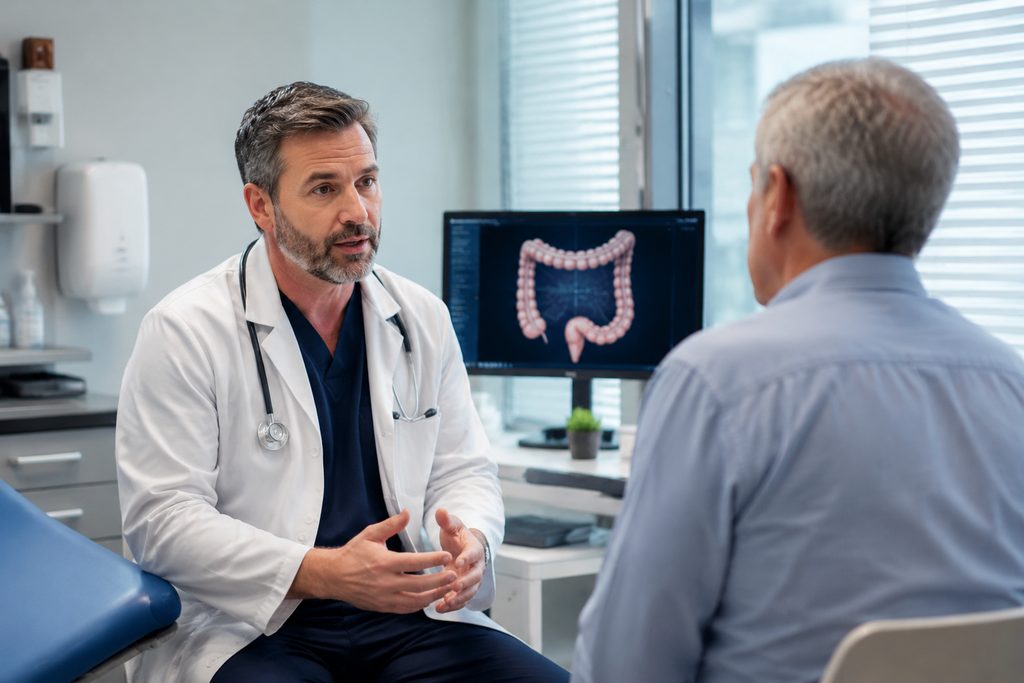
While American patients routinely pay over $3,000 out-of-pocket for a screening colonoscopy, the same procedure at a JCI-accredited hospital in Shanghai costs between $200 and $600 — including anesthesia and pathology. That is a 5-to-15-fold difference for a test that prevents the second deadliest cancer worldwide. And the quality gap? It does not exist in the direction most Western patients assume.
Colorectal cancer kills roughly 52,000 Americans every year, yet it remains one of the most preventable malignancies when caught early. The barrier for many is not fear of the scope. It is the bill. If you have been putting off screening because of cost, or because your home country’s waitlist stretches past the point of usefulness, this article explains what a colonoscopy in China actually involves — and whether it is time for yours.
Key Takeaways
- Colonoscopy cost China ranges from $200 to $600 at JCI-accredited and top-tier public international departments, versus $2,750–$4,800 in the United States.
- China’s top gastroenterology centers perform thousands of endoscopic procedures monthly, and many hold JCI accreditation with English-speaking staff.
- You cannot simply walk into a Chinese public hospital and book a scope from overseas — international departments and private hospitals are the realistic route for foreign patients.
- Screening age and frequency depend on your personal and family history; the procedure itself is identical to what you would receive in the West.
The Problem: Screening Costs and Wait Times Are Pushing People Away
In the United States, a screening colonoscopy without insurance averages $2,750, and prices above $4,000 are common at urban hospitals. Even insured patients often face surprise facility fees, anesthesiology bills, and pathology charges that arrive weeks later. The result is predictable: roughly 30% of Americans aged 50–75 are not up to date with colorectal cancer screening, according to the American Cancer Society.
Canada and the UK have their own version of the problem. Wait times for non-urgent colonoscopy in parts of Canada’s public system stretch to 6 months or more. In the UK, the NHS target of 6 weeks for urgent referrals is routinely missed, with some trusts reporting waits over 12 weeks even for patients with red-flag symptoms. And for a screening test, a 6-month delay is not just inconvenient — it can be the difference between a removable polyp and a stage III diagnosis.
So patients look abroad. That is where the question “how much is a colonoscopy abroad” starts to feel less like a hypothetical and more like a practical plan.
Why China Delivers Results for Endoscopy Patients
Clinical Volume That Western Centers Cannot Match
Chinese gastroenterology departments operate at a scale that is hard to comprehend from a Western perspective. A major endoscopy center in Shanghai or Beijing may perform 150–300 colonoscopies in a single day. Fudan University’s Zhongshan Hospital, one of the country’s most respected GI centers, handles tens of thousands of endoscopic procedures annually. That volume produces operators who have seen everything — flat lesions, difficult anatomy, post-surgical colons, poor prep.
Compare that to a typical American GI practice, where a busy endoscopist might complete 15–20 procedures per day. Volume alone does not guarantee quality, but for a technically demanding procedure like colonoscopy, repetition matters. Adenoma detection rate — the percentage of patients in whom a precancerous polyp is found — is the single best predictor of whether a colonoscopy will actually prevent cancer. Chinese academic centers report adenoma detection rates in line with or above the 25% benchmark recommended by the American Society for Gastrointestinal Endoscopy.
JCI Accreditation and International Standards
If you are wondering “is colonoscopy safe in China,” the answer depends entirely on where you go. The country’s 35,000+ hospitals range from world-class to basic. But the facilities that treat international patients are a different universe. A JCI accredited endoscopy center China offers follows the same patient-safety protocols, equipment standards, and infection-control requirements as any JCI hospital in Singapore or Cleveland. JCI — Joint Commission International — is the same accrediting body used by top hospitals worldwide, and its standards for endoscopy units cover everything from scope reprocessing to sedation monitoring.
You can browse our directory of top-ranked Chinese hospitals to see which facilities carry JCI accreditation and Fudan ranking. The short version: Beijing, Shanghai, and Guangzhou concentrate the most internationally accredited options.
Cost Advantage Without Quality Compromise
The colonoscopy cost China offers is not low because the care is worse. It is low because the underlying economics are different. Chinese physician salaries are a fraction of American ones, hospital construction costs less, and malpractice premiums are far lower. A top gastroenterologist in Shanghai earns in a year what an American GI may bill in a month. That is not a commentary on skill — it is simply labor market reality.
The equipment is the same. Olympus and Fujifilm scopes dominate Chinese endoscopy units, just as they do in the US and Europe. The sedatives are the same — propofol and midazolam. The pathology labs use the same immunohistochemistry panels. What you are not paying for is the administrative overhead, insurance billing complexity, and defensive-medicine culture that inflates American healthcare costs.
When to Screen: Guidelines, Age Thresholds, and Risk Factors
The American Cancer Society now recommends average-risk adults begin colorectal cancer screening at age 45, down from 50. The US Preventive Services Task Force aligns with that guidance. If you have a first-degree relative diagnosed with colorectal cancer or advanced polyps before age 60, screening should start at 40 — or 10 years before the age your relative was diagnosed, whichever comes first.
Inflammatory bowel disease, a personal history of polyps, or genetic syndromes like Lynch syndrome push the timeline even earlier. A colonoscopy is not the only screening option — FIT tests and stool DNA tests exist — but it remains the gold standard because it is both diagnostic and therapeutic. If a polyp is found, it is removed during the same procedure. No other screening method offers that.
If you are 45 or older and have never been screened, the answer to “is it time for yours?” is almost certainly yes. If you are younger but have symptoms — blood in stool, persistent change in bowel habits, unexplained anemia — the question is not whether to screen, but how quickly you can get scoped.
What a Colonoscopy in China Actually Involves for Foreign Patients
The procedure itself is identical to what you would receive at home. You arrive, change into a gown, an IV is placed, propofol is administered, and you wake up 20–30 minutes later with no memory of the scope. Polyps are removed and sent to pathology. Results are typically available within 3–5 days.
What differs is the pathway to get there. Chinese public hospitals do not allow overseas patients to pre-book outpatient procedures through a website. The standard route for a foreigner seeking elective screening is through a hospital’s international medical department or a private international hospital. These units have English-speaking coordinators, same-week or next-week availability, and pricing that is transparent before you arrive.
Here is a realistic timeline if you are coming from abroad:
| Step | Timeline | What Happens |
|---|---|---|
| 1. Remote consultation | Day 1–3 | You send medical history and any prior GI records. A gastroenterologist reviews them and confirms whether a colonoscopy is appropriate and safe for you. |
| 2. Booking and prep instructions | Day 3–7 | The hospital confirms a date. You receive bowel prep instructions (typically split-dose PEG solution). |
| 3. Arrival and pre-op assessment | Day before procedure | Blood work, ECG, and anesthesiology clearance. Some centers do this the same morning. |
| 4. Colonoscopy | Day of procedure | 30–45 minutes under sedation. You are discharged 1–2 hours after waking. |
| 5. Results and follow-up | 3–5 days later | Pathology report delivered by email or through the hospital’s patient portal. A follow-up video consult can be arranged if polyps were found. |
Total time in China for a straightforward screening colonoscopy: 2–3 days. Many patients combine it with a broader health check-up package.
Choosing Where to Go: Public International Departments vs. Private Hospitals
If you search for the best gastroenterology hospital Shanghai, you will find two distinct categories. Understanding the difference matters more than any single hospital name.
Public hospital international departments — such as the international medical center at Zhongshan Hospital or Huashan Hospital — offer access to the same senior gastroenterologists who run the hospital’s main endoscopy unit. You pay a premium over the local price, but that premium is modest by Western standards. A colonoscopy at a top public hospital’s international department typically runs $250–$450. The trade-off: these departments are busy, English support varies by staff member, and billing is pay-upfront with receipts for your home insurer.
Private international hospitals — United Family Healthcare, Jiahui, Parkway, and Raffles — operate more like Western private clinics. English is the default language, insurance direct billing is standard, and the patient experience is polished. A colonoscopy at these facilities runs $450–$600 or more. You are paying for convenience and familiarity, not better medicine. The gastroenterologists at these hospitals are often the same physicians who hold positions at public academic centers.
For a deeper comparison of these two models, see our guide to private international hospitals in China and the Fudan-ranked public hospital network.
Practical Considerations: Visas, Payment, Records, and Follow-Up
If you decide to book a colonoscopy package China medical tourism route, several logistics need attention before you board a plane.
Visa. Medical treatment in China falls under the S2 visa category, which covers short-term private affairs including medical care. The S2 is issued for stays up to 180 days. You will need an invitation letter or supporting documentation from the hospital confirming your appointment. A companion traveling with you applies for the same S2 category. The M visa is for commercial and trade activities and is not appropriate for medical travel. Requirements change, so verify with the Chinese embassy or consulate in your country before booking flights.
Payment. Public hospital international departments generally require upfront payment by credit card, bank transfer, or cash. Chinese hospitals do not bill Western insurers directly in most cases — you pay, then submit claims to your insurer for reimbursement. Private international hospitals like United Family and Jiahui often have direct billing agreements with major insurers, including Cigna, Aetna, and Bupa. Check with your insurer before choosing a facility.
Medical records. Bring any prior colonoscopy reports, pathology slides or reports, and a list of medications. If you have had polyps removed before, bring the histology report. This changes the procedure — a history of advanced adenomas means closer inspection and more frequent surveillance intervals. Records in English are fine; the gastroenterologists at international departments read English fluently.
Language. At public hospital international departments, physicians speak English, but nurses, technicians, and front-desk staff may not. At private international hospitals, English is ubiquitous. If you choose a public facility, a bilingual companion for the day of the procedure removes friction — someone to handle registration, escort you between prep, endoscopy suite, and recovery, and translate discharge instructions.
Follow-up after returning home. The pathology report will be provided in English. If polyps are found, the report will specify type, size, and recommended surveillance interval. You can share this directly with your home gastroenterologist. If you need to discuss results with the Chinese physician who performed the scope, a follow-up video consultation can be arranged — typically $100–$300.
Practical tip: Schedule your colonoscopy for a Monday or Tuesday. Bowel prep happens the day before, which means you will spend Sunday or Monday on a liquid diet and near a bathroom. Arriving in China a day early lets you do prep in a hotel rather than on a plane.
Frequently Asked Questions
At JCI-accredited and Fudan-ranked international departments, yes. These facilities follow the same infection-control, sedation, and scope-reprocessing standards as Western JCI hospitals. The key is choosing the right facility — a random local hospital is not the same as an internationally accredited endoscopy center. Stick to hospitals with JCI accreditation or a Fudan top-100 ranking, and the safety profile is comparable to what you would find in the US or Europe.
A screening colonoscopy with sedation and pathology at a top public hospital’s international department in Shanghai or Beijing typically costs $250–$450. At a private international hospital, expect $450–$600. Add $200 for round-trip airport transfer if you use a coordination service. Total cost including flights and a 2-night hotel stay often lands under $1,500 — still less than half the typical US out-of-pocket price for the procedure alone. Final pricing always varies by hospital and case complexity.
If a polyp is found, it is removed during the procedure and sent to pathology. You will receive a report within 3–5 days specifying the histology — hyperplastic, tubular adenoma, villous adenoma, etc. If a large polyp or early cancer is found, the gastroenterologist will recommend next steps, which may include a repeat scope for piecemeal resection, endoscopic submucosal dissection, or surgical referral. You can pursue that treatment in China or take the report home. Either way, you leave with a clear diagnosis and a documented plan — not ambiguity.
Yes, but through the right channel. Chinese public hospitals do not accept overseas self-booking for outpatient procedures. The realistic route is a remote consultation first — you send your history, a gastroenterologist reviews it, and the hospital confirms the appointment. At that point, you travel for the procedure. This is how international departments at major hospitals handle foreign patients. You cannot book a scope at a top public hospital by walking in off the street as a foreigner with no Chinese language support.
No. Unlike systems that require a GP referral, Chinese international departments and private hospitals accept self-referred patients for screening procedures. The hospital will still conduct its own pre-procedure assessment — blood work, ECG, and anesthesiology review — before clearing you for sedation. If you have significant comorbidities like uncontrolled heart failure or severe lung disease, the anesthesiologist may require additional clearance from your home physician.
Your Next Step
Colorectal cancer screening is one of the few medical tests that genuinely saves lives at a population level. If cost or wait times have kept you from getting scoped, the colonoscopy cost China offers — combined with JCI-accredited facilities and high-volume endoscopists — is a legitimate alternative worth evaluating. We are not a hospital and we do not provide diagnoses. What we do is connect international patients with China’s top gastroenterology departments, coordinate appointments, and provide bilingual support throughout the process. If you want to understand your options and get a concrete cost estimate, start with a free consultation at China Medical Services. You will leave the conversation with a clear picture of whether this path makes sense for you — no pressure, no obligation.
For more medical information and treatment options in China, visit chinamedservices.com (China Medical Services).
