Medical Tourism in China: Can You Combine a Check-Up With a Vacation?
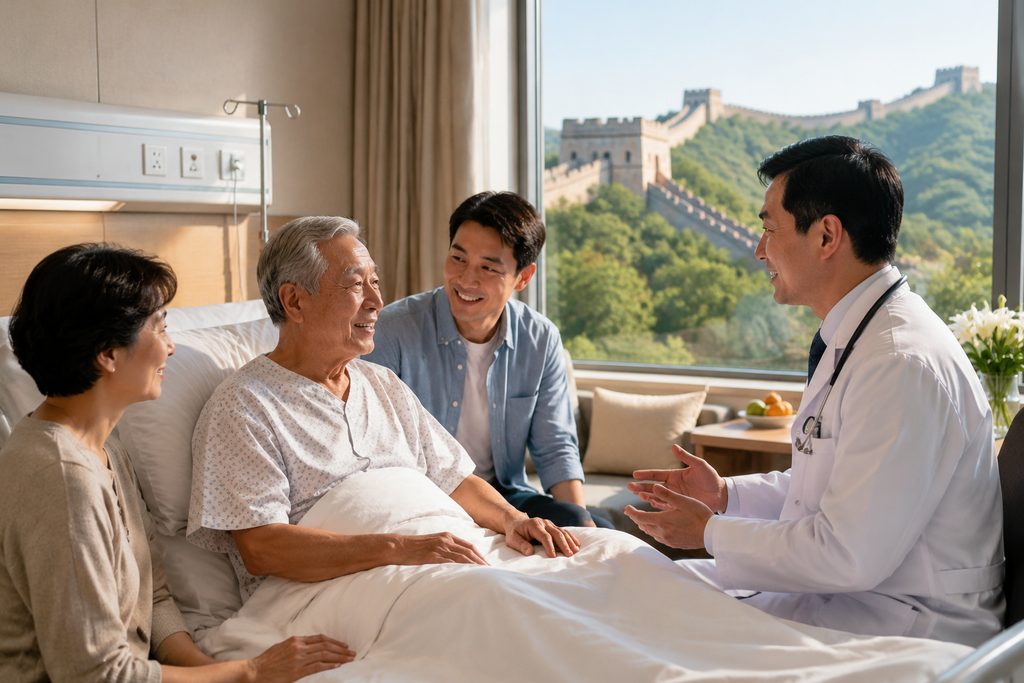
When 47-year-old Daniel from Manchester started budgeting his annual leave, he faced a familiar dilemma. His doctor had recommended a comprehensive health screening. His wife wanted a proper holiday. The National Health Service waiting list for an executive-style check-up stretched months, and private screening in London would set him back over £2,000. Then a colleague mentioned something that sounded almost too practical: book the check-up in Shanghai, recover from the jet lag while the lab processes results, and spend the remaining days exploring the Bund. Could you actually pull that off? The short answer is yes — a full body check up China vacation package is not only feasible, it is a growing segment of medical tourism in China. But the mechanics matter more than the marketing. Let us walk through exactly how it works, what it costs, and where the friction points hide.
How This Actually Works, Step by Step
The sequence is straightforward once you understand the Chinese hospital system’s rhythm. You do not simply land in Beijing and walk into Peking Union Medical College Hospital expecting a same-day executive screening. Public hospitals in China operate on a registration-first basis, and the top-tier institutions see staggering daily patient volumes. The workable path looks like this:
- Step 1 — Define the scope. You decide what “full body” means for you. A basic screening covers blood panels, chest X-ray, abdominal ultrasound, and ECG. An executive package adds cardiac stress testing, low-dose CT, tumor markers, and specialist consultations. The scope drives the hospital choice and the price.
- Step 2 — Select the channel. Foreigners overwhelmingly use one of two routes: a private international hospital like United Family or Jiahui, where English-speaking staff and insurance billing are standard, or the international/VIP department of a public hospital like Zhongshan Hospital or PUMCH, where senior specialists are accessible but at 1.5 to 2 times the standard outpatient price.
- Step 3 — Send records and goals in advance. You transmit existing medical history, current medications, and any specific concerns. A coordinator translates these documents and confirms which tests the hospital will actually run. This is not a formality — it prevents arriving in China only to discover your cardiology screening requires a separate appointment with a two-week lead time.
- Step 4 — Land, screen, wait. The check-up itself typically takes one full morning, occasionally a full day for comprehensive packages. Blood results return within 24 to 48 hours. Imaging reports often arrive the same day. A written summary with English translation follows within three to five business days.
- Step 5 — Consult and travel. You sit with the physician to review findings, usually on day two or three. Then you are free. The remaining week is yours — tourist visa rules permitting, which we will address shortly.
What a Full Body Check Up China Vacation Package Actually Includes
The term “package” deserves scrutiny. In the Chinese medical tourism context, a vacation-plus-screening arrangement is not a single product sold by a hospital. It is a coordination outcome. A hospital sells the screening. A travel agent sells the tour. Someone — either you or a medical coordinator — stitches them together. That stitching is where value is created or lost.
A well-designed itinerary for a full body check up China vacation package typically spans 7 to 10 days. Days one through three anchor in the hospital city — Shanghai, Beijing, or Guangzhou are the usual choices given their concentration of top-ranked institutions. The screening occupies one morning. The consultation occupies another. The remaining five to seven days open up for travel: high-speed rail to Hangzhou, a flight to Chengdu for pandas and Sichuan food, or a stay in a TCM wellness center for acupuncture and rehabilitation-focused therapies. The medical component is brief by design. The vacation component is what you make of it.
What surprises most Western patients is the pace. Chinese hospitals do not schedule check-ups the way Western clinics do. A comprehensive screening at a public hospital’s international department can involve moving between six or eight stations — phlebotomy, radiology, ultrasound, cardiology — often on different floors or even adjacent buildings. Without Chinese language ability, this is disorienting. A bilingual medical companion, arranged in advance, changes the experience entirely. That is a service cost, not a hospital charge, and we will return to it.
A Realistic Timeline
Planning windows matter more than most patients assume. Here is what a realistic schedule looks like for someone combining a health screening with a Chinese holiday, starting from the decision to go:
| Stage | What Happens | Realistic Duration |
|---|---|---|
| Week 1 | You select scope of screening and preferred city; coordinator contacts hospital international department for package details and available dates | 3–7 days |
| Week 2 | Medical records translated into Chinese; hospital confirms test list and quote; you apply for S2 visa with hospital invitation letter | 5–10 days |
| Week 3–4 | Visa processing at Chinese embassy or consulate; flight and accommodation booked; companion service confirmed | 10–20 days depending on consulate workload |
| Day 1 in China | Arrival; rest; no medical activity planned — jet lag distorts some baseline measurements | 1 day |
| Day 2 | Full screening at hospital international department; fasting required for blood draw; imaging and specialist exams | 4–8 hours |
| Day 3–4 | Results reviewed with physician; written English summary delivered; any urgent follow-up arranged | 1–2 days |
| Day 5–10 | Travel and tourism; results already in hand; no further hospital visits unless follow-up imaging was recommended | 5–6 days |
The forgotten waiting steps are document translation and visa processing. Neither is glamorous. Both can consume three weeks before you ever board a plane. Patients who try to compress this timeline to two weeks usually end up scrambling — either the visa is not ready or the hospital’s international department has no morning slots left for the desired week.
What Can Go Wrong — and What Happens Then
Honesty about failure modes is the difference between a smooth trip and a frustrating one. Here are the most common breakdowns and their actual recourses.
The visa category is wrong. China does not issue a “medical visa” in the way some countries do. For short-term medical treatment or private affairs, the applicable category is the S2 visa, annotated for medical purposes, supported by an invitation letter from the hospital. The M visa is for commercial and trade activities — it is not appropriate for medical travel. If a patient applies under the wrong category, the consulate rejects or delays the application. The recourse is a corrected invitation letter and a new application, which costs time, not just money. Always confirm the visa category with the Chinese embassy or consulate in your jurisdiction before submitting.
The hospital cancels or reschedules the screening. Public hospital international departments occasionally shift schedules when a senior specialist is called to an emergency or a conference. This is rare but real. The practical response is to build one buffer day into the itinerary. If the screening moves from Tuesday to Wednesday, the vacation portion absorbs the shift without collapsing the trip.
Results reveal something unexpected. A screening sometimes finds an abnormality that requires further investigation — a lung nodule on low-dose CT, an elevated tumor marker, an arrhythmia on the ECG. The hospital will recommend follow-up imaging or a specialist consultation. This can extend the medical portion by two to three days. Patients who planned a rigid tour schedule find this stressful. The mitigation is to keep the first half of the trip flexible and book refundable domestic travel for the second half.
Insurance refuses to reimburse. Many international insurers will not cover a preventive screening performed abroad unless it is deemed medically necessary. The patient pays out of pocket at the hospital, receives itemized receipts and translated reports, and submits a claim afterward. Reimbursement is not guaranteed. Patients should verify coverage before departure, not after return.
How to Choose Where to Get Your Annual Physical in Beijing or Shanghai
The question of the best hospital in Beijing for annual physical exam has no single answer — it depends on what you need screened and how much hand-holding you require. Beijing hosts 21 of the top 100 hospitals in the Fudan ranking, more than any other Chinese city. Shanghai follows with 18. That concentration means genuine competition for international patients, which keeps pricing rational and English-language services more available.
For a straightforward annual physical with English-speaking staff and direct insurance billing, a JCI-accredited private international hospital is the lowest-friction choice. United Family and Jiahui operate in both Beijing and Shanghai, with Western-style facilities and same-day results for most panels. The trade-off is cost: an executive screening at a private international hospital typically runs $800 to $1,500, depending on imaging scope.
For patients who want access to China’s most senior specialists — the physicians who interpret complex imaging and manage difficult cases — the international department of a public hospital like Peking Union Medical College Hospital or Zhongshan Hospital is the stronger choice. The executive health screening Shanghai price at a public hospital’s VIP wing generally falls between $400 and $900 for a comprehensive package, with add-ons like cardiac CT or full-body MRI pushing the total higher. These departments are accustomed to foreign patients, but the experience is more clinical than hotel-like. Expect efficiency, not spa amenities.
We maintain a database of top-ranked Chinese hospitals by city that helps patients compare options across Beijing, Shanghai, and Guangzhou. For specialty-specific screening — say, cardiac-focused or oncology-focused — the department rankings by specialty are more useful than any general hospital list.
Practical Considerations: Records, Visa, Payment, and Follow-Up
Combining a medical check-up with a holiday in China is a logistics project, not a medical one. The medical part is routine. The logistics are where attention belongs.
Medical records. Bring any prior imaging on a disc or cloud link, not just printed reports. Chinese radiologists often want to compare a current chest CT with one from two years ago. A written summary of your medical history, translated into Chinese before arrival, saves the consulting physician 20 minutes and you a round of confused pantomime.
Visa. The S2 visa is the applicable short-stay category for medical treatment and private affairs, subject to the latest embassy or consulate requirements. Processing times vary by consulate — some issue in under a week, others take three. Supporting documents from the hospital, including the appointment confirmation and invitation letter, are typically required. Family members traveling with you apply for their own S2 visas.
Payment. Public hospital international departments generally require prepayment at registration, with any balance settled on the day of service. Credit cards are accepted at international departments but not always at standard public windows. Private international hospitals bill directly to major insurers in many cases. Clarify payment mechanics before you arrive.
Language. Even in Beijing and Shanghai, most public hospital signage is Chinese-first. The international department staff will speak English, but the phlebotomist, the ultrasound technician, and the radiology desk may not. A bilingual companion who handles registration, queueing, and translation is not a luxury in this context — it is the difference between a three-hour screening and a six-hour ordeal.
Follow-up at home. The screening report you receive in China should be shared with your primary care physician back home. Chinese hospitals provide findings and recommendations; they do not manage your long-term care. If a follow-up imaging study is recommended in six months, schedule it with your home provider and send them the Chinese images for comparison.
Frequently Asked Questions
Yes. The check-up itself takes one morning, occasionally a full day for the most comprehensive packages. Results are typically available within 24 to 48 hours, and the physician consultation follows within a day or two. The remaining time is genuinely yours for travel. The key is sequencing: screen first, then vacation, so you are not traveling with unresolved medical questions hanging over you.
A comprehensive executive screening at a top Chinese public hospital’s international department typically costs $400 to $900. The same scope at a private international hospital runs $800 to $1,500. In the United States, comparable executive physicals at academic medical centers often exceed $3,000, and in the UK private sector, £2,000 or more. The savings are real but not the only draw — the speed of access and the ability to see senior specialists without months of waiting matter equally to many patients.
You have two options. The first is to contact the hospital’s international department directly, negotiate the screening package, and separately arrange your own travel. This works if you speak some Chinese or have high tolerance for coordination overhead. The second is to work with a coordinator who handles hospital matching, appointment scheduling, document translation, and on-the-ground companion services. The coordinator does not replace the hospital — they reduce the friction of navigating it. For most first-time visitors, the second option saves more in time and stress than it costs in fees.
At a top-ranked hospital, yes. The imaging equipment is current-generation, the laboratories run high volumes with standardized protocols, and the senior physicians reading your scans often see more cases in a month than a Western specialist sees in a year. The limitation is continuity: a Chinese screening is a point-in-time assessment. Your home physician remains responsible for interpreting results in the context of your full history and managing any follow-up.
The hospital will tell you clearly and recommend next steps, which may include additional imaging, a specialist consultation, or a biopsy. You are not obligated to pursue treatment in China. Many patients take the translated reports home and continue care with their local providers. Some choose to stay and address the finding in China, given the cost and speed advantages. That decision belongs entirely to you, and no reputable coordinator will pressure you toward one path.
Your Next Step
The core message is simple: combining a comprehensive health screening with a Chinese vacation is practical, affordable, and increasingly common — but only when the logistics are handled properly. The medical component is the easy part. The visa, the hospital channel, the language barrier, and the sequencing are where trips succeed or stall.
We help international patients navigate exactly this process. Our team matches you with the right hospital for your screening scope, coordinates appointments through official international departments, arranges bilingual medical companions, and supports your visa documentation. We do not practice medicine, and we do not promise outcomes. We handle the coordination so you can focus on the results — and then on the vacation. If you are considering a screening trip to China, start with a conversation. Tell us what you need screened and when you want to travel. We will tell you honestly whether it makes sense, what it will cost, and how to structure the trip so the check-up and the holiday both deliver.
For more medical information and treatment options in China, visit chinamedservices.com (China Medical Services).
