Am I Too Young to Freeze My Eggs? Age, Cost, and Success Rates Explained
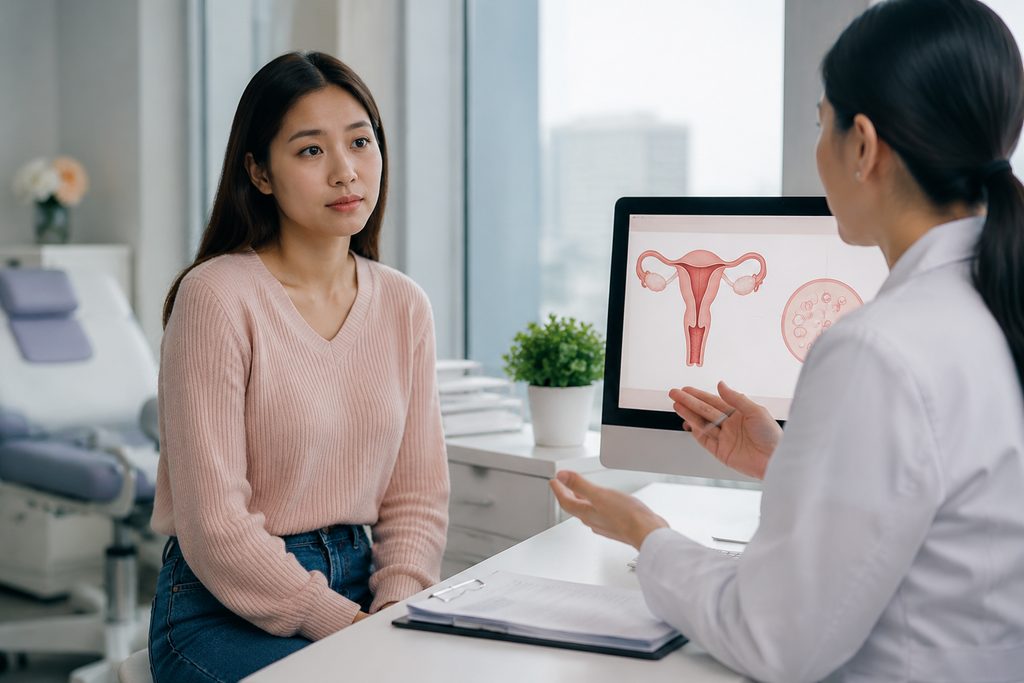
You’ve probably heard that egg freezing is a last-minute rescue for women pushing 40. The biology tells a different story. Your eggs are healthiest in your late 20s and early 30s. Waiting until fertility declines sharply means freezing fewer, lower-quality eggs. So no, you’re not too young to freeze your eggs at 25 or 28 — you may actually be at the ideal moment. The real question isn’t age alone. It’s whether your current life timeline justifies the egg freezing cost China offers, which runs $3,000–6,000 per cycle at top fertility centers, versus what you’d pay in the US or Europe.
Am I Too Young to Freeze My Eggs? The Short Answer
Medically, there is no minimum age for egg freezing in China for adult women. Most clinics accept patients from age 18, though reproductive specialists generally recommend the procedure between ages 27 and 34. That’s when ovarian reserve is still strong and egg quality peaks. If you’re 25 and asking “can I freeze my eggs at 25,” the answer is yes — and many fertility doctors would call it smart planning, not overreaction.
The caveat: egg freezing is not a guarantee. Frozen eggs don’t equal a future baby. The process gives you options, not certainty. And the younger you freeze, the more likely those options remain viable.
Who This Is Right For — and Who It Isn’t
Egg freezing suits a specific profile. You don’t need a medical diagnosis to benefit. But it’s also not for everyone.
Typically a good candidate:
- Ages 27–34 with no immediate plan for children but a clear desire to preserve options
- Women about to undergo chemotherapy or radiation that may damage ovarian function
- Those with a family history of early menopause (before age 40)
- Women diagnosed with endometriosis, which can progressively reduce ovarian reserve
- Anyone planning gender-affirming surgery or hormone therapy that affects fertility
Who should think twice:
- Women under 25 with no medical indication — the likelihood of needing frozen eggs is statistically lower, though not zero
- Those with severely diminished ovarian reserve, where a cycle may yield very few eggs
- Anyone who cannot commit to the hormonal stimulation protocol, which requires daily injections for 10–14 days
- Women who view freezing as a complete insurance policy — it reduces risk, it doesn’t eliminate it
Being honest about who should not pursue this is what makes the rest credible. Egg freezing is a tool. Tools work best in the right hands.
The Options, Compared: Egg Freezing Across Countries
Egg freezing isn’t cheap anywhere. But the price gap between regions is enormous. Here’s what you’re looking at per cycle, including medications, monitoring, retrieval, and the first year of storage.
| Country | Cost per Cycle (USD) | Medication Included | Typical Wait Time | Success Rate Context |
|---|---|---|---|---|
| United States | $10,000–15,000 | Usually separate ($3,000–5,000) | 2–6 weeks | Strong, well-documented |
| United Kingdom | $6,000–9,000 | Often separate | 4–12 weeks (NHS limits private access) | Good, fewer cycles performed annually |
| Spain | $4,500–7,000 | Usually included | 2–4 weeks | High volume, strong data |
| China (top-tier公立 or international) | $3,000–6,000 | Usually included | 1–3 weeks | Rapidly improving, high cycle volume |
| Thailand | $4,000–7,000 | Often separate | 2–4 weeks | Good for international patients |
Which column suits you depends on what you value. If you want the most established data and cost is secondary, the US remains the reference standard. If you’re looking for strong clinical quality at roughly one-third to half the US price, China’s top fertility centers in Shanghai and Beijing have closed much of the gap. The egg freezing cost China offers is not the cheapest in Asia, but it pairs reasonable pricing with high procedure volume — and volume matters for lab expertise.
Is There an Age Limit for Egg Freezing? What the Data Actually Shows
There is no universal legal age limit for egg freezing in China. Clinics set their own policies, and most accept women from 18 up to their late 40s. But “allowed” and “advisable” are different things.
Egg freezing success rates by age China mirror global patterns. A 2023 study published in Reproductive BioMedicine Online analyzed outcomes from over 3,000 egg freezing cycles across major Chinese fertility centers. The live birth rate per frozen egg was highest when eggs were retrieved before age 30, declined moderately through 35, and dropped more steeply after 38. By 42, the per-egg success rate fell below 5%.
That means the practical age limit isn’t legal — it’s biological. Freezing at 25 or 28 gives you the best odds of a future pregnancy from those eggs. Freezing at 40 is still possible, but you’ll likely need multiple cycles to bank enough eggs for a reasonable chance.
So if you’re asking “is there an age limit for egg freezing,” the honest answer is: no legal limit, but the biological window is real. The earlier side of that window is where you are now.
What Egg Freezing in China Actually Costs
Let’s break down the egg freezing cost China clinics typically quote. At a top-tier public hospital’s international department or a private international hospital in Shanghai, a full cycle runs $3,000–6,000. That usually includes:
- Initial consultation and ovarian reserve testing (AMH, antral follicle count)
- All stimulation medications (gonadotropins)
- Ultrasound monitoring throughout the cycle
- Egg retrieval procedure under sedation
- Lab fees for egg vitrification (flash-freezing)
- First year of storage
What’s not included: pre-cycle bloodwork if done outside the clinic, travel and accommodation, and annual storage fees after year one (typically $300–500 per year). Some clinics charge separately for anesthesia, so confirm that upfront.
Cost varies by hospital tier and case complexity. A woman with low ovarian reserve may need higher medication doses, pushing the total toward the upper end. A straightforward cycle at a public hospital’s international wing lands closer to $3,000–4,000.
Best Fertility Clinic Shanghai for Egg Freezing: What to Look For
Shanghai hosts several fertility centers with strong reputations for egg freezing. The best fertility clinic Shanghai for egg freezing depends on what you need: English-speaking staff, international accreditation, or the lowest price at a high-volume public hospital.
Key factors to evaluate:
- Lab vitrification expertise: Egg freezing is harder than embryo freezing. Ask how many egg thaw cycles the lab performs annually.
- Success rate transparency: Reputable clinics publish per-egg thaw survival rates. Anything above 85% thaw survival is solid.
- English-language coordination: Public hospitals in China run massive daily patient volumes. Without Chinese language support, navigating registration, payment, and follow-up is genuinely difficult. Private international hospitals in Shanghai offer English-speaking staff and direct insurance billing, at roughly 1.5–2 times the public hospital price.
- Storage facility accreditation: Confirm the cryostorage facility has backup power systems and documented monitoring protocols.
For international patients, the practical route is often a top public hospital’s international department — combining senior specialists with English coordination — or a JCI-accredited private hospital like those listed in our reproductive medicine department rankings.
Practical Considerations: Documentation, Visa, and Follow-Up
Coming to China for egg freezing requires planning beyond the medical procedure itself.
Records you’ll need: Recent AMH and FSH bloodwork, a pelvic ultrasound report, and any prior fertility treatment records. Clinics may repeat testing on-site, but bringing your history speeds up the initial consultation.
Visa: Medical treatment in China falls under the S2 visa category, which covers short stays for private affairs including medical care. You’ll need supporting documents from the hospital — typically an invitation letter or treatment confirmation. S2 visas are issued at Chinese embassies and consulates abroad. Processing takes 1–2 weeks in most countries. Family members accompanying you apply for the same S2 category. We never guarantee approval; requirements shift, and your local consulate has final say.
Timeline: The stimulation phase runs 10–14 days. You’ll need to be in Shanghai for roughly 2–3 weeks total, from baseline ultrasound through retrieval. Some clinics allow you to start stimulation at home and arrive later, but most prefer monitoring in-house from day one.
Payment: Public hospitals require prepayment. International insurance often doesn’t cover elective egg freezing, so expect to pay out of pocket and seek reimbursement if your policy allows. Private international hospitals may bill insurers directly.
Language: Even at top public hospitals, front-desk staff may not speak English. A bilingual medical companion handles registration, queueing, payment, and translation — the difference between a smooth cycle and a stressful one.
After you return home: Your eggs stay in cryostorage in China. You’ll pay annual storage fees remotely. If you later want to use them, you’ll either return to the same clinic or arrange international transport of frozen eggs to another fertility center — a specialized process with its own costs and regulations.
Frequently Asked Questions
Yes. Eggs frozen at 25 retain the quality of a 25-year-old’s eggs when thawed. The uterine environment at 40 is a separate factor — some women may need additional hormonal support or a gestational carrier, but the egg quality itself is preserved. Freezing at 25 gives you more eggs per cycle and higher per-egg success odds than freezing at 35 or 40.
China’s top fertility centers operate under national health authority regulations with strict lab standards. The country performs a very high volume of assisted reproduction cycles annually, which builds lab expertise. That said, standards vary between top-tier hospitals and smaller clinics. Stick to hospitals ranked in the Fudan specialty lists or JCI-accredited international facilities. Ask for thaw survival data before committing.
This is the hardest truth about egg freezing. Thaw survival rates at good labs run 85–90%, but not every surviving egg fertilizes, and not every embryo implants. The American Society for Reproductive Medicine estimates that a woman under 35 needs roughly 15–20 frozen eggs for a 70–80% chance of at least one live birth. One cycle may yield 10–15 eggs at that age. Some women need two cycles. No clinic can promise a baby from frozen eggs — anyone who does is not being honest with you.
No. Egg freezing does not require a partner’s consent because you are not creating embryos. Adult women can pursue elective egg freezing independently. This applies to single women and those in relationships alike. Chinese law restricts some assisted reproduction services to married couples, but egg freezing for non-medical reasons is permitted for adult women.
Some agencies bundle clinic fees, accommodation, airport transfers, and a bilingual coordinator into a single package. Prices vary widely — from $5,000 to $12,000 depending on hospital tier and hotel level. Packages can simplify logistics, but always confirm what the medical portion includes. The clinic fee should be itemized separately from travel services. A reputable package never inflates the medical cost; it adds transparent coordination fees on top.
Your Next Step
Freezing your eggs at 25 or 28 is not premature. It’s backed by biology. The decision comes down to whether the cost and the process make sense for your life right now — and whether you’d rather preserve options than wait. Our team at China Medical Services connects international patients with top-tier fertility centers across 37 Chinese cities. We are not a hospital, and we don’t provide medical advice or diagnoses. What we do is handle the logistics: clinic matching, appointment coordination, bilingual accompaniment, and visa guidance. If you want to understand your options without committing to anything, request a free consultation. We’ll help you sort through the practical questions, so you can make a clear decision.
For more medical information and treatment options in China, visit chinamedservices.com (China Medical Services).
