Vasectomy Reversal in China: Costs, Top Hospitals, and How to Book
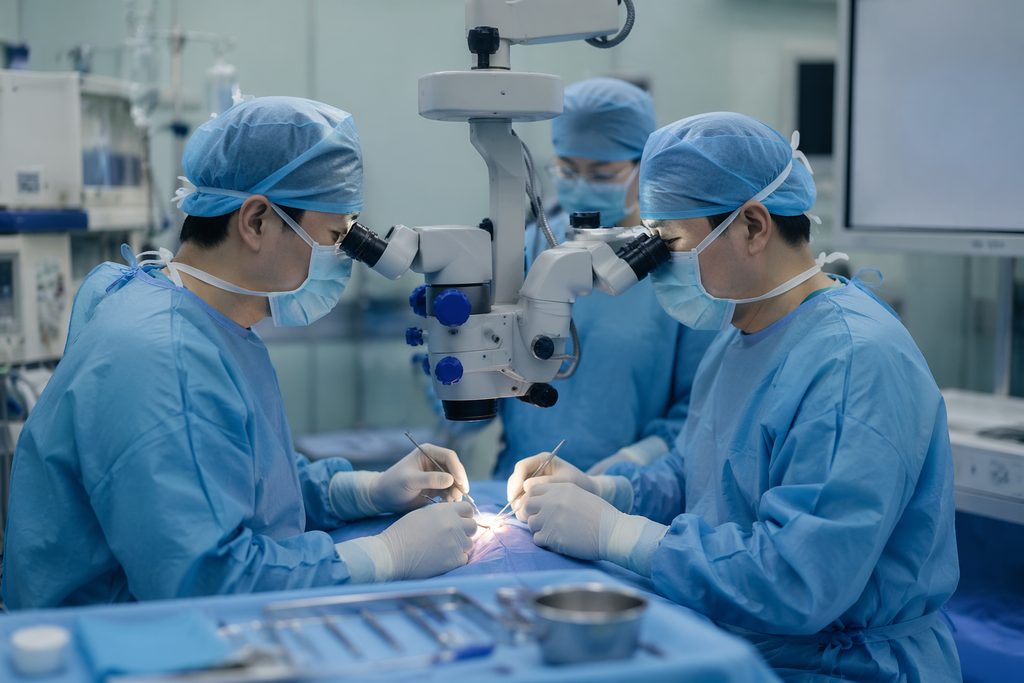
Can I Get a Vasectomy Reversal in China? A Complete Guide to Costs, Hospitals, and Logistics
You’ve probably heard that traveling abroad for surgery means rolling the dice on quality. The reality for microsurgical procedures like vasectomy reversal is exactly the opposite in China’s top-tier medical centers. A procedure that routinely costs $12,000 to $20,000 in the United States can be performed in Shanghai or Beijing for a fraction of that — often between $3,500 and $7,000, depending on the hospital tier and case complexity. The vasectomy reversal cost China offers is not a discount for inferior care. It reflects structural economics: high surgical volume, lower facility overhead, and specialist salaries that do not carry the same malpractice insurance burden as Western systems.
This guide answers the question directly: yes, you can get a vasectomy reversal in China. But the process requires understanding which hospitals actually perform this procedure well, what the real costs are, how to navigate the S2 visa, and what recovery looks like when you are 7,000 miles from home.
Key Takeaways
- Vasectomy reversal in China costs roughly $3,500–$7,000 at top public hospitals, versus $12,000–$20,000 in the US — a 60–70% savings even after travel.
- China’s leading urology and andrology departments perform thousands of microsurgical procedures annually, with many specialists trained in Japan, Germany, or the US.
- You cannot simply book surgery online. Chinese public hospitals require an in-person consultation first — but international patient coordinators can arrange this efficiently.
- Recovery timelines are identical to Western standards: 2–4 weeks before returning to desk work, 3–6 months before assessing sperm return.
The Problem: Vasectomy Reversal Is Priced Out of Reach for Most Western Men
An estimated 500,000 vasectomies are performed annually in the United States. Roughly 6% of those men — about 30,000 per year — eventually seek reversal. The reasons vary: remarriage, the loss of a child, or simply a change of heart. What does not vary is the price shock. The average cash price for a microsurgical vasovasostomy in the US now exceeds $10,000, and a more complex epididymovasostomy can push past $20,000. Insurance rarely covers it. In the UK, the NHS does not fund vasectomy reversal at all, pushing men toward private clinics where prices hover between £3,500 and £6,000.
That leaves a large group of men with a painful choice: pay a year’s worth of savings, or give up on the possibility of fathering a child. Some try medical tourism in Thailand or India, only to discover that quality varies wildly and post-operative follow-up is nearly impossible once they fly home.
China sits in a unique position. Its top urology departments are not tourist clinics — they are high-volume academic centers attached to major universities. And the medical tourism for vasectomy reversal China route is still young enough that prices have not inflated to match demand.
Why China Delivers Results for Vasectomy Reversal Surgery
Microsurgical Volume Drives Patency Rates
Vasectomy reversal is a technically demanding operation. The surgeon must reconnect the vas deferens under an operating microscope, often using sutures finer than a human hair. Success — measured by sperm returning to the ejaculate — correlates strongly with how many of these procedures a surgeon performs each year. A urologist doing 10 reversals annually will never match one doing 150.
China’s top andrology centers operate at volumes that are hard to find elsewhere. The urology department at Peking University First Hospital, for example, is one of the largest in Asia. Renji Hospital in Shanghai performs thousands of microsurgical urology cases per year across its andrology division. These are not boutique practices. They are industrial-scale surgical units where microsurgical vasovasostomy is a routine Tuesday, not a rare referral.
Technology and Training Are on Par with Western Centers
The assumption that Chinese hospitals lag behind Western technology is about fifteen years out of date. Top-tier Chinese teaching hospitals routinely use Zeiss and Leica operating microscopes — the same brands found in Johns Hopkins or the Cleveland Clinic. Many senior andrologists in China completed fellowships in Germany, Japan, or the United States. Some publish in the same peer-reviewed journals their Western counterparts read.
What Chinese hospitals do not have is the same administrative bloat. A patient at a Shanghai public hospital moves from registration to lab work to surgical scheduling through a system designed for throughput, not for maximizing billable hours. That efficiency translates directly into lower costs without touching clinical quality.
Cost Advantage Without Quality Compromise
Let us be blunt: the vasectomy reversal cost China hospitals charge is low because Chinese labor economics are different, not because the surgery is worse. A senior microsurgeon in Shanghai earns a fraction of what a comparable US surgeon earns — but that salary still places them in the top 1% of Chinese earners. Hospital facility fees are lower. Malpractice insurance is a rounding error compared to American premiums. None of this affects the quality of the anastomosis performed under the microscope.
The result is a procedure that costs 60–70% less than in the US while being performed by surgeons who do more of these operations per year than most American urologists. That is not a compromise. It is an arbitrage opportunity.
How Much Is Vasectomy Reversal in Shanghai? A Real Cost Breakdown
Shanghai is the most common entry point for international patients seeking this procedure. The city has three hospitals with strong andrology reputations: Renji Hospital, Zhongshan Hospital Fudan University, and Huashan Hospital. Here is what you can expect to pay at each tier.
| Hospital Type | Estimated Cost (USD) | What’s Included | Notes |
|---|---|---|---|
| Public hospital — standard pathway | $3,500 – $5,000 | Surgery, basic hospital stay, standard post-op care | Chinese-language environment; long queues; no dedicated international coordination |
| Public hospital — international/VIP department | $5,000 – $7,000 | Surgery, private room, English-speaking nurse liaison, expedited scheduling | Recommended for foreign patients; roughly 1.5–2x standard pricing |
| Private international hospital (e.g., United Family, Jiahui) | $7,000 – $10,000 | Surgery, Western-style care, direct insurance billing, full English environment | Higher cost but zero language barrier; JCI-accredited |
These figures vary by hospital and case complexity. A straightforward vasovasostomy (reconnecting the two ends of the vas deferens) costs less than an epididymovasostomy (connecting the vas deferens directly to the epididymis), which is required when a blockage has formed in the epididymis — common when the original vasectomy was performed more than 10 years ago.
For comparison, the same procedures in the United States average $12,000 for vasovasostomy and $20,000+ for epididymovasostomy. Even adding $2,000–$3,000 for flights, hotel, and food, the total cost of traveling to Shanghai for surgery is still roughly half of staying home.
Best Hospital for Vasectomy Reversal in China: Where to Actually Go
There is no single “best” hospital — the right choice depends on your budget, your language needs, and how long ago your vasectomy was performed. But a few institutions stand out for andrology and microsurgery.
Renji Hospital (Shanghai Jiao Tong University School of Medicine) operates one of China’s most respected urology departments. Its andrology division handles male infertility and microsurgical reconstruction at high volume. The hospital has a dedicated international medical center that handles foreign patients, though you should expect to pay the VIP pathway premium.
Peking University First Hospital (Beijing) is another heavyweight. Its urology department is consistently ranked among China’s top programs. Beijing adds a layer of complexity for visa processing — the city is more bureaucratic than Shanghai — but the clinical quality is undeniable.
For men who want a fully Western-style experience with zero language friction, private international hospitals like United Family and Jiahui offer English-speaking urologists and JCI accreditation. The trade-off is cost: you will pay 50–100% more than the public hospital international department route.
Our team maintains a database of 340+ top-ranked hospitals across 37 cities, including detailed profiles of urology and andrology departments. We can help you match your specific case — vasectomy date, previous surgeries, current sperm analysis results — to the right institution.
Can I Get a Vasectomy Reversal in China? The Step-by-Step Process
The short answer is yes. The longer answer involves navigating a system that was not designed for foreign patients. Here is the actual sequence.
Step 1: Pre-Consultation and Record Review
Before you book a flight, you need a Chinese urologist to review your case. This happens remotely. You send your vasectomy date, operative notes if you have them, and a recent semen analysis. The specialist reviews these and gives a preliminary assessment: whether reversal is feasible, which technique is likely needed, and what the expected patency rate is. A written second opinion from a top hospital specialist typically costs $300–$500 through our coordination service.
Step 2: In-Person Consultation in China
Chinese public hospitals do not schedule surgery without an in-person consultation. This is non-negotiable. You will fly to China, meet the surgeon, undergo any additional testing (scrotal ultrasound, hormone panel), and then receive a surgical date. The gap between consultation and surgery is usually 2–7 days, depending on the surgeon’s schedule and the hospital’s operating room availability.
Step 3: Surgery and Immediate Recovery
The procedure itself takes 2–4 hours under general or spinal anesthesia. You will stay in the hospital for 1–3 days. Most men can walk comfortably within 48 hours, though you should plan to remain in China for at least 7–10 days after surgery for the initial follow-up and suture removal.
Step 4: Follow-Up After Returning Home
This is where many medical tourism plans fall apart. A surgeon in Shanghai cannot examine you if you develop a hematoma in Chicago. The solution is a structured follow-up protocol: your Chinese surgeon provides a detailed post-operative care plan, and you arrange with a local urologist in your home country to handle any physical examinations. Semen analyses are done at 3, 6, and 9 months post-surgery and sent back to your Chinese team for review.
Practical tip: Book your surgery for a Monday or Tuesday. This ensures the full surgical team is available and gives you the maximum number of business days for any unexpected pre-op testing before the weekend.
Who Should Not Travel to China for Vasectomy Reversal
This option is not for everyone. Be honest with yourself about the following.
Men with complex surgical histories. If you have had multiple scrotal surgeries, a history of infection, or a failed reversal attempt, your case is higher-risk. A remote consultation becomes less reliable because the surgeon cannot physically examine the scrotum. You may still be a candidate, but expect a longer in-person evaluation period.
Men who need extensive post-operative care. If you have a bleeding disorder, poorly controlled diabetes, or another condition that increases surgical risk, the distance between you and your surgeon becomes a genuine liability. The cost savings are not worth a complication you cannot get treated promptly.
Men who cannot take 2–3 weeks away from work. You need at least a week in China before surgery (consultation, testing, scheduling) and another week after. Attempting to compress this timeline leads to rushed decisions and poor recovery.
Also, understand that booking vasectomy reversal surgery abroad through an online form is not how this works. There is no “add to cart” button. The process requires patience, documentation, and a willingness to follow a foreign medical system’s rules. If you want a fully streamlined, English-only, insurance-billed experience, stay in your home country and pay the premium.
Practical Considerations: Visa, Payment, and Language
The logistics matter as much as the surgery. Here is what you need to handle.
S2 Visa for Medical Treatment
Foreign nationals traveling to China for medical treatment apply for an S2 visa, which covers short-term private affairs including medical care. Your accompanying spouse or partner also applies for an S2 visa. You will need supporting documents from the Chinese hospital — typically an invitation letter or a treatment confirmation — which the hospital’s international department provides after your consultation is scheduled. The S2 visa is typically valid for 30–90 days per entry. For stays exceeding 180 days, an S1 visa applies, but that is not relevant for vasectomy reversal.
Visa requirements change. Always check with the Chinese embassy or consulate in your country before booking flights. We provide current visa guidance as part of our coordination service, but we cannot guarantee approval — that decision rests with the consular officer.
Payment Methods and Insurance
Chinese public hospitals require pre-payment. You will pay a deposit when your surgery is scheduled, with the balance due before discharge. International credit cards are accepted at major hospitals’ international departments, but not always at the standard registration desk. Wire transfer is the most reliable method for larger amounts. Private international hospitals like United Family accept direct insurance billing; public hospitals generally do not, meaning you pay out of pocket and seek reimbursement from your insurer afterward.
Most Western health insurance plans do not cover elective procedures abroad. Check your policy carefully. Some men use medical tourism insurance policies, but these are still a niche product with significant limitations.
Language and Interpretation
Even in Shanghai, the standard public hospital pathway operates in Mandarin. Registration forms, lab slips, pharmacy instructions — all Chinese. The international department solves this with English-speaking coordinators, but that service costs more. A bilingual medical companion can bridge the gap for the standard pathway, handling registration, queueing, payment, and translation during consultations. This costs from $300 per day through our service.
Frequently Asked Questions
Patency rates (sperm returning to the ejaculate) for microsurgical vasovasostomy range from 75% to 95% depending on the time since vasectomy and the surgeon’s experience. Chinese top-tier centers report rates consistent with international benchmarks. Pregnancy rates are lower — typically 40% to 70% — because they depend on female partner factors as well. No surgeon anywhere can guarantee pregnancy.
Sperm typically returns to the ejaculate within 3 to 6 months after surgery. Some men see sperm in their semen analysis as early as 6 weeks, but this is not universal. Doctors generally recommend waiting until at least two consecutive semen analyses show stable sperm counts before actively trying to conceive. This usually means waiting 6 to 9 months.
This is the hardest question in medical tourism, and you deserve an honest answer. If the reversal fails to restore sperm, options include a repeat reversal attempt (with lower success odds) or sperm retrieval with IVF/ICSI. If you have a post-operative complication — hematoma, infection, chronic pain — you will need to see a local urologist in your home country. Your Chinese surgical team can provide records and consult remotely, but they cannot physically treat you. This is the trade-off for the cost savings. Men who are not comfortable with that risk should have the surgery closer to home.
No, but you need a plan for communication. The international departments at major Shanghai and Beijing hospitals have English-speaking staff. Private international hospitals are fully English-language environments. If you choose the standard public hospital pathway to save money, you will need either strong Mandarin skills or a bilingual medical companion. We provide this service, but you can also hire an independent interpreter.
Yes. There is no restriction on foreign nationals receiving elective urological surgery in China. The only requirements are a valid visa, a hospital that accepts international patients, and payment for services. Vasectomy reversal is a standard, legal procedure throughout China.
Your Next Step
The decision to travel to China for vasectomy reversal comes down to three numbers: the $8,000–
For more medical information and treatment options in China, visit chinamedservices.com (China Medical Services).
