Teeth Whitening Cost China: Safe Options for International Patients
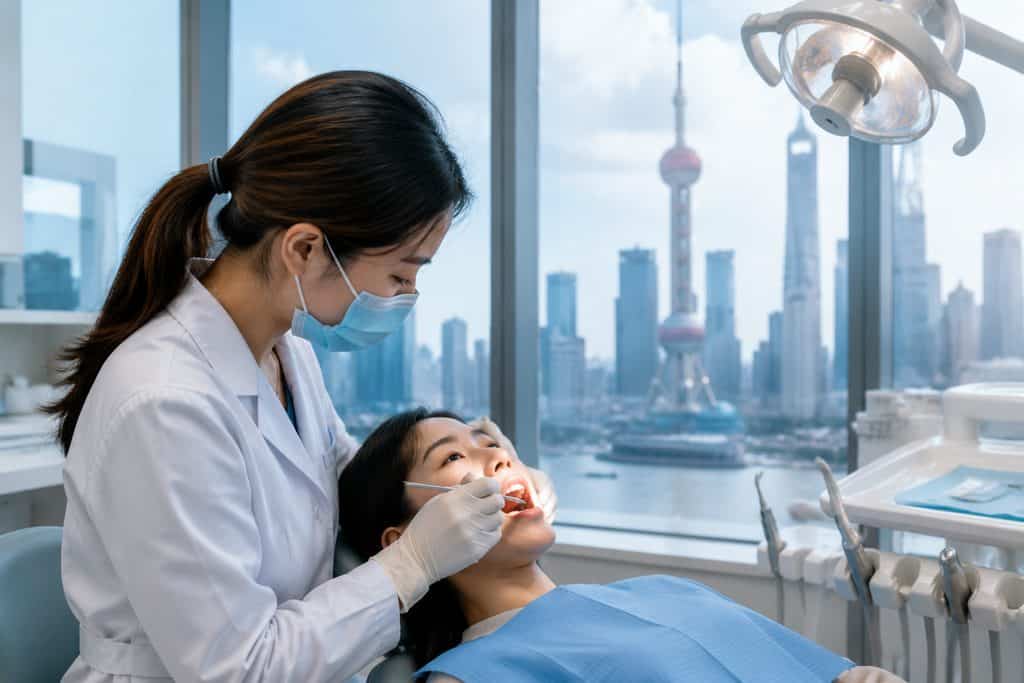
While a single in-office laser whitening session in New York routinely runs between $800 and $1,200, the same procedure at a top-tier dental clinic in Shanghai costs roughly $150 to $400. That is not a typo. The teeth whitening cost China consistently lands at a fraction of Western prices, even at internationally accredited facilities that cater specifically to foreign patients. But cost only matters if the quality holds up. And that is exactly what we are going to unpack.
You searched for this because you are weighing a decision. Maybe you live in China already. Maybe you are planning a trip and wondering if you can tack on a cosmetic dental visit. Either way, you want to know three things: Is it safe? What will it actually cost? And how do you find a clinic that will not botch the job? We have spent years connecting international patients with China’s top dental departments. Here is what the landscape actually looks like.
Key Takeaways
- Professional laser teeth whitening in China costs $150–$600, compared to $800–$1,200 in the US — a 60–80% savings at comparable quality levels.
- Top dental clinics in Shanghai and Beijing use the same whitening systems found in Western practices: Philips Zoom, Beyond, and laser-activated peroxide gels.
- The biggest risk is not the chemicals — it is choosing an unlicensed “beauty salon” instead of a registered dental clinic. Whitening is a dental procedure, not a spa treatment.
- You cannot book most public hospital dental appointments from overseas in advance. Private international clinics and hospital VIP departments are the realistic route for travelers.
The Problem: Cosmetic Dentistry Prices Have Spun Out of Control in the West
The American Dental Association’s Health Policy Institute found that 36% of US adults delayed dental care because of cost in 2022. Cosmetic procedures like whitening are rarely covered by insurance. So patients pay out of pocket. And the prices keep climbing. A single Zoom whitening session in Manhattan now averages $850. In London, expect £500–£700. In Sydney, AUD $600–$900.
That is for roughly 45 to 90 minutes in a chair. The active ingredient — hydrogen peroxide or carbamide peroxide gel — costs the clinic a few dollars. The rest is equipment amortization, facility overhead, and a hefty markup driven by Western labor costs and malpractice insurance premiums. None of that makes your teeth whiter.
So patients with the flexibility to travel start asking a logical question: what does the same procedure cost somewhere with excellent dental training but lower operating costs? The answer, in China, is surprisingly accessible.
Why Teeth Whitening Cost China Is Structurally Lower — Without Cutting Corners
Labor Economics, Not Lower Standards
Chinese dentists at top-tier institutions train in the same techniques as their Western counterparts. Many complete fellowships in the US, Germany, or Japan. But the salary structure is different. A senior cosmetic dentist at a private Shanghai clinic earns perhaps $60,000–$100,000 annually. A comparable New York dentist bills $250,000 or more. That gap shows up directly in procedure pricing.
Facility costs tell a similar story. Commercial rent for a prime Shanghai medical office runs about 40–60% lower than equivalent space in Manhattan or London. Malpractice insurance, while rising in China, remains a fraction of US premiums. None of these factors affect the quality of the whitening gel or the laser hardware. They simply make the final bill smaller.
The Same Equipment You Would Find in a Beverly Hills Practice
Walk into a reputable private dental clinic in Shanghai or Beijing and you will see familiar names: Philips Zoom WhiteSpeed, Beyond Polus, LaserSmile. These are the same systems used in Western cosmetic dental offices. The protocols are standardized. The light-activated gels are imported from the same manufacturers. A clinic that invests in this hardware is not running a discount operation — it is competing for patients who know what good whitening looks like.
Our team has visited dozens of these facilities. The standard is consistent: disposable barriers, protective gingival dams, post-treatment desensitizing fluoride. The clinical hygiene at a top Shanghai dental clinic is indistinguishable from a good private practice in Seattle or Berlin.
Volume Creates Efficiency
Chinese dental clinics see high patient flow. A busy cosmetic dental department in Shanghai might perform 20 to 40 whitening procedures per week. That volume allows clinics to spread equipment costs across more patients and refine their workflow. It also means the staff have seen every tooth shade, every sensitivity complaint, every re-treatment case. Experience at scale, passed on as lower prices and smoother visits.
Is Teeth Whitening Safe in China? What the Evidence Shows
Short answer: yes — if you choose a licensed dental clinic, not a beauty salon. The distinction matters more than anything else.
Teeth whitening uses hydrogen peroxide concentrations between 15% and 40%. In China, the National Health Commission regulates this as a dental procedure, not a cosmetic retail service. That means only licensed dentists and registered dental clinics may legally perform in-office whitening. Beauty salons, nail spas, and “whitening studios” operate in a gray zone — some use illegal high-concentration gels or unshielded LED lights that damage enamel and burn gums.
A 2021 review published in the Journal of Esthetic and Restorative Dentistry examined adverse effects of professional whitening across multiple studies. The conclusion: when performed with proper isolation and controlled peroxide concentrations, in-office whitening is safe, with transient tooth sensitivity being the most common side effect, affecting roughly 50–70% of patients for 24–48 hours. Permanent enamel damage is rare and almost always linked to misuse or unqualified operators.
So the safety question is not about China versus the West. It is about licensed clinic versus unlicensed operator. Choose a registered dental hospital or a JCI-accredited private clinic, and the risk profile matches what you would expect in any developed country.
How Much Does Laser Teeth Whitening Cost in Beijing and Shanghai?
Prices vary by clinic tier, location, and the specific system used. Here is what we currently see across major Chinese cities:
| City & Clinic Type | Laser Whitening (per session) | Take-Home Kit | Notes |
|---|---|---|---|
| Beijing — public hospital dental dept. | $150–$300 | $80–$150 | Chinese-speaking; long queues; no overseas booking |
| Beijing — private international clinic | $250–$500 | $120–$200 | English staff; direct insurance billing; bookable in advance |
| Shanghai — public hospital dental dept. | $150–$350 | $80–$150 | High volume; experienced staff; walk-in registration |
| Shanghai — private international clinic | $300–$600 | $150–$250 | Western-trained dentists; JCI accreditation; premium experience |
| Guangzhou / Shenzhen — private clinic | $200–$450 | $100–$180 | Growing expat dental market; good value |
These figures are consistent with what our patients report paying in 2024 and 2025. They vary by hospital and case complexity — a patient with tetracycline staining or heavily restored teeth may need additional sessions or a combined in-office plus take-home protocol, which raises the total.
For comparison, the same laser whitening in the United States averages $800–$1,200 per session. In the UK, £500–£700. In Australia, AUD $600–$900. Even at the top end of the Shanghai private clinic range, you are paying half the US price — often less.
Best Dental Clinic Shanghai for Whitening: How to Choose
Shanghai has the deepest pool of international-standard dental clinics in China. The city hosts multiple JCI-accredited private hospitals with dedicated dental departments, plus several well-regarded standalone dental clinics that serve the expat community. But “best” depends on what you need.
If you want English-speaking staff, direct insurance billing, and a Western-style appointment experience, private international clinics are the obvious choice. Names like United Family, Jiahui, and ParkwayHealth operate dental clinics in Shanghai with internationally trained dentists and imported whitening systems. Expect to pay at the higher end of the range — $400–$600 per laser session — but the experience is seamless.
If you are comfortable with some Mandarin or willing to bring a bilingual companion, public hospital dental departments offer the same clinical quality at roughly half the private price. Shanghai Ninth People’s Hospital, affiliated with Shanghai Jiao Tong University, runs one of the largest dental facilities in Asia. Its cosmetic dentistry department handles enormous volume. But you cannot book from overseas through the standard outpatient channel — you must register in person, and queues are long.
We maintain a directory of Shanghai hospitals and clinics with verified dental departments, including which ones offer international services and which accept walk-in foreign patients.
Dental Tourism Packages China Whitening: What Is Actually Included
Some agencies market “dental tourism packages” that bundle whitening with flights, hotels, and sightseeing. The concept sounds convenient. In practice, most of these packages are put together by travel agencies, not medical coordinators. The dental clinic is often chosen for its commission structure, not its clinical quality.
That does not mean you should avoid combining dental care with travel. It means you should understand what you are actually booking. A legitimate package should include: a pre-treatment consultation (in person or via video), a named clinic with verifiable credentials, a written quote with no hidden fees, and a local contact who can intervene if something goes wrong.
If a package price seems too cheap — say, $99 for laser whitening plus hotel — the clinic is almost certainly unlicensed or using non-medical-grade peroxide. Walk away.
You can also skip the package entirely and book directly. Many private dental clinics in Shanghai and Beijing accept international patients without a middleman. The challenge is language and logistics. That is where a bilingual medical companion helps — not to sell you anything, but to translate, navigate registration, and make sure you are seen by the right department.
Book Teeth Whitening China: The Step-by-Step Process
If you are planning to whiten your teeth in China, here is the realistic sequence — not the idealized version.
Step 1: Decide on Clinic Type
Private international clinic or public hospital dental department. The trade-off is price versus convenience. Private clinics book in advance, speak English, and accept foreign insurance. Public hospitals cost less but require in-person registration and Mandarin or a translator.
Step 2: Get a Pre-Treatment Assessment
Any reputable clinic will want to see your teeth before whitening. Existing restorations — crowns, veneers, bonding — do not whiten. If you have visible fillings on front teeth, whitening will make them stand out. A good dentist checks for cavities, gum recession, and enamel thickness first. Some clinics offer video consultations for overseas patients. Expect to pay $100–$300 for a remote video consult at a private international clinic.
Step 3: Book the Appointment
Private clinics accept advance bookings by phone, email, or WeChat. Public hospitals generally do not — you register on the day. If you are traveling to China specifically for dental work, book a private clinic. Do not fly across the world hoping to walk into a public hospital and get same-day whitening. It might happen. It might not.
Step 4: Handle Payment
Chinese clinics accept cash, major credit cards (Visa, Mastercard, UnionPay), and increasingly Alipay or WeChat Pay linked to foreign cards. Public hospitals require prepayment at the registration desk. Private clinics bill after the consultation. Insurance rarely covers cosmetic whitening, so budget to pay out of pocket.
Step 5: Aftercare
Expect 24–48 hours of mild to moderate sensitivity. Avoid coffee, tea, red wine, and dark sauces for 48 hours — the “white diet.” Most clinics provide desensitizing gel or fluoride varnish. If sensitivity persists beyond a week, contact the clinic.
Who Should NOT Whiten Their Teeth in China
Whitening is not for everyone, and the location does not change that.
Pregnant or nursing women should postpone whitening. There is no evidence of harm, but no ethical dentist will perform elective cosmetic whitening during pregnancy. Patients with untreated cavities, gum disease, or exposed dentin need those issues addressed first — whitening over active decay is painful and pointless. Anyone with extensive visible restorations should reconsider: crowns and veneers will not lighten, and the color mismatch may look worse after whitening.
If you have a history of severe tooth sensitivity or enamel hypoplasia, discuss it with a dentist before committing. A responsible clinician will tell you when whitening is a bad idea. If a clinic waves away your concerns and pushes the procedure, find another clinic.
Practical Considerations: Visas, Language, and Follow-Up
If you are traveling to China specifically for dental treatment, the applicable visa category is the S2 visa, which covers short-term private affairs including medical treatment. You will need supporting documents from the Chinese clinic — an appointment confirmation letter or treatment plan. Requirements vary by embassy and change periodically, so verify with your local Chinese consulate before booking flights. The S2 visa is typically issued for up to 180 days. There is no separate “medical visa” category, and the M visa is for commercial and trade activities — it is not appropriate for medical travel.
Language is the practical hurdle most patients underestimate. Public hospital dental departments operate almost entirely in Mandarin. Registration forms, queue numbers, payment windows, post-care instructions — all in Chinese. A bilingual companion who knows the hospital layout can turn a stressful three-hour ordeal into a 60-minute visit. Private international clinics eliminate this problem, which is part of what you are paying for.
Follow-up after returning home is straightforward for whitening. It is a single-visit procedure, not a surgical intervention. If you need a touch-up or have a concern, most international clinics offer video follow-up. If you develop persistent sensitivity, see a local dentist — the records and whitening system used will be in your discharge summary.
For a broader look at how international patients navigate Chinese healthcare, from hospital selection to visa logistics, our China medical services guide covers the full landscape.
Frequently Asked Questions
Yes, when performed at a licensed dental clinic or hospital dental department. Chinese regulations classify teeth whitening as a dental procedure, so only registered dentists may perform it. The peroxide gels and laser systems used at reputable clinics are the same as those in Western practices. The main risk comes from unlicensed beauty salons offering cheap “whitening” — avoid any non-dental venue.
At a public hospital dental department in Beijing, expect $150–$300 per session. At a private international clinic with English-speaking staff, the range is $250–$500. Prices vary by hospital and case complexity, and patients with heavy staining may need more than one session.
Private international clinics and hospital VIP departments accept advance bookings by phone, email, or WeChat. Standard public hospital outpatient dental departments generally do not take overseas bookings — you register in person on the day. If you are traveling specifically for dental work, book a private clinic to avoid uncertainty.
Almost certainly not. Teeth whitening is a cosmetic procedure, and most international insurance plans exclude cosmetic dentistry. Some private clinics in China offer direct billing for covered treatments, but whitening is typically out of pocket. Budget accordingly.
Reputable private clinics provide post-treatment contact details and will address complications like prolonged sensitivity or gum irritation. If you have returned home, most clinics offer video follow-up. Keep your treatment records and the name of the whitening system used — a local dentist can then assess and manage any issue.
Your Next Step
Teeth whitening in China is a safe, high-quality option at a price that makes Western cosmetic dentistry look indefensible. The key is choosing a licensed clinic, understanding the booking reality, and going in with realistic expectations. Our team helps international patients identify suitable dental clinics, coordinate appointments, and arrange bilingual support where needed. We are not a hospital and we do not provide diagnoses — we are the bridge between you and the right medical expertise. If you want help sorting through the options, request a free consultation and we will map out a practical plan together.
For more medical information and treatment options in China, visit chinamedservices.com (China Medical Services).
