Getting Wisdom Teeth Out in China: Costs, Safety, and How to Book
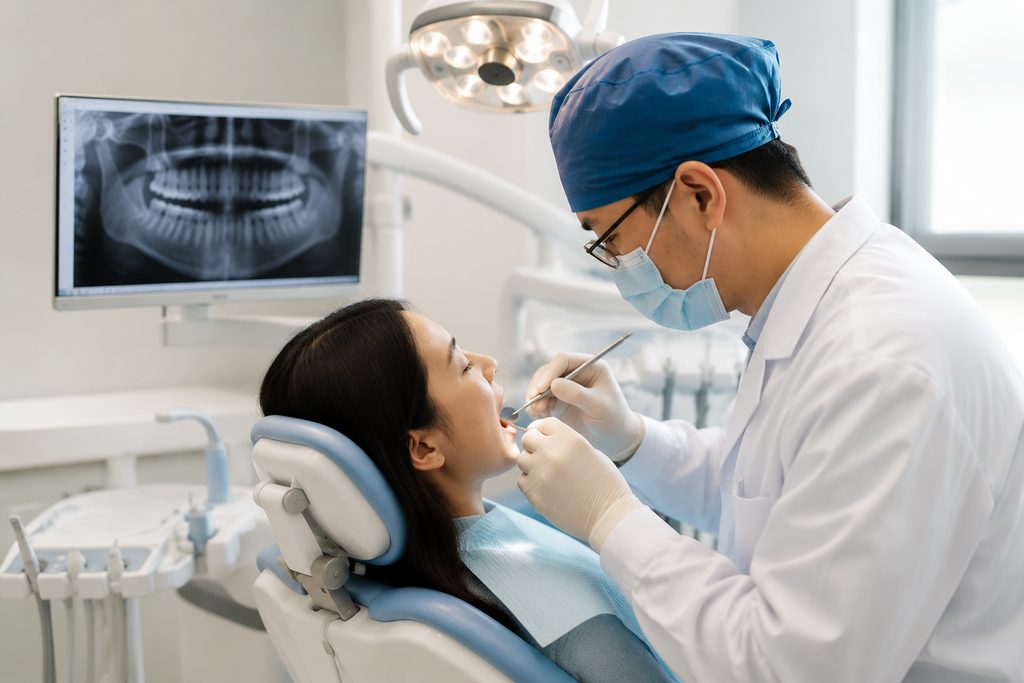
Have you ever sat in a dental chair, heard the words “impacted wisdom teeth,” and then felt your stomach drop when the quote arrived? If you’re looking at a bill of $2,000 to $4,000 for four teeth in the United States or Europe, you’re not alone. The wisdom teeth removal cost China offers is a fraction of that — often between $150 and $800 per tooth depending on impaction complexity and hospital tier. That’s a real, verifiable difference. And it’s why thousands of international patients now ask a very practical question: can I get my wisdom teeth out in China safely, affordably, and without losing weeks to logistics?
The short answer is yes. China’s top-tier dental hospitals and JCI-accredited private clinics perform wisdom tooth extractions daily, using the same CBCT imaging, piezosurgery units, and anesthesia protocols you’d find in Boston or London. The difference is structural: lower labor costs, higher patient volumes, and a hospital system built for scale. We’ll break down exactly what this costs, where to go, how to book, and what the risks actually are.
Key Takeaways
- Wisdom teeth removal cost China typically ranges from $150 to $800 per tooth, compared to $500 to $2,500 per tooth in the US or UK.
- Top dental departments in China use the same imaging and surgical technology as Western hospitals, with specialists performing hundreds of extractions annually.
- Language barriers in public hospitals are real — but private international clinics and bilingual companion services solve this directly.
- You cannot pre-book surgery at a Chinese public hospital from overseas without an in-person consultation first. Plan for a two-visit trip or use an international clinic that accepts remote booking.
The Problem: Dental Surgery Costs Are Spiraling in the West
In the United States, a single surgical extraction of an impacted wisdom tooth averages $550 to $1,100. Add general anesthesia, 3D imaging, and facility fees, and a full-mouth extraction of four impacted teeth routinely lands between $3,000 and $6,000. In the UK, NHS waiting lists for wisdom tooth removal now stretch past 18 months in some regions, pushing patients toward private care at £250 to £900 per tooth. Australia and Canada tell similar stories.
What happens if you delay? Impacted wisdom teeth can cause pericoronitis, cyst formation, damage to adjacent molars, and crowding that undoes years of orthodontic work. The pain doesn’t wait for a better insurance plan. So patients start searching: how much does wisdom teeth surgery cost abroad? Thailand, Mexico, Turkey, and China all come up. But China offers something the others often don’t — a combination of top-ranked public hospitals, internationally accredited private clinics, and a cost structure that makes even complex cases manageable without sacrificing safety.
Why China Delivers Results for Wisdom Teeth Removal
China’s dental infrastructure is not a budget alternative. It’s a parallel system with real clinical depth. The country has over 35,000 hospitals, and the top 5% — roughly 340+ top-ranked hospitals across 37 cities — include dental and oral-maxillofacial departments that handle extraction volumes Western surgeons rarely see. That volume matters. A surgeon who removes 400 impacted third molars a year has seen anatomical variations that a surgeon doing 50 a year hasn’t.
Clinical Volume and Specialist Depth
Take Peking University School of Stomatology in Beijing or Shanghai Ninth People’s Hospital. These are not small clinics. Shanghai Ninth’s oral-maxillofacial surgery department is one of the largest in Asia, handling tens of thousands of surgical cases annually. The specialists there routinely manage complex impactions — teeth sitting on the inferior alveolar nerve, horizontally impacted molars, cases requiring coronectomy. For a straightforward extraction, you’ll likely be treated by a senior resident or attending with hundreds of cases behind them. For complex cases, a chief surgeon with thousands.
Technology Without the Markup
Modern Chinese dental hospitals use cone-beam computed tomography (CBCT) as standard pre-operative imaging for impacted teeth. That’s the same 3D imaging that costs $300 to $600 as a separate line item in the US. In Chinese public hospitals, CBCT often costs $50 to $120. Piezosurgery — ultrasonic bone cutting that reduces nerve injury risk — is widely available. So is computer-guided extraction planning. The technology is not the differentiator. The price of delivering it is.
Cost Advantage Without Quality Compromise
Why is wisdom teeth removal cost China so much lower? Three structural reasons. First, labor economics: a Chinese oral surgeon’s salary is a fraction of a US surgeon’s, even at top hospitals. Second, hospital efficiency: Chinese public hospitals process enormous patient volumes, spreading fixed costs over far more procedures. Third, no insurance-driven inflation: Chinese hospitals set prices through provincial fee schedules, not through negotiation with private insurers. The result is a simple extraction for $150 to $300, a surgical extraction for $300 to $600, and a complex full-bony impaction for $500 to $800. At private international clinics like United Family or Jiahui, expect to pay 2 to 3 times those public hospital rates — still well below Western prices, but with English-speaking staff and direct insurance billing.
Dental Surgery Packages Shanghai and Beijing: What’s Actually Included
When you search for dental surgery packages Shanghai or try to book wisdom tooth extraction Beijing, you’ll find two distinct models. Public hospital international departments offer a la carte pricing: consultation, imaging, extraction, and medication billed separately. A typical full-mouth case at a top public hospital international wing might run $1,200 to $2,500 all-in, including anesthesia and follow-up. Private international clinics bundle these into packages. A package at a JCI-accredited clinic in Shanghai or Beijing typically includes initial consultation, CBCT imaging, the extraction procedure, anesthesia, post-operative medications, and one follow-up visit. Prices range from $800 to $2,000 per tooth for complex cases, with discounts for multiple teeth in one session.
What no package includes is the guarantee of a specific surgeon unless you pay a premium. And that’s fine — the standard of care across these institutions is consistent. What you’re paying for at the private clinics is language support, scheduling convenience, and a familiar Western-style experience. At public hospitals, you’re paying for raw clinical excellence and the lowest possible price, but you’ll need help navigating the system.
Is It Safe to Get Wisdom Teeth Pulled in China? A Realistic Assessment
The honest answer: yes, at the right institutions, with the right preparation. The safety question usually hides three specific fears — infection control, anesthesia competence, and what happens if something goes wrong. Let’s address each.
Infection control at top-tier Chinese hospitals follows protocols aligned with international standards. JCI-accredited private clinics like United Family and Raffles undergo the same accreditation audits as hospitals in Singapore or Dubai. Public hospitals like Peking Union Medical College Hospital maintain strict sterilization workflows — instrument tracking, single-use disposables, and operating theater discipline that would be familiar to any Western surgeon. The risk is not the top hospitals. The risk is choosing an unvetted, low-tier clinic based on price alone. Don’t do that.
Anesthesia for wisdom tooth extraction in China is typically local with or without sedation. General anesthesia is available at hospital-based oral surgery departments with full anesthesiology teams. The safety record for third molar surgery in China is comparable to international benchmarks. A 2019 study in the Journal of Oral and Maxillofacial Surgery examining complications in Chinese patients found rates of inferior alveolar nerve injury and dry socket consistent with global averages — roughly 1-5% for temporary nerve disturbance and 5-10% for dry socket, depending on impaction complexity.
And if something goes wrong? Chinese hospitals have robust post-operative care pathways. The key is staying in the country long enough for follow-up. For simple extractions, 3 to 5 days is usually sufficient. For complex cases, plan for 7 to 10 days before flying home. That’s not a safety compromise — it’s the same advice we’d give for dental surgery in any foreign country.
How to Book Wisdom Tooth Extraction Beijing or Shanghai: The Two-Visit Reality
Here’s the structural truth that surprises most international patients. You cannot email a Chinese public hospital from London and book a surgical slot for next month. The system doesn’t work that way. Public hospitals require an in-person consultation before any surgery is scheduled. The doctor needs to examine you, review your imaging, and confirm the surgical plan. That means one of two things: either you make two trips, or you use a private international clinic that accepts remote pre-booking.
Private clinics like United Family, Jiahui, and ParkwayHealth will often schedule your extraction based on panoramic X-rays or CBCT images you send in advance. You fly in, have a quick confirmation consultation, and the surgery happens the same day or the next. That’s the most efficient path for a single-visit trip. Public hospital international departments sometimes offer similar arrangements through their VIP wings, but it’s case-by-case.
What about our role? We help patients navigate exactly this. Not by promising access that doesn’t exist, but by knowing which hospitals and clinics actually accept overseas pre-booking, what documents they need, and how to coordinate the consultation-to-surgery timeline so you don’t waste days waiting. We also provide bilingual medical companions who handle registration, payment, and translation — the things that eat hours if you’re alone in a Chinese hospital.
| Procedure Type | China Public Hospital (USD) | China Private International Clinic (USD) | US Average (USD) |
|---|---|---|---|
| Simple extraction (per tooth) | $150 – $300 | $300 – $600 | $300 – $800 |
| Surgical extraction (soft tissue impaction) | $300 – $500 | $500 – $900 | $550 – $1,100 |
| Complex full-bony impaction (per tooth) | $500 – $800 | $800 – $1,500 | $800 – $2,500 |
| Full-mouth (4 impacted teeth, with sedation) | $1,200 – $2,500 | $2,500 – $5,000 | $3,000 – $6,000 |
Finding the Best Dental Clinic for Wisdom Teeth Removal China: What Actually Matters
Searching for the best dental clinic for wisdom teeth removal China will return dozens of options. Here’s how to filter them. First, check accreditation. JCI certification is the gold standard for private clinics — it means the facility has passed a rigorous international audit covering everything from infection control to patient safety protocols. Second, verify the surgeon’s credentials. In China, oral-maxillofacial surgeons complete 5 years of dental school plus 3 to 5 years of specialty residency. Ask for the surgeon’s title: attending physician (主治医师) or above is what you want for complex cases. Third, confirm imaging capability. If the clinic doesn’t have CBCT on-site, walk away. Three-dimensional imaging is non-negotiable for impacted third molars near the nerve.
Public hospital options worth considering: Peking University School of Stomatology in Beijing, Shanghai Ninth People’s Hospital, West China Hospital of Stomatology in Chengdu, and the dental department at Peking Union Medical College Hospital. These are consistently ranked among China’s top dental institutions. For private care, United Family (Beijing, Shanghai, Guangzhou), Jiahui (Shanghai), and Raffles (Beijing, Shanghai) offer English-speaking staff and direct insurance billing with major international insurers.
Practical Considerations: Visas, Payment, and Follow-Up After Returning Home
For a medical trip to China, you’ll need an S2 visa, which covers short-term private affairs including medical treatment. The Chinese embassy or consulate in your country will require supporting documents — typically a treatment invitation letter or appointment confirmation from the hospital or clinic, your passport, and a completed application form. Processing time varies from 4 to 10 business days depending on the consulate. Family members accompanying you also apply for S2 visas. We advise against applying for an M visa — that’s for commercial and trade activities, not medical care.
Payment at Chinese public hospitals is almost always required upfront, before the procedure. Bring a credit card that works internationally (Visa and Mastercard are widely accepted at hospital international departments) or arrange a bank transfer in advance. Private international clinics often bill insurance directly — check with your insurer before you travel to confirm whether your plan covers overseas dental surgery. Most US dental insurance plans do not, but some international health plans do. Keep every receipt and medical record; you’ll need them for reimbursement claims.
After the extraction, your surgeon will give you a post-operative care sheet. Standard advice: no smoking for at least 72 hours, no straws for a week, soft foods for 3 to 5 days, and salt-water rinses after 24 hours. If you’re flying home within a few days of surgery, cabin pressure changes can theoretically increase swelling or discomfort. Most surgeons recommend waiting at least 48 to 72 hours after a simple extraction before flying, and 7 to 10 days after complex surgery. For ongoing follow-up, your home dentist can handle routine post-operative checks. Request a written surgical report and a copy of your imaging before you leave China — it makes continuity of care much easier.
Frequently Asked Questions
At private international clinics, yes. Send your X-rays or CBCT scans in advance, get pre-approved for surgery, and the extraction can happen the day after you arrive. At public hospitals, you’ll likely need a consultation first, then surgery a day or two later — still doable in a single 5-7 day trip for straightforward cases. Complex cases with sedation may require a slightly longer stay.
Serious complications from wisdom tooth extraction are rare — dry socket and temporary nerve disturbance are the most common, and both are manageable remotely with guidance from your surgeon. Ask for a post-operative contact (email or WeChat) before you leave. Your home dentist can also manage most follow-up issues. For anything urgent, you’d return to China or seek care locally, depending on severity.
At top-ranked public hospital dental departments and JCI-accredited private clinics, the clinical standard is comparable. The technology is the same — CBCT, piezosurgery, modern anesthesia. The surgeons are board-certified specialists with high case volumes. What differs is the care model: public hospitals are efficient but not hand-holding, while private clinics offer a Western-style experience at a higher price. Choose the model that fits your needs.
At private international clinics, no — English is standard. At public hospital international departments, English is usually available but not guaranteed for every staff member. A bilingual medical companion solves this: they handle registration, payment, translation, and navigation. It’s not required, but it removes the single biggest friction point for foreign patients.
Your Next Step
You now have a clear picture: wisdom teeth removal in China is safe at the right institutions, costs a fraction of Western prices, and requires some planning to do properly. Whether you choose a public hospital for maximum savings or a private clinic for maximum convenience depends on your budget, your timeline, and your comfort with navigating a foreign system. We help patients figure out which path fits — matching you with appropriate hospitals or clinics, coordinating the consultation, and providing on-the-ground support if you want it. Take a look at our patient services overview to understand how that works, or browse our top-ranked hospital database to start researching institutions. No pressure, no obligation — just a clear next step when you’re ready.
For more medical information and treatment options in China, visit chinamedservices.com (China Medical Services).
