Is Glaucoma Treatable in China? Costs, Hospitals, and What to Expect
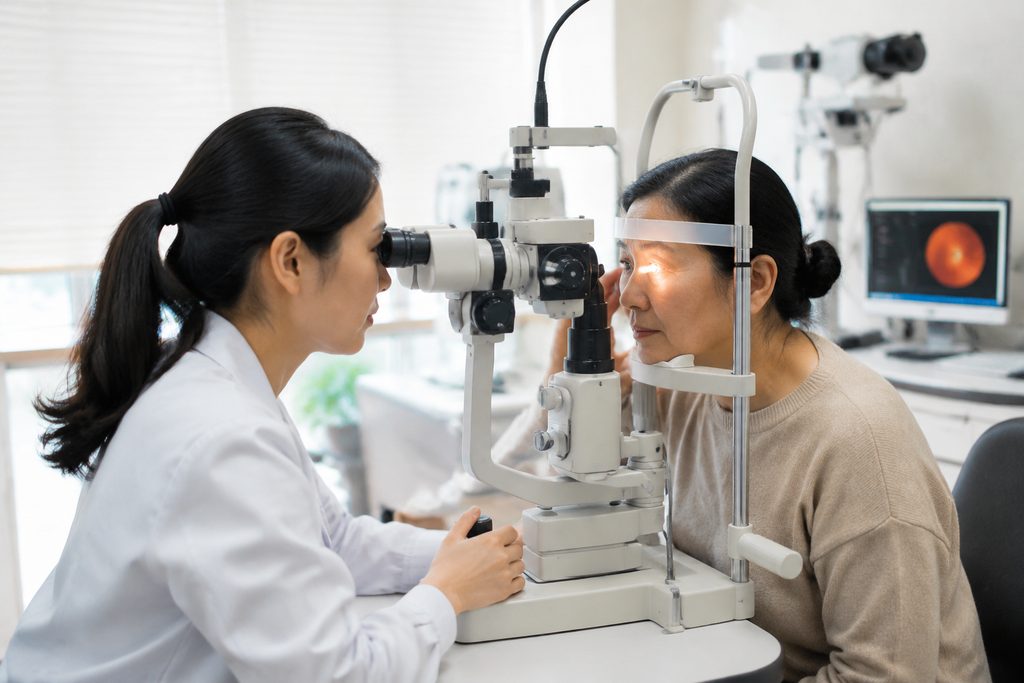
While a patient in the United States can expect to pay between $4,000 and $8,000 for a single minimally invasive glaucoma surgery (MIGS) device alone, the same category of implant at a top-tier Chinese eye hospital typically adds $1,800 to $3,200 to the procedure bill. And the wait? In Canada’s public system, a referral to a glaucoma specialist can stretch past 12 weeks in some provinces. At Shanghai Eye and ENT Hospital, one of the world’s highest-volume glaucoma centers, international patients are often seen within 5 to 10 business days through the hospital’s international department. That gap is not marketing. It is arithmetic. If you are searching for glaucoma treatment cost China, you are probably not just curious about a price tag. You are wondering whether the system on the other side of the world can actually deliver safe, modern care for a disease that, left untreated, steals vision quietly.
We have spent years helping patients from North America, Europe, and the Middle East navigate exactly this question. What follows is a straight explanation of what glaucoma care in China actually looks like — the costs, the hospitals, the surgical safety record, and the steps you would take to make it happen. No promises about outcomes. No cherry-picked miracles. Just the facts we have verified through repeated coordination with China’s leading eye centers.
How This Actually Works, Step by Step
You do not fly to China and walk into a public hospital expecting a same-day glaucoma consultation. That is not how the system works, and anyone who tells you otherwise is oversimplifying. Here is the real sequence.
First, you send us your existing records: visual field tests, OCT scans of the optic nerve, intraocular pressure (IOP) history, current medication list, and any prior surgical notes. We translate these into Chinese and route them to the ophthalmology department of a hospital matched to your case — usually a Fudan-ranked eye center or a JCI-accredited private international hospital, depending on your budget and urgency.
Second, a glaucoma specialist reviews the file. This is not a chatbot or a general practitioner. It is a fellowship-trained ophthalmologist who manages angle-closure, open-angle, and secondary glaucomas daily. They issue a written opinion: what they agree with in your current management, what they would change, and whether they believe a procedure in China would offer meaningful benefit over what you can access at home.
Third, you decide. If the opinion is favorable and you want to proceed, we coordinate a video consultation so you can speak directly with the treating team. You ask about their surgical volume, their complication rate, their preferred approach — trabeculectomy versus tube shunt versus MIGS. Then, and only then, do we schedule your in-person visit and procedure.
This staged approach protects you from flying 7,000 miles on a hunch. It also means the hospital knows exactly who you are and what you need before you arrive.
Can Glaucoma Be Cured in China? The Honest Answer
No. Not in China. Not anywhere. Glaucoma is a chronic neurodegenerative disease of the optic nerve, and no current treatment — surgical, laser, or pharmaceutical — restores vision that has already been lost. What treatment does is lower intraocular pressure, the only modifiable risk factor we have, to slow or halt further damage. A patient who asks can glaucoma be cured in China deserves this answer up front, because any clinic that promises a cure is one you should walk away from.
What China does offer is volume. The country’s leading eye hospitals perform glaucoma surgeries at a scale that is genuinely hard to match. Shanghai Eye and ENT Hospital’s glaucoma department handles over 4,000 surgical cases annually. Zhongshan Ophthalmic Center in Guangzhou, another Fudan top-ranked program, manages a similar load. That repetition builds technical proficiency. For a disease where surgical precision directly correlates with long-term pressure control, volume matters.
But volume is not a cure. It is a tool. The goal in China, as in the US or Germany, is to slow the disease enough that you keep useful vision for the rest of your life. That is the realistic target.
A Realistic Timeline
People underestimate the administrative runway. Here is what a typical international glaucoma journey looks like, from first contact to post-operative follow-up, based on cases we have coordinated.
| Stage | What Happens | Realistic Duration |
|---|---|---|
| Day 1–7 | You send records; we translate and route them to the ophthalmology department | 3–7 business days |
| Week 2–3 | Specialist reviews file and issues written second opinion | 5–10 business days |
| Week 3–4 | Video consultation with treating team, if you choose to proceed | 1–2 weeks (scheduling dependent) |
| Week 4–8 | S2 visa application, with hospital invitation letter as supporting document | 2–6 weeks, varies by consulate |
| Week 6–10 | Travel to China; in-person consultation, pre-op testing, surgery | 3–7 days in-country before procedure |
| Month 3 | Post-operative follow-up; if stable, return home with a written discharge summary | 1–2 weeks recovery before long-haul flight (surgeon-dependent) |
Notice the waiting steps people forget. Document translation takes days, not hours. A specialist who reviews 40 files a week cannot turn yours around in 24 hours. And the S2 visa — the correct category for medical treatment and private affairs — requires an invitation letter from the hospital, which itself takes time to issue. Plan for the whole sequence to run 8 to 12 weeks from first email to surgery date. If your glaucoma is advancing rapidly, that timeline may be too long, and the honest advice is to treat locally first.
What Can Go Wrong — and What Happens Then
We would rather you hear this from us than discover it at a check-in counter in Beijing.
The visa gets delayed. Consulates in some countries are backlogged. The S2 visa is the right category for medical travel, but it is not guaranteed. If your visa does not arrive in time, the hospital will not hold an operating room slot indefinitely. You reschedule. That means new flights, new accommodation, possibly a new pre-op workup. We have seen this happen. Budget for flexibility.
The specialist changes the plan. You flew in expecting a trabeculectomy. The surgeon reviews your OCT and says a tube shunt is safer given your conjunctival scarring. This is not bait-and-switch. It is good medicine. But it changes the cost and the recovery timeline. You need to be psychologically prepared for the plan to shift after in-person evaluation.
Post-operative pressure spikes. Even in the best hands, a small percentage of glaucoma surgeries result in early post-op IOP elevation. The hospital manages this with medication and close monitoring. That is why you should not book a return flight 72 hours after surgery. Most surgeons want you in-country for at least one week of follow-up, often two.
Language friction outside the hospital. Inside the international department, English is generally available. Outside — in a pharmacy, a taxi, a hotel — it is not. This is where a bilingual medical companion changes the experience from stressful to manageable. It is not a luxury. It is logistics.
Is Glaucoma Surgery Safe in China? What the Numbers Say
The question is glaucoma surgery safe in China deserves a data-driven answer, not a reassurance. Here is what we can verify. Trabeculectomy, the gold-standard filtration surgery for moderate to advanced glaucoma, has been performed in China for over four decades. At top centers, the reported success rate — defined as IOP below 21 mmHg without medication at one year — runs between 75% and 85% for primary open-angle glaucoma, consistent with outcomes published in major Western ophthalmology journals. Complication rates for serious events like endophthalmitis or suprachoroidal hemorrhage are below 1% at high-volume centers.
What China adds is volume. A surgeon who performs 300 trabeculectomies a year has seen the anatomical variations, the scarred conjunctivas, the angle anomalies that a surgeon performing 40 a year has only read about. That experience translates into fewer surprises in the operating room.
But safety is not just about the surgeon. It is about the system around the surgeon. And here is the honest caveat: safety at a Fudan-ranked eye hospital in Shanghai is not the same as safety at a small private clinic in a second-tier city. The gap is real. When we say we connect patients with top-tier hospitals, we mean the ones with published surgical volumes, international departments, and English-speaking coordinators. Not every facility in China meets that bar. You should not choose a hospital for glaucoma surgery based on a website with stock photos.
Practical Considerations: Records, Visa, Payment, and Follow-Up
You will need your complete ophthalmic history. That means visual fields from the last two years, serial OCT scans showing optic nerve progression, a full list of IOP readings, and every glaucoma medication you have tried, with dosages and dates. If you have had prior eye surgery — cataract, LASIK, trabeculectomy — bring the operative notes. A surgeon evaluating you remotely cannot make a safe recommendation without these.
For the visa, the S2 category is the one used for short-term medical treatment and private affairs. It is not the M visa, which is for commercial and trade activities and has nothing to do with healthcare. Your hospital will issue an invitation letter confirming your scheduled treatment. That letter, plus your passport and completed application, goes to the Chinese embassy or consulate in your home country. Processing times vary. Apply early.
Payment is upfront at public hospitals. You will pay a deposit before surgery, and the hospital draws down from it as services are rendered. Private international hospitals may accept direct insurance billing; public hospitals generally do not. You pay, then seek reimbursement from your insurer at home. Keep every receipt. Ask for itemized invoices in English — the international department can usually provide them.
Follow-up at home is the part people forget. Your surgeon in China will write a detailed discharge summary with target IOP, medication plan, and a recommended follow-up schedule. You then need a local ophthalmologist who is willing to take over that plan. Line this up before you travel. A glaucoma surgery is not a one-time event. It is a long-term management change, and your local doctor needs to be part of it.
Frequently Asked Questions
Selective laser trabeculoplasty (SLT) in Beijing typically runs between $800 and $1,500 per eye at top-tier hospitals, while a full trabeculectomy or tube shunt procedure ranges from $4,000 to $8,000 depending on the hospital and case complexity. Laser is cheaper and lower-risk, but it is not appropriate for every patient. A specialist needs to evaluate your angle anatomy and disease stage first. If you are researching glaucoma laser treatment price Beijing, understand that the price is only meaningful after a doctor confirms you are a candidate.
Shanghai Eye and ENT Hospital (Fudan University) is the most commonly recommended center for complex glaucoma, based on its surgical volume and Fudan specialty ranking. For international patients who prioritize English-speaking staff and direct insurance billing, Jiahui International Hospital and United Family Shanghai both have Western-trained ophthalmologists and JCI accreditation. The best glaucoma hospital Shanghai depends on whether you value surgical volume or service experience more. We can help you weigh both. Our top hospital directory breaks down the differences.
You cannot book a specific surgery date from abroad through a public hospital. The standard rule is that surgery requires an in-person consultation first. What you can do remotely is complete a written evaluation or video consultation, receive a treatment recommendation, and then have your in-person visit and procedure scheduled on a coordinated timeline. If you are asking book glaucoma surgery China, the honest answer is that the booking happens after the specialist sees you in person — but the evaluation can start before you board a plane. Our team handles the coordination at every stage, and if we cannot secure the appointment we promised, the coordination fee is refunded in full.
This is the scenario that keeps people up at night. The mitigation is a detailed handoff. Your Chinese surgeon provides a written post-operative protocol, and you identify a local ophthalmologist before you travel who agrees to manage you after return. In the rare event of a complication, that local doctor treats you and can communicate directly with the Chinese team if needed. We can facilitate that communication. But the hard truth is that cross-border surgical care always carries this risk, and no coordination service can eliminate it entirely.
Glaucoma treatment in China is not a miracle story. It is a volume story, a cost story, and a logistics story. The surgeons are excellent at the top centers. The prices are a fraction of Western rates. But the system demands preparation, patience, and a clear-eyed understanding of what can go wrong. If you are willing to do the groundwork, the option is real. If you want to explore whether your specific case makes sense for treatment in China, start with a conversation. Our team at China Medical Services coordinates written evaluations, video consultations, and in-person care at top eye hospitals across the country. We do not promise outcomes. We do not guarantee surgical dates. We handle the translation, the scheduling, and the on-the-ground support so you can make a decision based on medicine, not guesswork.
Send us your records. See what a Chinese glaucoma specialist actually says. Then decide.
For more medical information and treatment options in China, visit chinamedservices.com (China Medical Services).
