Is an MRI With Contrast Safe? What the Evidence Actually Shows
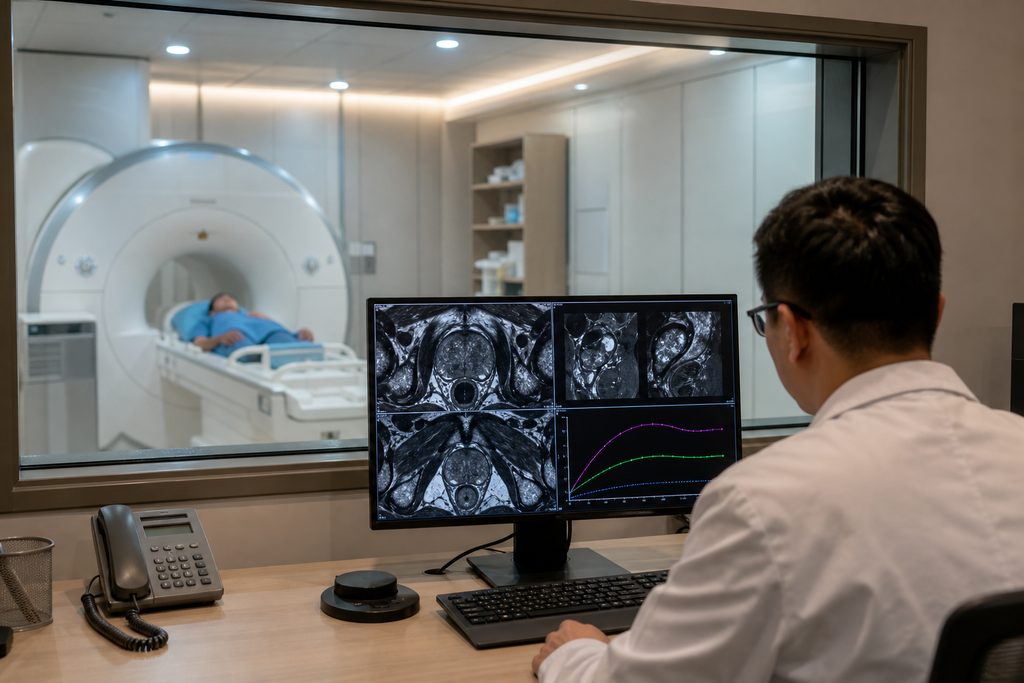
Have you ever been told you need an MRI “with contrast” and immediately tensed up at the word contrast? That reaction is understandable. The idea of having a dye injected into your bloodstream before a scan raises real questions. Is an MRI with contrast safe? What exactly is in that injection? And if you are considering traveling abroad for medical imaging, how does the mri with contrast cost China factor into your decision?
Let’s answer the safety question head-on. For the overwhelming majority of patients, a contrast-enhanced MRI is a low-risk procedure. Serious adverse reactions occur in approximately 0.04% to 0.3% of administrations, depending on the specific contrast agent used. That is between 4 and 30 serious reactions per 10,000 doses. The American College of Radiology classifies the most commonly used gadolinium-based contrast agents as carrying a very low risk profile compared to older, now-retired formulations. But “low risk” is not the same as “no risk,” and you deserve a precise explanation of what that means for your body.
Our team at China Medical Services regularly helps international patients navigate imaging appointments at top-ranked Chinese hospitals. We see the same questions come up again and again: Will I have an allergic reaction? Does the dye stay in my body? Is the scan worth the extra time and money? This guide walks through the evidence without medical jargon, so you can make a clear-eyed decision.
How This Actually Works, Step by Step
Understanding the process removes much of the fear. Here is the real sequence when you book a contrast MRI, whether in Beijing, Shanghai, or your home city.
First, you complete a screening questionnaire. A radiographer or nurse reviews your kidney function, pregnancy status, history of asthma, and any prior reactions to contrast media. If you have severely impaired kidney function, the medical team may order a blood test for estimated glomerular filtration rate (eGFR) before proceeding. This is standard practice at accredited imaging centers worldwide.
Next, a small intravenous cannula is placed in your arm. The contrast agent — almost always a gadolinium-based compound — is injected either by hand or via an automated power injector timed to the scan sequence. You may feel a cool sensation spreading up your arm. Some patients report a metallic taste in the mouth for a few seconds. Both are benign and transient.
The scan itself proceeds like any MRI. You lie still inside the magnet bore while the machine captures cross-sectional images. The contrast agent alters the magnetic properties of certain tissues, making blood vessels, tumors, inflammation, and areas of abnormal blood flow stand out more clearly against surrounding structures. A radiologist then interprets these enhanced images and issues a written report.
For international patients seeking imaging in China, the practical steps are similar. You send your existing medical records and the referring physician’s request to the hospital’s international department or to a coordination service like ours. The radiology team confirms the appropriate protocol. You schedule the appointment, complete the screening on site, undergo the scan, and receive the images and report — usually within 24 to 48 hours.
Is an MRI With Contrast Safe? The Evidence on Gadolinium
The safety question deserves a direct answer. Gadolinium is a rare earth metal that is toxic in its free form. But in contrast agents, it is bound to a chelating molecule that wraps around the metal ion and allows the kidneys to excrete it rapidly. The stability of that chemical cage is what determines safety.
Older linear gadolinium agents were less stable and released small amounts of free gadolinium into the body. That led to the discovery of gadolinium deposition disease and nephrogenic systemic fibrosis (NSF), a rare but serious condition affecting patients with severe kidney failure. Regulatory agencies in the United States and Europe suspended or restricted several linear agents between 2017 and 2018. The macrocyclic agents that remain in widespread use today — including gadoterate meglumine, gadobutrol, and gadoteridol — have a much tighter molecular structure and a far lower rate of gadolinium retention.
What does the data show? A 2019 study published in Radiology examined over 280,000 gadolinium-enhanced MRI exams and found zero cases of NSF among patients receiving macrocyclic agents, even in those with impaired renal function. The risk of anaphylaxis — a severe, life-threatening allergic reaction — is estimated at 0.004% to 0.01% for modern agents. That is roughly 1 in 10,000 to 1 in 25,000 patients. Mild reactions such as nausea, headache, or hives occur in about 0.5% to 1% of cases.
So is mri contrast dye safe? The short answer is yes, for patients with normal kidney function and no prior history of contrast reactions, modern macrocyclic gadolinium agents are considered very safe. The longer answer is that no medical intervention carries zero risk, and the decision to use contrast should always be tied to a clinical question that cannot be answered adequately without it.
A Realistic Timeline
Planning a contrast MRI in China as an international patient involves steps that many people underestimate. Here is an honest schedule, from first inquiry to receiving your report.
| Stage | What Happens | Typical Duration |
|---|---|---|
| Day 1–3 | You submit your referral, medical history, and any prior imaging to the hospital international department or coordination service | 1–3 days for review |
| Day 3–7 | Radiology team confirms the appropriate MRI protocol and contrast agent; appointment is scheduled | 2–5 days lead time for non-urgent scans |
| Day 7–14 | If you need an S2 visa, you gather the hospital’s invitation letter and supporting documents; visa processing at the nearest Chinese embassy or consulate | 5–10 business days, varies by country |
| Day 14–20 | You arrive in China, complete on-site screening (including eGFR blood test if indicated), and undergo the MRI with contrast | Scan itself: 30–60 minutes |
| Day 15–22 | Radiologist issues the written report and image files; you receive copies digitally and on disc | 24–48 hours after scan |
How long does mri with contrast take? The injection adds only a few minutes to the procedure. A typical contrast-enhanced brain MRI takes 30 to 45 minutes. A liver or cardiac MRI with contrast can run 45 to 75 minutes. The contrast agent itself circulates and clears within hours in patients with healthy kidneys.
One step people forget: document translation. If your existing medical records are not in Chinese, the hospital’s international department will need either an English version (many top-tier hospitals accept English) or a certified translation. Our team handles this as part of coordination, but it adds time if you are arranging everything independently.
What Can Go Wrong — and What Happens Then
Honest talk about failure modes. The most feared complication is an allergic reaction. It happens rarely, but every accredited imaging center in China is equipped to handle it. Radiologists and nurses carry emergency medications, including antihistamines, epinephrine, and oxygen. Severe reactions are treated on the spot.
What if your kidney function is borderline? You may be asked to complete a blood test before the scan. If your eGFR is below 30 mL/min/1.73m², the radiologist may recommend a non-contrast study, a different imaging modality like ultrasound or CT, or a reduced dose of a macrocyclic agent with careful monitoring. This is not a refusal to scan — it is risk management.
What about gadolinium retention? Studies have confirmed that trace amounts of gadolinium can remain in the brain and bones even years after a single contrast MRI. The clinical significance of this retention is unknown. No study has linked retained gadolinium from macrocyclic agents to any adverse health outcome in patients with normal kidney function. But the finding has made radiologists more selective about when contrast is truly necessary. You should ask your referring physician: “What will the contrast show that a non-contrast scan cannot?” If the answer is vague, get a second opinion before proceeding.
Another realistic issue: language barriers. If you arrive at a large public hospital in China without Chinese language support, you may struggle with registration, screening forms, and post-scan instructions. This is not a safety failure of the MRI itself, but it can create confusion. A bilingual medical companion or the hospital’s international department solves this.
Best Hospital for Contrast MRI Shanghai: How to Choose
If you are specifically searching for the best hospital for contrast mri Shanghai, the question is less about the city and more about the machine, the radiologist, and the protocol. Shanghai has several hospitals with 3T MRI scanners — the current gold standard for high-resolution imaging — including Zhongshan Hospital Fudan University, Ruijin Hospital, and Huashan Hospital. These institutions handle enormous imaging volumes. Huashan Hospital’s radiology department, for example, performs thousands of MRI studies annually, which means its radiologists see rare findings regularly.
But “best” depends on your clinical question. A brain tumor workup benefits from a neuro-radiologist with subspecialty training. A liver lesion characterization requires a hepatobiliary MRI protocol with specific contrast timing. A cardiac MRI for myocarditis demands a completely different setup and radiologist expertise. The right question is not “which hospital is best for MRI” but “which hospital is best for my MRI indication.”
Our department-level hospital rankings can help you narrow the field by specialty. We also maintain profiles of top-ranked general hospitals across Shanghai and other major Chinese cities. When you contact us with your referral documents, we match your case to an appropriate imaging center — not the other way around.
Practical Considerations: Records, Visa, Payment, and Follow-Up
Bring every prior imaging study you have. If you had a CT scan in your home country, bring the disc and the report. Radiologists in China will compare the new MRI against your old images. This is standard practice and improves diagnostic accuracy. Without priors, the radiologist may flag benign findings as suspicious, leading to unnecessary anxiety or additional tests.
Visa category matters. Foreign nationals traveling to China for medical treatment use an S2 visa, annotated for medical purposes. The hospital’s international department can provide an invitation letter or treatment confirmation to support your application. Family members accompanying you also apply for S2 visas. Processing times vary by country, so start this early.
Payment is typically required upfront at Chinese public hospitals, even for international patients. Many private international hospitals in China, such as United Family and Jiahui, offer direct insurance billing if your insurer has an agreement in place. Public hospital international departments generally require self-pay with reimbursement claimed from your insurer afterward. The mri with contrast cost China varies significantly: a contrast brain MRI at a top public hospital’s international department typically ranges from $300 to $800, while the same study at a private international hospital may run $800 to $1,500. By comparison, the same MRI in the United States often costs $2,000 to $5,000 before insurance. Always request a written quote before scheduling.
Follow-up at home is straightforward. You leave with a CD or USB containing DICOM image files and a printed or emailed report. Your home physician can review these directly. If the Chinese radiologist’s report is in Chinese, request an English translation — most international departments provide this as standard.
Frequently Asked Questions
Having allergies to food, pollen, or medications does not predict a reaction to gadolinium contrast. The relevant history is a prior reaction to any contrast agent used in CT, MRI, or X-ray procedures. If you have had a previous reaction, tell the radiology team before scheduling. They may pre-medicate you with antihistamines or choose a different contrast agent.
In patients with normal kidney function, the kidneys excrete most of the gadolinium within 24 hours. The biological half-life of modern macrocyclic agents is roughly 1.5 to 2 hours. Trace amounts may persist in bone and brain tissue for years, but no study has demonstrated clinical harm from this retention with current agents.
Most Chinese hospitals require a referral or a clinical indication from a physician before scheduling a contrast MRI. This is a safety measure, not bureaucracy. If you do not have a referral, a video consultation with a Chinese specialist can generate one. Some private international hospitals are more flexible, but a clinical question still needs to be defined.
Yes. The contrast agent itself adds cost, and the scan often requires additional sequences. Expect a 20% to 40% price increase over a non-contrast study. The mri with contrast cost China reflects this: a non-contrast brain MRI at a public hospital international department may start around $200, while the contrast version typically starts around $350.
A contrast mri medical tourism package China typically bundles the scan with airport pickup, hotel booking, bilingual accompaniment, and report translation. These packages are convenient for patients who want a single point of contact. They are not a clinical necessity — you can arrange everything independently — but for many international patients, the coordination saves time and reduces stress. Just confirm what the package includes before paying.
Your Next Step
The evidence on contrast MRI safety is reassuring for most patients, but the decision to use contrast should never be automatic. Ask your physician what the contrast will reveal that a non-contrast scan cannot. If the answer justifies the injection, proceed with confidence.
Our team at China Medical Services helps international patients arrange imaging, consultations, and treatment at 340+ top-ranked hospitals across 37 Chinese cities. We coordinate appointments, provide bilingual support, and handle the logistics — but we do not make medical decisions, and we do not promise outcomes. If you are considering an MRI in China and want help navigating the process, request a free consultation and we will walk you through your options.
For more medical information and treatment options in China, visit chinamedservices.com (China Medical Services).
