Remote Neurological Second Opinion: How to Get Expert Review from China
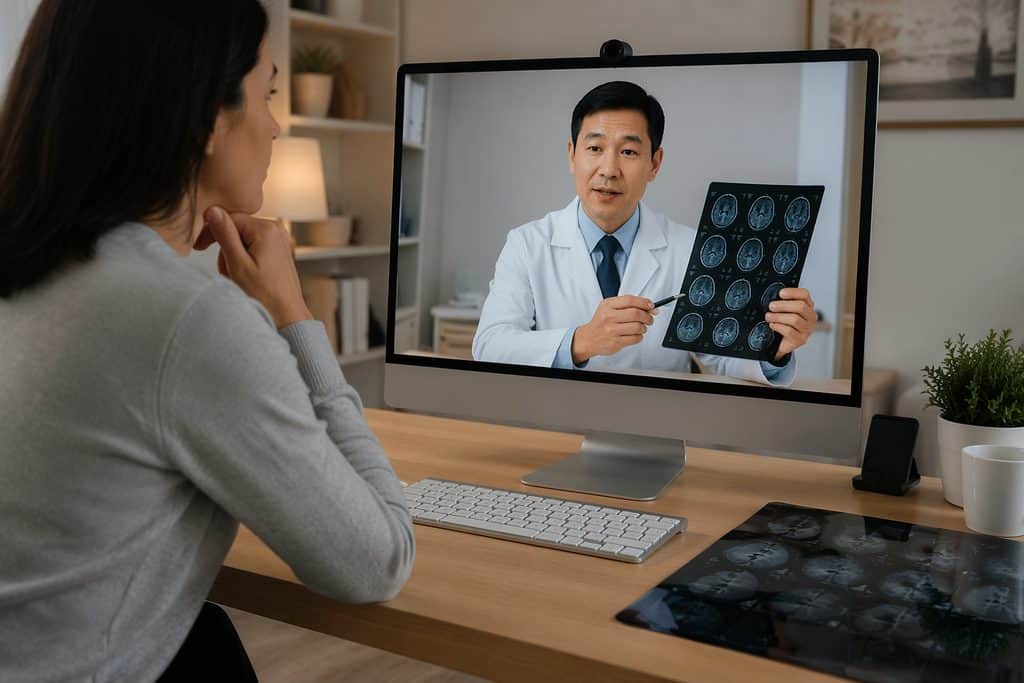
When 42-year-old Michael first heard the diagnosis — a suspected low-grade glioma near his left temporal lobe — he had no idea where to start looking for treatment. His local neurologist recommended watchful waiting with repeat MRI every six months. Michael wasn’t satisfied. He wanted another set of eyes on the scans, ideally from a team that reviews thousands of brain tumor cases annually. But flying to another country for a single consultation felt excessive, expensive, and logistically overwhelming. His question was simple: can I get a serious remote neurological second opinion cost China without leaving my living room?
The short answer is yes. Chinese tertiary hospitals, particularly the neurology and neurosurgery departments at Fudan-ranked institutions, now offer structured remote consultation pathways for international patients. You send your existing records. A specialist team reviews them. You receive a written analysis or join a video discussion. The remote neurological second opinion cost China typically ranges from $300 to $800 depending on the hospital tier and whether you need a written report or a live video session with a top specialist.
This article walks through exactly how the process works, what it costs, what can go wrong, and how to decide whether it’s the right move for your situation.
How This Actually Works, Step by Step
The sequence is more straightforward than most patients expect. But each step has details that matter.
Step 1: Gather your records. You need the original imaging files — not just the radiology report. For neurological cases, that means DICOM files from your MRI or CT scans, ideally the most recent two studies for comparison. You also need your neurologist’s clinical summary, any pathology reports if a biopsy was done, and a list of current medications.
Step 2: Submit for review. A service coordinator — or the hospital’s international department directly — receives your files through a secure upload portal. The coordinator checks that everything is readable and complete. Missing sequences or corrupted DICOM files are the most common cause of delay at this stage.
Step 3: Specialist assignment. The neurology department assigns your case to a senior specialist whose subspecialty matches your condition. A movement disorder case goes to a different person than a neuro-oncology case. This matching step is where hospital choice matters significantly.
Step 4: Written analysis or video consultation. You choose the format. A written second opinion costs less — typically $300 to $500 at top-tier public hospital international departments. A video consultation with the reviewing specialist runs $500 to $800. During the video session, you can ask questions directly, which changes the value equation for many patients.
Step 5: You receive the report. Written opinions usually arrive within 5 to 10 business days after the specialist accepts the case. Video consultations are scheduled once the specialist has reviewed your files, often within two weeks. The report includes the specialist’s assessment, agreement or disagreement with your original diagnosis, and suggested next steps — but it is not a prescription and does not replace in-person care.
Remote Neurological Second Opinion Cost China: What You Actually Pay
The written opinion is a medical document, not a prescription or a legally binding diagnosis. Your local physician reviews it and decides how to incorporate it into your care. Some countries and insurance providers recognize international second opinions; others treat them as advisory only. Check with your local regulatory context if you need the opinion for a specific legal or insurance purpose.
That’s the point of a second opinion. A disagreement doesn’t mean one doctor is wrong — it means your case has genuine diagnostic ambiguity. The written report will explain the reasoning. You then discuss it with your local neurologist, who may order additional testing to resolve the disagreement. In some cases, the difference is not in the diagnosis but in the recommended treatment approach.
Request the specialist’s credentials before the review begins. Fudan-ranked hospital neurology departments list their senior physicians’ titles and subspecialties publicly. A legitimate coordination service will tell you exactly who is reviewing your case, their subspecialty, and their years of experience. If the answer is vague, ask again or choose a different pathway.
Yes, but pediatric neurology is a distinct subspecialty. You need a hospital with a dedicated pediatric neurology department, not a general neurology department that occasionally sees children. The record requirements are the same: full DICOM imaging, clinical summary, and any developmental or genetic testing results.
Your Next Step
A remote neurological second opinion is not a replacement for in-person care. It’s a decision-making tool — a way to pressure-test a diagnosis before committing to surgery, medication, or months of watchful waiting. The remote neurological second opinion cost China makes this tool accessible to patients who would otherwise never get a second set of expert eyes on their scans.
Our team at China Medical Services helps international patients navigate the remote consultation process — from record preparation and translation to hospital matching and scheduling. We don’t provide medical advice, and we don’t promise specific outcomes. What we do is handle the coordination layer so you can focus on the medical conversation itself. If you’re ready to explore whether a remote second opinion makes sense for your case, start with a free consultation to discuss your situation and options.
Frequently Asked Questions
Yes. The hospitals used for international patients are JCI-accredited and follow the same international safety standards as top hospitals in the US and Europe. Surgical teams perform high volumes of procedures — often more than their Western counterparts — which studies show leads to better outcomes.
Costs vary by procedure and hospital, but international patients typically save 40-80% compared to US prices — even when factoring in travel and accommodation. A consultation with our team will give you an exact, all-inclusive quote with no hidden fees.
Send us your existing medical reports to get started. We handle everything from hospital selection and appointment scheduling to visa assistance and post-operative recovery planning. Your medical records are reviewed by the specialist before you even book a flight.
For more medical information and treatment options in China, visit chinamedservices.com (China Medical Services).
