Is Varicose Vein Treatment Worth It? Cost, Recovery & Real Outcomes
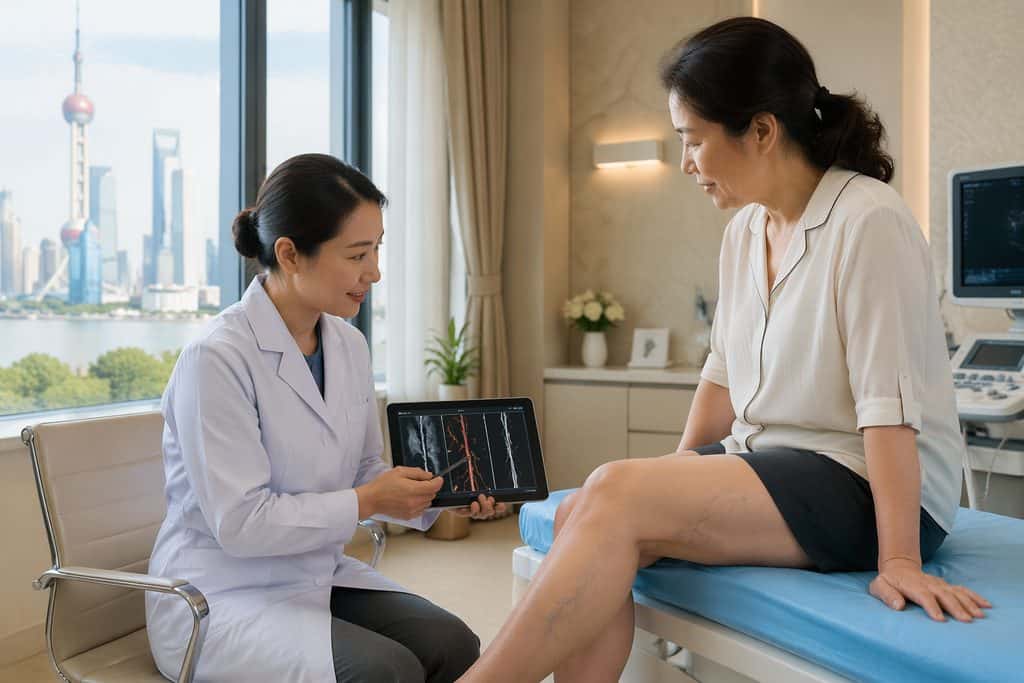
When 42-year-old Michael first noticed the twisted, bluish veins snaking up his left calf, he dismissed them as a cosmetic annoyance. Six months later, the throbbing after his warehouse shifts made standing unbearable. His GP in Manchester told him the NHS waiting list for a vascular consult was 14 months. He started searching: is varicose vein treatment worth it? What does varicose vein treatment cost China actually look like compared to private clinics in the UK?
That question sits at the heart of a decision millions of patients face each year. Chronic venous insufficiency, the underlying cause of varicose veins, affects approximately 1 in 3 adults over 45 in Western countries. For many, the veins are not just unsightly. They ache, swell, itch, and sometimes progress to skin changes or ulcers. The treatment decision is rarely purely medical. It is financial, logistical, and emotional.
Key Takeaways
- Varicose vein treatment in China costs roughly $1,200–$3,500 per leg for endovenous laser or radiofrequency ablation, compared to $4,000–$8,000 in the US and £3,000–£5,000 privately in the UK.
- Top vascular centers in Shanghai and Beijing perform thousands of minimally invasive vein procedures annually, with same-day discharge as the standard protocol.
- Recovery from modern endovenous ablation is measured in days, not weeks — most patients walk immediately and return to desk work within 48–72 hours.
- International patients must plan for a pre-treatment consultation, S2 visa documentation, and post-procedure compression stocking compliance before booking anything.
The Problem: Living With Veins That Will Not Improve on Their Own
Varicose veins are not a static condition. The underlying venous reflux — where one-way valves in the leg veins fail and blood pools downward — is progressive. The Bonn Vein Study, a large German cohort analysis, found that among adults with visible varicose veins, roughly 30% developed more advanced venous disease within 6.5 years. Left untreated, chronic venous hypertension can lead to lipodermatosclerosis, venous eczema, and in approximately 1–2% of cases, venous leg ulcers that take months to heal.
And here is the thing most patients do not realize until they are deep into the process: compression stockings and leg elevation manage symptoms. They do not fix the broken valves. The only definitive treatments are procedural — endovenous laser ablation (EVLA), radiofrequency ablation (RFA), ultrasound-guided foam sclerotherapy, or in advanced cases, phlebectomy and stripping. That reality pushes patients toward a decision point: live with the discomfort and risk progression, or pay for a procedure that many insurance plans classify as elective.
The cost barrier is real. In the United States, a single-leg endovenous ablation averages $4,000–$8,000 without insurance coverage for “cosmetic” cases. In the UK, private treatment runs £3,000–£5,000. Australia sees similar figures, often exceeding AUD $6,000 per leg. For patients without comprehensive coverage, these numbers force a difficult calculation.
Why Varicose Vein Treatment Cost China Is Structurally Lower
The question patients should ask is not just “what does it cost” but “why does it cost what it costs.” The answer reveals why so many international patients now look to Chinese vascular centers for definitive treatment.
Volume Creates Efficiency That Western Clinics Cannot Match
A senior vascular surgeon at a top-tier Shanghai hospital performs between 800 and 1,500 endovenous procedures annually. That is a clinical volume roughly 5–8 times higher than a typical Western vascular surgeon in private practice. High procedural volume correlates with shorter operating times, fewer complications, and refined protocols. Chinese hospitals also run dedicated vascular day-surgery units where pre-op ultrasound, the ablation itself, and post-op observation happen in a single streamlined visit. No separate imaging appointments, no multi-week gaps between consultation and procedure.
Technology Adoption Without the Legacy Cost Structure
Chinese tertiary hospitals adopted endovenous laser and radiofrequency technology later than Western centers, which means they skipped the expensive first-generation equipment and went straight to current-generation systems. The 1470nm laser fibers and segmental radiofrequency catheters used in Beijing and Shanghai vascular departments are the same models found in US and European operating rooms. The difference is overhead. Chinese public hospital procedure fees are regulated by provincial pricing bureaus, not market-driven hospital networks. Labor costs for nursing and support staff are lower. Equipment is amortized across vastly higher patient volumes. None of that reduces clinical quality — it reduces the per-case cost.
What You Actually Pay: A Realistic Breakdown
| Procedure | China (per leg, USD) | US (per leg, USD) | UK Private (per leg, USD) |
|---|---|---|---|
| Endovenous laser ablation (EVLA) | $1,500–$3,000 | $4,000–$7,000 | $3,800–$6,200 |
| Radiofrequency ablation (RFA) | $1,800–$3,500 | $4,500–$8,000 | $4,000–$6,500 |
| Ultrasound-guided foam sclerotherapy | $400–$900 per session | $800–$1,500 per session | $600–$1,200 per session |
| Ambulatory phlebectomy (adjunct) | $600–$1,200 | $1,500–$3,000 | $1,200–$2,500 |
Figures are approximate ranges for international patient pathways; final pricing varies by hospital and case complexity.
How Recovery From Varicose Vein Surgery Abroad Actually Works
One of the biggest misconceptions about varicose vein treatment is that it requires a long, painful recovery. Modern endovenous techniques upended that assumption. The procedure itself takes 30–60 minutes per leg under local tumescent anesthesia. You walk out of the procedure room. You walk to the recovery bay. You walk to your ride.
The first 48 hours involve wearing compression stockings continuously, avoiding prolonged standing, and taking short walks every 2–3 hours to promote venous return. Bruising and a sensation of tightness along the treated vein are normal and expected. Most patients describe the discomfort as mild to moderate — easily managed with over-the-counter analgesics. By day 3, desk-based work is feasible for many. By day 7, light exercise like walking or cycling is typically fine. Strenuous lifting and high-impact activity wait until week 2–3.
For international patients, the practical question is how long to stay in China. The standard protocol at most international vascular departments in Shanghai and Beijing is: initial consultation and venous duplex ultrasound on day 1, procedure on day 2 or 3, follow-up ultrasound and wound check on day 5–7. A 7–10 day stay covers the entire treatment and immediate post-procedure monitoring comfortably. Some patients schedule both legs in one trip; others treat one leg and return for the second after 3–6 months.
Is Varicose Vein Surgery Worth It? The Decision Framework
Not every patient with visible veins needs surgery. The honest answer is that treatment is worth it when symptoms interfere with daily life, when conservative measures have failed, or when the veins are progressing toward skin changes. A purely cosmetic concern with zero symptoms may not justify the cost and recovery — in China or anywhere else.
Here is a practical checklist to work through. If you answer yes to two or more, the case for treatment is strong. First, do your legs ache or feel heavy by the end of the day? Second, have you tried compression stockings consistently for 3–6 months without meaningful relief? Third, is the discomfort limiting your activity — avoiding the gym, cutting walks short, dreading long flights? Fourth, has the skin around your ankle changed color or texture? Fifth, has anyone in your family developed venous ulcers?
But the framework cuts the other way too. Who should NOT rush into treatment? Patients with asymptomatic veins, patients who are pregnant or within 3 months postpartum, patients with significant peripheral arterial disease, and patients who cannot commit to 2–4 weeks of post-procedure compression stocking wear. A proper venous duplex ultrasound — not just a visual exam — should always precede any treatment decision. Any center that books you for ablation without a recent ultrasound is cutting corners.
Comparing Options: Laser Varicose Vein Removal Price Beijing vs Shanghai
Chinese cities are not interchangeable when it comes to vascular care. The two strongest hubs are Shanghai and Beijing, and the choice between them matters more than the small price differences.
Shanghai’s advantage is concentration. The city hosts several Fudan-ranked vascular surgery departments with dedicated vein centers. Zhongshan Hospital and Shanghai Ninth People’s Hospital both run high-volume endovenous programs. Shanghai also has a more developed international patient infrastructure — more English-speaking coordinators, more experience with foreign insurance documentation, more private international clinic options for follow-up. If you are considering the best hospital for varicose veins Shanghai offers, the answer typically points to these tertiary vascular centers rather than standalone cosmetic clinics.
Beijing’s advantage is depth of clinical research and access to top academic vascular surgeons. Peking Union Medical College Hospital and Beijing Anzhen Hospital both maintain strong vascular departments. Laser varicose vein removal price Beijing is generally comparable to Shanghai — expect $1,500–$3,000 per leg for EVLA at a public tertiary hospital’s international department. Private international hospitals like United Family Beijing may charge 1.5–2 times that, with the tradeoff being fully English-language care and direct insurance billing.
The better question than “which city is cheaper” is “which hospital will actually see me as an international patient without a 2-month wait.” That is where coordination matters. Public hospital international departments handle foreign patients through a separate booking channel, but you cannot simply walk in from overseas. You need the right department, the right documents, and often a local contact to confirm scheduling.
Book Varicose Vein Treatment Package China: What That Actually Means
International patients sometimes arrive expecting a fixed-price, all-inclusive “package” like a holiday booking. Chinese public hospitals do not work that way. What exists instead is a coordinated pathway: pre-arrival records review, appointment scheduling through the international department, on-the-ground interpretation during consultation and procedure, and assistance with payment and discharge paperwork.
The realistic sequence looks like this. First, you send your existing medical records — venous duplex ultrasound report if you have one, relevant medical history, current medications — for review by the vascular department. This happens before you book any flights. The department confirms whether you are a suitable candidate for endovenous treatment and what procedure they recommend. Only then do you schedule dates. The S2 visa application follows, with the hospital’s invitation letter and appointment confirmation as supporting documents. Plan for the visa to take 2–4 weeks depending on your home country’s Chinese embassy or consulate.
Payment is another practical reality. Public Chinese hospitals require prepayment for procedures — typically a deposit covering the estimated cost, settled at discharge. Insurance reimbursement happens afterward, with the hospital providing itemized invoices and medical reports. Private international hospitals in China may offer direct billing with certain insurers, but their procedure fees run higher.
Frequently Asked Questions
For purely cosmetic veins with no symptoms, the value is subjective — you are trading money and recovery time for appearance. If the veins are asymptomatic but large, a venous ultrasound can reveal whether underlying reflux is present. Reflux that is not yet causing symptoms will likely cause them eventually. That is a medical argument for earlier treatment, but the decision remains personal.
For a single-leg endovenous ablation, budget $1,500–$3,000 for the procedure, $700–$1,200 for a 7–10 day hotel stay, $500–$1,500 for round-trip flights depending on origin, and $300–$600 for local coordination and interpretation support. A realistic all-in range is $3,000–$6,500. That compares favorably to US procedure costs alone, which often exceed the full China trip budget.
Serious complications from modern endovenous ablation are rare — the incidence of deep vein thrombosis after EVLA is below 1% in large registry studies, and major bleeding or nerve injury is similarly uncommon. Chinese tertiary vascular departments manage these complications daily and have full hospital resources on site. The key protection is choosing a hospital with a real vascular surgery department, not a cosmetic clinic without inpatient capability. Ask directly: does this facility have an inpatient vascular ward and 24-hour surgical coverage?
It depends entirely on your policy. Some international health insurance plans cover varicose vein treatment abroad if it is deemed medically necessary, not cosmetic. Public Chinese hospitals provide itemized invoices and translated medical reports that most insurers accept. You pay upfront and claim reimbursement. Check with your insurer before committing — specifically ask about coverage for “endovenous ablation for symptomatic venous insufficiency” and whether pre-authorization is required.
Your Next Step
The decision to treat varicose veins is personal, but it should be informed by real numbers, not fear or guesswork. At China Medical Services, we help international patients navigate the practical side of seeking care in China — identifying appropriate vascular departments, coordinating record reviews and appointments, and arranging bilingual support on the ground. We are not a hospital and we do not provide medical advice or diagnoses. If you are weighing your options and want to understand what treatment in China would actually look like for your situation, start with a free consultation through our patient coordination service. You will get honest answers about feasibility, cost ranges, and timelines — and then you can decide.
Take the time to get the ultrasound. Ask the hard questions. The right decision becomes clearer when you have real data in front of you.
For more medical information and treatment options in China, visit chinamedservices.com (China Medical Services).
